A film’s opening scene is crucial. It sets the stage for the entire story, gives viewers a sense of the movie’s look and feel, and often introduces important characters. Just like in life, first impressions are vital in cinema – a strong opening can immediately grab the audience’s attention and keep them engaged, while a weak one can cause them to lose interest right away.
Many movies don’t fully utilize their beginnings, but these 10 films from the 21st century immediately stand out with incredible opening scenes. They quickly establish compelling themes, deliver exciting action, develop characters, or showcase unique visual approaches right from the start.
Melancholia Opens With a Thought-Provoking Montage
Lars von Trier, a director known for sparking debate, includes a striking sequence in his film. It features highly stylized, extremely slow-motion shots of key characters like Justine (Kirsten Dunst), Claire (Charlotte Gainsbourg), and her son, Leo (Cameron Spurr). Intercut with these scenes are visions of other worlds and the catastrophic destruction of Earth by a colliding planet.
The film Melancholia begins with striking images – falling birds, burning artwork, a collapsing horse, butterflies, woodcarving, and crackling electricity – immediately signaling a strange and unpredictable story. Director Lars von Trier beautifully and hypnotically explores themes of family, trauma, and relationships as the world faces destruction. This opening sequence, powerfully set to the beginning of Richard Wagner’s Tristan and Isolde, is considered one of the most impressive and unforgettable in film history.
The Brutalist Establishes Its Themes From the First Moment
Brady Corbet’s acclaimed film begins with a strikingly original and captivating scene. It starts with Zsófia (Raffey Cassidy) undergoing questioning, then seamlessly transitions to a lengthy, upside-down shot of a ship carrying immigrants from Europe to America. The passengers eventually catch sight of the Statue of Liberty and joyfully celebrate their arrival.
This shot offers a new look at the classic image of immigrants arriving in New York Harbor. It powerfully introduces the film’s main ideas – the immigrant experience, modern America, and the pursuit of the American dream. The visual is enhanced by a stirring musical score played on a specially prepared piano, combined with a voiceover from the character Erzsébet Tóth (Felicity Jones), creating a deeply engaging moment.
No Country for Old Men Immerses Us In Its Setting Before Anything Else
The film begins with stunning, still images of the empty West Texas scenery, accompanied by a voiceover from Tom Bell (Tommy Lee Jones) that introduces both him and the setting. These quiet, powerful visuals hint at the film’s subdued tone and seamlessly transition into the scene where Anton Chigurh (Javier Bardem) is arrested – a moment that gradually comes into view against the vast landscape.
The film’s opening immediately sets a bleak and harsh mood. The Coen brothers achieve this by combining beautiful visuals from cinematographer Roger Deakins with the thoughtful, somber voiceover of the character Bell, hinting at the intense violence and sense of meaninglessness that will unfold in No Country for Old Men.
The Dark Knight Begins With Its Villain’s Iconic Attack
The film begins with a slow, unsettling shot of a Gotham City skyscraper. As the camera gets closer, a window explodes, revealing a clown-masked criminal starting an attack on a bank owned by the mafia. This chaotic scene culminates with the Joker, brilliantly played by Heath Ledger, as the only one left standing – and the clever mind behind the heist, making off with the cash. By immediately jumping into the action, director Christopher Nolan grabs the audience’s attention right away.
As a fan, I think Nolan absolutely nailed the introduction of the Joker in The Dark Knight. That opening sequence – the bank robbery – is just unforgettable, and it’s become one of my favorite moments in any movie. It immediately told me this wasn’t going to be your typical superhero film; it was going to be a really intense, unpredictable crime thriller, and honestly, it delivered on that promise.
La La Land Opens With a Fantastic Musical Number
Everyone loves a good movie musical, and La La Land quickly became a modern classic when it was released in 2016. The film immediately grabs your attention with a huge, energetic, and beautifully choreographed dance number set to the song “Another Day of Sun.” The scene takes place on a Los Angeles highway, where drivers and passengers spontaneously join in, creating a vibrant and joyful spectacle right from the start.
Many consider La La Land, a near Best Picture winner at the Oscars, to be a modern cinematic masterpiece, and the film’s opening scene immediately demonstrates why. It brilliantly turns a typical, frustrating Los Angeles traffic jam into a six-minute musical number, filmed in one continuous shot, that feels both joyful and dreamlike. The number smoothly connects to the story of Sebastian and Mia, instantly establishing the film’s tone as a vibrant and escapist fantasy set in the real city of Los Angeles.
Roma Gently Eases Us Into the Story In Its Opening Shot
Similar to how La La Land didn’t win Best Picture, the film Roma also faced disappointment. The movie tells the story of Cleo (Yalitza Aparicio), an indigenous Mixteca housekeeper working for a wealthy Mexican family. It begins with a captivating four-minute shot of a tiled floor being washed with soapy water, which reflects the sky and planes overhead, drawing the viewer into the film’s atmosphere before any characters appear.
Following the credits, the camera slowly rises to show Cleo cleaning a long hallway. This single, striking shot of the tiled floor immediately sets the visual style and central themes of the film. It introduces Roma’s focus on personal experiences, class, and memory, and forces the audience to see things from a low perspective. This emphasizes the film’s key idea: bringing the often-overlooked work and lives of working-class women to the forefront.
Drive Drops The Viewer Onto Los Angeles’ Neon-Lit Streets
The 2011 film Drive is a stunning example of neo-noir filmmaking, and its opening scenes immediately set the stage. After a short phone call introducing the main character, known only as “The Driver” (Ryan Gosling), the film plunges us into the vibrant, neon-soaked streets of Los Angeles, seen from inside his classic Chevrolet Impala. The focus on the Driver’s hands on the wheel and his reflection in the rearview mirror emphasizes a key idea: this story is entirely about him.
The beginning of Drive introduces the main character – a stuntman who moonlights as a getaway driver – not as a wild daredevil, but as a calm and clever professional who thinks his way through situations instead of just relying on speed. This opening has become well-known for its unique style, combining a driving electronic soundtrack with director Nicolas Winding Refn’s use of bright neon lights and dark shadows in Los Angeles, creating a memorable and distinctive look.
Mad Max: Fury Road Opens With Its Desert Wasteland Setting
Within seconds, Mad Max: Fury Road immediately draws you in with its intense narration by Tom Hardy and a striking view of its barren, post-apocalyptic world. Director George Miller’s 2015 film opens with Max Rockatansky (Hardy) beside his beat-up car, gazing out at the poisonous desert. This instantly creates a feeling of being trapped and isolated, while also fully immersing the viewer in the film’s harsh setting.
The scene concludes with Max silently crushing and eating a two-headed lizard – a quick, shocking act that immediately shows how scarce food is and how desperate things have become for him. This happens just before he’s captured by Immortan Joe’s (Hugh Keays-Byrne) forces. This quiet start smoothly leads into a fast-paced chase, creating a brief moment of calm before the relentless action begins.
The Revenant Reveals Utter Tragedy In Its Opening Scenes
Alejandro González Iñárritu, an Academy Award-winning director, delivers a powerful opening to his film. It begins with a peaceful view of a sleeping Native American family, quickly contrasted by a brutal scene: American soldiers destroying their village on the Great Plains. Leonardo DiCaprio, playing fur trapper Hugh Glass, witnesses the devastation. Though understated, this scene effectively showcases the harshness and violence inherent in the world Glass inhabits.
The film The Revenant plunges you immediately into a harsh and unforgiving world with its powerful opening scenes. It follows Hugh Glass on a grueling journey home after a brutal attack on his trapping crew. From the start, the film establishes a bleak, dark atmosphere and we quickly feel connected to Glass as he mourns the loss of his community.
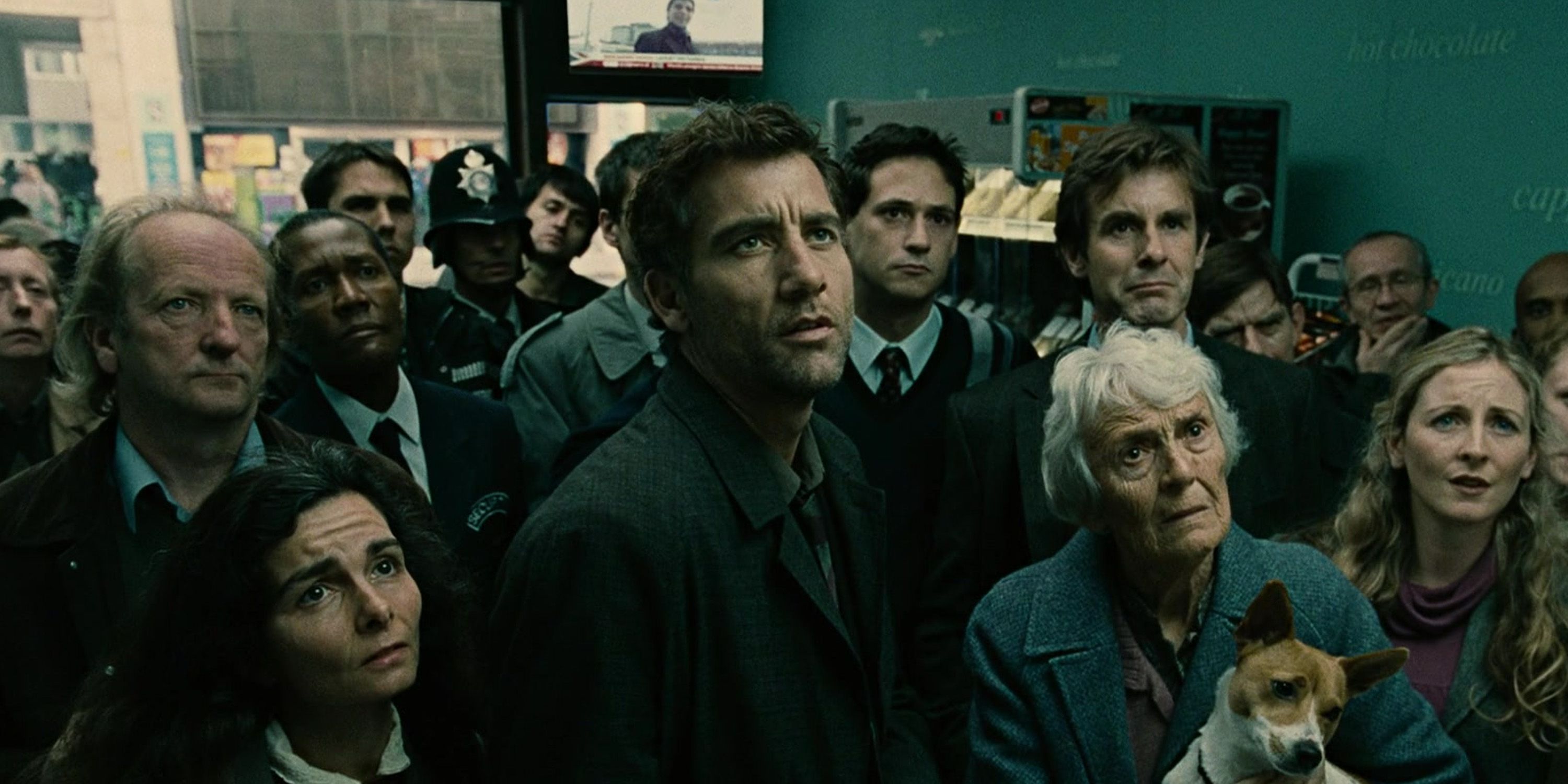
Children of Men’s Opening Shot Is One of Cinema’s Most Iconic & Dark
The film is famous for a remarkable single-shot sequence. It follows Theo (Clive Owen) as he goes about his morning – getting coffee and walking down the street – just as news breaks that the world’s youngest person, 18-year-old Baby Diego (Juan Gabriel Yacuzzi), has died in an explosion.
The opening scene of Children of Men immediately establishes the film’s depressing world and Theo’s detached attitude. In just one continuous shot, it shows the pollution, societal breakdown, and violence born from humanity’s fear. This instantly draws the viewer into a grim and realistic future, beginning with an ordinary moment that quickly escalates into intense, yet believable, action, and maintaining a harrowing atmosphere throughout the entire film.
Read More
- 10 Greatest Manga Endings of All Time
- Mark Zuckerberg & Wife Priscilla Chan Make Surprise Debut at Met Gala
- Elon Musk’s Mom Maye Musk Shares Her Parenting Philosophy
- GBP CNY PREDICTION
- 10 Best Free Games on Steam in 2026, Ranked
- Forza Horizon 6 Car List So Far: Confirmed Highlights, Cover Cars, DLC, and Rewards
- Ranking the 5 Best Spring 2026 Anime So Far (Mid-Season Update)
- Elon Musk’s Ex Ashley St. Clair Reveals When Romance Became “Weird”
- 20 K-Dramas That Nailed the Perfect Ending
- 7 Classic Anime You Can Stream for Free Right Now (& Where to Find Them)
2026-05-24 16:11