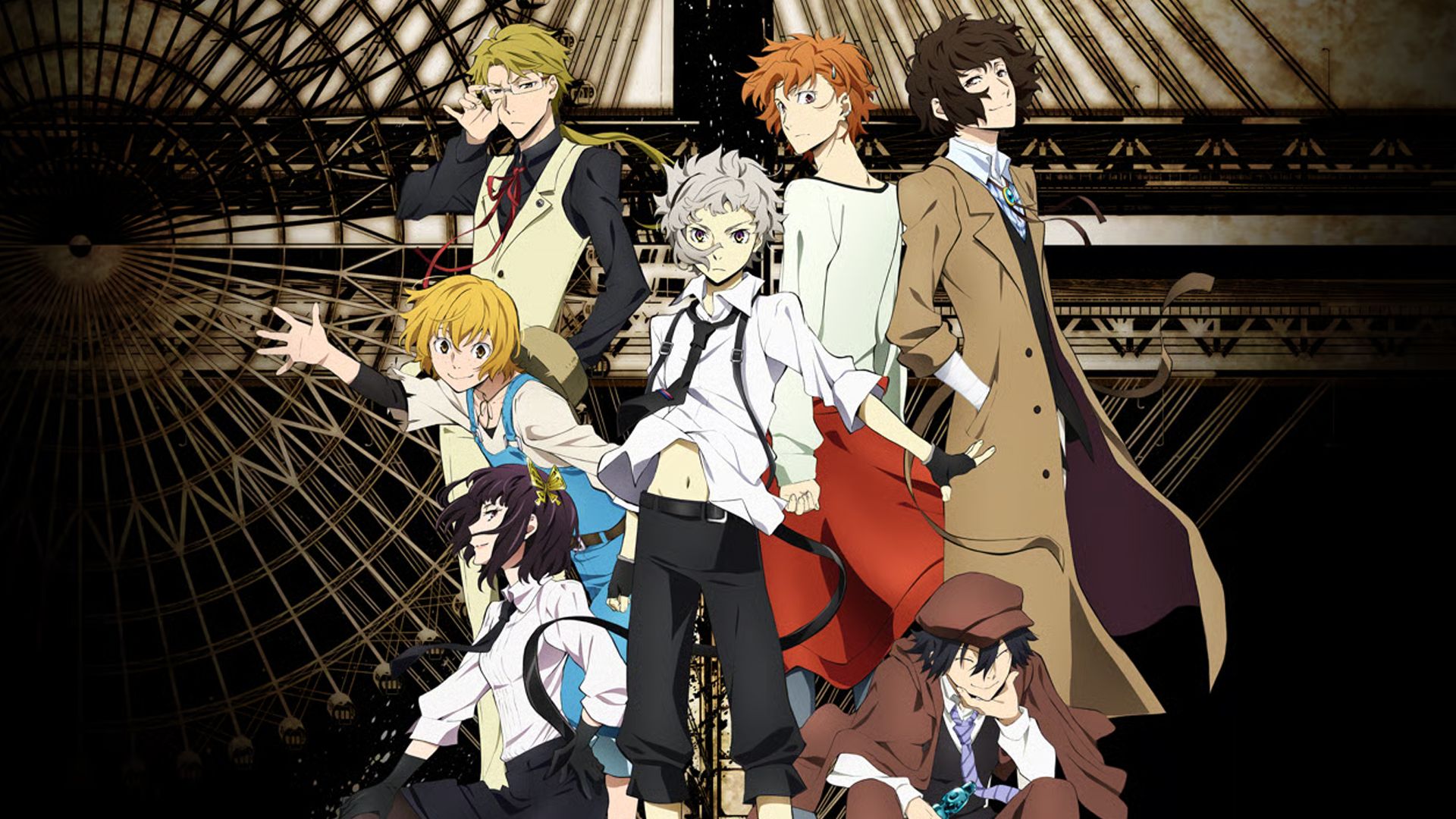
The most compelling stories reveal how violence, abuse, and difficult moral choices continue to affect people’s lives even after conflicts are over. These narratives – whether about secret agency tests, guild plots, vampire conflicts, or the realities of war – demonstrate that power is linked to sorrow, beliefs, and the instinct to survive, rather than clear-cut heroism or villainy.
Looking at characters like Dazai, Atsushi, Kyoka, Akutagawa, Yosano, and Chuya shows that the series is more focused on the emotional and psychological consequences of events than on violence. Stories like BEAST and Storm Bringer explore different sides of these characters and even question their very existence, making the overall story a deep exploration of themes like guilt, loyalty, and the burdens of making difficult choices.
Azure Apostle Incident Reveals Dazai’s Ruthless Pragmatism
In the light novels, Dazai’s entrance exam for the Armed Detective Agency isn’t about his ability to cause violence, but rather how he deals with difficult moral choices. Kunikida assesses Dazai as he looks into the death of the Azure King and Nobuko Sasaki, the Azure Apostle who continues the King’s dangerous plan while pretending to be an ordinary office worker.
Ultimately, despite Dazai and Kunikida’s reluctance to use deadly force against Sasaki, it’s Rokuzo Taguchi, driven by his father’s death at the hands of the Azure King, who shoots her. Both Taguchi and Sasaki are then caught in a cycle of inescapable consequences. This event tests Dazai’s ability to understand complex motivations fueled by love, beliefs, and revenge, highlighting a recurring theme in Bungou Stray Dogs: a preference for bittersweet resolutions over clear-cut victories.
Guild Arc Shows Fitzgerald’s Genocidal Ambition
During the Guild storyline, F. Scott Fitzgerald devises a plan to destroy Yokohama by crashing the ship Moby Dick into the city. However, his goal isn’t malice, but to obtain a special book and bring his daughter back to life, hoping to reunite his broken family. His harsh actions stem from deep sorrow and pride, rather than genuine wickedness.
The Guild not only kidnaps Dogra Magra but also uses his powers to spread insanity and fear throughout the city. We see both ordinary citizens and soldiers succumbing to Q’s curse, highlighting how rapidly order breaks down. The story’s bleakness stems from how a single, personal desire escalates into something almost genocidal, and how a power that was taken by force is used against innocent people who had no connection to the Guild.
Vampire Invasion Arc Reveals Fukuchi’s Vengeful Devastation
I watched as Ochi Fukuchi instigated a widespread vampirism outbreak, infecting both soldiers and ordinary people. It seemed his goal was to completely upend the world order. Sadly, Akutagawa died protecting Atsushi, and then, tragically, he was brought back as a vampire. It was heartbreaking to see their long-standing rivalry end not with resolution, but as a casualty of this whole ordeal.
The central conflict focuses on preventing the activation of One Order. Fukuchi relentlessly attempts to unlock its control system, while the Agency desperately tries to stop him. The anime’s visuals – dark colors and heavy shadows – effectively portray a city under attack. But the true horror comes from the possibility that if One Order becomes fully operational, all armies could be turned against each other, instantly destroying any trust between allies.
Kyoka Izumi’s Backstory Reveals Exploitation of Innocence
Kyoka Izumi has a tragic past. Her parents, who were assassins, were ambushed by an enemy with the power to control blood. They were quickly overwhelmed, and it became clear their bodies would be used against their daughter. To prevent this, Kyoka’s mother made a heartbreaking decision: she instructed their loyal dog, Demon Snow, to kill both her and her husband in front of Kyoka, ensuring the enemy couldn’t exploit them.
After her mother’s death, Kyoka inherits the dangerous ability of Demon Snow, becoming linked to the very weapon that shattered her family. Taken in by Koyo Ozaki, an executive of the Port Mafia, she’s treated as family but controlled through obedience rather than allowed to think for herself. Her path towards joining the Agency is a difficult one, as she fights to regain her independence and sense of self after a childhood where love, family ties, and power were used to manipulate her.
Akutagawa’s Slum Origins Intensify His Survivalist Ruthlessness
Ryunosuke Akutagawa and his sister Gin had a difficult childhood in the poorest parts of Yokohama, and Ryunosuke was known for his dangerous ability to manipulate a cloth-like material. One day, members of the Port Mafia discovered that Ryunosuke and a group of eight other children had accidentally overheard a secret weapons transaction. The Mafia thugs brutally murdered all the children except for Ryunosuke and Gin, leaving the siblings amidst the bodies.
Akutagawa arrived at the meeting place intending to get his revenge, but found all six men already killed – a calculated move by Dazai. Dazai had orchestrated the murders as both a gift and a test, wanting to see how Akutagawa would react. He then offered Akutagawa a position within the Port Mafia, presenting the killings as a twisted invitation. This experience profoundly affected Akutagawa; witnessing such callous violence – including the murder of children – and the theft of his chance for revenge, convinced him that kindness was a weakness. This harsh worldview fueled his later cruelty, rooted in a brutal understanding of survival where strength and violence were all that mattered.
Atsushi’s Orphanage Ordeal Underscores His Trauma
Atsushi Nakajima had a terrible childhood at an orphanage, where he was chained, beaten, starved, and kept completely alone. The headmaster told him he was cursed, and the other children bullied him, leading Atsushi to believe he was worthless and a danger to others. Throughout the anime Bungou Stray Dogs, we see how much this trauma affected him, through his recurring nightmares and panic attacks.
After the orphanage faces financial hardship, Atsushi is kicked out and forced to fend for himself, a harsh experience meant to test his strength. This history of being seen as both dangerous and a problem fuels his strong desire to protect others. Throughout his journey, Atsushi learns to embrace his own power – the same power he once feared – and use it to help those in need.
Oda Sakunosuke’s Death Marks a Turning Point for Dazai
Sakunosuke Oda, known as ‘Odasaku,’ gave up killing to pursue his dream of becoming a writer, believing that someone who takes lives can’t truthfully depict them. He secretly worked within the criminal world while also looking after orphans, reserving his moral compass for the novel he planned to write. He served as a steady and grounded presence, offering a contrast to Dazai’s pessimistic outlook.
It absolutely wrecked me when Mimic turned on the orphans he was supposed to be guarding. Seeing Oda, a man who always believed in peace, finally snap and kill Andre Gide… it was devastating. He knew it meant giving up on everything he’d hoped to write about, but he did it anyway. And then, dying in Dazai’s arms, asking him to live for others… it was just so powerful. That image of a writer, a man who dedicated his life to capturing life itself, dying with a gun in his hand… it finally made Dazai realize how pointless all the violence was. It was the turning point he needed to start thinking about a different path.
Yosano Akiko’s Wartime Duty Becomes a Nightmare
During the Great War on Tokoyami Island, Akiko Yosano became known as an ‘angel’ for her ability to repeatedly revive soldiers using her skill, Thou Shalt Not Die. She received a golden hairpin as a token of gratitude. One soldier, Shunzen Tachihara, the older brother of Michizo, kept track of each time Yosano saved him by marking his dog tag. When the marks combined to form the kanji for ‘correct,’ he accused her of saving him too many times, tragically taking his own life and calling her an angel of death. This event deeply fueled Michizo’s anger when he later discovered who was responsible for repeatedly sending his brother back into battle.
The experience deeply affects Yosano, pushing her to her breaking point. She stops healing people and ultimately destroys the island’s hospital to prevent Mori and the military from making her continue to revive soldiers endlessly. Afterward, she’s held captive, burdened by the guilt of prolonging the suffering of those she healed and the trauma of being used as a mere instrument of war. From then on, every time she uses her ability, she’s haunted by the memory of Tachihara’s dog tags, a constant reminder of how war can corrupt even acts of kindness.
BEAST Alternate Timeline Twists Heroes Into Despair
In BEAST, Dazai manipulates reality using a special book and memories from his past. He creates a world where Oda continues to live and write, but this comes at a great price. Dazai is now the leader of the Port Mafia, and Atsushi continues to suffer abuse at the orphanage until Dazai personally recruits him. Dazai transforms Atsushi into a cold and effective enforcer known as the White Reaper.
The true horror lies in the story’s very foundation. Oda’s vision can only survive if Atsushi continues to suffer, and if Dazai is removed from the picture. Dazai’s departure from the Port Mafia is born of both desperation and a deliberate sacrifice – the world he helped build simply can’t accommodate both him and a living Oda. BEAST presents a particularly grim alternate reality, showcasing a fleeting happiness constructed on manufactured pain and the choice of one man to effectively disappear from existence.
Storm Bringer Arc Forces Chuuya to Confront His Origins
In Storm Bringer, Chuuya Nakahara learns he might be an artificially created being with special abilities. Paul Verlaine, another artificial human from Europe, and a researcher named N reveal a clone’s skeleton to him. This skeleton has a birthmark matching a scar Chuuya has and is linked to the disappearance of a local boy, suggesting Chuuya’s body could have been created from someone who was once kidnapped and used as a model.
The story deliberately leaves it unclear who is the original and who is the clone. Dazai points out that finding an answer might be impossible, and Chuuya eventually realizes it doesn’t matter. What defines a person, he believes, is what they remember, choose, and love. By firmly choosing the Port Mafia as his family and continuing to fight for what he believes in, Chuuya overcomes his doubts and asserts that he’s more than just an experiment or a theory.
Read More
- Gold Rate Forecast
- USD HKD PREDICTION
- EUR CNY PREDICTION
- SUI PREDICTION. SUI cryptocurrency
- USD TRY PREDICTION
- USD BRL PREDICTION
- USD CHF PREDICTION
- 7 Classic Free Animated Shows Hidden Deep on Streaming
- Black Clover Confirms Special Chapter After Manga Finale
- Green Game Jam returns with 70 games teaming up to tackle the climate crisis
2026-06-10 23:57