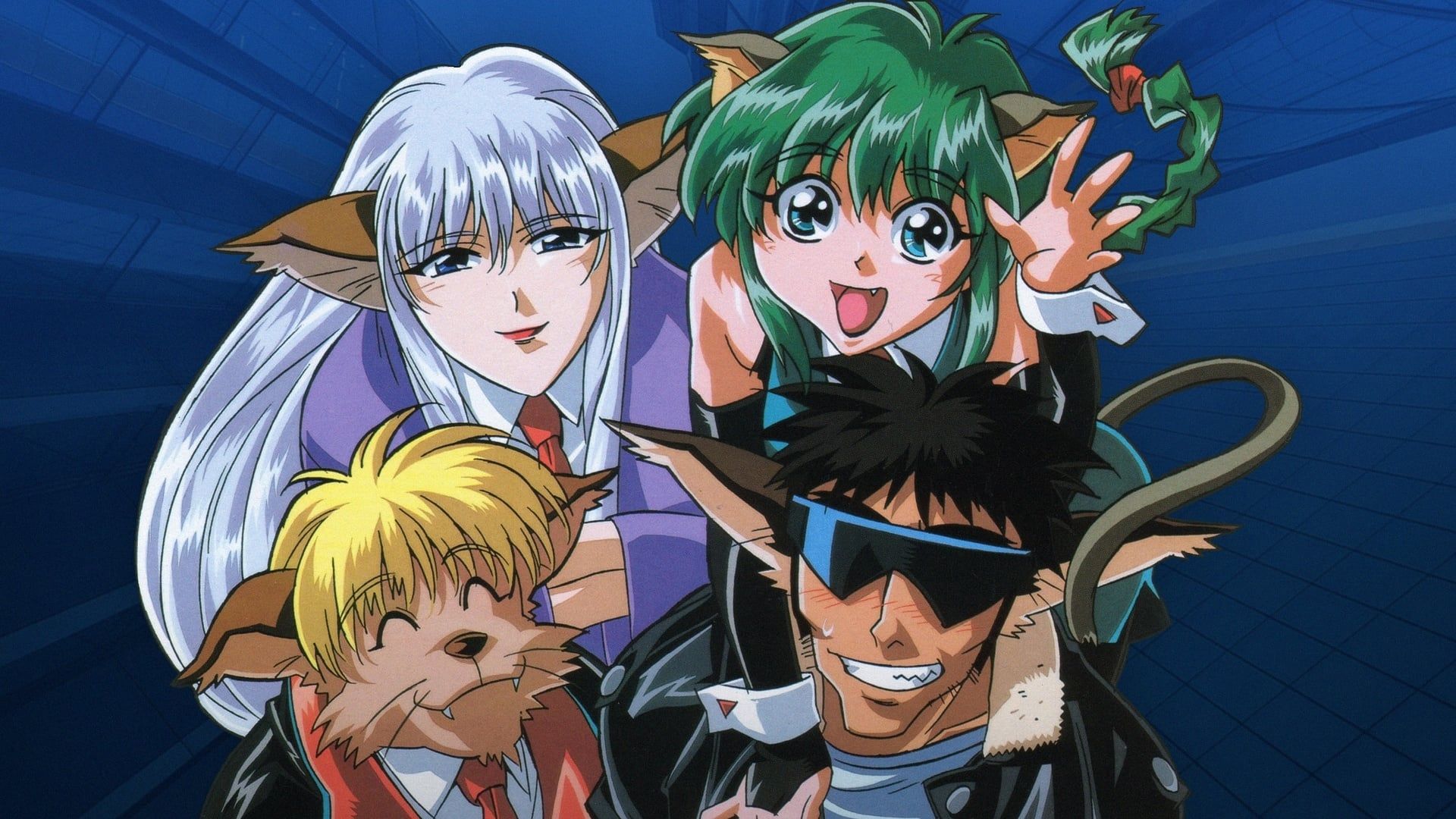
There’s a unique quality to anime from the 1990s that today’s shows often lack. It’s not about the stories themselves, but rather the way ’90s anime felt – a bit rough around the edges, with complex themes that felt fresh and genuine. The OVA format of the time allowed for unusual and challenging ideas to be explored without the restrictions of traditional television.
While popular anime like Ghost in the Shell and Cowboy Bebop have massive fan bases, many other deserving shows haven’t gotten the recognition they deserve. This can happen for various reasons, including delays in getting the anime released, problems with licensing, production issues, or simply misjudging what kind of genre would appeal to audiences, leading to these shows being overlooked.
Betterman Blends Bio-Horror with Psychological Sci-Fi
Created by Sunrise and directed by Yoshitomo Yonetani, Betterman is a biological horror series that originally aired on TV Tokyo in 1999. The show explores themes of body horror, loneliness, and distrust, suggesting that the future of humanity isn’t necessarily secure.
Each episode of Betterman is rich with symbolism inspired by the work of Carl Jung. Interestingly, it exists in the same universe as the more popular anime GaoGaiGar. However, viewers coming to Betterman after watching GaoGaiGar might be surprised. Betterman deliberately avoids traditional heroic themes, opting instead for a bleak and unsettling story told through a science fiction setting. This makes it one of the most darkly themed mecha anime of the 1990s, comparable to Neon Genesis Evangelion.
Violinist of Hameln Is an Absurd Comedy With a Dark Fantasy Twist
The anime Violinist of Hameln is striking for its jarring shifts between disturbing horror and deep emotional pain, which creates a disorienting but memorable viewing experience. It stands out as a product of the 1990s, embracing tonal experimentation and refusing to soften its harsh edges, resulting in a tragic story rather than a typical action-adventure anime.
The manga Violinist of Hameln was a big hit in Japan, running for 37 volumes. The anime adaptation presented Hamel as a flawed, darker hero. Unlike the manga, which balanced humor and sadness, the anime awkwardly mixes these elements, creating a disturbing feeling for viewers.
Angel Links Extends Space Opera Tropes Without Redefining Them
Angel Links is an anime series produced by Sunrise that originally aired on WOWOW from April to June 1999. It’s a spin-off connected to the world of Outlaw Star. While the series received criticism for focusing too much on fan service – particularly the character Meifon – this overshadowed its intriguing concept: a company offering free security in a universe where everything usually comes at a cost.
I remember watching Angel Links and noticing it really hit its stride around the middle of the series, getting much more intense as some surprisingly dark secrets came to light. The ending felt just right – a little sad, but ultimately fitting. It’s a shame it took so long for Western audiences to get a chance to see it, though. By the time the licensing issues were sorted out, Outlaw Star wasn’t being talked about much anymore, and I think that really hurt Angel Links’ chances of finding a big audience.
Compiler Reflects Early Internet Anxiety Through Sci-Fi Comedy
Compiler is a 1994 animated series based on Kia Asamiya’s manga. It follows two computer programs who become women and try to live as humans on Earth. The show is known for its unique, fast-paced humor, where jokes often come before the setup. It’s filled with parodies that pile on top of each other, but with only two episodes, there isn’t much time to develop the characters.
Kia Asamiya created both Silent Mobius and Steam Detectives, which were widely released in Western markets. However, his work Compiler didn’t gain as much traction, likely because its humor relies heavily on understanding the self-parody and tropes common in 1990s anime. Compiler showcases a period in science fiction that explores a reality that feels both familiar and strangely unpredictable.
Hyper Police Combines Cyberpunk With Everyday Work Structure
Set in a futuristic Tokyo of the year 22 HC, Hyper Police takes place in a world where humans are nearly extinct and monsters now make up most of the population. The series, directed by Takahiro Omori (who would later direct other works), boasts an impressive creative team and features monsters drawn from traditional Japanese folklore.
For a long time, Hyper Police was only translated into Spanish, which limited its reach and prevented it from gaining a following outside of Spanish-speaking countries. The show also struggled with its tone, jumping between serious character moments and silly comedy without finding a consistent balance, ultimately making it feel unremarkable.
Sorcerous Stabber Orphen Deconstructs Fantasy Heroism Through Quiet Tension
The first half of Sorcerous Stabber Orphen slowly reveals its central mystery, holding back important details until a major turning point in episode 7. This deliberate pacing is uncommon for ’90s fantasy anime, which usually explains everything upfront. The main character is also a refreshing change of pace – he’s openly motivated by money and doesn’t seem to care about being a hero.
The anime Sorcerous Stabber Orphen first appeared on Japanese television in 1998 and came to the US in 2001 thanks to ADV Films. In 2020, a new version was created to celebrate the 25th anniversary of the original novel. Unlike the 1998 series which slowly revealed its central conflict, the remake immediately starts with the story’s main problem.
Pet Shop of Horrors Frames Horror Through Taxonomy
In 1999, the anime Pet Shop of Horrors stood out because it was presented as a series of standalone stories, with each episode exploring different aspects of human flaws like greed, obsession, and the inability to cope with loss. Madhouse Studio created four episodes for a TBS anthology series, and the animation style shares similarities with anime like Ninja Scroll and City Oedo.
Count D, the villain of Pet Shop of Horrors, is unsettlingly calm and collected as he manipulates his customers. The horror in this anime isn’t about sudden shocks, but a deeper, more disturbing sense of wrongness based on the creatures themselves. Despite being hard to find on streaming services, Pet Shop of Horrors remains a remarkably well-made and impactful horror story from recent years.
Those Who Hunt Elves Turns Isekai Into Comedic Chaos
I remember watching Those Who Hunt Elves back in late 1996 on TV Tokyo. It was a 12-episode late-night show with character designs by Keiji Goto, and a second season followed with another 12 episodes. Both seasons were adapted from Yu Yagami’s manga, originally published in Dengeki Comic Gao. What really stood out to me wasn’t necessarily a complex storyline, but the writer’s obvious knack for finding humor in really unexpected places – it was just genuinely funny and a bit silly.
I’m a huge fan of Those Who Hunt Elves, and one of the things I love most is how it mixes the totally unexpected – like a rugged Type 74 military truck – with a classic fantasy world. It’s hilarious! Back in the day, ADV Films put out both seasons on VHS and DVD, and for a while, it built a little following through video rental stores, but it sadly faded from view after that.
Shadow Skill Presents Strength Through Discipline Instead of Combat
Studio Deen adapted Megumu Okada’s manga, Shadow Skill, into a 26-episode anime series called Shadow Skill: Eigi. The story centers on Elle Ragu, the first woman in the kingdom of Kuruda to achieve the rank of Sevalle – the highest level for warriors. However, the series focuses more on the world and events surrounding battles, rather than the combat itself.
At its heart, Shadow Skill explores themes of pressure from high expectations, opposition from those in power, and the dynamic between teachers and students. This realistic focus gives the anime a believable quality, but it might not appeal to everyone. However, viewers who enjoy detailed depictions of martial arts will likely find it to be a standout series.
Kyo Kara Ore Wa!! Reinvented Itself to Japanese Audience
This 10-episode animated series, created by Studio Pierrot, originally aired on and off between April 1993 and December 1997. While the manga was very popular, the series itself didn’t gain much attention outside of Japan. Before 2020, when TOHO released a remastered Blu-ray version, the only way to watch Kyo Kara Ore Wa!! was through Italian DVDs released under the name Due Come Noi!
The series Kyo Kara Ore Wa!! was very popular in Japan with fans of shows like GTO, Crows Zero, and Cromartie High School. While a live-action adaptation in 2018 reintroduced it to Japanese audiences, it remains relatively unknown to viewers in the West.
Found an error? Send it so it can be corrected.
Read More
- Gold Rate Forecast
- 10 Most Powerful Versions of Superman, Ranked
- GBP CNY PREDICTION
- 007 First Light: Release Date, Story, Gameplay, Cast, Editions, and Platforms
- Forza Horizon 6 Car List So Far: Confirmed Highlights, Cover Cars, DLC, and Rewards
- DOGE PREDICTION. DOGE cryptocurrency
- Superman’s 7 Best Power-Ups, Ranked
- 10 Greatest Wii U Games of All Time, Ranked
- What happened to Soldier Boy in The Boys?
- Kingdom Come Deliverance Update 1.002 Enables Trophies to Be Transferred
2026-04-21 00:15