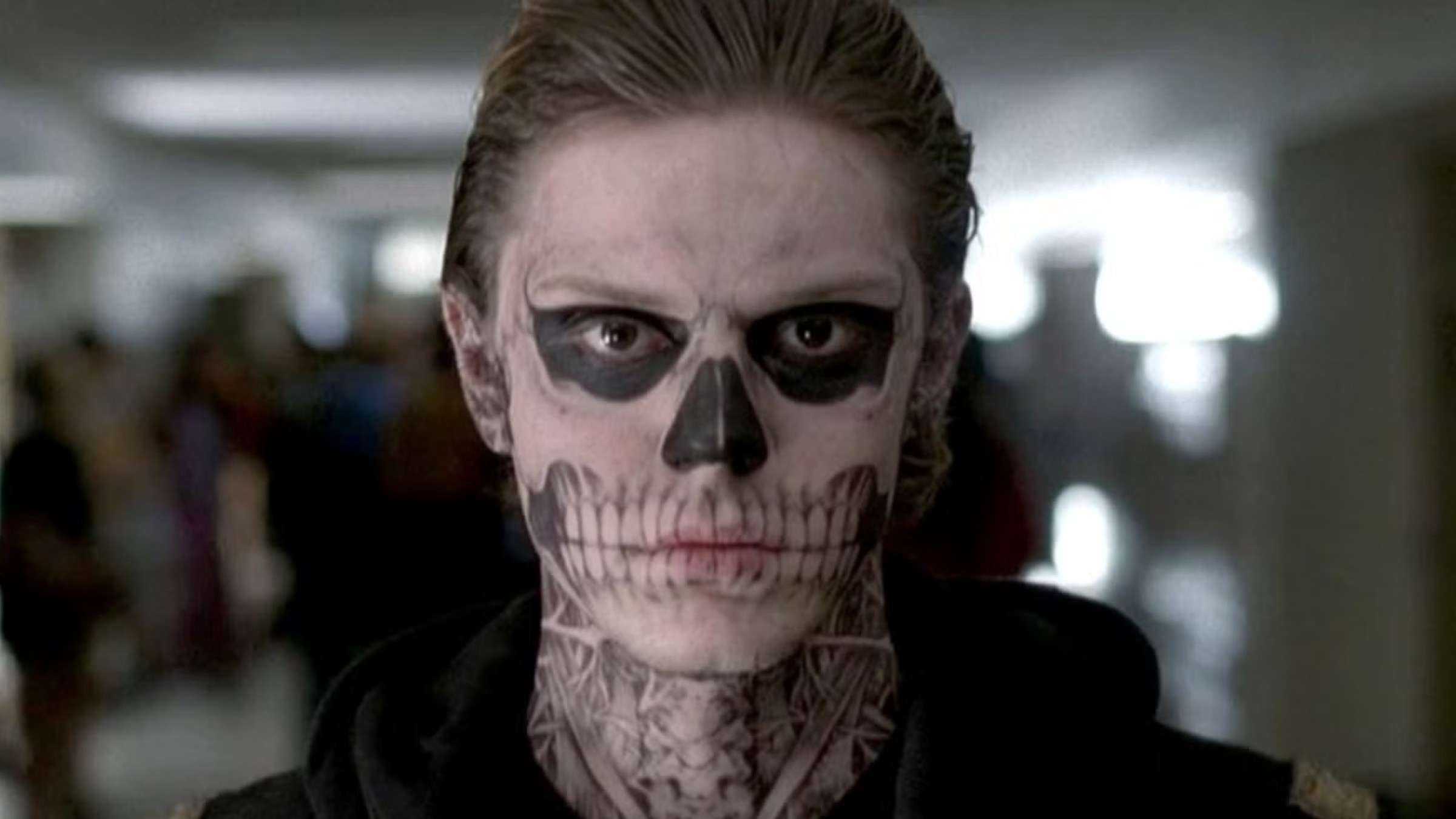
Since its debut in 2011, American Horror Story has been celebrated for its affectionate homage to classic horror films and media, seamlessly integrating various elements such as circus freaks, extraterrestrial beings, and even offspring of Satan into the series. One need only look as far as the first season to spot references to timeless horror movies and archetypes that would later become emblematic of the show. Even if you’re not a fan of Ryan Murphy, you can acknowledge the intricate layers and the deep respect for horror present in both fictional and non-fictional works portrayed within the series.
The first season, famously referred to as “Murder House,” offers a diverse blend of various horror movie elements. It draws inspiration from the multitude of haunted house narratives over the years, placing the iconic “Amityville Horror” at the forefront. However, it also incorporates contemporary gothic horror, elements reminiscent of true crime stories, a touch of classic slasher tropes, and even medical experimentation that borders on the grotesque – enough to disturb most viewers. It’s a rich tapestry that pays homage to its predecessors.
Take a look further down to discover musical hints, motifs, hidden references, and much more from the first season of American Horror Story. We aim to delve a little deeper than simple observations, but at times, that’s all we can manage. Fortunately, there’s always space for a few unexpected side trips in any list.
1 ) Hitchcock Vibes (Vertigo, Psycho)

The initial episodes of the season pay homage to Alfred Hitchcock’s renowned thrillers, particularly “Vertigo” and “Psycho”. Not only does the series incorporate music from both films during crucial moments, but it skillfully intertwines the character’s death (Maria, played by Rosa Salazar) and the early elements of a slasher film reminiscent of “Psycho”. Although Maria isn’t in a shower when she is stabbed, the melodies still create an analogous impact on the viewer.
In addition to contemporary horror films, the anthology series AHS occasionally pays tribute to, incorporating elements from Robert Zemeckis’ What Lies Beneath, with its music being a nod as well as sharing some common themes. This tribute is also extended to more classic horror movies in later episodes of the series.
2) Frankenstein

The story of Nora and Dr. Charles Montgomery, a couple who reside at the infamous Murder House, seems to be connected to the house’s chilling incidents and an alleged pact with the supernatural. In collaboration with Murphy and others, they draw upon themes from Mary Shelley’s ‘Frankenstein’ to express their grief over losing their child. Overwhelmed by his sorrow, Dr. Montgomery transitions from clandestine abortion practices at home to attempting to resurrect both the dead and his own child. In a state of madness, he stitches together pieces of his child using parts from animals, revealing his descent into mental instability.
3) Bram Stoker’s Dracula

The Montgomery’s tale incorporates a substantial amount of music from “Dracula” by Bram Stoker in 1992, enhancing the show’s flashback scenes and demonstrating similarities with the present. Moreover, our production appears to be one of Murphy’s initial ventures into true crime within his work, as it integrates the Black Dahlia murder into the dark history of the Murder House.
4) Twisted Nerve

In a nod to its pioneering status as a slasher film, this early production is most recognized for its haunting theme song, which is eerily whistled by the film’s antagonist while he pursues his victims. This motif is similarly employed in “American Horror Story,” and borrows elements from Quentin Tarantino’s “Kill Bill” soundtrack. The character of Martin in “Twisted” bears a resemblance, albeit faint, to Tate (played by Evan Peters). Both characters are killers and harbor intense affection for certain objects, much like Tate and Martin. Furthermore, both characters have overbearing mothers, although this detail is unveiled later in the season of “American Horror Story.” Ultimately, these characters serve as compelling illustrations of how young men from different time periods react when their perspectives are disrupted.
5) To the Devil a Daughter

Although there are some instances involving Satan and Hell from earlier works that have been replicated over time, a particular scene in Hammer Horror’s “To the Devil…A Daughter” has been nearly identical in “American Horror Story”. This involves the appearance and attack of the Rubber Man on Vivien Harmon, which closely mirrors a scene from the original film. In the Christopher Lee movie, the scene where the cult impregnates Catherine (played by Nastassja Kinski), has a similar counterpart in the sequel when the pregnancy reaches full term. However, it is important to note that additional events unfold after this point, but the attack by the Rubber Man follows the same pattern as the movie’s original scene.
6) Beetlejuice

Moving towards the finale of the season, the fate of the Murder House draws inspiration from the movie “Beetlejuice”. In this narrative, the Maitlinds persistently try to scare off the new residents, finding affection for Lydia and recognizing the dangers of summoning Betelgeuse to intensify their haunting. Unlike “Beetlejuice”, there’s no charming poltergeist in “AHS”, but instead, several ghosts with contrasting allegiances reside within. The Harmons, now ghosts themselves, align with the benevolent spirits confined in the house to protect the new occupants by terrifying them away. On the opposing side are Tate and other malignant spirits trapped within the home.
7) The Shining

At the beginning of the first season, several eerie children are initially presented, including younger Adelaide Langdon, who trespasses onto the Murder House estate without an invitation. However, it’s the red-haired twins that stand out, as they are reminiscent of the slain twins from Stanley Kubrick’s The Shining. It can be challenging to imagine something else when you see them standing behind Vivien, their wounds from their demise still visible.
8) Rosemary’s Baby / Demon Seed

A significant inspiration stems from the aftermath of the sexual assault involving the Rubber Man, as hinted at earlier. This incident’s outcome reveals the child born of a ghost and a human is destined to be the Antichrist, an omen suggesting the Apocalypse has commenced. This theme unfolds during the later “Apocalypse” season, serving to connect several seasons of “American Horror Story,” which is intriguing for dedicated viewers of the series.
Constance Langdon is similarly reminiscent of Ruth Gordon’s curious neighbor with a concealed malevolent past from the movie “Rosemary’s Baby.” Both characters take part in the birthing rites, adopting the evil newborn after Vivien tragically passes away during childbirth. In the afterlife, Vivien eventually reclaims her surviving stillborn baby twin from Nora Montgomery, who had been caring for and protecting it instead.
9) Halloween

In a more concise and easy-to-understand manner, the initial appearance of Denis O’Hare as Larry Harvey provides a recognizable reference while still maintaining clarity. Outside the Harmon residence, his first scene finds him gazing upward at their bedroom amidst some laundry swaying. This shot mirrors one from John Carpenter’s Halloween, where Michael Myers similarly stares in an unsettling manner. Although they diverge into grislier paths after this, it serves as a subtle homage to the slasher genre early on.
10) The Omen

To wrap things up, it’s crucial to mention that The Omen serves as a significant influence. Later in the Apocalypse series, more events unfold, yet we get an initial glimpse of Michael Langdon towards the end. Constance is diligently raising her adopted son, but Michael, who mirrors his grandfather Tate in wickedness, takes a violent turn by killing their nanny while she’s absent. This child exhibits no virtues, but manages to maintain an innocent façade of mischief, ending the season with a smile plastered on his face as he gazes up at Constance, stained with blood.
Michael Langdon and Damien from “The Omen” may have distinct physical appearances, yet they share a similar ethos. In the realm of folklore, the conception of the Antichrist is not disregarded in American Horror Story either, suggesting a hidden universe teeming with spirits that remain obscured to the everyday living.
Read More
- Gold Rate Forecast
- Hazbin Hotel Secretly Suggests Vox Helped Create One of the Most Infamous Cults in History
- Every Creepy Clown in American Horror Story Ranked
- 22 actors who were almost James Bond – and why they missed out on playing 007
- Best X-Men Movies (September 2025)
- Blue Protocol Star Resonance: Goblin Lair Dungeon Guide
- Arknights: Endfield – Everything You Need to Know Before You Jump In
- Kingdom Come: Deliverance 2 – Legacy of the Forge DLC Review – Cozy Crafting
- Chill with You: Lo-Fi Story launches November 17
- Everything We Know About Gen V Season 3 (& Why It’ll Be a Very Different Show)
2025-08-24 01:13