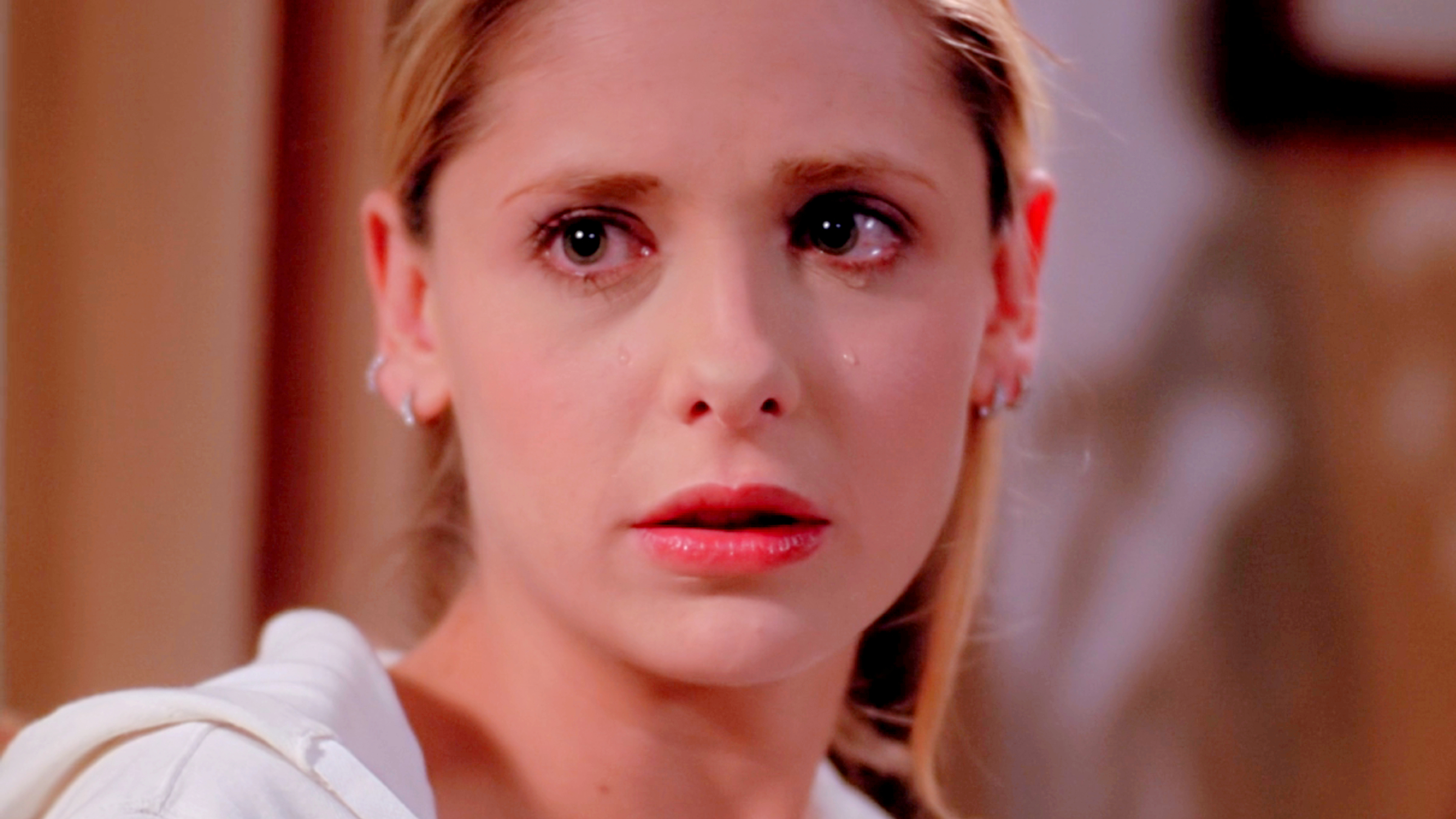
Over its seven seasons, Buffy the Vampire Slayer – with its rich backstory and established lore – inspired countless fan theories. Like most shows of its kind, these theories ranged from plausible to wildly imaginative. Some fans believed Drusilla could have been a Slayer herself, that Dracula created Dawn, or even that Willow Rosenberg was responsible for the deaths (and resurrections) of all the Slayers in the final episode. And let’s not forget the theory that Rupert Giles was actually a Time Lord!
One of the most discussed and intriguing theories about Buffy the Vampire Slayer is that everything that happened in the show wasn’t actually real. This idea stems from the Season 6 episode “Normal Again.” In this episode, a demon’s venom causes Buffy to believe she’s been in a mental institution for six years. Within this hallucination, things are very different: Dawn never existed, her mother Joyce is still alive, and her parents are still married.
Alternatively, could Buffy’s life as the Slayer be the illusion? The episode deliberately ends with this question, prompting many fans to believe the hospital setting in “Normal Again” is actually reality, and everything else takes place within Buffy’s mind.
Does The “Buffy Wasn’t Real” Theory Hold Up?

As a huge Buffy fan, what really struck me about that episode is the ending. It looks like a typical victory – Buffy defeats the demon and things should go back to normal, right? But then it throws this curveball, cutting to her in the hospital, completely out of it. She’s lost in her own head, reliving being the Slayer, and that’s just… where it ends. It’s super unsettling because the show never actually says that didn’t happen, and it’s totally plausible. It’s even hinted at later when Buffy mentions being in an institution when she first started dealing with vampires. It makes you wonder if everything we saw was real, or if it was all happening inside her head!
The theory that everything is a fabrication helps explain the strange, supernatural events in Sunnydale, and specifically addresses how Dawn abruptly appeared in Season 5. Though initially explained as her being “the key,” a doctor reveals that Buffy actually created Dawn later, shaping her from her own desires for a family. This idea also allows for other characters to be re-imagined as patients within the hospital setting, as detailed by Reddit user u/theotherghostgirl.
- Giles was her head therapist, who ended up leaving.
- Willow is a woman with anxiety issues.
- Xander is a nymphomaniac.
- Dru is a homeless woman and addict; Spike is her boyfriend.
- Angel is an orderly or security guard.
This is an interesting idea to explore, but it does have a few weaknesses. Although the theory doesn’t directly conflict with the show Buffy, certain elements feel illogical if Buffy were simply imagining things unrelated to her own experiences. Furthermore, the idea that she was previously institutionalized doesn’t align with her established backstory or her mother’s reaction to learning she’s the Slayer. While it’s possible to explain these inconsistencies, the theory ultimately feels a bit messy.
The show gets really confusing because of Angel. It doesn’t quite add up that her hallucinations would create so many different characters. Plus, things happen on Angel that then affect Buffy, but she only finds out about them on Buffy. That whole idea doesn’t really fit if everything is supposed to be happening inside her mind.
However, the biggest issue is that it weakens the show’s central message. The themes of female empowerment don’t feel as strong if everything is happening only in her imagination. Producer Marti Noxon recognized this, and as noted in the book Slayers and Vampires: The Complete Uncensored, Unauthorized, Oral History of Buffy the Vampire Slayer and Angel, she felt…
That moment was meant to be a playful misdirection for the audience. We didn’t want to undermine the show’s core message. If Buffy lost her strength or seemed unstable, it would send the wrong signal – that female empowerment is just a fantasy. The show always aimed to prove the opposite – that strong women can be real. We wouldn’t want the ending to suggest otherwise. That’s why we presented it as a ‘what if?’ scenario – exploring how it would feel if things went differently. I, and I believe Joss Whedon too, don’t see that as the true nature of the show. It was simply a playful tease, meant to surprise people.
I always thought that theory was fascinating! Even if it’s not what happened in the main Buffy storyline, it doesn’t mean it couldn’t be true somewhere else. We know there are alternate realities, so maybe what that demon did was just tear down the wall between them. It means that in one universe, Buffy really did fight vampires, but in another, she genuinely ended up in a mental institution. And honestly, I love that. It preserves the heartbreaking impact of the ‘Normal Again’ episode without falling into that tired ‘it was all a dream’ cliché. It feels much more powerful that way.
Interestingly, the world of All My Children might be connected to the supernatural. Sarah Michelle Gellar started her career on the soap opera and made a guest appearance in 2011, playing a character who was hospitalized after claiming to see vampires!
Buffy the Vampire Slayer is streaming on Hulu.
What do you think? Leave a comment below and join the conversation now in the ComicBook Forum!
Read More
- Gold Rate Forecast
- Hideo Kojima Says He Was Never Told About The Matrix Creators Wanting Him to Make a Game
- ’90s Cartoon Reboot & TMNT Connection!
- Eurogamer Gives ARC Raiders 2/5 Over AI Voices, Dropping Metacritic Score from 94 to 84
- Dune 3 Gets the Huge Update Fans Have Been Waiting For
- One of Hulu’s Best New Shows Lands on Disney+ Ahead of Season 2
- Guardians of the Globe Members We Want to See in Invincible Season 4
- Kelly Osbourne Slams “Disgusting” Comments on Her Appearance
- What Song Is In The New Supergirl Trailer (& What It Means For The DC Movie)
- Man vs. Baby’s AI-Enhanced Baby Is Still Partly Human, Confirms Netflix Director
2026-03-12 21:43