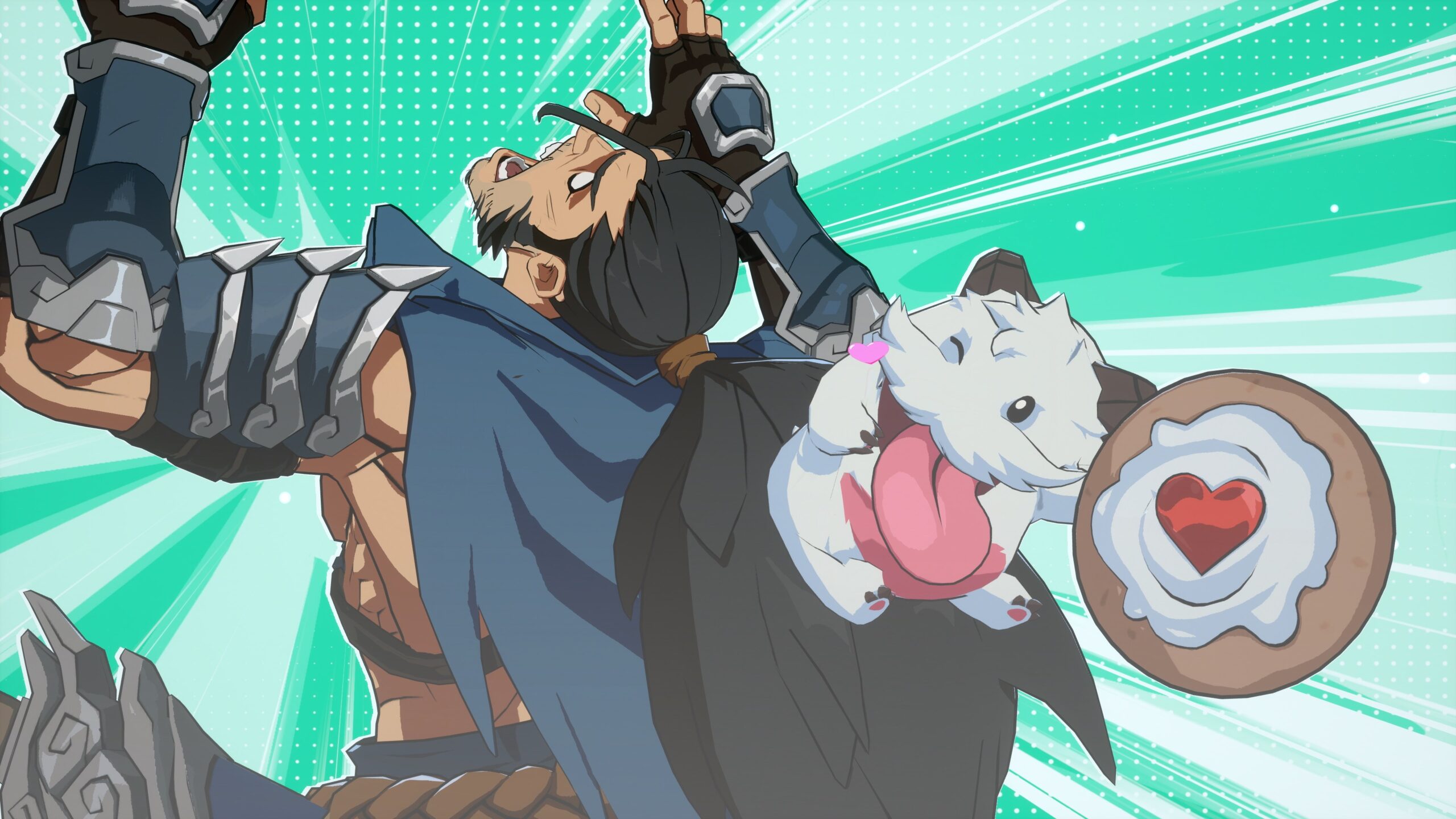
Riot Games has clearly been working to broaden the world of League of Legends, as evidenced by spin-off games and the popular Netflix series Arcane. League of Legends remains incredibly successful with a large player base, but Riot is now entering the fighting game scene with 2XKO. Similar to League of Legends, 2XKO aims to be easy to pick up and play, hoping to attract a wider audience than traditional fighting games like Street Fighter or Guilty Gear.
At its core, 2XKO is a team-based fighting game where you choose two characters. You can use your second character for support moves or switch to them during a fight, depending on the team setup you choose. A round ends when one team has defeated all opposing fighters, and matches are best of three rounds. What makes 2XKO special is its focus on 2v2 gameplay – you can control both characters yourself, or play with a friend and share control, adding a unique level of teamwork not found in many similar games.
When I first started playing 2XKO, I quickly realized there was a lot more going on under the surface than it seemed. What really sets it apart from games like Guilty Gear Strive and Street Fighter 6 is that it ditches the traditional motion inputs. Forget about doing a quarter-circle forward plus punch for a fireball – that stuff isn’t here! Instead, you’ve got dedicated S1 and S2 buttons for your special moves, and what those moves are depends on who you’re playing as. You can then press those buttons with a light, medium, or heavy attack to make the move stronger, but it’ll cost you some of your Super meter. If you hit both S1 and S2 at the same time, you’ll drain a big chunk of your Super meter for a super powerful, but risky, attack.
“Right from the get-go, it’s quite obvious that 2XKO is hiding quite a bit of its depth.”
2XKO includes an optional feature called Pulse Combo that simplifies attacks. If you turn it on before a match, quickly pressing one attack button will automatically create longer combos, and can even use special meter for powerful Supers. But for players who want more control, the game also has unique, custom combos. These require combining different attack buttons, using directional inputs, and even utilizing tag and assist moves.
The fighting in 2XKO is really well done. The developers clearly know what they’re doing, much like with their previous game, Rising Thunder. Everything feels smooth and responsive, whether you’re moving on the ground or in the air, and the game’s physics are easy to understand. A lot of the focus is on the ‘neutral game’ – the back-and-forth of trying to get close enough to attack or keep your opponent at bay, and how you begin your attacks. Defensively, you can block, push your opponent away by using your assist cooldown, and escape throws with precise timing. There’s also a ‘Break’ meter that builds up during the match. When full, you can use it to break free from combos, but it doesn’t recharge quickly, so you have to use it wisely – you’ll likely only get one or two uses per round. Aside from these systems and a universal ‘Parry’ that costs meter, your character’s specific abilities will determine how much extra defense you have.
Even with its fast-paced action, 2XKO doesn’t feel overwhelming. Combos can be visually impressive, and landing a character’s level 3 Super is like watching a mini-movie. However, the game’s clear art style and design choices – like exaggerating character features such as fists and weapons – make it easy to follow what’s happening. You can always clearly see attacks and anticipate your opponent’s next move. Even during the most intense exchanges, with players rapidly switching characters in and out of combos, 2XKO remains easy to understand, even for newcomers to fighting games.
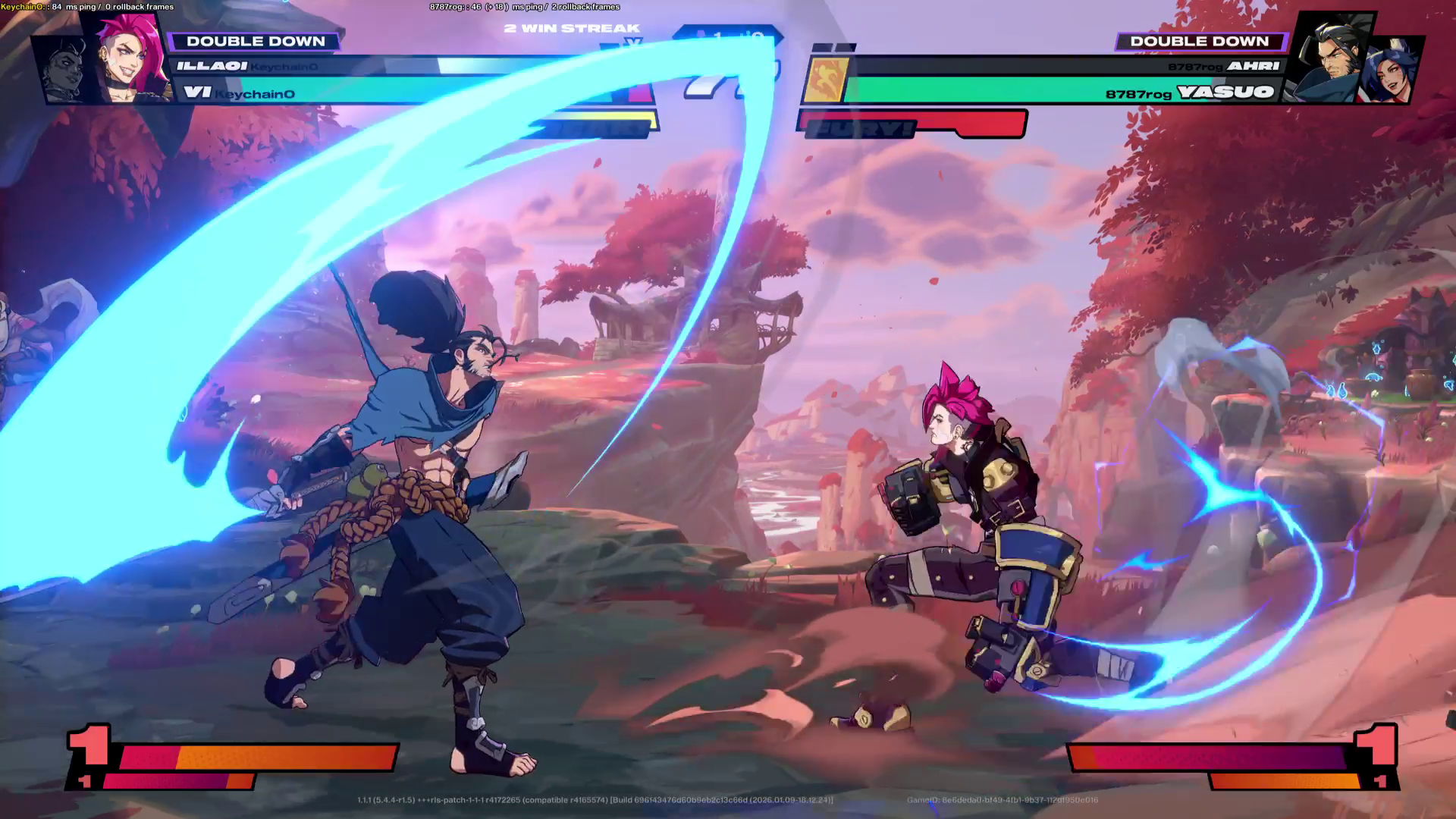
“Despite all of this, 2XKO never really feels chaotic.”
When building your team, called Fuses, you have different options for how to play. You can choose a traditional tag-team style, similar to games like Blazblue Cross Tag Battle, with the Double Down Fuse. Alternatively, you can focus on a single character using the Juggernaut or Sidekick Fuses. While this means you won’t have a backup character when your health is low, you’ll start with more health overall. Plus, if your health drops below 30%, you’ll gain a defensive boost. It’s good to know that, except when using the Juggernaut Fuse, you can still call in your second character for assist attacks.
Beyond the basic Fuse, there are two other options – 2X Assist and Freestyle – that focus on using tags strategically. These give you more ways to link assists and create combos to match how you like to play. For example, 2X Assist lets you perform several assist moves before your second character needs to recharge. Freestyle allows you to chain multiple Handshake tags together in a single combo, letting both characters land more hits. While these might seem complicated, they’re unlocked with tutorials that also teach you how to use them effectively.
The design of these Fuses, particularly Juggernaut, and other aspects of the game mean that no match in 2XKO ever feels truly unwinnable. Even with low health or after losing your partner, skillful play – like knowing when to block and attack – combined with elements like powerful auto combos, can create comeback opportunities. While not overly dramatic, these features keep matches consistently exciting and engaging.
Just so you know, even if you’re using the Juggernaut Fuse, you’ll still be able to call in your second character to help with assist moves.
A strong character roster is key to any good fighting game, and 2XKO immediately impresses with its diverse and unique characters. While the game currently features 12 playable characters, each one feels distinct and offers a different gameplay experience. For example, players who like to keep opponents at a distance might choose Caitlyn and team her with Teemo, using Teemo’s traps to punish anyone who gets too close. Alternatively, those who prefer aggressive, close-quarters combat could try Warwick and Blitzcrank, combining Warwick’s fast-paced attacks with Blitzcrank’s powerful grabs.
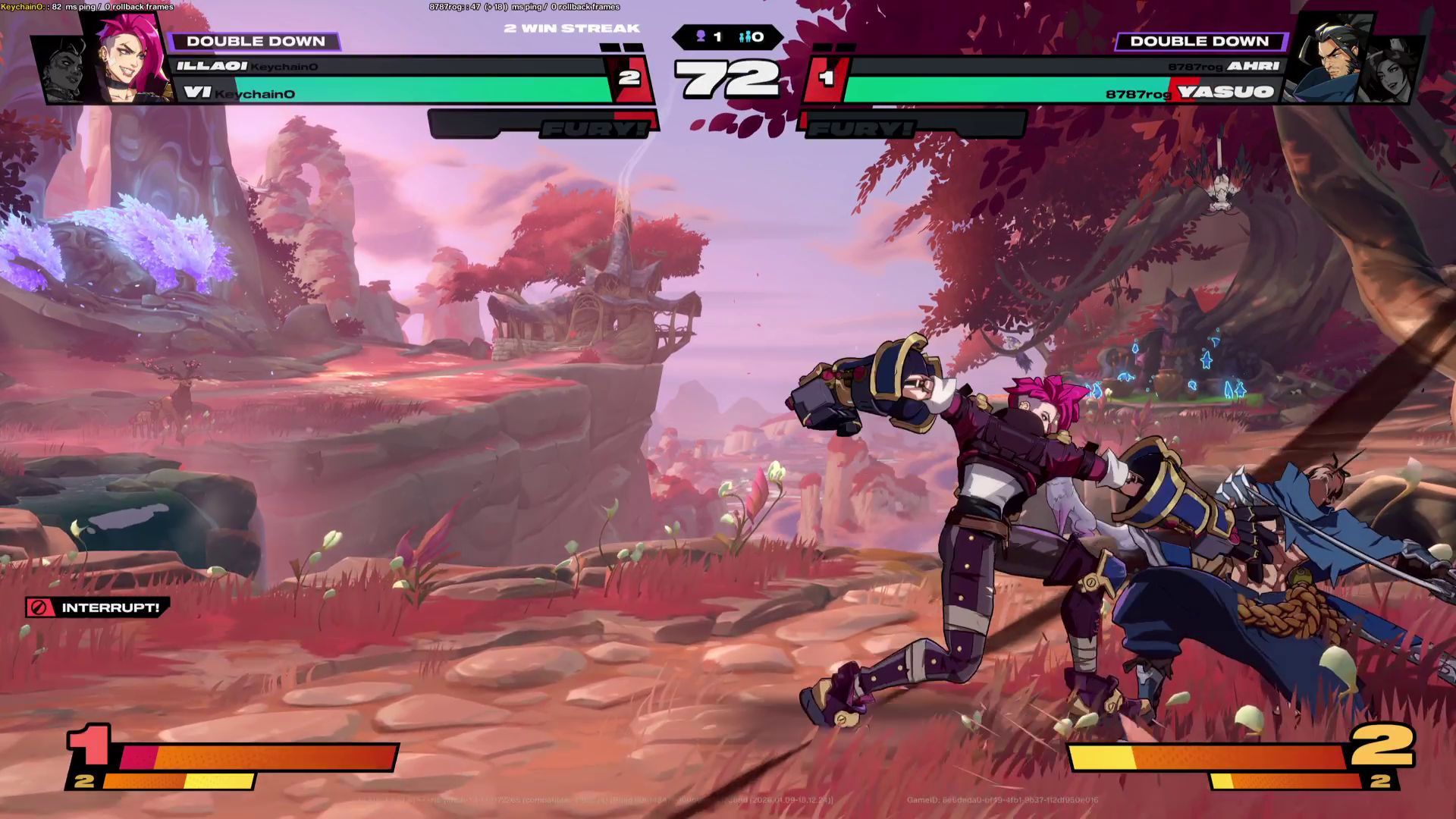
I mainly played Illaoi, a powerful character who uses tentacles to dominate the battlefield, and Vi, a fast and strong fighter who excels at close-range combat and countering aerial opponents. The game’s character roster covers a lot of familiar fighting game styles. I also noticed many players choosing Yasuo, a well-rounded character with a cool samurai look and surprisingly long-range attacks.
Like most modern fighting games, 2XKO focuses on online multiplayer, so its online performance is crucial. Thankfully, my experience has been excellent. There were a few minor issues right after launch, but overall, the multiplayer is fantastic. Lobbies are consistently full in both casual and ranked modes, and finding a match usually takes less than two minutes. The game uses rollback netcode, which keeps the gameplay smooth even with some lag. Once a fight starts, the interface stays out of the way, and rematching is fast and easy.
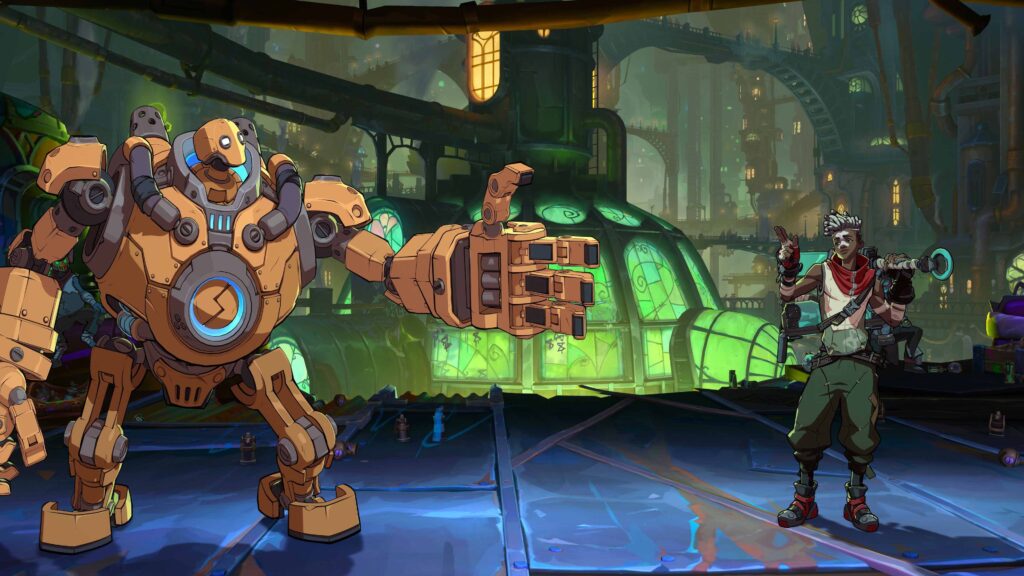
I ended up playing Illaoi, a powerful champion who uses tentacles to dominate fights and control the battlefield.
As a fighting game fan, I expect a good ranked mode, and this one delivers! It’s built on systems that work really well in other competitive games, which is great. You can’t jump straight in, though – you need to reach level 3 by playing some casual matches first. Once you do, you play five placement matches to get your initial rank, which is a nice way to figure out where you stand against other players.
Your performance will place you in one of 11 ranks, ranging from Aspirant (the lowest) to Challenger (for top players). You earn Ranking Points by winning Ranked matches, and you’ll move up a rank every 100 points. Climbing the ranks can take time, as each rank between Aspirant and Grandmaster (the second-highest) is divided into three smaller ranks. For example, you need 100 Ranking Points in Bronze III to reach Silver I. Losing matches will cause you to drop down in rank.
Players on PlayStation 5 and Xbox Series X/S can play together thanks to crossplay. However, PC players will only be matched with other PC players. If you play on both console and PC, you’ll be glad to know that 2XKO offers cross progression! This means your progress, including any unlocked items, will carry over between all platforms as long as you’ve connected your Riot Account.
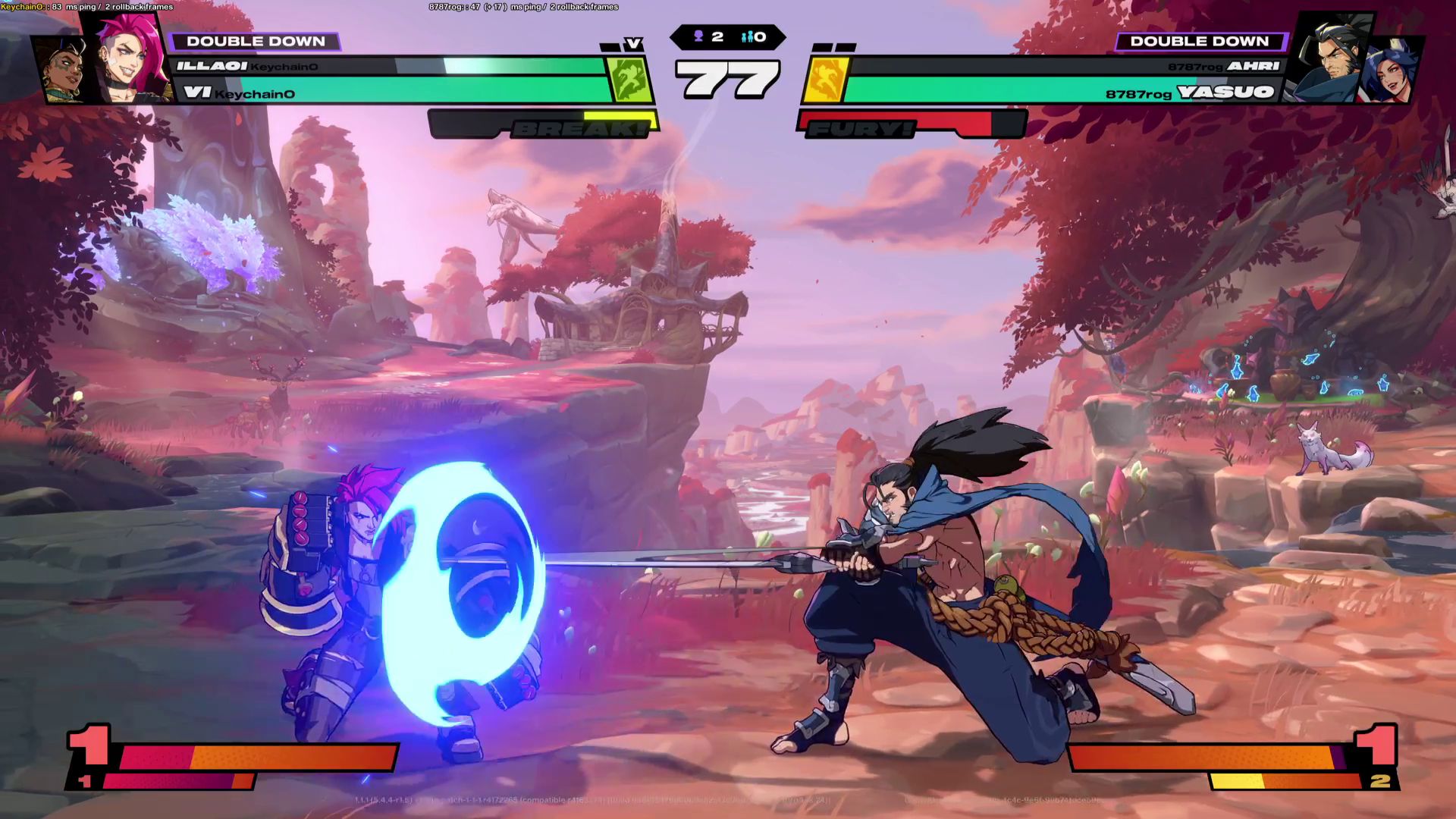
Ranked mode functions smoothly by utilizing successful features from other competitive multiplayer games.
If you don’t plan on playing with others, 2XKO doesn’t offer much gameplay. Beyond quick local matches against the computer or a friend, you’re mostly limited to tutorials and detailed character combo practice. There’s no arcade or story mode, so players hoping for a single-player experience will likely be disappointed.
Now let’s talk about how the game looks and feels. 2XKO really excels in this area. The striking color scheme, lively character designs, and fluid animations make every match feel like watching a professional animated series. Powerful hits are emphasized by satisfying sound effects, and clear character voices let you know when an opponent is about to assist or break free from your attacks.
The biggest problem with 2XKO is how it tries to make money. Like many free-to-play games, it offers things like character skins and lobby customizations for purchase. However, the game also starts with several characters unavailable. You can unlock them by playing and earning in-game rewards, or you can pay real money to unlock them immediately.
“The major downsides of 2XKO largely revolve around its monetisation tactics.”
Okay, so things get a little complicated in 2XKO with all the different currencies. There are three of them: KO Points, Champion Tokens, and Credits. You earn Credits just by playing, but there’s a cap – you can only get 12,000 total. If you want to spend actual money, you’ll be buying KO Points. With those, you can unlock characters, cool outfits, and even the premium Battle Pass. Then, both Credits and KO Points can be used to get Champion Tokens, which are basically what you need to unlock new Champions.
This game uses a similar way of making money as League of Legends. Although 2XKO is free to play, keeping its competitive scene healthy will rely on how often new characters are added, how much they cost, and whether players can earn enough in-game currency to stay competitive without spending real money. Currently, the game is fairly balanced, but allowing players to buy new characters could create balance issues if a particularly strong character is released.
2XKO is launching with a lot of promise. It’s surprisingly deep for experienced fighting game players, thanks to its unique Fuse system, even without complex button combinations. But it’s also very easy for newcomers to pick up, with helpful introductions to the game’s mechanics. Detailed tutorials cover everything you need to know, and a robust training mode even lets advanced players analyze frame data. Overall, it’s a fantastic fighting game, and being free-to-play makes it easy to recommend to anyone curious about the genre. To keep the game successful, Riot Games should focus on fair monetization for new characters and ensure they’re just as diverse and engaging as the starting lineup.
This game was reviewed on PS5.
Read More
- Pluribus Star Rhea Seehorn Weighs In On That First Kiss
- Kelly Osbourne Slams “Disgusting” Comments on Her Appearance
- Looks Like SEGA Is Reheating PS5, PS4 Fan Favourite Sonic Frontiers in Definitive Edition
- Arknights: Endfield – Everything You Need to Know Before You Jump In
- ’90s Cartoon Reboot & TMNT Connection!
- ‘Marty Supreme’ Ending, Explained
- Goat 2 Release Date Estimate, News & Updates
- Gold Rate Forecast
- Dune 3 Gets the Huge Update Fans Have Been Waiting For
- Hideo Kojima Says He Was Never Told About The Matrix Creators Wanting Him to Make a Game
2026-01-27 16:17