
Halloween II (1981) is a lot like Jaws 2 in the Halloween series. It doesn’t quite live up to the original film, but it was always going to be difficult to do so. When the first movie sets such a high standard, sequels simply aim to get as close as possible. Halloween II comes remarkably close, and it’s best viewed as the perfect partner to John Carpenter’s classic. While some fans might consider Halloween (2018) the most direct continuation of Carpenter’s story, I believe this sequel was the best approach, even if it didn’t receive the recognition it deserved – and still doesn’t, really.
And, if you look closely, Dana Carvey makes a very quick cameo appearance when Annie’s body is being taken away. While that’s more of an interesting tidbit than a major reason why Halloween II is a surprisingly good, lesser-known slasher film, it’s still fun to spot. Now, let’s discuss the real reasons why Halloween II is so great.
A Thorough Replication of Carpenter’s Style

A particularly effective element of Carpenter’s Halloween was Michael Myers’ habit of silently standing behind his victims while they went about their daily lives. This creates a feeling of vulnerability in the audience, making them feel as threatened as Myers’ targets. A prime example of this is when he watches Annie, as she accidentally spills hot popcorn butter on herself and gets changed. The film cleverly shows us the scene from his perspective, while simultaneously showing him lurking in the foreground.
Then there’s the famous scene with Laurie in class. She’s trying to focus, but Michael distracts her. He’s standing by the car he took, watching her from across the street. She glances down at her desk, then looks up again, and he’s still there. But when she looks up a final time, he’s disappeared.
Halloween II builds upon the ideas presented earlier rather than relying on the classroom scenario. That scenario wouldn’t be effective a second time because, by the time the sequel’s events unfold, Michael’s identity is well-known. The news of the killings has been widely reported on the radio, so anyone who sees him will recognize him.
The previous example still works effectively. And it’s a testament to Halloween II that it handles the “look, he’s hiding in the background” technique just as well. A prime instance of this occurs very early in the movie. Michael has escaped the police and continues to silently stalk the previously quiet neighborhood, eventually entering the home of the elderly Elrod couple. The news report about the night’s murder is playing on the TV, drawing Mrs. Elrod out of the kitchen. Then, as the kitchen lights come on, we see Michael standing there, at which point he grabs a knife. When Mrs. Elrod turns back to get the knife, she discovers only a small amount of blood, prompting a natural scream.
This scene is effective for a number of reasons. Firstly, it’s deeply captivating to watch Michael cautiously move around that night, going from house to house as the residents discover the nearby murders. Additionally, the fact that Michael stands in a brightly lit kitchen is significant. It literally shines a light on his apparent indifference to being caught. This is partly because he’s confident he could overpower anyone who confronts him, but it also suggests that Michael is essentially empty. He is fixated on a single, decidedly inhuman purpose.
Beyond Michael’s effective background technique – which skillfully builds suspense – it’s also important to note that Halloween II benefited from considerable creative input from John Carpenter himself. While Rick Rosenthal directed the film (he later directed the lowest point in the series, Halloween: Resurrection), Carpenter again partnered with his frequent collaborator Debra Hill to co-write the screenplay.
Carpenter presented a pleasantly revised version of his initial music, now performed on a synthesizer organ instead of a piano, as it was in his 1978 film. This time, he created the theme with Alan Howarth, his collaborator on that year’s Escape from New York. They would go on to work together on six additional projects.
While Carpenter was key to making Halloween a classic, he wasn’t the sole reason for its success. Dean Cundey was the ideal cinematographer, creating the film’s memorable, atmospheric, and autumnal look. Interestingly, Dean Cundey also served as the cinematographer for Halloween II.
Cundey’s work really stands out in one specific scene. Similar to the original Halloween, there’s a chilling shot of Michael’s face appearing from the darkness as he’s shown standing right behind a character. In the first film, it happened behind Laurie, immediately after she found her friends had been killed. In Halloween II, he appears behind Nurse Marshall right after she discovers Dr. Mixter with a needle in his eye. Does the effect still shock you the second time around? Not as much, but it’s still a good and memorable moment.
A Pair of Overarching Narrative Choices That Really Work
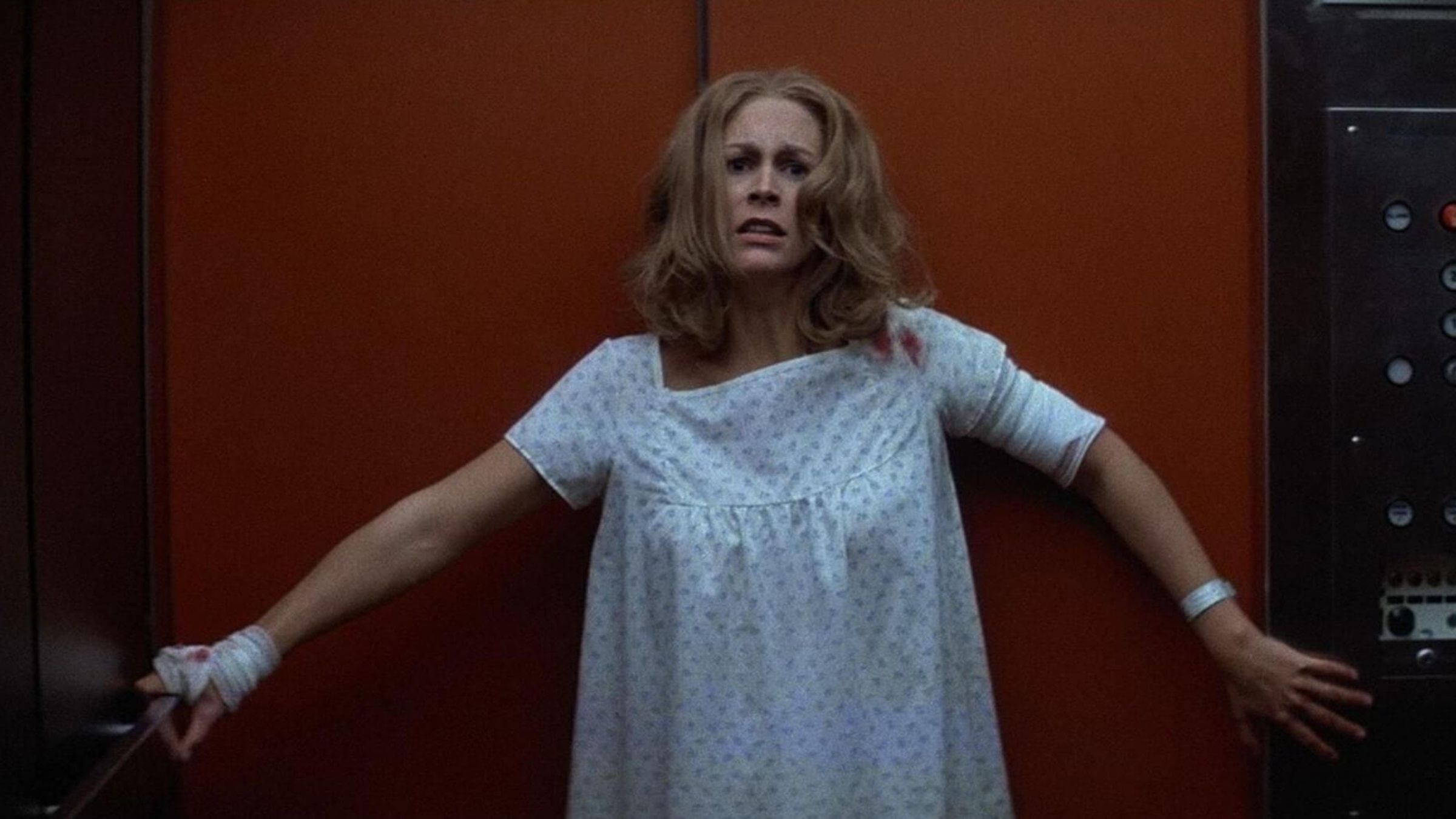
As a big Halloween fan, I often hear people say that the reveal of Laurie being Michael’s sister was a low point for the series’ backstory – and that’s why David Gordon Green decided to ignore it in his 2018 film. I don’t really dislike it, and it’s definitely a memorable twist, but honestly, I think it was completely unnecessary.
In the 1978 film, Michael first spots Laurie as she walks toward the Myers house, which her father intends to sell. He sees her through the screen door, and that brief glimpse is all it takes for him to choose her as his victim after being released from the hospital. There’s a uniquely disturbing quality to this random, ‘wrong place, wrong time’ selection of a target, and it’s a key element of what makes the original movie so impactful.
What I think most of us can agree on when it comes to Halloween II is the impact of a couple of its big story decisions. Sure, the twist that Laurie is Michael’s sister is famous, but also pretty divisive. But the idea of Michael stalking Laurie through a hospital? That’s just legendary. It’s so well-known, actually, that the upcoming 2025 film The Strangers – Chapter 2 is completely borrowing the concept!
The other option, which we’ve already talked about, is Halloween II continuing directly from the story of Halloween. The first movie ends with Dr. Loomis realizing Michael survived being shot six times and simply walked away. Halloween II picks up right there, and that’s the main reason why it’s the best choice to watch immediately after Carpenter’s original, rather than Halloween (2018).
Kills Variety and an Actually Effective Jump Scare
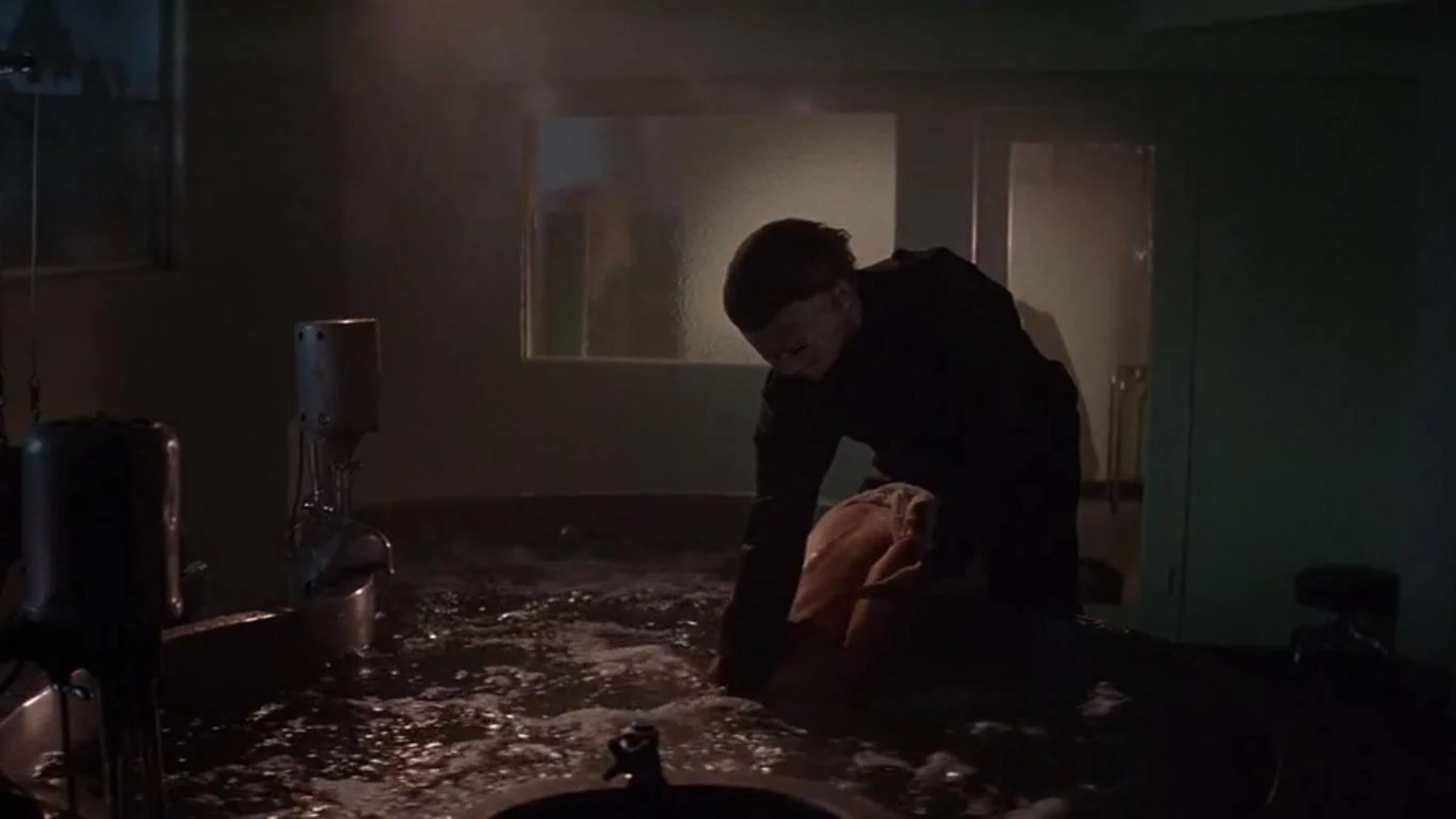
When Halloween II was released in 1981, a lot of critics – including Roger Ebert – who had praised Carpenter’s original film, thought Rosenthal’s sequel quickly turned the Halloween series into just another slasher franchise focused on kills, much like Friday the 13th. However, similar to how opinions shifted regarding Sean S. Cunningham’s original Friday the 13th, many reviewers now agree that Halloween II is actually above average for a slasher film. The key to this is that it really focuses on building suspense, and it does so effectively.
However, they weren’t completely off base. Halloween II actually features twice the number of deaths as Halloween. But, to be fair, you’d expect that from a horror movie sequel. And to Halloween II’s benefit, the ways people die are a bit more varied. The first film only showed a stabbing, a stabbing that happened off-screen, a very difficult-to-see throat slashing, another stabbing, and a strangulation.
Here, we see some elements from the original movie, as well as some new, shocking scenes – including a death by hot tub, the previously mentioned injury to the eye, a needle inserted into the temple followed by air injected into the skull, and a poorly performed blood draw. Nearly all of these moments are distinct and effectively utilize the hospital environment.
Before we get to the hospital scenes, there’s one moment worth mentioning. Generally, jump scares are considered a lazy trick in horror movies. However, two of them consistently startle me. The first is the long hallway sequence in The Exorcist III. The second is the scene in Halloween II where Michael enters Alice Martin’s house and jumps out from behind her couch. The timing is so precise, combined with a sudden, loud musical cue, that it’s difficult not to flinch, even knowing it’s going to happen.
Returns From Film One

Following Halloween, Jamie Lee Curtis appeared in several other horror movies. While none achieved the same level of success as Carpenter’s original, they all performed reasonably well. This period, between the first and second Michael Myers films, included The Fog, the often-overlooked Prom Night, Terror Train, and the suspenseful Roadgames. Halloween II marked the end of her initial string of horror roles, except for a brief voice appearance in Halloween III: Season of the Witch, which I don’t consider a full role. Her next significant film after Halloween II was Trading Places.
I was really excited to see Curtis back, but it was just as fantastic to have Donald Pleasence return. Though, honestly, his repeated line, “This is not a man we’re dealing with!” was starting to feel a little predictable. And then there’s Charles Cyphers, who has some really powerful moments early on, especially when we find out his daughter, Annie, was one of the victims – a truly heartbreaking reveal. It really hit me hard, and added so much weight to the story. It’s a classic for a reason!
The mask also reappeared, just like in the first movie. It’s a bit faded because Debra Hill stored it in less-than-perfect conditions, but it’s definitely the original. This really makes Halloween II feel like a direct continuation of the first film. Compare that to the silly masks in Halloween 4: The Return of Michael Myers or Halloween 5: The Revenge of Michael Myers – they’re so different that those sequels don’t feel as strongly connected to the 1978 movie (although Return is still a lot of fun).
Ending on a Memorable High Note
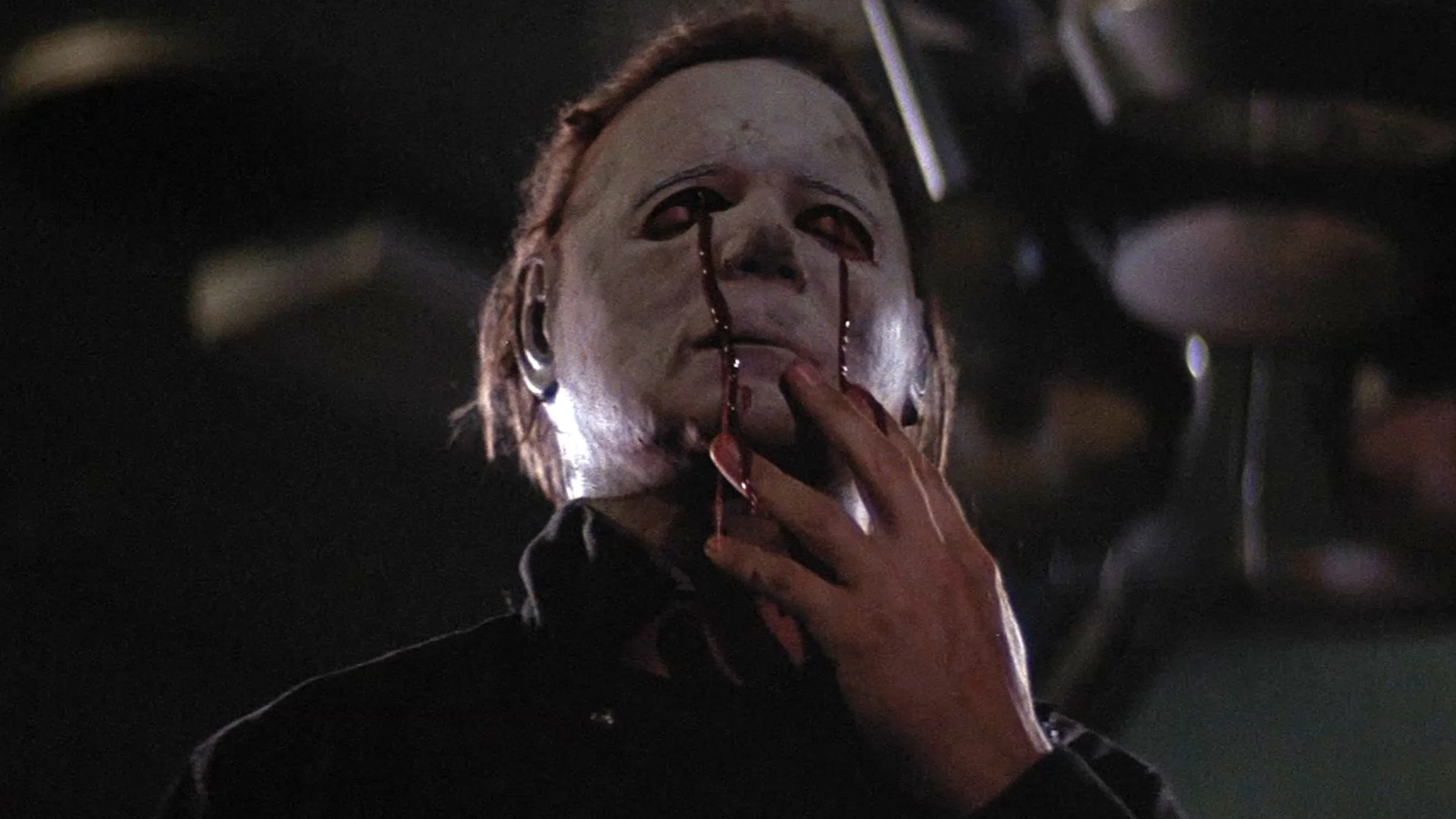
Halloween II’s ending is memorable for a couple of key reasons. First, there’s the event itself. Second, the use of The Chordettes’ song “Mr. Sandman” is significant; much like Carpenter’s music, it’s become strongly associated with this Halloween franchise. The song’s gentle, dreamlike quality works beautifully with the image of an ambulance traveling through a foggy parking lot. It’s a truly perfect combination.
Regarding how things unfolded, this was intended to be the definitive end for both Michael and Dr. Loomis, and it’s hard to imagine a more fitting conclusion. Laurie shooting Michael in the eyes gives her a sense of control she hadn’t previously had (largely due to the heavy medication she was on), Michael’s subsequent, blind attacks with a scalpel create powerful imagery and build suspense, Dr. Loomis’s decision to sacrifice himself to defeat Michael provides a satisfying resolution to his story, and the image of Michael walking down the hallway engulfed in flames before collapsing is simply striking. While some of the Michael Myers films that followed Rosenthal’s 1981 film have been quite good or even excellent, this truly felt like the way to permanently conclude Halloween.
https://comicbook.com/movies/news/3d-horror-movies-ranked-jaws-3d-friday-the-13th-part-3/embed/#
Read More
- Why is Tech Jacket gender-swapped in Invincible season 4 and who voices her?
- Welcome to Demon School! Iruma-kun season 4 release schedule: When are new episodes on Crunchyroll?
- Sydney Sweeney’s The Housemaid 2 Sets Streaming Release Date
- Highly Anticipated Strategy RPG Finally Sets Release Date (And It’s Soon)
- The Super Mario Galaxy Movie: 50 Easter Eggs, References & Major Cameos Explained
- Dune 3 Gets the Huge Update Fans Have Been Waiting For
- TV legend Carol Kirkwood reveals the reasons why she decided to retire after 28 years with BBC
- Who Wants to Be a Millionaire? confirms contestant wins full £1 million prize pot on Jeremy Clarkson quiz
- How Blake Lively & Ryan Reynolds’ Kids Pranked Her on April Fool’s Day
- Sesame Street Slams “Disgusting” Posts on Elmo’s Account After Hack
2025-10-04 19:24