
Not every fantastic manga series gets an anime adaptation. Some stories are just too complicated, strange, or detailed to be brought to life through animation. These manga truly excel as comics, offering unique stories and artwork that fully engage the reader’s imagination. While we might wish to see them animated, sometimes a story’s special qualities are best experienced in its original form, on the printed page.
Even the most successful anime relies on a shared, repeating pattern. Truly great anime pushes boundaries, avoiding what’s easy or mainstream. These stories were specifically created for this visual medium, and that unique quality is likely what makes them so exceptional.
7. Berserk
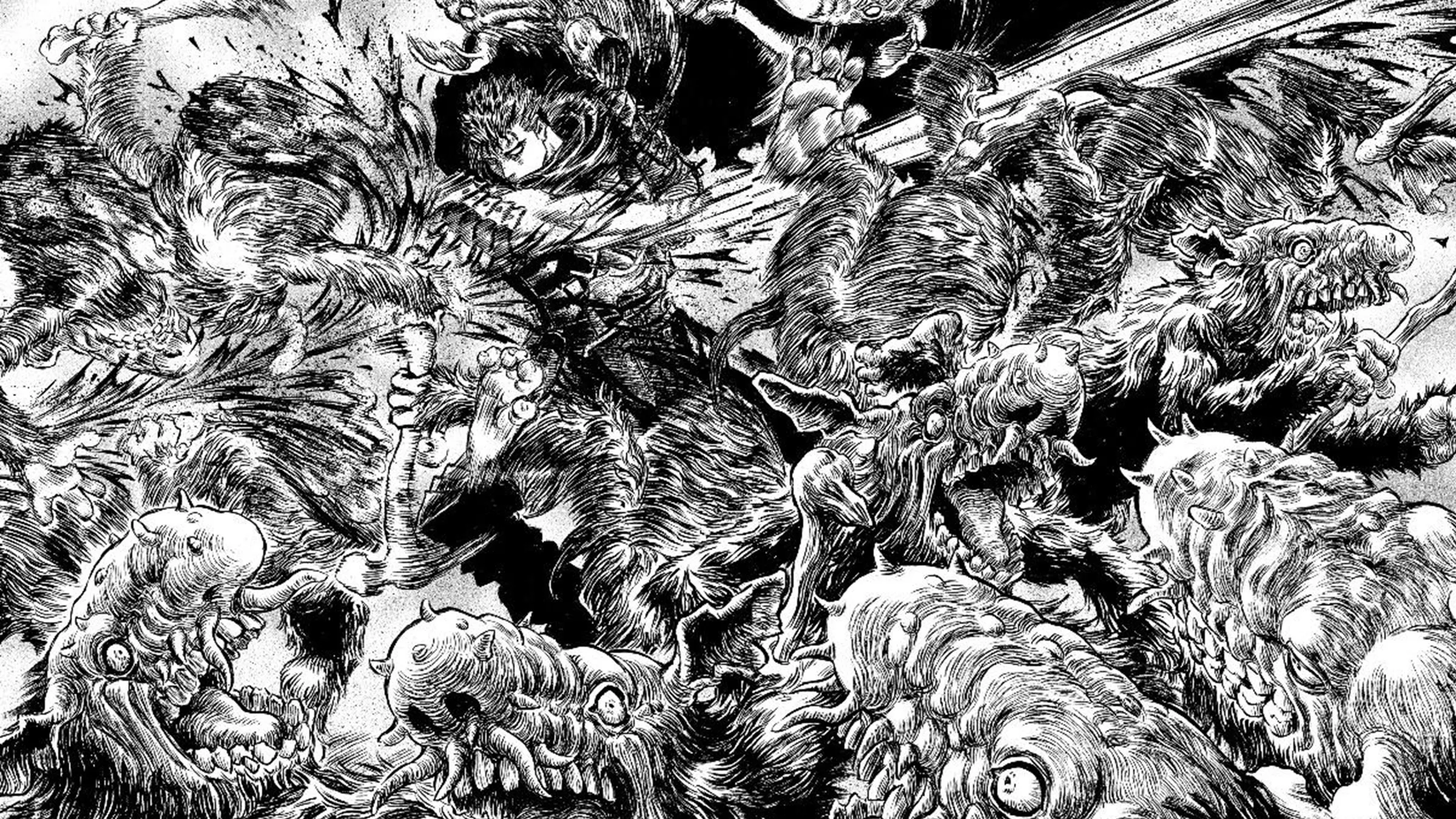
Berserk tells the story of Guts, a solitary mercenary haunted by a difficult past, as he fights to survive in a dark and brutal medieval world. After being betrayed by his best friend, Griffith – a moment well-known among manga fans – Guts dedicates himself to revenge while trying to safeguard the people he cares about. The story delves into challenging topics like trauma, vengeance, what’s right and wrong, and the incredible strength of the human spirit when facing overwhelming adversity.
Berserk is widely considered a dark fantasy masterpiece thanks to its beautiful artwork and powerful story. However, translating it into a successful anime has proven impossible. While the 1997 series is a fan favorite, it only covers a small portion of the overall story. The more recent 2016-2017 adaptation suffered from poor CGI animation and was criticized for its visuals. Berserk’s intricate art style, intense violence, and complex characters are incredibly challenging for any animation studio to bring to life. A truly faithful adaptation would require a massive budget and a willingness to take creative risks—something rarely seen in anime productions of this scope.
6. Homunculus

Homunculus is a disturbing psychological horror film that explores the hidden depths of the human mind. It follows Susumu Nakoshi, a man without a home, who agrees to have a hole drilled in his skull as part of an experimental procedure for money. After the surgery, Nakoshi starts seeing strange, nightmarish visions – twisted representations of other people’s hidden traumas and secret desires, which he calls ‘homunculi.’ As he experiences more of these visions, it becomes increasingly difficult to tell what’s real and what isn’t, and Nakoshi’s own mental state begins to deteriorate.
The show’s powerful and disturbing visuals are essential to the story, but they’d be hard to bring to life in animation without making them less intense. Much of Homunculus unfolds within a character’s mental breakdown, blending hallucinations and reality through surreal and unsettling images. Beyond the visuals, the story is slow-paced and deeply focused on psychological themes, requiring viewers to be patient and emotionally invested. Its ambiguous nature and lack of easy answers might not appeal to audiences who prefer more straightforward stories.
5. The Voynich Hotel
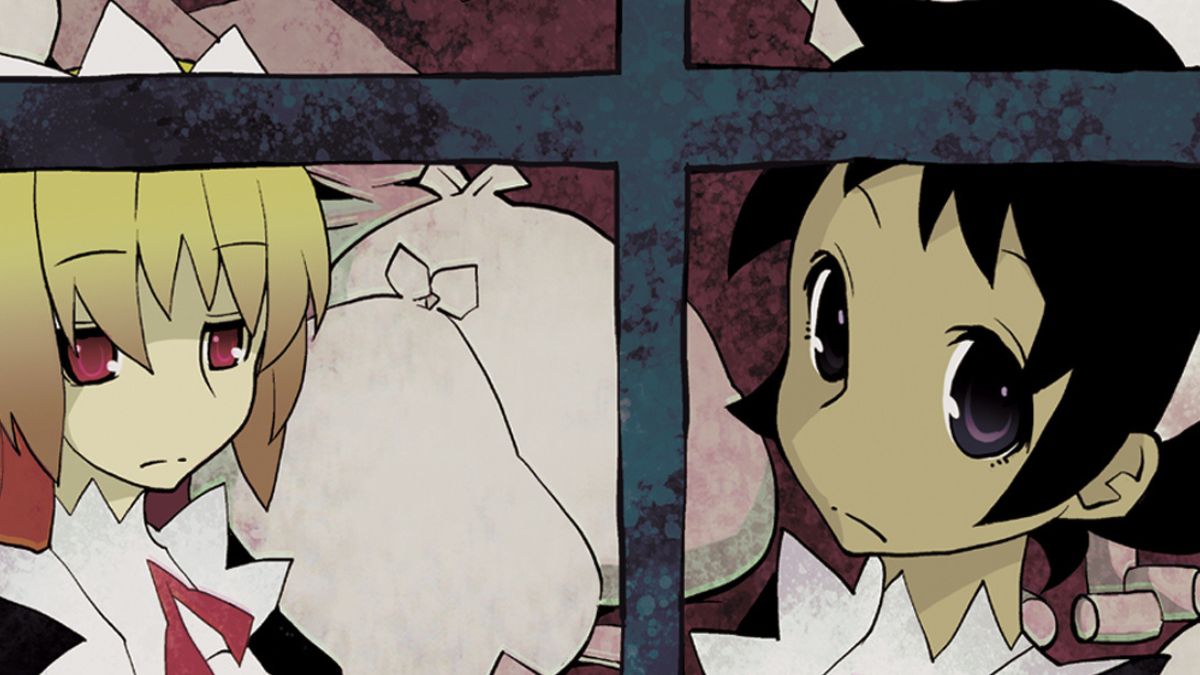
The Voynich Hotel is a strange and darkly funny manga set in a bizarre island hotel where unsettling things happen. It follows Taizou, a man trying to outrun his problems, and his encounters with a cast of unusual characters – from cruel maids and yakuza assassins to a mysterious ghost. The story’s appeal comes from its quirky humor and how it effortlessly mixes the ridiculous with the disturbing.
The manga’s humor and unsettling mood rely heavily on its simple, distinctive art style. Adapting it into anime could easily diminish its strange and captivating quality, resulting in a less impactful and original work.
4. Blame!
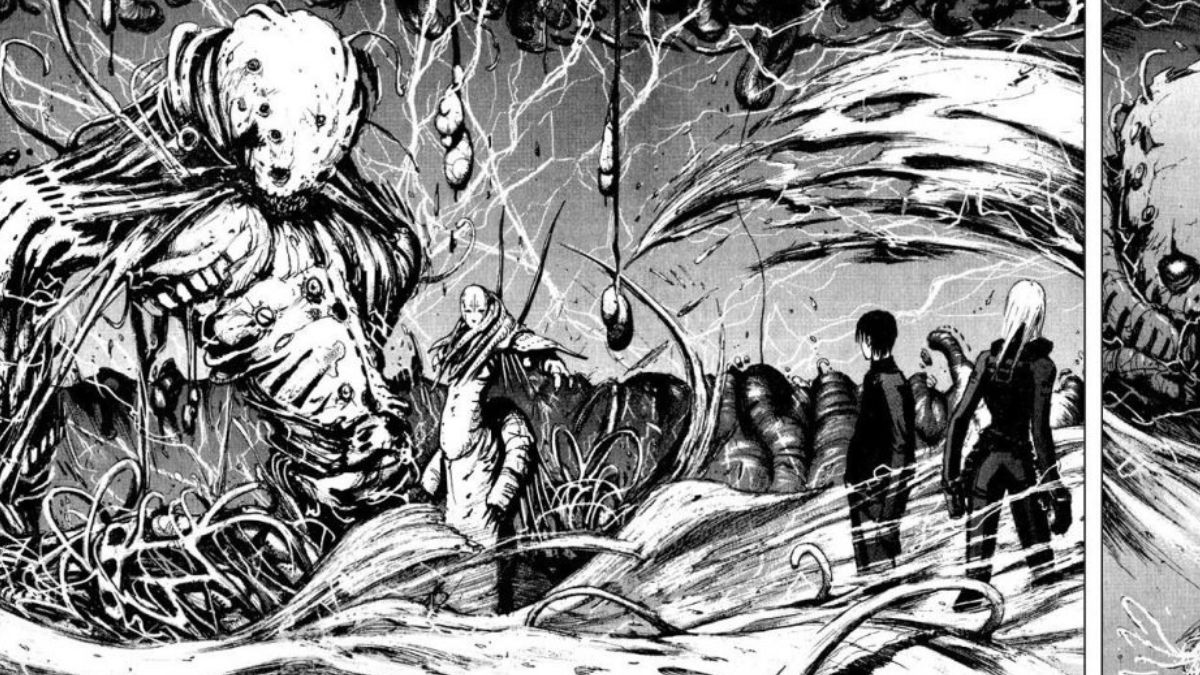
Blame! is a stunning cyberpunk story set in a huge, bleak, futuristic city. It centers around Killy, a quiet traveler, and his quest to find a unique genetic code that might save humankind. The comic is famous for its lack of dialogue, incredibly detailed cityscapes, and a deeply unsettling mood that evokes feelings of loneliness and hopelessness.
The recent Netflix animated film based on Blame! didn’t fully capture the depth of the original manga’s story and intricate world. Because the manga uses very little dialogue and focuses on visuals, it wasn’t well-suited for an anime adaptation, which typically relies on conversations and detailed explanations to develop characters and plot.
3. Dorohedoro
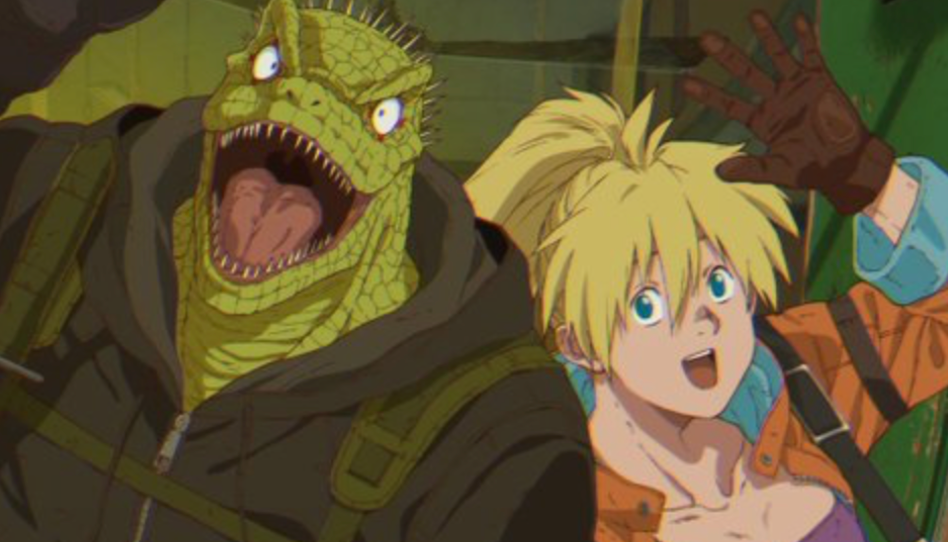
Dorohedoro is set in a rundown, magical district called “The Hole,” where humans and sorcerers are constantly fighting in strange and often comical battles. The story centers on Caiman, a man with a lizard’s head who doesn’t remember his life before the transformation, and his quest to find the sorcerer who did it. He meets a lot of unusual people along the way – everything from quirky assassins to gyoza-making chefs. While the 2020 anime adaptation showed some of the series’ wild energy, it only covered a small part of the manga’s complex story and dark, funny moments.
2. I Am a Hero

I Am a Hero offers a fresh take on the zombie apocalypse genre. The main character, Hideo Suzuki, is a manga artist battling mental health challenges like delusions and paranoia. As a zombie outbreak throws the world into chaos, Hideo must overcome his personal struggles while fighting for survival.
I’m completely captivated by ‘I Am a Hero’ – it’s not just another zombie story! What really sets it apart is how beautifully drawn it is, and the way the story unfolds so gradually, really digging into what surviving does to a person, not just the action itself. Honestly, the level of detail in the zombies and the ruined cities is incredible – it would take a huge animation budget to do it justice on screen!
1. Oyasumi Punpun

Inio Asano’s Oyasumi Punpun is a deeply emotional story about a boy growing up and facing hardship, loss, and a loss of faith. The main character, Punpun, is uniquely depicted as a simple bird-like drawing, set against very detailed and realistic backgrounds. This artistic choice is central to the story’s meaning. Punpun’s simplistic design allows the story to portray extremely difficult events without becoming overly dramatic. Turning this into an anime presents a challenge, as it could make the story’s internal, emotional focus feel too literal. Asano skillfully contrasts realistic visuals with distorted feelings, and that impact might be lost in animation. Essentially, Punpun exists in the space between images, rather than as a series of moving pictures.
What do you think? Leave a comment below and join the conversation now in the ComicBook Forum!
https://comicbook.com/anime/list/7-hidden-anime-gems-nobody-talks-about/embed/#
Read More
- What Song Is In The New Supergirl Trailer (& What It Means For The DC Movie)
- Why is Tech Jacket gender-swapped in Invincible season 4 and who voices her?
- Highly Anticipated Strategy RPG Finally Sets Release Date (And It’s Soon)
- Dune 3 Gets the Huge Update Fans Have Been Waiting For
- TV legend Carol Kirkwood reveals the reasons why she decided to retire after 28 years with BBC
- Game of the Month: Crimson Desert (March 2026)
- Sydney Sweeney’s The Housemaid 2 Sets Streaming Release Date
- Crimson Desert is a “Cynical Amalgamation of Borrowed Mechanics,” Says Larian’s Publishing Director
- The Most Surreal Moments From the O.J. Simpson Murder Trial
- Robert Pattinson’s The Batman 2 Suit ‘Evolution’ Gets an Answer From Designers
2025-12-01 20:21