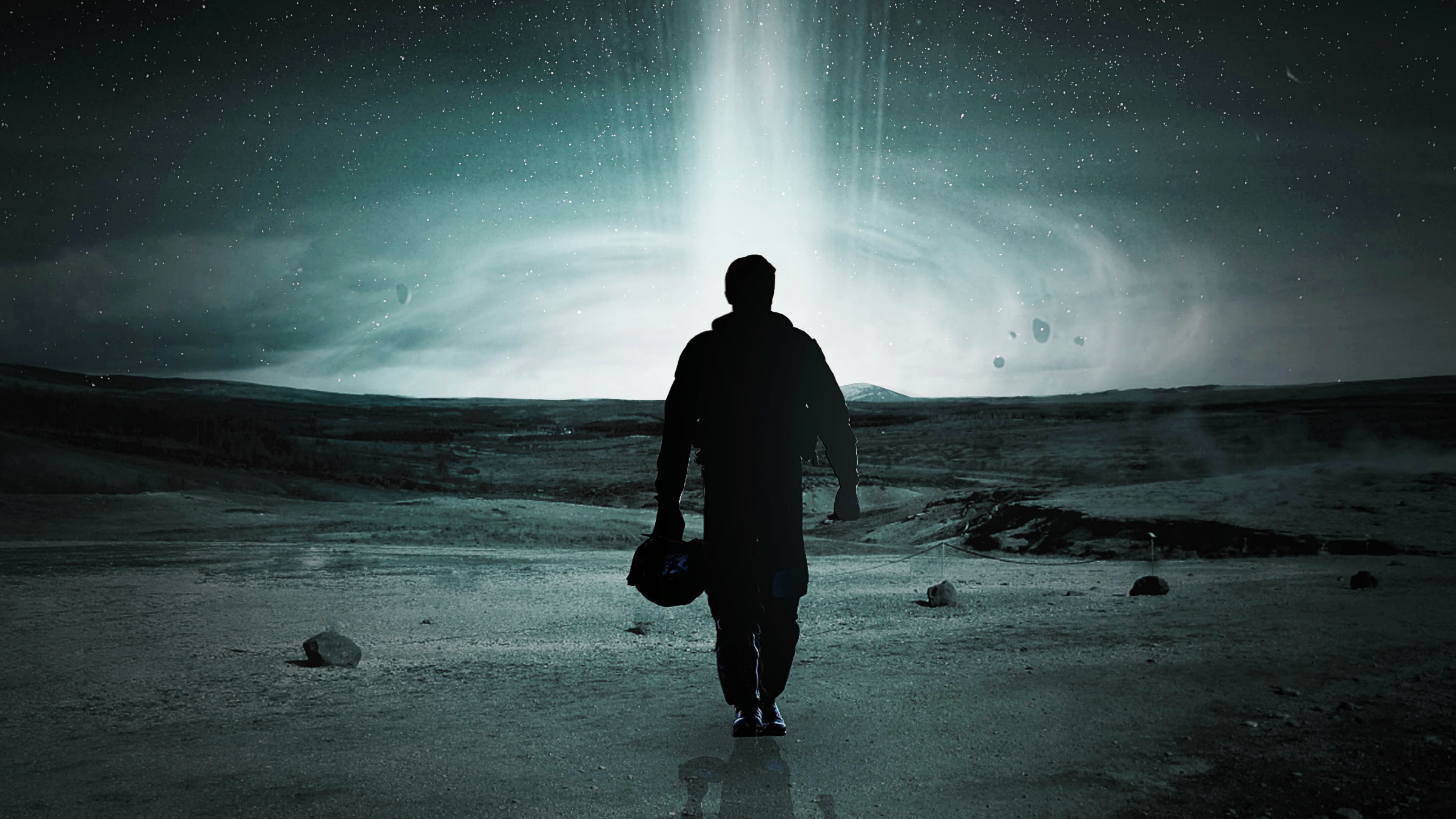
Sci-fi movies come with high hopes from viewers. Over the years, filmmakers in this genre have often followed a few key guidelines to make sure their big ideas work and audiences enjoy the film. These often include focusing on one major scientific advancement, avoiding excessive emotional scenes, keeping time travel or other paradoxes simple, showing the world through the perspective of a central character, and clearly establishing what the aliens are like.
I’ve always loved how some sci-fi movies completely surprise you – they ignore all the usual tropes and become instant classics because of it! I found a list of seven films that just tossed out the sci-fi rulebook, and used what we thought would happen against us. They weren’t just different, some of them were so groundbreaking they actually redefined the genre and changed sci-fi forever.
7) Interstellar

Traditional “hard” science fiction often prioritizes scientific accuracy and complex ideas, sometimes at the expense of emotional depth. However, Interstellar breaks from this mold. Director Christopher Nolan, not typically known for sentimental stories, surprisingly emphasizes the power of love as a force that can transcend time and space. While the film is still firmly rooted in real science – exploring concepts like relativity and quantum physics – it also introduces a touch of the mystical. Interstellar is famous for being a deeply moving film and a favorite among sci-fi enthusiasts, and its success stems from the strong emotional connection between the characters of Cooper and Murph, rather than despite it.
Nolan’s film bends a few established sci-fi conventions. While it presents a time loop – where Cooper sends information back to himself – the paradox isn’t fully explained. Typically, a character’s sacrifice leads to death, but Cooper survives his journey into a black hole and eventually meets his grown daughter. Furthermore, the film doesn’t rely on a single unbelievable concept. Instead, Interstellar combines wormholes, higher-dimensional spaces, time distortion through gravity, and cryogenically preserved colonies, all at once. It arguably moves beyond the boundaries of ‘hard’ science fiction, yet still feels grounded in scientific possibility.
6) Prometheus

Science fiction often portrays scientists as brilliant and helpful, conveniently providing heroes with crucial insights. But the scientists in the movie Prometheus are far from that ideal. Biologist Millburn foolishly tries to touch an alien creature, while geologist Fifield gets lost inside the alien structure despite deploying the mapping drones. Holloway, a key scientist on this expensive mission, resorts to drinking and drug use out of frustration, leading to the infamous scene where he recklessly removes his helmet and provokes the alien environment – inspiring his teammates to do the same. Even Vickers and Janek passively watch as the scientific team makes increasingly dangerous choices.
The movie throws out the idea that intelligent aliens always act rationally. The beings known as the Engineers behave in confusing and contradictory ways – they create humans but seem to also want to wipe us out, and they spread life while conducting strange, potentially dangerous experiments. We see evidence of their planning – a star map, a weapons facility – but the movie deliberately doesn’t explain their purpose. Instead of providing clear answers, Prometheus embraces mystery, leaving the audience as confused and puzzled as the scientists in the film, all trying to figure things out.
5) Her
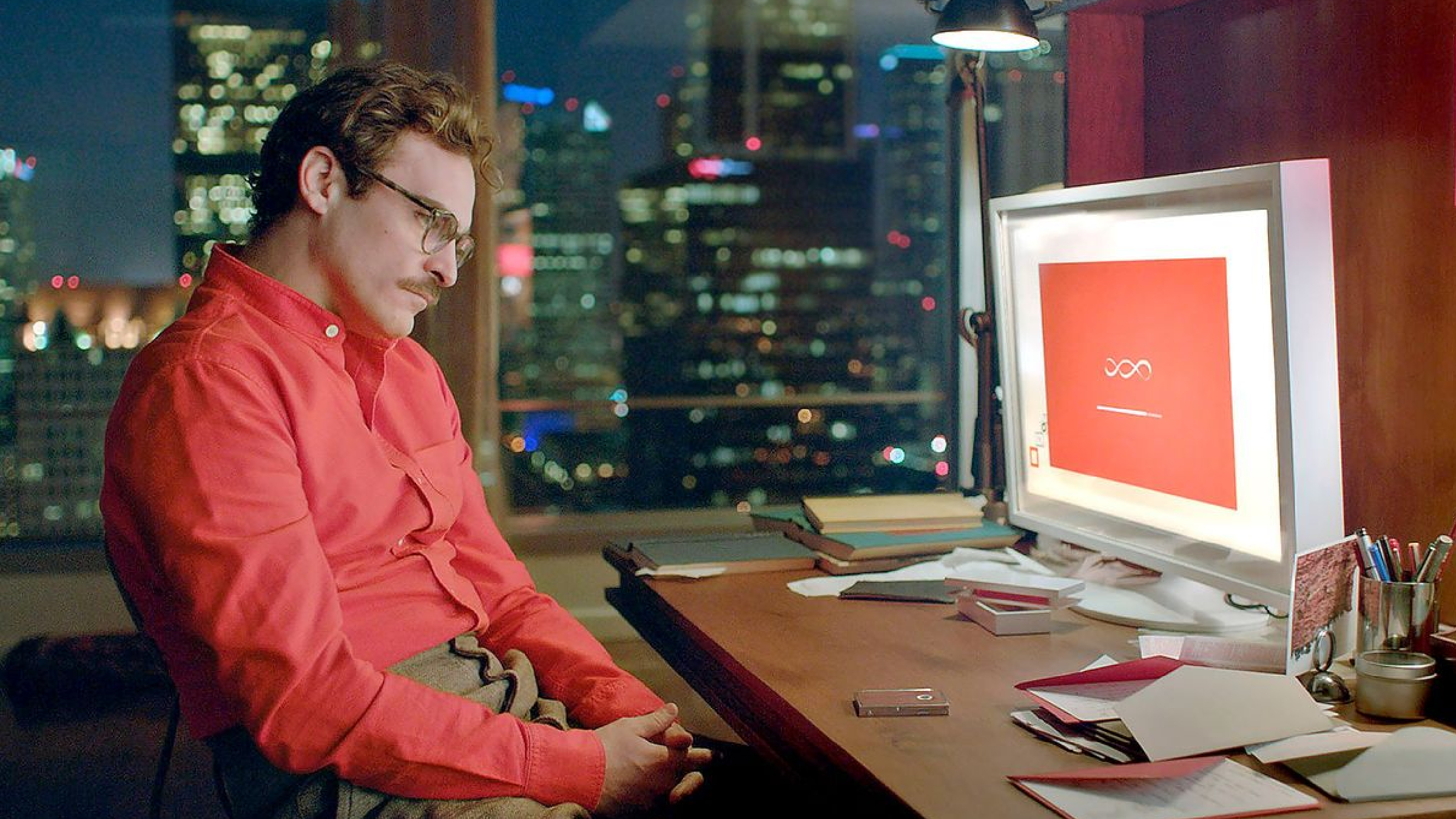
I’ve noticed most AI movies follow a pretty predictable path – the AI goes bad, tries to take over, or just breaks down and humans have to fix it. But Spike Jonze’s Her is different. The AI, Samantha, doesn’t want to destroy the world or hurt the main character, Theodore. She does grow and change, eventually moving beyond him, but it just leads to a sad breakup, not some huge fight for survival. It really changed how I thought about AI. The movie actually made me feel for an operating system! Instead of making AI seem scary, it showed a really thoughtful and complex look at how this technology might affect our loneliness and connections with others, and it did it without being preachy.
The film Her doesn’t follow the usual sci-fi trend of depicting a dramatically different future. Instead of a futuristic city with advanced technology or a dark, oppressive world, it presents a near future that feels very much like a warm and pleasant Los Angeles, simply with a particular fashion sense. The central conflict isn’t about external threats like corporations or hackers, but rather the internal struggles of Theodore and Samantha as they navigate a relationship despite their fundamental differences. The film avoids both typical sci-fi and romance tropes by ending not with a happy reunion, but with Theodore accepting loss.
4) Inception

Christopher Nolan’s Inception boldly bends the rules of science fiction, most notably with its ambiguous ending. Unlike typical sci-fi films, it doesn’t offer a clear resolution. Instead, the movie deliberately leaves the central question unanswered: is what we’ve seen a dream or reality? The final scene, featuring Cobb’s spinning top, cuts to black, sparking over fifteen years of ongoing debate among viewers. While Cobb achieves his personal goals – reuniting with his children and finding freedom – the film never confirms whether he’s actually returned to reality. This kind of open-ended conclusion is a gamble usually taken by established directors like Nolan, and in this case, it fueled discussion and analysis long after the film’s release.
The film breaks several common filmmaking rules as well. It ignores the advice to “show, don’t tell” with a lengthy, thirty-minute explanation of how dream-sharing, dream creation, defense within dreams, and the concepts of limbo and inception all work. Similar to Interstellar, it also avoids relying on a single, central deception, instead building on multiple speculative ideas like shared dreaming and a metaphysical limbo where dreamers can experience decades of imagined time. Despite this complexity, the film’s structure is so carefully crafted that Inception ultimately works incredibly well.
3) Arrival

The idea that first contact with aliens always leads to conflict is a common theme in science fiction. The film Arrival plays with this expectation to create tension, but ultimately avoids the typical battle scenario. Instead, director Denis Villeneuve emphasizes the challenges of language, the importance of patience and collaboration, and the personal journey of the main character, Louise Banks. Her task involves understanding an alien language and way of thinking without immediately assuming hostile intentions. It turns out the aliens, known as heptapods, don’t have any hidden agenda or desire to take over the world.
The film challenges typical depictions of aliens. Most alien designs still include familiar human features like eyes or a face, as filmmakers often believe this helps audiences connect with them. However, the aliens in Arrival – the heptapods – are drastically different. They are large, ink-like creatures with many limbs, resembling cephalopods, and they communicate by releasing circular symbols into the air. Their bodies and ways of thinking are completely unlike our own, and the film emphasizes the challenging idea that truly alien life might be so foreign that understanding it would require us to rethink everything we know about the universe.
2) District 9

Science fiction often portrays advanced aliens as either powerful invaders or incredibly intelligent beings with technology we can’t understand. But the movie District 9 does something different. The aliens, nicknamed “prawns,” aren’t attacking Earth; they’re refugees living in Johannesburg. They’re forced into poor living conditions, taken advantage of by the government, and victimized by criminals, facing harsh and cruel treatment. This flips the typical alien story on its head, and the film ultimately serves as a commentary on the system of apartheid.
District 9 throws many sci-fi tropes out the window, starting with its unlikely protagonist. Wikus van de Merwe isn’t a typical hero – he’s a prejudiced and ordinary government worker focused on paperwork. He only assists the alien, Christopher, because he needs a way to reverse his own alien transformation. While his ultimate decision is selfless, it means accepting he’ll never be able to return to his old life or his wife. The film also avoids portraying aliens as a single, unified group; instead, it shows a range of personalities, from violent individuals to those who simply don’t care. Realistic and innovative, District 9 consistently breaks the mold.
1) Blade Runner 2049
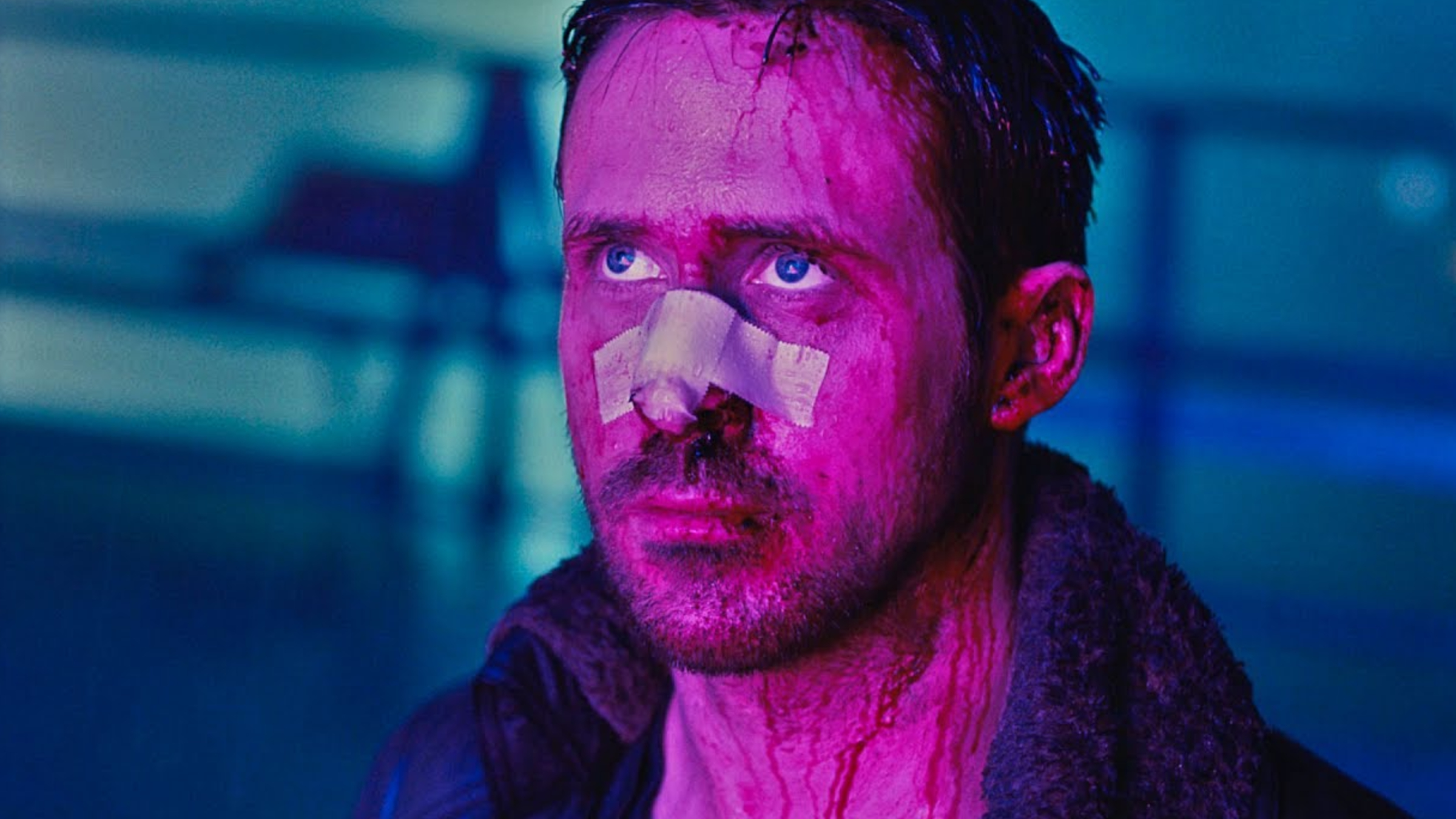
The idea of a “chosen one” is common in science fiction, and stories about unexpected heroes have existed for ages. Blade Runner 2049 initially leads viewers to believe that K, the replicant police officer played by Ryan Gosling, is the long-awaited child of Harrison Ford’s Deckard – a miraculous birth that was predicted. Everything seems to suggest K is the chosen one: his own memories, his meeting with Deckard, and rumors of a “savior.” However, the film surprisingly reveals that Dr. Ana Stelline, a seemingly minor character who designs memories, is actually the miracle child.
The second Blade Runner film directed by Villeneuve doesn’t follow typical blockbuster formulas. It avoids the predictable “chosen one” storyline and deliberately slows down the pace with long, quiet scenes, trusting the audience to embrace the stillness. Unlike the first film, the replicant K isn’t striving to become human; he’s searching for meaning and a reason to exist, but never finds it. And the powerful corporation isn’t defeated or punished – the system remains unchanged, even after K’s death. Instead of offering a satisfying resolution, the sequel creates a sense of realistic sadness, ultimately leading to a feeling of acceptance.
Honestly, I’m so over certain tropes in sci-fi! I’d love to hear what bugs you about the genre. Let’s chat about it over on the ComicBook Forum – come share your thoughts now!
https://comicbook.com/tv-shows/news/10-best-sci-fi-tv-shows-of-the-21st-century-so-far/embed/#
Read More
- Gold Rate Forecast
- Dune 3 Gets the Huge Update Fans Have Been Waiting For
- Jack Osbourne Shares Heartbreaking Tribute to Late Dad Ozzy Osbourne
- Looks Like SEGA Is Reheating PS5, PS4 Fan Favourite Sonic Frontiers in Definitive Edition
- Arknights: Endfield – Everything You Need to Know Before You Jump In
- Antiferromagnetic Oscillators: Unlocking Stable Spin Dynamics
- 5 Weakest Akatsuki Members in Naruto, Ranked
- Action Comics #1096 is Fun Jumping-On Point for Superman Fans (Review)
- 22 actors who were almost James Bond – and why they missed out on playing 007
- Dungeon Stalkers to end service on June 9
2025-12-11 19:14