The world of Yu-Gi-Oh! often prioritizes exciting moments over consistent rules, meaning things don’t always make sense if you try to apply real-world logic. It’s strange to see a card game presented as so central to everything, and the story conveniently introduces new rules or card effects just when the plot demands them.
While enjoyable, this approach isn’t what usually keeps competitive games thriving. The success of Yu-Gi-Oh! lies in prioritizing exciting moments over perfectly balanced gameplay. Players and viewers understand that the most important part isn’t following the rules, but the emotional investment – the pride, personal connection, and the thrill of an unexpected, game-changing play that feels destined to happen.
7. The Rules of the Game Are Constantly Changing
The rules of Yu-Gi-Oh! are constantly changing, which is incredibly frustrating for players of all levels, especially those returning after a break. Over the years, the game has seen numerous updates to its ban list, rulebook, and ways to play, including the introduction of summoning types like Synchro, Xyz, Pendulum, and Link. It’s hard for anyone except the most committed players to stay current. It’s discouraging to spend time and money building a deck, only to have the popular strategies change completely or your essential cards become illegal. It’s similar to playing Monopoly and then being told mid-game that hotels are no longer allowed – you can only build railroads.
It really bums me out to see how quickly older cards become useless in this game. I mean, cards I used to build entire decks around just a couple years ago are now seriously underpowered compared to what’s popular now. This constant need to have the newest, strongest cards makes it tough for casual players like me to keep up, and honestly, it feels less about strategy and more about how much money you’re willing to spend. It’s frustrating because Yu-Gi-Oh! should be about clever plays, but it often feels like you need the best cards just to compete.
6. The Ridiculous Life Point Disparity
As someone who’s watched Yu-Gi-Oh! evolve, it’s become pretty wild. We all start with 8,000 life points, but that number feels almost pointless now. Modern decks are so powerful that games often end in just one or two turns. You see combos that can easily deal over 10,000 damage in a single turn! It’s shifted the game away from the classic back-and-forth duels where you could actually build a strategy. Now, it’s mostly a race to see who can pull off their “FTK” – a combo that wins the game on the first turn – the fastest.
Honestly, it’s gotten to the point where life points feel totally pointless! After the first turn or so, they hardly matter at all. So many cards just ignore the usual back-and-forth, hitting your opponent directly or shutting down their plays completely. It makes you wonder, if the game is this fast and chaotic, what’s even the point of having a life point total? Why not just make it a game where one big attack wins it all and cut out the charade?
5. The Anime vs. Actual Game Disconnect
As someone who practically lived for the original Yu-Gi-Oh! anime, I have so many amazing memories – Yugi bringing out Dark Magician, Kaiba unleashing Blue-Eyes… it was incredible! But honestly, trying to play those duels with actual cards? Forget about it! The anime was way more interested in being dramatic than following the rules. They’d just make up new rules whenever it suited the story. No Polymerization for a Fusion Summon? Totally happened. Attacking the moon to win?! Yep, that too. It was awesome TV, but a far cry from how the real card game works.
This difference between the anime and the game leads to disappointment for new players. Cards that seem incredibly powerful in the show often aren’t very good in the actual game. A prime example is the Dark Magician, the face of the franchise, which isn’t a strong card in competitive play and needs a lot of help from other cards to be effective. While the anime gets fans excited, the game doesn’t quite capture the same feeling of power and wonder.
4. The Overcomplication of Card Text
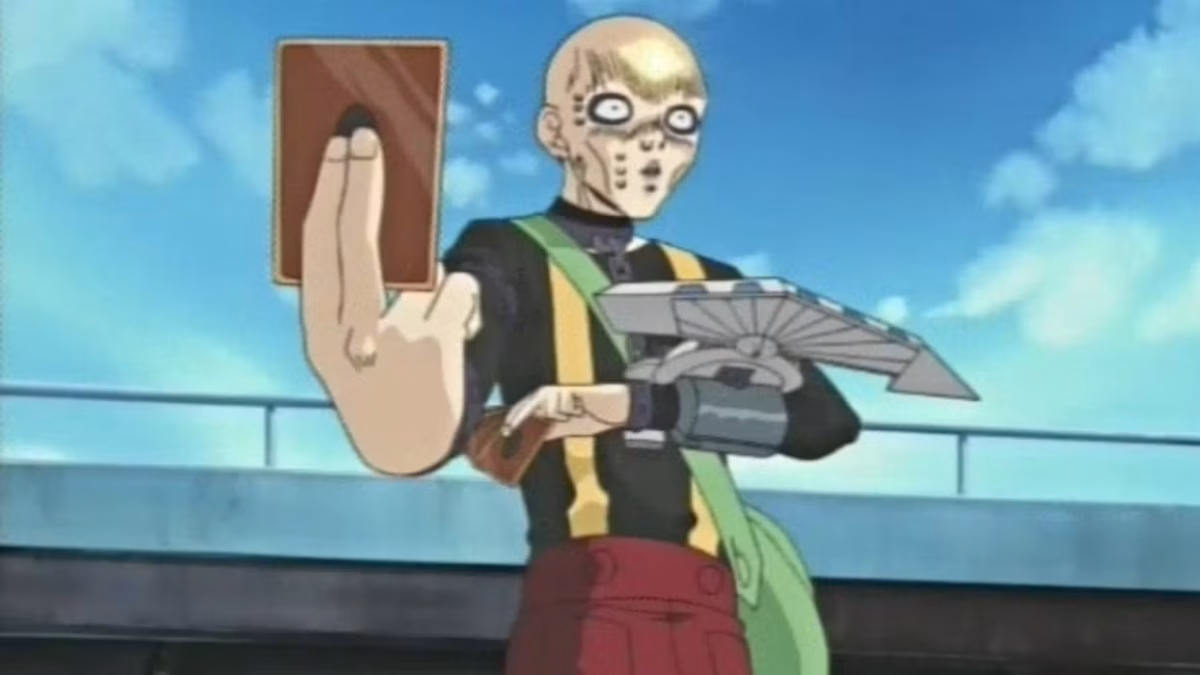
Today’s Yu-Gi-Oh! cards are incredibly complex, often filled with so much text that they’re hard to understand. Players now spend a lot of time figuring out what each card does. This is a big change from the early days of the game, when cards like Pot of Greed had simple effects, such as drawing two cards. Now, each new set of cards seems to introduce a whole new set of rules, exceptions, and conditions.
As a long-time player, I’m really worried about how hard this game is becoming for new players. Honestly, trying to understand what some cards even do – like “Drytron Meteonis Draconids” – feels like deciphering a contract! And it’s not just beginners; even I mess up combos all the time because the card interactions are so complicated. It’s tough to have fun when you’re constantly wondering if you played something right.
3. The Pay-to-Win Problem

Let’s be direct: Yu-Gi-Oh! heavily favors players who spend a lot of money, and it’s quite obvious. The most powerful decks usually require expensive, rare cards. Competitive players essentially have to spend a lot of money to remain competitive, because there’s a huge difference in strength between cheaper decks and the best ones. While Konami sometimes releases more affordable “structure decks,” they rarely perform well at a high level without further, costly improvements.
The game’s current system heavily favors players who spend a lot of money, which discourages more casual players and makes it hard for them to compete. It’s disappointing because Yu-Gi-Oh! could be a much fairer and more welcoming game. Unfortunately, Konami appears focused on maximizing profits by frequently releasing new card sets and making older ones less useful, pushing players to constantly buy more. This creates a frustrating cycle where profits are valued more than the enjoyment of the players.
2. The Inconsistent Banlist Logic
The Forbidden and Limited List is a constantly debated part of the Yu-Gi-Oh! trading card game. It’s not updated very often, and the reasons behind which cards are banned can seem random. Some cards are banned for being strong, but others with similar abilities are still allowed. Frustratingly, cards that players dislike, like Mystic Mine, often stay legal for a long time, while perfectly safe cards are sometimes unexpectedly restricted.
This inconsistency frustrates and confuses players, making it difficult to trust the game when developer decisions seem unclear. The banlist also worries players about their investments – it’s hard to justify spending money on cards that might become unusable with the next update. Until Konami is more open and consistent about why cards are banned, players will feel like their progress depends on luck rather than strategy.
1. The One-Turn-Kill Meta
As a long-time Yu-Gi-Oh! player, I think the biggest issue right now is how common one-turn kills, or OTKs, have become. It’s seriously frustrating to lose a duel before you even get a turn! People are building these incredibly complex decks that can summon a ton of monsters, lock down the field with negates, and just win – all in a single turn. Honestly, it’s shifting the game away from a strategic battle of wits and turning it into a race to see who can pull off their combo fastest, and it doesn’t always feel very satisfying.
The intense competition has unfortunately made the game much less enjoyable for many players. It’s hard to have a relaxed match when even simpler decks use overly complicated strategies. The game has become less about clever plays and more about getting lucky with your initial cards. Unless Konami fixes the problem with overly powerful, quick-win strategies, Yu-Gi-Oh! will continue to be frustrating and discouraging for players who want a truly strategic and fun experience.
What do you think? Leave a comment below and join the conversation now in the ComicBook Forum!
https://comicbook.com/anime/list/7-best-duelists-in-yu-gi-oh-ranked/embed/#
Read More
- The Super Mario Galaxy Movie: 50 Easter Eggs, References & Major Cameos Explained
- Surprise Isekai Anime Confirms Season 2 With New Crunchyroll Streaming Release
- 10 Best Free Games on Steam in 2026, Ranked
- ‘Project Hail Mary’: The Biggest Differences From the Book, Explained
- Starfield (PS5) Review – A Successful Cross-Console Voyage
- Frieren: Beyond Journey’s End Gets a New Release After Season 2 Finale
- Sydney Sweeney’s The Housemaid 2 Sets Streaming Release Date
- Preview: Sword Art Online Returns to PS5 as a Darker Open World Action RPG This Summer
- Why is Tech Jacket gender-swapped in Invincible season 4 and who voices her?
- Skate 4 – Manny Go Round Goals Guide | All of the Above Sequence
2026-02-09 00:19