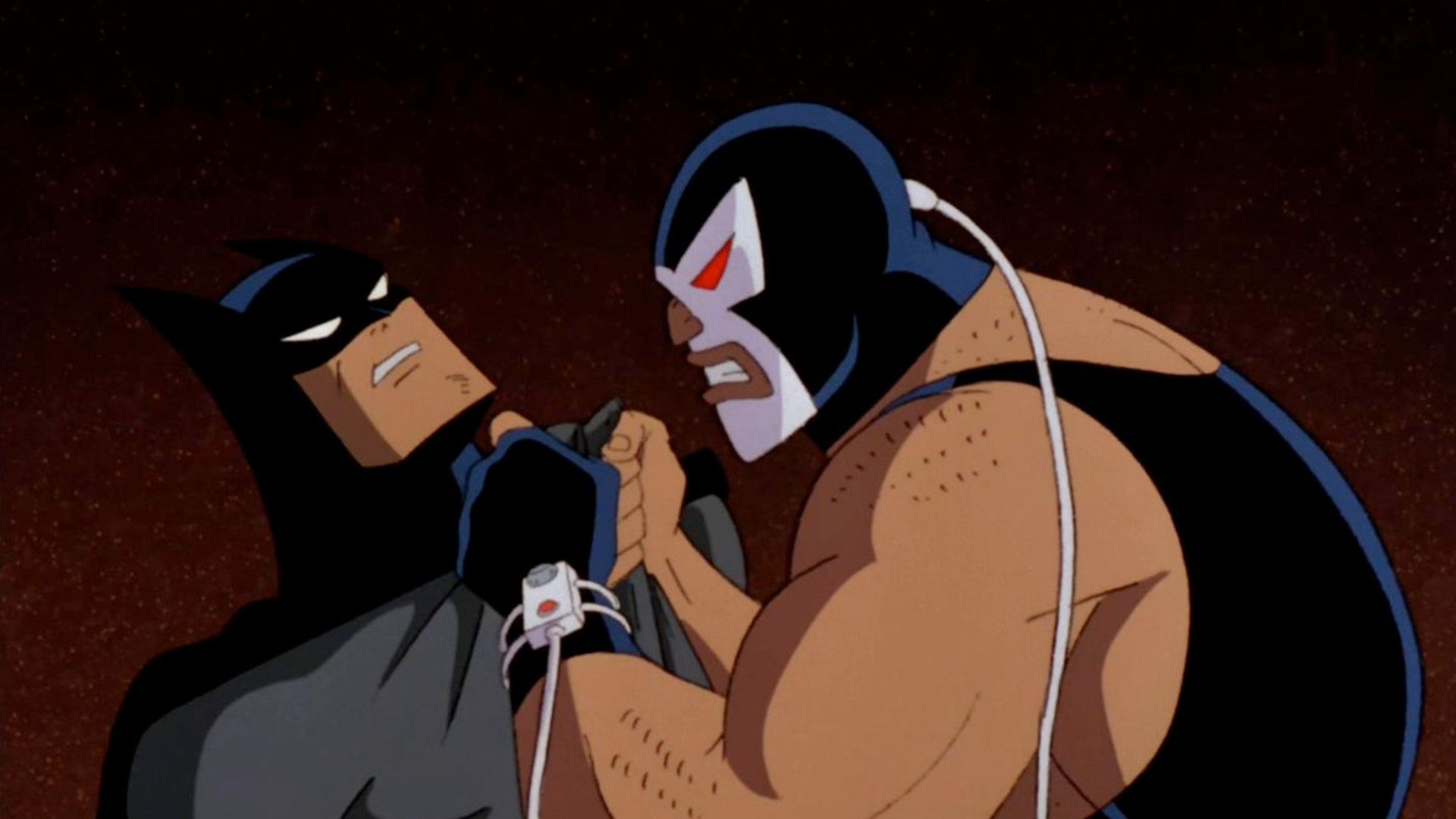
Even though Batman: The Animated Series is highly praised, it didn’t do justice to several well-known DC characters. While the show gave many characters impressive depth and maturity, others weren’t as well-served and actually came across as less compelling than they are in the comics.
Batman: The Animated Series is widely considered a masterpiece, and it’s easy to see why. It shaped how an entire generation views Batman, brought complex and heartfelt stories to superhero cartoons, and created iconic versions of villains like the Joker, Harley Quinn, Two-Face, and Mr. Freeze. Even today, its distinctive look, serious themes, and dark, atmospheric style continue to inspire DC’s animated projects.
Often, these characters weren’t poorly written, but simply lacked enough attention. The show heavily focused on Batman’s inner life and a few key villains, which meant other characters didn’t get the development they deserved due to time constraints, network demands, or the show’s overall style. They weren’t fundamentally broken, but the series, which was usually strong, didn’t give them a fair chance to shine.
Lucius Fox

Looking back, it’s noticeable how little impact Lucius Fox has on Batman: The Animated Series. He isn’t shown as Bruce Wayne’s key tech support; instead, he’s just a typical Wayne Enterprises employee who doesn’t really matter to the story. The show makes it seem like Batman creates all his gadgets himself, unlike later versions where Lucius plays a bigger role in developing them.
Lucius Fox is never shown as a link between Wayne Enterprises and Batman’s work as a crime fighter; he remains completely unaware of Bruce Wayne’s double life. This decision significantly restricts the development of the show’s overall world in Batman: The Animated Series.
Without a strong network of allies, Gotham feels limited in the Batman stories. While later versions, especially in movies and TV shows, emphasized how crucial Batman is, Batman: The Animated Series, despite being well-made overall, doesn’t fully utilize the character. It overlooks the chance to explore how Batman’s fight for justice could reach beyond the streets and into the powerful businesses at the core of the city.
Professor Achilles Milo

Professor Achilles Milo, with his willingness to experiment on people, should have been a truly terrifying villain in Batman: The Animated Series. He embodies the risks of unrestrained drive and failing morals, but the show surprisingly portrays him as less threatening than he could be. He represents danger through intelligence, not physical strength, yet somehow comes across as weak.
Milo appears odd and a little unstable, but he’s not usually scary. His actions don’t build the suspense you’d expect from his character, making him seem more like a silly, over-the-top scientist than a truly frightening villain. This is especially frustrating because Batman: The Animated Series is usually very good at creating psychological and physical horror in a smart and subtle way.
As a big fan of seeing villains really explored in shows like this, I was honestly a little disappointed with Milo. He could have been a truly creepy addition to Gotham’s already shady science world, but he just… wasn’t. Instead of making him more interesting, they somehow made him feel flat and forgettable. It’s rare to see a character downgraded in a series that usually does such a great job of building up its bad guys, and that’s what happened with Milo.
Hugo Strange
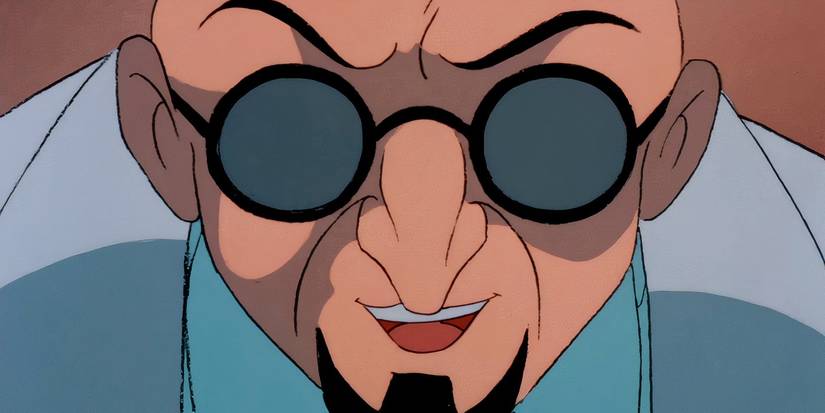
Hugo Strange had the potential to be a major, frightening villain on Batman: The Animated Series. His key characteristic – knowing Bruce Wayne’s secret identity and using that to mess with Batman’s mind – would have fit right in with the show’s focus on double lives and dealing with past pain. However, Strange only showed up in a single episode.
Even more disappointingly, Strange isn’t defeated by Batman’s cleverness. Instead, he loses power because other villains team up against him, taking away his control and frightening presence. This feels like a strange choice, considering Batman: The Animated Series was so good at building tension through psychological battles, and Strange is a villain perfectly suited for that kind of conflict.
Rather than being a recurring, psychological challenge for Batman, Hugo Strange has been quickly turned into a simple, one-time villain. This is a missed opportunity for the series to really delve into Batman’s weaknesses and explore his inner struggles. Considering how much the show focuses on Bruce Wayne’s psychology, not fully utilizing Strange feels like a significant oversight.
The Terrible Trio
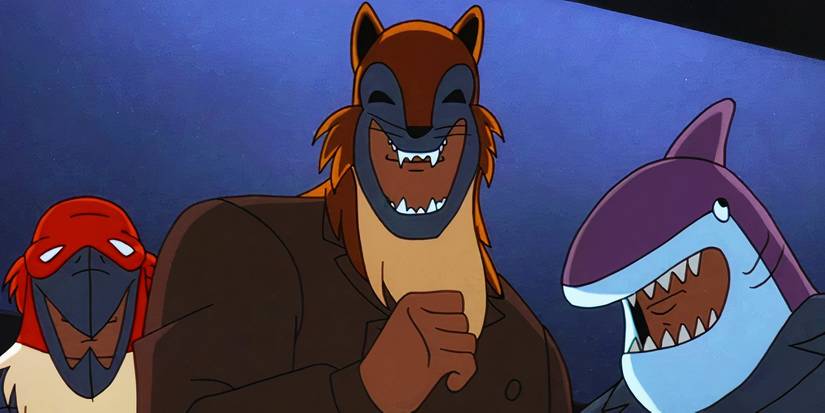
The idea behind The Terrible Trio – rich people committing crimes simply because they’re bored – had a lot of promise. It could have been a clever commentary on the wealthy and powerful in Gotham and how they avoid facing the consequences of their actions. However, Batman: The Animated Series doesn’t really explore that potential.
The Trio have been simplified into basic criminals who wear animal masks, lacking strong reasons for their actions and offering no real insights into issues of class or power. The episode hints at satire, but doesn’t fully develop it. Their wealth, self-importance, and lack of values are only touched upon, which turns what could have been a sharp commentary on society into a standard, easily forgotten villain storyline.
It’s particularly disappointing because Batman: The Animated Series was so good at showing how deeply corruption affected Gotham City. The Terrible Trio had the potential to represent that high-level rot, but they ended up feeling no different than many other minor villains. This wasted a promising idea that could have been much more impactful and interesting.
Bane

Bane’s version in Batman: The Animated Series is well-known for disappointing fans. While initially presented as a strong villain, he quickly became one of the show’s weakest adaptations. The biggest issue is that he never actually defeats Batman, either physically or mentally. This crucial moment – a defining characteristic of the character in the comics – is completely missing from the series.
Instead of being a formidable threat, he’s defeated quite easily and becomes a simple strongman who relies on Venom. The show highlights his physical power, but overlooks his intelligence – a key part of what makes Bane so scary. Without his clever strategies, he’s no longer a unique villain, just another powerful but unremarkable fighter.
Considering how well Batman: The Animated Series usually develops its villains, this portrayal of Bane feels surprisingly one-dimensional. While later versions improved on the character, within the show itself, Bane never quite becomes the truly terrifying and impactful villain he was intended to be.
Talia Al Ghul

Talia al Ghul has a complex and meaningful connection with Batman. However, the animated series Batman: The Animated Series doesn’t often let her develop as her own person. She’s usually presented as simply an extension of her father, Ra’s al Ghul, instead of a fully developed character.
Honestly, as much as I love this character, I always felt like her inner struggle – being pulled between her feelings for Batman and her loyalty to the League of Assassins – was just… touched on, but never really dug into. It’s frustrating because she often feels like she’s just reacting to things happening to her, instead of actually being the one making things happen. It feels like a huge missed chance to give her a really compelling story of her own.
As a huge fan of Batman: The Animated Series, I always appreciated how deeply they explored relationships. They really could have done something special with Talia al Ghul, but it felt like they held back. Instead of letting her drive the plot, she mostly just reacted to what Batman was doing. It’s a shame, because Talia is supposed to be this morally gray, emotionally complex character, and the show just didn’t give her the space to develop. She was interesting when she showed up, but ultimately felt like a missed opportunity – they could have really dug deeper!
Lloyd Ventrix

Lloyd Ventrix had the potential to be a truly heartbreaking villain in Batman: The Animated Series. His story – a father forgotten and left behind by everyone – naturally explores feelings of loneliness, bitterness, and a breakdown of the mind. However, the show focuses more on the interesting idea of invisibility itself, and doesn’t fully develop the emotional impact of his tragedy.
While Ventrix’s suffering is recognized, the show doesn’t really delve into why he’s in pain. He doesn’t come across as a tragic character like some villains; instead, he feels more like a plot device focused on his power of invisibility. This emphasis on his abilities overshadows any chance to understand him as a person.
Subscribe for deeper dives on Batman adaptations and more
Subscribe for deeper dives on Batman adaptations and more
By subscribing, you agree to receive newsletter and marketing emails, and accept Valnet’s Terms of Use and Privacy Policy. You can unsubscribe anytime.
This unevenness prevents Ventrix from becoming a truly compelling character. Batman: The Animated Series was known for creating memorable villains by exploring their painful pasts, but Ventrix’s story feels incomplete. As a result, he’s mainly remembered for his abilities, not his tragic background.
The Penguin
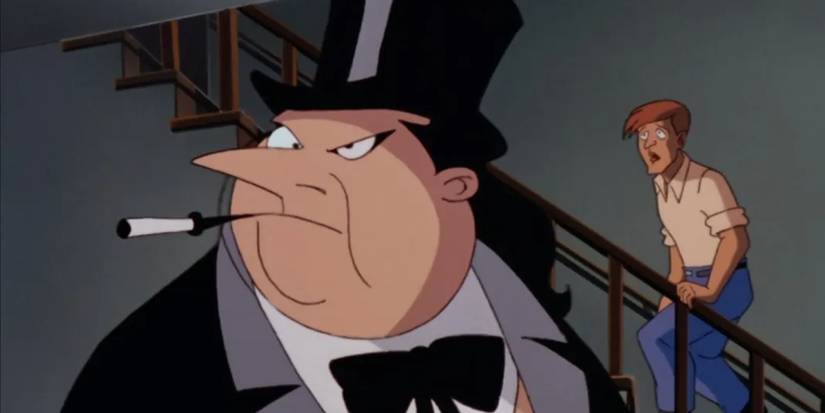
Batman: The Animated Series took a daring approach with the Penguin, visually presenting him as monstrous and animal-like, similar to his appearance in the film Batman Returns. This made for one of the show’s most memorable character redesigns. However, the series also kept the core of the character – a refined criminal fascinated with birds – that fans had known from the early days of DC Comics.
Penguin isn’t the cunning criminal mastermind he pretends to be. He’s often embarrassed and tricked, and his attempts to control others constantly fail. The most striking example of this is when he’s defeated by a group of kids – a moment that completely destroys any sense of power he might have.
The villain Penguin, who was originally intended to be frightening and commanding, ended up seeming pathetic and silly. While it’s good to try new things, Batman: The Animated Series went too far in making Penguin unintelligent and weak. This change removed his status as a serious criminal in Gotham, turning him into a laughable figure rather than a real danger.
The Riddler

The Riddler in Batman: The Animated Series doesn’t really come across as the genius he’s supposed to be. Despite being presented as smart, Batman always manages to defeat his plans, which often depend on elaborate traps rather than careful thinking. He’s less of a mastermind and more of a flamboyant showman who loves puzzles simply for the fun of it.
The Riddler’s plans aren’t very well thought out, which makes his losses seem predictable instead of challenging. This is frustrating because the show usually focuses on clever, psychological battles. The Riddler had the potential to really test Batman’s mind, putting him in difficult moral and logical situations, but he never quite lived up to that potential.
I always felt like the Riddler in Batman: The Animated Series didn’t quite live up to his potential. Later versions really brought out his cleverness and how dangerous he could be, but in this show, he felt a bit toned down. Considering how much the series focused on smart villains and characters grappling with who they are, I really thought Riddler could have been a huge part of it, but he just never quite clicked for me.
Read More
- Gold Rate Forecast
- Looks Like SEGA Is Reheating PS5, PS4 Fan Favourite Sonic Frontiers in Definitive Edition
- Arknights: Endfield – Everything You Need to Know Before You Jump In
- Dune 3 Gets the Huge Update Fans Have Been Waiting For
- Hazbin Hotel Secretly Suggests Vox Helped Create One of the Most Infamous Cults in History
- Jack Osbourne Shares Heartbreaking Tribute to Late Dad Ozzy Osbourne
- 22 actors who were almost James Bond – and why they missed out on playing 007
- 5 Weakest Akatsuki Members in Naruto, Ranked
- Action Comics #1096 is Fun Jumping-On Point for Superman Fans (Review)
- Every Upcoming Transformers Movie: Release Dates, Details, & Everything We Know
2025-12-20 22:52