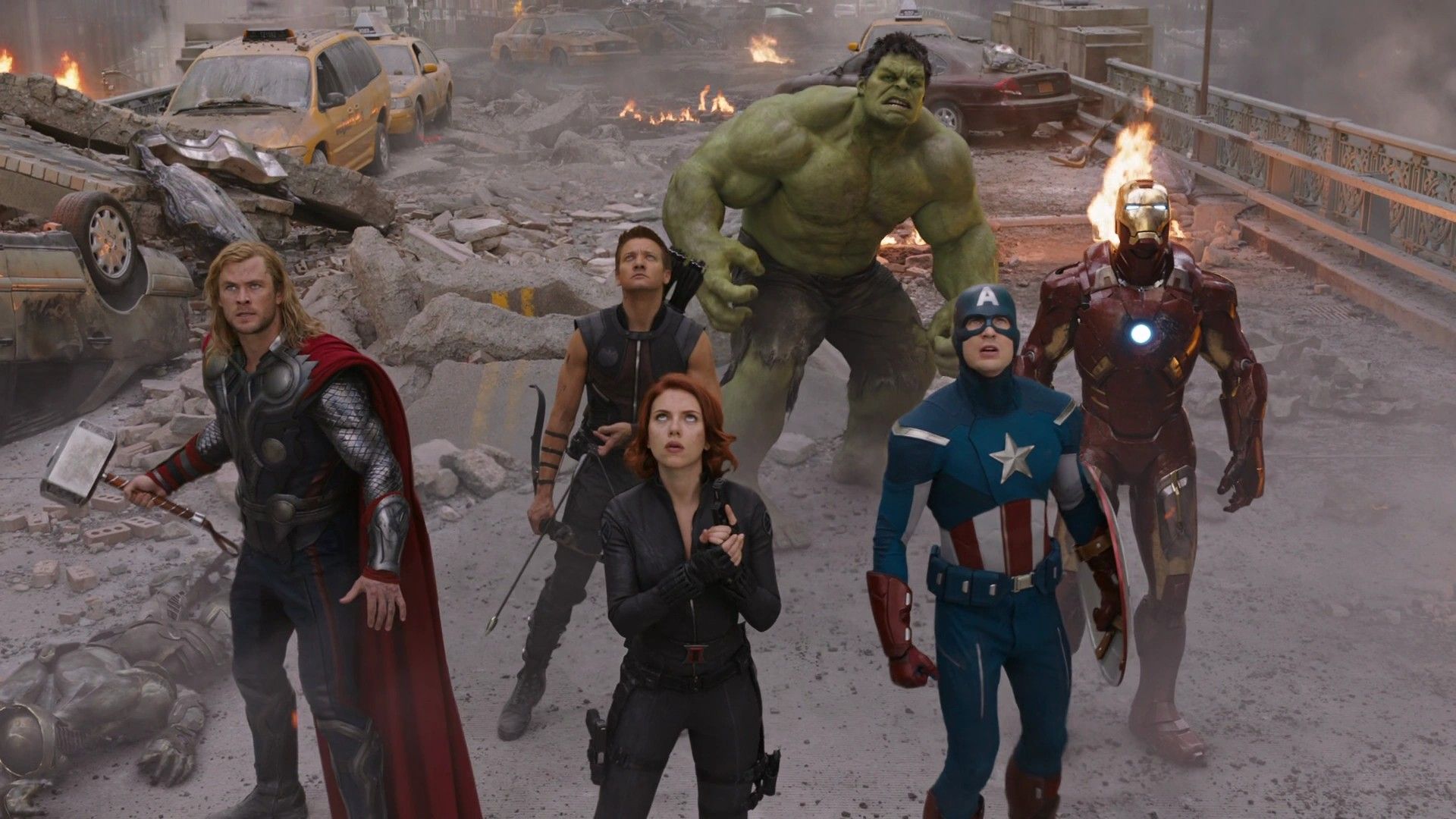
The success of The Avengers in 2012 inspired many other studios to try and create similar superhero teams. Marvel had demonstrated that building up individual heroes in separate movies before bringing them together in one big event could be incredibly popular with audiences. As a result, studios quickly attempted to copy this approach, but often without taking the necessary time to properly develop their characters and storylines first, in a rush to launch their own shared universes.
Many films tried to copy the success of The Avengers, but often missed the mark. They focused too much on big action and team-ups, and not enough on strong characters and a well-told story. While a few did okay, most failed to live up to expectations, proving it’s incredibly difficult to recreate that same magic. These attempts are often remembered for being disappointing.
Batman V Superman: Dawn of Justice (2016)

Warner Bros. tried to quickly create its own version of The Avengers with Batman v Superman: Dawn of Justice. Unlike Marvel’s gradual approach to team-ups, this film immediately introduced several heroes and a conflict between them. Much of the movie focuses on setting up future sequels and hinting at other heroes like Wonder Woman, Aquaman, Flash, and Cyborg.
As a film fan, I have to say this movie doesn’t feel like the exciting team-up it should be. It feels rushed, like it’s more worried about setting up future installments than telling a good story. You know, Marvel took their time building up Iron Man, Captain America, and Thor individually before finally bringing them together. But Batman v Superman tried to do that whole process in just one movie, and it really felt crammed and forced.
Although visually impressive, Batman v Superman feels uneven in its tone, moves too quickly, and doesn’t quite know what story it wants to tell. The film’s eagerness to launch a larger cinematic universe ended up being more important than the actual plot. Dawn of Justice really shows how risky it is to try and replicate The Avengers without taking the time to build things up properly.
Avengers Grimm (2015)

As a huge movie fan, I have to say Avengers Grimm is a pretty obvious cash-in on the success of The Avengers. It’s made by a company called The Asylum, and instead of superheroes, it uses classic fairy tale characters – Snow White, Little Red Riding Hood, Cinderella, that sort of thing. Honestly, the plot follows The Avengers incredibly closely, almost scene for scene. It’s a very…direct take, let’s put it that way.
The story brings together a group of characters to fight a common enemy. Unfortunately, Avengers Grimm doesn’t have the resources, strong writing, or well-developed characters that made Marvel’s team-up movies successful. Rather than being a clever twist on the formula, it feels like a quickly made copycat project that relies on familiar names to attract viewers.
While some might find it amusing, Avengers Grimm shows that simply copying the idea of a team-up doesn’t usually create something worthwhile. It doesn’t really offer a new take on The Avengers; instead, it highlights just how popular and easily imitated that formula became.
Guardians (2017)

The Russian film Guardians is heavily inspired by The Avengers, but reimagined with a uniquely Russian twist. Like Marvel’s superhero team, it brings together a group of individuals with special abilities. However, instead of representing different countries, each hero embodies a former Soviet republic, uniting to fight a global catastrophe. The film’s core idea—a team of powerful heroes with distinct national identities—is similar to Marvel’s approach, but tailored to a Russian cultural context.
While promising, Guardians doesn’t quite deliver. It suffers from inconsistent special effects, characters that aren’t fully developed, and a story that jumps between tones. The team never quite feels like a cohesive unit, unlike The Avengers, and the movie prioritizes action over building genuine relationships between the characters.
As a critic, I’ve been watching how Marvel’s success with The Avengers has rippled through the superhero landscape, and Guardians is a really telling example. It proves that just throwing a bunch of heroes together on screen isn’t enough. This film really shows us that without a solid story and characters we genuinely care about, things fall apart fast – and all you’re left with is endless action and special effects.
The Mummy (2017)

Universal’s The Mummy was intended to kick off a new series of interconnected films, now known as the Dark Universe. The idea was to create a franchise, similar to the Marvel Cinematic Universe, featuring classic monsters like Dracula, Frankenstein’s Monster, and the Wolfman. Just as Iron Man launched the MCU, The Mummy was meant to establish a new style and hint at future team-ups.
Instead of being a scary or exciting adventure, The Mummy spends almost every scene explaining its story, building its world, and hinting at future movies. Russell Crowe’s Dr. Jekyll isn’t really a developed character; he mostly exists to set up potential sequels. The film feels more focused on creating a franchise than telling a compelling story.
The studio tried to copy the successful formula of The Avengers – starting with individual hero movies and then bringing them together as a team – but didn’t really understand what made that formula work. When The Mummy didn’t do well at the box office, the whole plan fell apart. This became a prime example of a studio trying to replicate The Avengers‘ success without first building a connection with the audience.
Suicide Squad (2016)

Similar to how The Avengers brought heroes together, Suicide Squad tried the same approach, but with villains and antiheroes. The film gathered a group of criminals and forced them to work as a team. The idea had potential – putting flawed characters in high-pressure situations could have been a unique and compelling take on the team dynamic seen in Marvel movies.
Despite its potential, Suicide Squad has trouble finding its footing. The movie focuses too much on introducing the characters and not enough on building connections between them. This, combined with a shifting tone, studio meddling, and a hurried plot, makes it difficult for the team to feel like a unified group.
While The Avengers built its story through how characters interacted, Suicide Squad focuses more on its visual style, music, and big action sequences. Although some actors did a good job, the movie ultimately feels like it’s just going through the motions of a typical superhero film, rather than telling a cohesive story. It demonstrates that simply copying a formula doesn’t work if you don’t also prioritize the connections between characters.
Fantastic Four (2015)
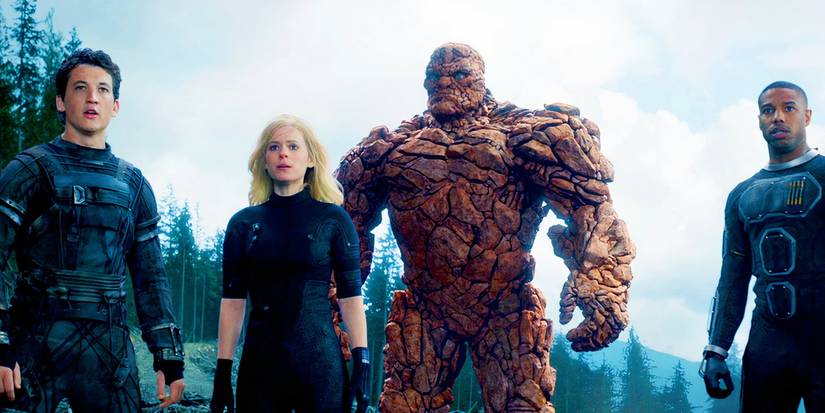
The movie Fantastic Four aimed to restart the story of Marvel’s first family and kick off a larger, connected universe of Marvel films using characters owned by Fox, similar to The Avengers. As a result, the film is more realistic and serious in tone, but it has trouble effectively telling the origin story while also setting up future installments.
Honestly, as a movie fan, I just didn’t feel a strong connection with the characters – their development felt really hurried. And you know, with a team-up movie like this, especially one aiming for that Avengers vibe, you need that sense of family, that believable team dynamic. This one just didn’t quite get there; the group felt strangely distant and a little flat. It’s no secret the movie had a bumpy production, and I think that really showed in the ending – it felt rushed, unfinished, and left me wanting more in a bad way.
Although clearly trying to follow the success of the Marvel Cinematic Universe, the new Fantastic Four movie misses what truly made The Avengers great: strong connections between characters and a story that builds excitement. Instead of feeling rewarding, it serves as a reminder that simply copying a successful formula doesn’t guarantee a good film.
Godzilla: King Of The Monsters (2019)

With Godzilla: King of the Monsters, Legendary Pictures really tried to create a shared universe similar to the Marvel Cinematic Universe’s Avengers. Instead of just focusing on one monster, the movie brought together famous creatures like Godzilla, Mothra, Rodan, and King Ghidorah, presenting them as powerful characters destined for a massive battle.
I really enjoyed King of the Monsters – it’s just as epic and focused on big, mythological moments as The Avengers. But honestly, sometimes it felt like the story itself took a backseat to all the amazing monster action. The human characters were there, but they mostly served to explain the backstory and set up the next fight – I wish their stories had felt a little more developed.
Although many viewers enjoyed seeing a variety of iconic monsters together, critics weren’t as impressed. They thought the movie focused too much on setting up future installments and appealing to fans rather than telling a strong story. It’s similar to the Avengers films, but with giant monsters – a grand idea that didn’t quite come together perfectly.
G.I. Joe: Retaliation (2013)

G.I. Joe: Retaliation moved the series in a new direction, focusing on a team dynamic similar to The Avengers. After the first movie, The Rise of Cobra, received some criticism, the sequel brought in more characters and shifted the focus from one main hero to a group working together in action-packed scenes.
The movie’s visuals, including dramatic slow-motion scenes and international adventures, strongly resemble modern superhero blockbusters. It’s very clear the film borrows heavily from the look and feel of The Avengers (2012). Dwayne Johnson’s character, Roadblock, is presented as a charming and central figure, much like Iron Man was in The Avengers.
While G.I. Joe: Retaliation is a definite improvement over the first movie – it’s tighter and more assured – it still doesn’t quite make us care about the characters’ relationships. The film clearly tries to turn G.I. Joe into a big team-up adventure, but it feels like it’s following what’s popular in movies right now, rather than building on what made the franchise special.
Justice League (2017)

The movie Justice League clearly tried to copy The Avengers, particularly after Joss Whedon became involved during editing. Although Zack Snyder originally envisioned a DC team-up, Whedon attempted to make Justice League feel more like an Avengers film. This resulted in a noticeable change in tone, adding more jokes, brightening the visuals, and altering scenes and character interactions.
Honestly, it felt like they completely reworked the movie after The Avengers came out, trying to copy that formula. But they did it without paying attention to what made this DC universe special in the first place. It ended up feeling like a pale imitation. You’ve got Batman putting together a team, lots of quippy dialogue during fights, and the whole thing really pushes this idea of teamwork being the important part – it just didn’t quite work for me.
Despite good intentions, the movie suffers from a hurried production and disagreements about its creative direction. Unlike The Avengers, which had years of groundwork, Justice League throws a lot of heroes into the mix all at once without fully developing their characters. This makes the team feel forced rather than organic, and the film comes across as an attempt to replicate The Avengers‘ success rather than forge its own path.
Read More
- The Super Mario Galaxy Movie: 50 Easter Eggs, References & Major Cameos Explained
- 10 Best Free Games on Steam in 2026, Ranked
- Surprise Isekai Anime Confirms Season 2 With New Crunchyroll Streaming Release
- Sydney Sweeney’s The Housemaid 2 Sets Streaming Release Date
- ‘Project Hail Mary’: The Biggest Differences From the Book, Explained
- Preview: Sword Art Online Returns to PS5 as a Darker Open World Action RPG This Summer
- Frieren: Beyond Journey’s End Gets a New Release After Season 2 Finale
- Why is Tech Jacket gender-swapped in Invincible season 4 and who voices her?
- Skate 4 – Manny Go Round Goals Guide | All of the Above Sequence
- Starfield (PS5) Review – A Successful Cross-Console Voyage
2026-01-19 00:35