
1990s science fiction TV flourished during a time of significant cultural and technological evolution. The waning certainty of the Cold War paved the way for a more intricate global tapestry, which was echoed in the storytelling of the era. At the same time, advancements in computer-generated imagery made it possible to create complex visual realms on a television budget. This fusion led to a new wave of creators who were keen to transcend traditional storylines, offering characters with moral ambiguity and plots where actions bore lasting effects. Consequently, this decade witnessed the rapid maturation of sci-fi TV, asking more from its audience than ever before.
The outcome led to an assortment of series that significantly reshaped the genre’s role within the collective consciousness. By the 1990s, science fiction expanded beyond a specialized interest and transformed into a compelling medium for widespread storytelling, captivating a diverse and dedicated fanbase. These shows left indelible marks on our culture, inciting discussions and fostering online communities in the infancy of the internet’s public use. Below is our selection of the most influential science fiction TV shows from the 1990s.
4) Star Trek: Deep Space Nine

In contrast to the enduring impact of “Star Trek” on television, “Deep Space Nine” stood out by challenging and redefining the franchise’s conventions. Unlike its predecessors that typically revolved around weekly visits to various planets, “Deep Space Nine” was stationed at a fixed outpost near a wormhole, opting for ongoing narrative development instead of episodic structure. This shift enabled intricate examinations of thought-provoking topics such as war, faith, genocide, and ethical dilemmas – subjects that earlier versions of the series had only skimmed due to the limitations imposed by traditional storytelling formats. Concurrently, the long-lasting conflict in “Deep Space Nine,” the Dominion War, served as a multi-season narrative thread that portrayed the harsh realities of cosmic warfare with a depth and nuance seldom encountered in science fiction narratives.
The space station Deep Space Nine was helmed by Commander Benjamin Sisko, played by Avery Brooks, a Starfleet officer who found himself assumed as a spiritual figurehead among the Bajorans. Throughout his journey, and the evolution of its complex cast, Deep Space Nine delivered a dramatic impact that seemed groundbreaking in its era. Initially criticized for its grittier style, which clashed with Gene Roddenberry’s utopian ideals, the show stood out due to its daring exploration of Starfleet’s values and portrayal of morally complex characters. This very subversion of expectations has solidified Deep Space Nine’s status as a thought-provoking and significant part of the Star Trek universe.
3) Stargate SG-1

Derived from the 1994 movie, “Stargate SG-1” astonished everyone and went on to be one of television’s longest-running and most cherished science fiction series. The series revolved around the Stargate, an extraterrestrial artifact capable of instantaneous travel to numerous planets scattered throughout the galaxy. This setup offered a wealth of story possibilities, merging contemporary military sci-fi with age-old mythology. Colonel Jack O’Neill (played by Richard Dean Anderson) led the SG-1 team as they ventured into uncharted territories, fought against alien overlords called the Goa’uld, and established ties with various cultures.
What set Stargate SG-1 apart was its unique blend of thrilling action, humor grounded in character development, and an upbeat outlook. Unlike many of its grittier counterparts, the show primarily focused on human resilience, exploration, and the courage to face seemingly impossible obstacles. Over the course of ten seasons, it created a captivating and user-friendly universe filled with intricate mythology and reoccurring characters. This resulted in Stargate SG-1 becoming a mainstay of the sci-fi genre, regularly providing engaging television that shaped cable TV during the late 90s and early 2000s. It also laid the groundwork for a long-lasting and far-reaching franchise.
2) Babylon 5

Back in an age when TV predominantly churned out episodic content, I found “Babylon 5” to be a groundbreaking deviation from the norm. Its creator, J. Michael Straczynski, daringly envisioned it as a television novel, meticulously planning a five-year narrative journey. Unlike other syndicated sci-fi shows of the ’90s, each episode served as a chapter in this grander tale, filled with political machinations, age-old prophecies, and an intergalactic struggle against a shadowy adversary known as the Shadows. This innovative approach led to a space opera that imbued its characters with lasting impact and allowed for profound, permanent transformations within its cosmos.
Nestled on a colossal space station serving as a neutral meeting point for diverse alien species, Babylon 5 unfolded into an intricate saga chronicling diplomacy, deceit, and the struggle to uphold peace amidst insurmountable challenges. Remarkably steadfast in its storyline, even under threats of cancellation, creator Straczynski compressed crucial plot developments into the fourth season. This tenacious adherence to a comprehensive and coherent tale from start to finish was groundbreaking, laying the foundation for the surge of serialized dramas that marked the 21st century, earning Babylon 5 a prominent place in television’s architectural history.
1) The X-Files
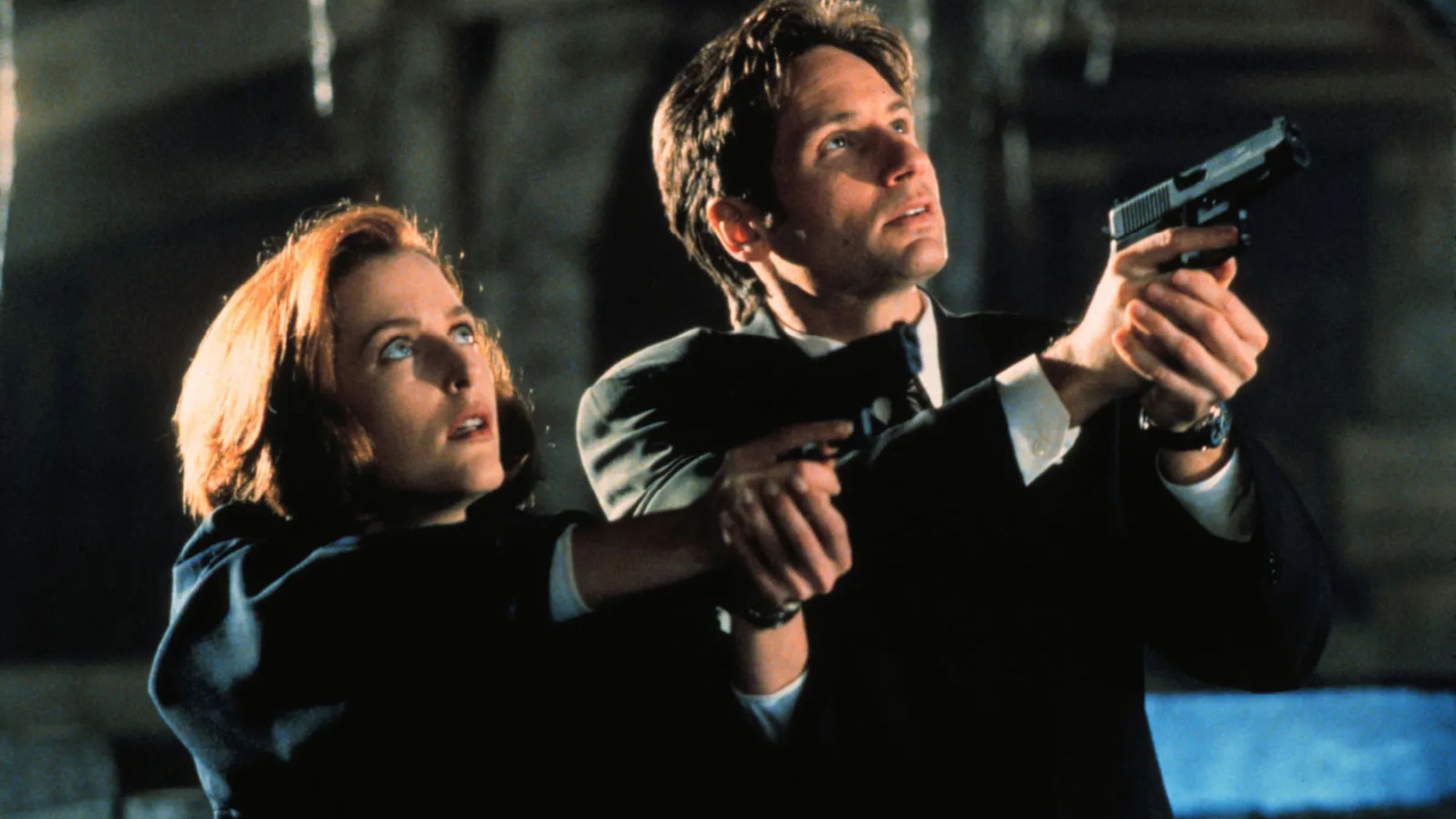
In simpler terms, the 90s sci-fi series “The X-Files” left an indelible mark on both science fiction and television as a whole during that era. The show captivated audiences by exploring fears and uncertainties about government conspiracies, hidden powers, and truth itself in the post-Cold War period. Starring David Duchovny as Fox Mulder and Gillian Anderson as Dana Scully, the program skillfully combined episodic “monster-of-the-week” stories with a larger narrative about a clandestine alien colonization plot. This blend of storytelling styles served as a model for numerous other genre shows in the years that followed.
The TV show “The X-Files” brought horror and paranoia to mainstream television in a way that was cinematic, proving that audiences were ready for deep, dark, and thought-provoking stories. The relationship between Mulder (the believer) and Scully (the skeptic) became one of the most memorable partnerships on TV, and catchphrases like “I Want to Believe” became popular.
The show’s success showed that science fiction could be a big hit with both audiences and critics, moving the genre from being a small interest into a major player in pop culture. For its huge impact, unique structure, and defining influence on the 1990s, “The X-Files” is considered the most important science fiction series of that decade.
https://comicbook.com/tv-shows/news/horror-tv-shows-1990s-important-ranked/embed/#
Read More
- Mark Zuckerberg & Wife Priscilla Chan Make Surprise Debut at Met Gala
- Elon Musk’s Mom Maye Musk Shares Her Parenting Philosophy
- 10 Greatest Manga Endings of All Time
- GBP CNY PREDICTION
- Forza Horizon 6 Car List So Far: Confirmed Highlights, Cover Cars, DLC, and Rewards
- Ranking the 5 Best Spring 2026 Anime So Far (Mid-Season Update)
- Review: Final Fantasy Tactics: The Ivalice Chronicles (PS5) – Still the Benchmark for Turn-Based Tactics
- 10 Best Free Games on Steam in 2026, Ranked
- Miranda Kerr Shares “Quick” Procedure She Got Before Met Gala 2026
- Elon Musk’s Ex Ashley St. Clair Reveals When Romance Became “Weird”
2025-08-20 18:14