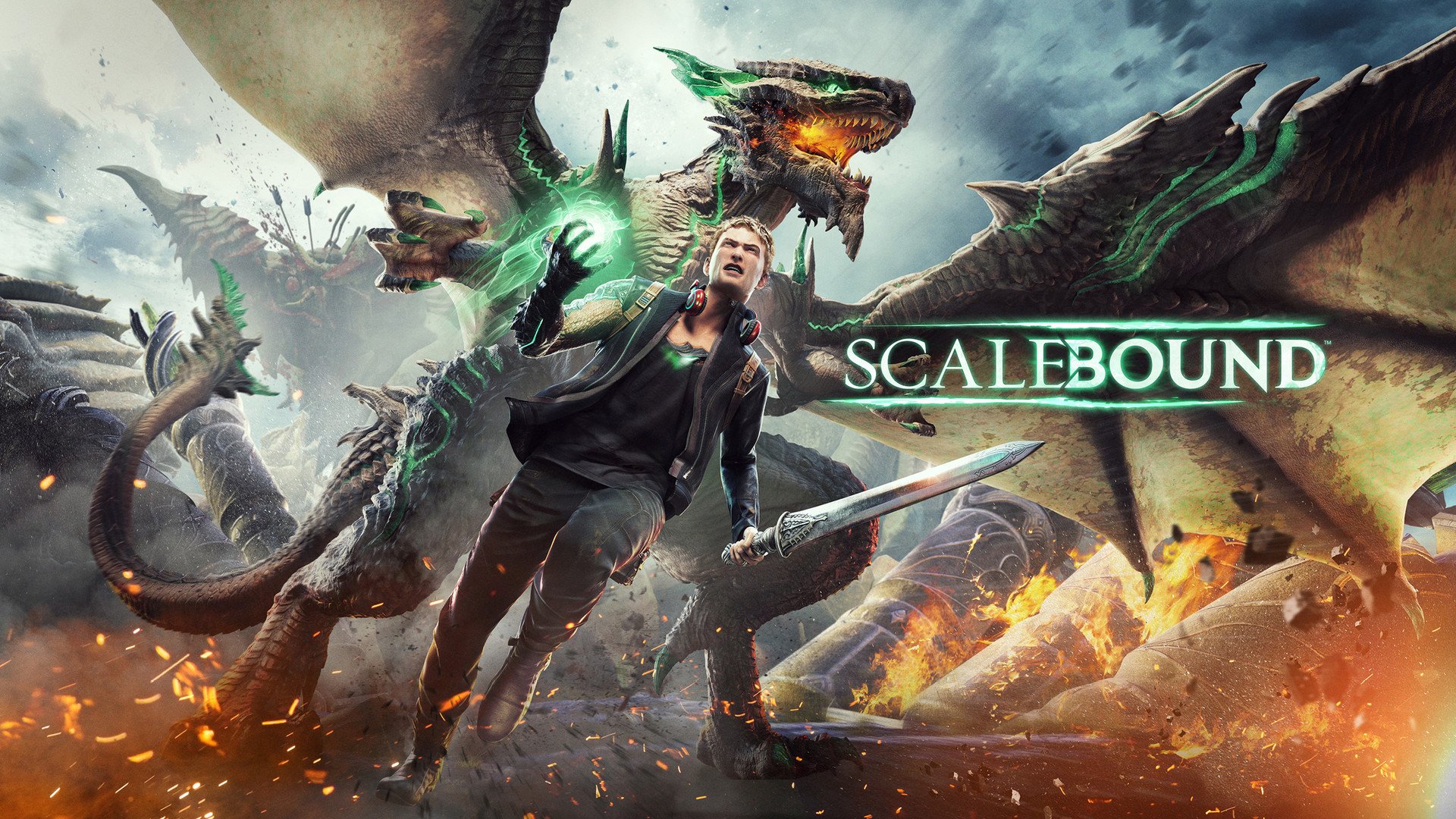
Even though PlatinumGames’ *Scalebound* was cancelled years ago, it continues to be a notable example when discussing game announcements, delays, and ultimate cancellations. In a recent interview with VideoGamesChronicle, the game’s director, Hideki Kamiya, explained that he believes the project would have fared better if he’d been working with a Japanese publisher instead of Microsoft.
When asked why Japanese developers and publishers seem to cancel fewer projects compared to others, Kamiya explained that Japanese companies generally offer more support and understanding to their creative teams. He based this observation on his own work with well-known companies like Sega, Capcom, Nintendo, Konami, and Koei Tecmo.
Kamiya, a creative professional, has collaborated with major companies like Sega, Capcom, and Nintendo. While at PlatinumGames, he also worked with Japanese publishers including Konami and Koei Tecmo, and international companies such as Microsoft, Tencent, and Activision. He notes that working with Japanese publishers generally feels more collaborative and they are typically more supportive of creative teams.
When discussing his approach to game development, Kamiya describes it as more about invention than following established rules. This often results in his games featuring innovative and unusual mechanics. For instance, *Okami* uniquely integrated a watercolor painting style into its gameplay, allowing players to use a brush to solve puzzles and battle enemies. Similarly, *The Wonderful 101* let players combine their heroes into different shapes, which then transformed into powerful weapons.
As a big fan, it’s always fascinated me how Hideki Kamiya and his team approach game development. He describes it as pure invention, and that really comes through in his games. Think about *Bayonetta*’s Witch Time, or the Unite Morphs in *The Wonderful 101*, and even the Celestial Brush in *Okami* – each game has this one, totally unique mechanic that defines it. What’s interesting is how Japanese developers and publishers view this process. He feels they *get* the struggle of creating something new, they appreciate the innovation, and they’re willing to be patient while it takes shape. He sees that as a real difference when working with publishers – they seem to understand and support the creative process in a way that’s really valuable.
He pointed out a key difference between Western and Japanese publishing companies. Western companies, he explained, often put a lot of pressure on developers who are experimenting with new ideas. Kamiya also noted that Western companies often favor first-person shooters because they feel more secure sticking with a proven formula.
As many people know, with *Scalebound* we were aiming to create a game where players controlled both a human character and a dragon as a team throughout the adventure. However, there wasn’t a good example of another game that did this, so it was hard to visualize, and I think that led to some skepticism.
Kamiya thinks *Scalebound* might have turned out differently if a Japanese company had published it. He clarified he doesn’t necessarily believe the game would have been finished and released, but he suspects the development process would have been handled differently. He feels Western publishers prioritize finishing a game quickly, while a Japanese publisher might have allowed them more flexibility and time.
Kamiya emphasized that his comments specifically concern the cancellation of *Scalebound*. He wants to be clear that the decision was due to issues within the development team at PlatinumGames and his own leadership as director, and not due to any other factors.
Having worked with publishers outside the country, I’m confident that if we get another chance, we can combine their strengths with our own to achieve the best results.
Kamiya had mentioned before that he’d like to collaborate with Phil Spencer at Microsoft on the game *Scalebound* sometime down the road.
Read More
- Elon Musk’s Ex Ashley St. Clair Reveals When Romance Became “Weird”
- 10 Best Free Games on Steam in 2026, Ranked
- Forza Horizon 6 Car List So Far: Confirmed Highlights, Cover Cars, DLC, and Rewards
- GBP CNY PREDICTION
- Mark Zuckerberg & Wife Priscilla Chan Make Surprise Debut at Met Gala
- Elon Musk’s Mom Maye Musk Shares Her Parenting Philosophy
- 10 Greatest Manga Endings of All Time
- Ranking the 5 Best Spring 2026 Anime So Far (Mid-Season Update)
- 20 K-Dramas That Nailed the Perfect Ending
- Miranda Kerr Shares “Quick” Procedure She Got Before Met Gala 2026
2025-09-17 15:44