
If you enjoy turn-based RPGs or Pokemon games, you should definitely check out Digimon Story: Time Stranger. The last game, Digimon Story: Cyber Sleuth, has become a bit of a fan favorite, and this new one looks to be even better with improvements to gameplay and a more immersive world. Although it isn’t a direct sequel to Cyber Sleuth, Time Stranger offers the same sci-fi story and monster-collecting gameplay that made Cyber Sleuth popular, but with even more depth. Time Stranger costs $69.99, so here are 15 important things to know before you buy it.
Seventh Game in the Story Series
The Digimon Story series started on the Nintendo DS in 2006. In the United States, it’s more commonly known as Digimon World DS. It’s worth noting that the name World is a little misleading, since Digimon World is actually its own separate series. Digimon Story remained primarily on handheld consoles with fairly standard and uncomplicated RPG gameplay until Digimon Story Cyber Sleuth came out in 2015, which expanded its reach to consoles and PCs.
Where it fits in the Timeline
You may be wondering, “Do I need to have played the earlier Story games to enjoy Time Stranger?” Luckily, Time Stranger is designed as a self-contained story and isn’t a continuation of previous titles. The only games that are directly linked are Cyber Sleuth and Hacker’s Memory, as they share a connected storyline and happen at the same time. Although Time Stranger is set within the larger Digimon universe and will likely include nods and references to older games, its story and characters are fresh and perfect for those new to the series.
Setting
A common thread in almost every Digimon story is where it takes place. Time Stranger keeps the idea of a connection between the digital and human worlds by allowing players to visit both. Digimon live in a digital world called Illiad, which is explored in detail throughout the game. You play as a secret agent sent back eight years in time to investigate a disaster that destroyed Tokyo. By exploring both the human world and the digital world, you’ll discover how to stop the catastrophe from happening.
Fully Fleshed Out Digital World
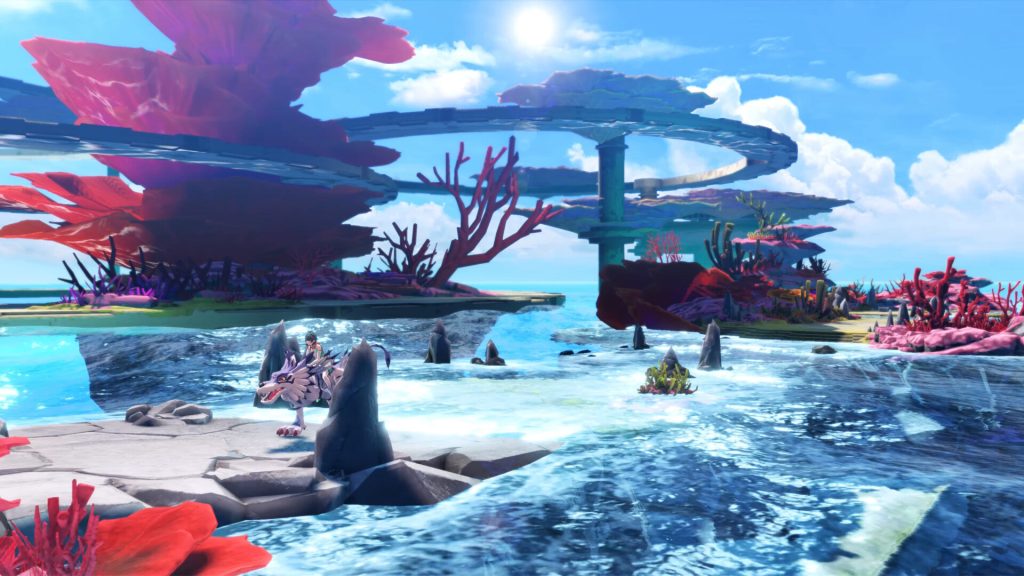
Compared to the Cyber Sleuth games, Time Stranger offers a seamlessly connected digital world to discover. The demo highlights the diverse and vibrant nature of this digital realm, called Illiad. The repetitive, basic dungeons from previous games are a thing of the past. Illiad is full of Digimon that have different jobs and roles within society, which makes the world feel much more realistic and dynamic. A particularly neat feature is the ability to ride Digimon as mounts to get around Illiad. There are many different mounts available, and we anticipate a system similar to Technical Machines (TMs) in the Pokemon games might be used to solve puzzles and overcome challenges.
Largest Digimon Roster Yet
A major draw of Time Stranger is its huge collection of digital monsters. It actually has more Digimon than any other game in the series so far, with 450 that players can tame and battle with. This is a significant increase over Hacker’s Memory, which included 341 Digimon.
How Catching and Taming Works
Unlike other games where you throw balls to befriend Digimon, Time Stranger uses a Conversion system. Each time you encounter a Digimon, there’s a scan percentage – higher percentages mean a better chance of them joining your team. To improve the scan percentage for a specific Digimon, you need to battle it repeatedly until the scan rate reaches nearly 100%, which then converts the creature to your side. You can start battles with an advantage by using a gun volley with the R2 button for a first strike. A helpful feature is that you can see each Digimon on the field before a battle, letting you know what to expect – this was more random in earlier games.
Digimon Customization
You don’t just collect and battle with your digital monster friends; you can also personalize them to match your preferences. In addition to giving your digital monster a name, you can digivolve them in many different ways-there isn’t just one set path-and customize their personality by choosing from various traits.
Non-linear Evolution Paths
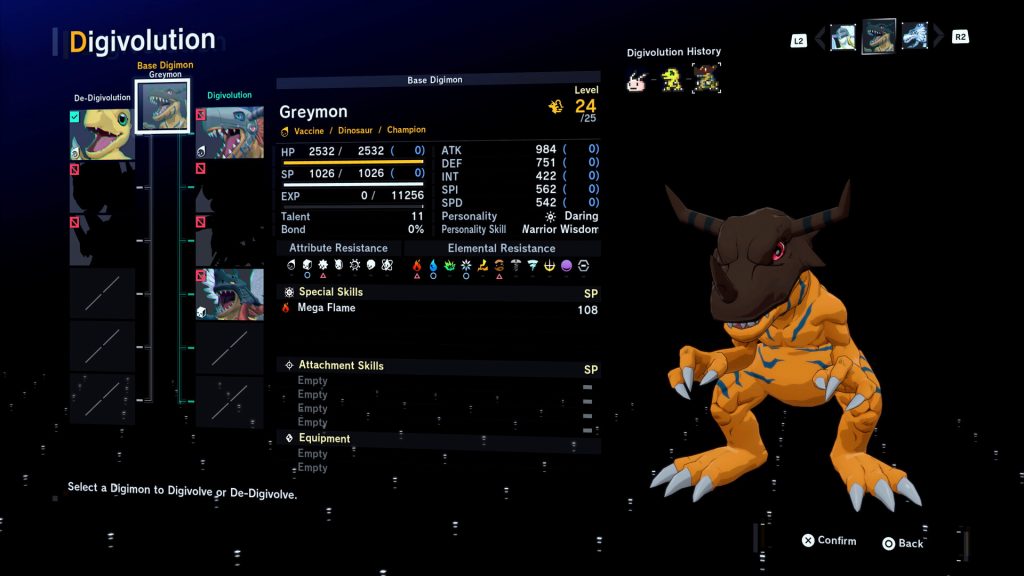
Each Digimon has around six different ways it can evolve. However, the exact evolution paths are kept secret, shown only as outlines without details on the digivolution menus. The menus *do* show each Digimon’s personality and what you need to do to make it evolve. Compared to previous games, the menus are simpler, using clear rows to display the available digivolution choices. And to top it all off, the menus feature charming, old-school sprites for each Digimon – a really nice detail!
Personality Traits
Time Stranger features a unique personality system that makes each Digimon more distinct. There are 16 different personality traits, allowing even identical Digimon to have significantly different stats, likes, and vulnerabilities. These personalities also affect how they digivolve and what skills they can acquire.
Turn-Based Battle System

Battles follow the traditional turn-based RPG format, but with the added element of monster taming. You can have up to four Digimon in your party during a fight, and switch between them as needed. You can discover an opponent’s weakness by using the Analyze ability, and during battle you can block attacks, use standard attacks, and utilize items. However, the true strategic complexity comes from the diverse skills and elemental strengths you can take advantage of. Prefer faster combat? You can increase battle speed up to 5X, and if you trust the game’s AI enough, you can even use the auto-battle feature.
Attributes and Elements
The game’s main complexity and strategic options come from its 7 attributes and 11 elements. Attributes are usually part of a Digimon’s type, while elements are linked to what it can do. If you’re fighting a Vaccine type Digimon, just use a Data type Digimon to deal extra damage. You can also buy skills that add elemental boosts for your Digimon from shops, letting you combine these boosts with the Digimon’s natural attributes.
New Agent Skill System
Digimon skills are mostly used during battles, but agent skills offer ongoing benefits and abilities. You’ll find a complete Agent skill tree with skills that do everything from grant extra experience points to boost stats and improve your bond with Digimon. These Agent Skills are new to this game and can be enhanced and leveled up once you’ve unlocked them. Learn more about Agent Skills here.
Progression
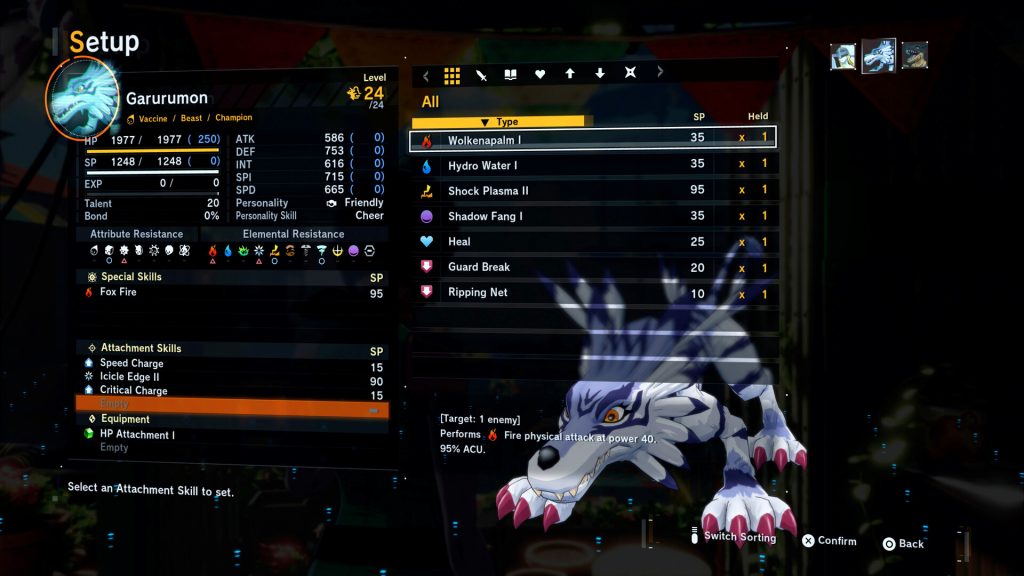
You earn Agent Skill points by finishing missions, and your Digimon grow stronger by fighting battles. Your Agent Rank increases as you perform different actions. For instance, using skill points, winning fights, and completing quests all contribute to raising your Agent Rank.
English dub
A really exciting update is the addition of English voice dubbing, a first for this series. As we saw in the demo, not every single line has a voice actor, but most of the conversations are now fully voiced in English. Before this, Digimon games only had Japanese audio with English subtitles, so this change is a great improvement.
Release Date and Platforms
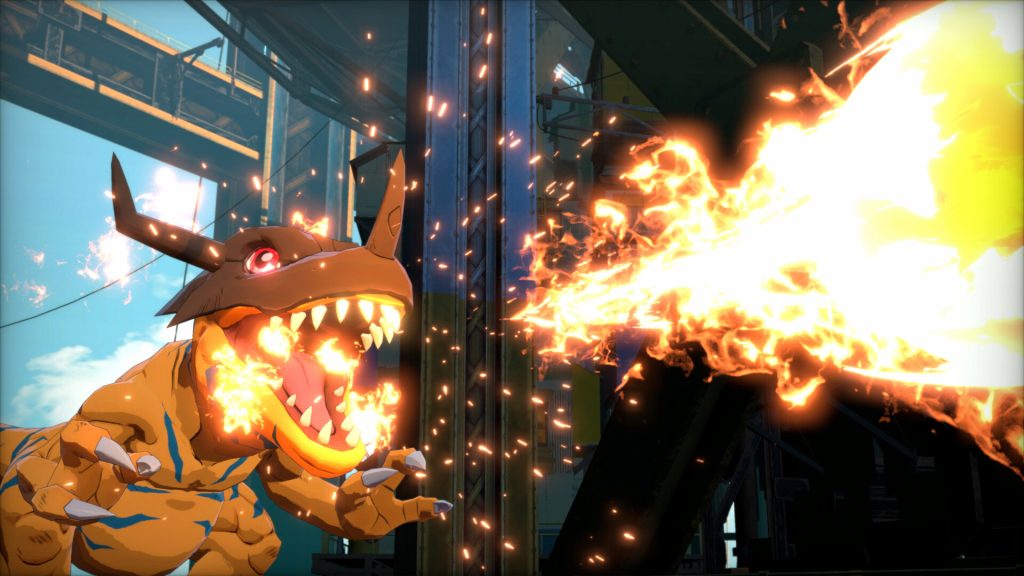
Digimon Story: Time Stranger will be available on PC, PlayStation 5, and Xbox Series X/S starting October 3. Currently, there are no plans to release a version for the Switch 2, nor will it be compatible with older consoles such as the PS4 or Xbox One. If you’d like to get a feel for the game, you can try out the demo to see if this newest Digimon Story RPG appeals to you.
Read More
- Elon Musk’s Mom Maye Musk Shares Her Parenting Philosophy
- GBP CNY PREDICTION
- Mark Zuckerberg & Wife Priscilla Chan Make Surprise Debut at Met Gala
- Forza Horizon 6 Car List So Far: Confirmed Highlights, Cover Cars, DLC, and Rewards
- 10 Greatest Manga Endings of All Time
- Ranking the 5 Best Spring 2026 Anime So Far (Mid-Season Update)
- 7 Classic Anime You Can Stream for Free Right Now (& Where to Find Them)
- 10 Best Free Games on Steam in 2026, Ranked
- Elon Musk’s Ex Ashley St. Clair Reveals When Romance Became “Weird”
- EUR CNY PREDICTION
2025-09-29 18:14