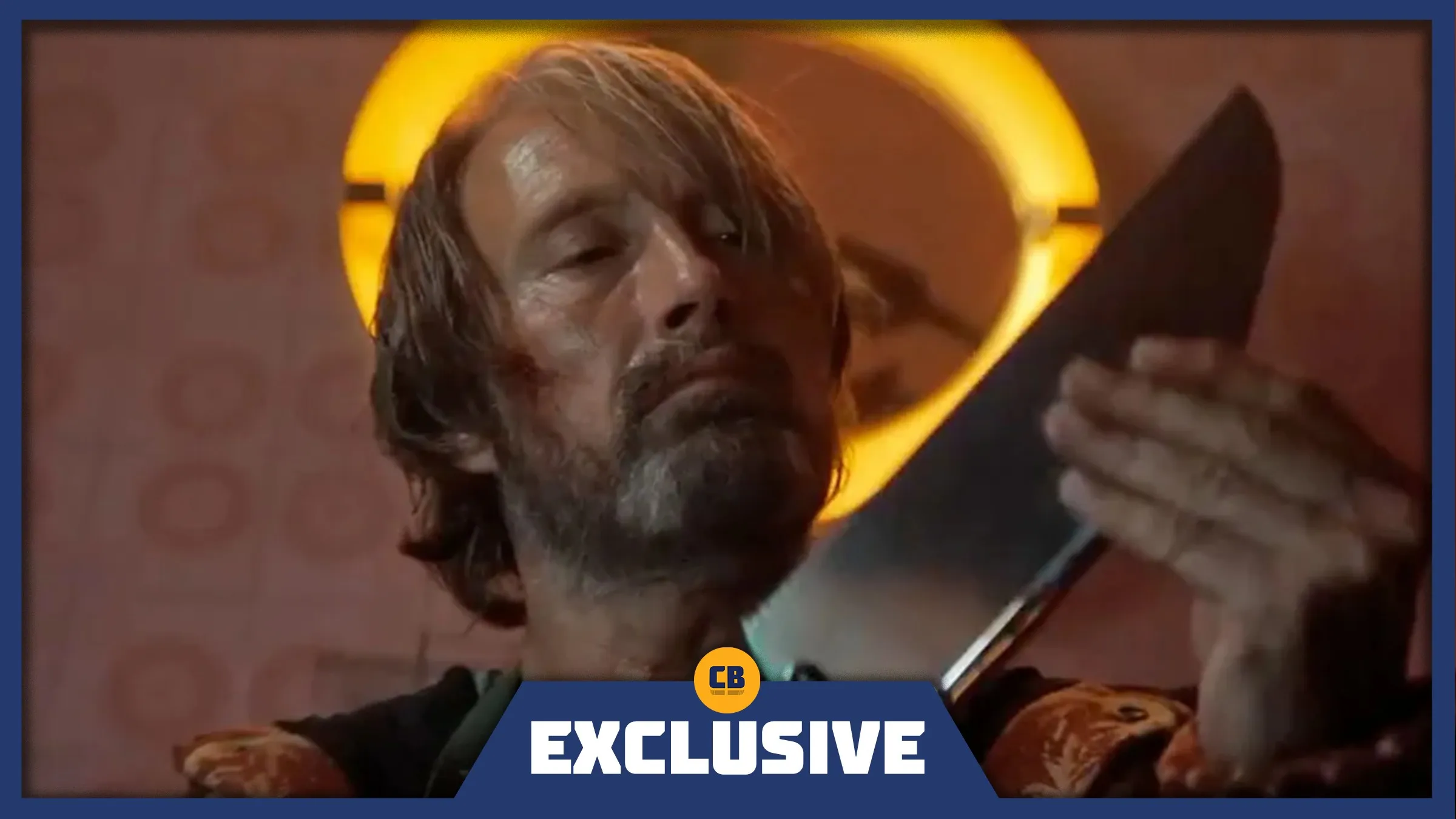
Despite ongoing discussions about bringing it back, it’s been ten years since NBC cancelled Hannibal. Ultimately, low viewership led to the show’s end, cutting short Mads Mikkelsen’s critically acclaimed performance as the villain. While several efforts to create a fourth season haven’t worked, fans are still hoping for a continuation. Luckily, Mikkelsen and Hannibal creator Bryan Fuller are teaming up again for a new horror project this month.
The new horror film, Dust Bunny, reunites stars from the show Hannibal after a decade and hits theaters on December 12th. When asked about working with them again, director Bryan Fuller told ComicBook what it was like directing Mads Mikkelsen in a different kind of role than the one he’s known for.
It’s refreshing to see Mads play a character so different from Hannibal. He’s a down-to-earth guy – a bit messy, loves soccer and fast food like McRibs, and is devoted to his family and pets. He’s not at all the polished, arrogant type Hannibal was. I was thrilled to work with him on a role that felt much more true to the Mads I know personally – as a friend and colleague. I especially wanted to showcase his playful, charming, and quick-witted side, like in the scene with Sigourney by the elevator. This character allowed Mads to show a lightness and humor that Hannibal simply didn’t have.
In another interview with ComicBook, both the director and Mikkelsen discussed the unique challenges of playing The Neighbor, Mikkelsen’s character in Dust Bunny. They compared it to his role as Hannibal, noting that both characters struggle with social interactions.
Hannibal isn’t uncaring; he’s simply very selective about who he connects with emotionally. He carefully chooses who he lets in. He’s also socially awkward and lacks strong social skills, and he seems perfectly content living alone. He’s just a different kind of person. Whether he was an adult or a child wouldn’t change that – he struggles to communicate with others. And in this situation, dealing with a persistent and dishonest child makes things even more difficult for The Neighbor.
Our full interview with Bryan Fuller continues below.
In the TV show Buffy the Vampire Slayer, the character Anya famously fears bunnies above all else. This fear is playfully explored in Dust Bunny, the first feature film directed by Bryan Fuller, who also created Hannibal and Pushing Daisies.
Hitting theaters December 12th, this movie tells the story of Aurora, a 10-year-old who believes a scary monster lives under her apartment. She’s convinced it’s a large, hopping creature and hires her grumpy neighbor, a hitman named Mads Mikkelsen, to get rid of it. As they work together and face increasing danger – including a group of assassins after them – they discover the monster is real. Aurora and her protector must be careful, or they might become the monster’s next meal.
Shortly after the premiere of Dust Bunny at the Toronto International Film Festival, ComicBook spoke with the filmmaker about how the movie came to be, the creation of its terrifying monster, the decision to use practical effects, the personal inspiration behind the story, and working again with actor Mads Mikkelsen.
Dust Bunny started as a proposal for the magazine Amazing Stories. Can you tell us how that initial idea developed into the movie we see today?
Bryan Fuller explains that television storytelling, like the original ‘Amazing Stories’ format, tends to be more focused and self-contained. While the current project is still relatively contained, earlier versions were more expansive, particularly focusing on the hitman character. When the show wasn’t picked up, Fuller decided to develop it as a movie – his first – allowing him to delve deeper into Aurora’s character and tell a personal story about someone navigating a difficult and challenging home life and finding ways to cope.
You not only have to flesh it out, but there’s a larger scope and scale in play…
We had a surprisingly large budget, especially for television. One thing I’ve learned is that good style doesn’t have to be expensive, but it can really enhance a show in unexpected ways. For example, the darkness of Hannibal was partly due to the fact that our sets weren’t very elaborate – we couldn’t afford to light them brightly. I’ve learned that carefully chosen close-up shots can dramatically improve the overall look of a story. If even a single object, like a teapot, looks beautiful on camera, it elevates everything around it. We included a few of these shots in Dust Bunny, and I wish we’d had the time and money to do more.
What inspired the creation of this impressive bunny character? And how did the idea change and develop as it was brought to life on screen?
I contacted comic book artist Jon Wayshack, who was involved with artwork for a planned Pushing Daisies comic that unfortunately never materialized. I was really drawn to his character designs – they had a wonderfully unhinged quality. He subtly exaggerated certain features, making the characters feel both familiar and a little bit crazy, which I found incredibly captivating.
As the film really got going, I immediately called Jon and asked if he’d be up for designing a monster with me – he was totally on board! I described this crazy creature: imagine a highland cow, a piranha, a hippopotamus, but with a fluffy bunny thrown in! He quickly sketched out a few ideas, one with horns, and we refined them together. The Legacy effects team took those sketches and developed them into a fully realized puppet. Then, our visual effects house stepped in, building on that work to create a digital version that matched the puppet perfectly – something convincing enough to really feel like it was stomping around on set.
The scary bunny isn’t fully revealed until close to the film’s conclusion. What led the filmmakers to choose practical effects instead of relying entirely on computer-generated imagery?
I probably wouldn’t have used a puppet for adult characters because they’re costly – a significant portion of the budget. We had to consider whether that money could be better spent on computer-generated effects. However, having a physical puppet on set and seeing Sophie react to it as if it were a real monster was crucial for creating a believable experience for her as a young actor. It allowed her to react more genuinely. Sophie is a talented actor who could have performed well either way, but the puppet just made things more engaging and enjoyable for everyone involved.
This film is deeply moving and full of genuine emotion. A key idea it explores is the importance of personal growth and healing. We want audiences to reflect on what they hope others will remember after watching it.
I especially loved working with our wardrobe team on this film. Catherine Leterrier designed all of Sigourney Weaver’s costumes – she’s actually worked with Sigourney since the movie Gorillas in the Mist. Olivier Beriot handled the costumes for everyone else, and because they’d collaborated for ten years, the whole team worked together beautifully.
When he arrived in Budapest, we’d only spoken over Zoom. He approached me after a meeting and asked if we could discuss the script, explaining he had questions that weren’t about the work itself, but about my motivations for writing it. We had a lovely brunch at the Four Seasons where he repeatedly asked, “How are you Aurora? Are you the neighbor, or are you Aurora?” I simply responded, “I’m Aurora,” and he mirrored back, “How are you Aurora?” I loved this exchange. I want audiences to connect with the character and see themselves in her, recognizing that she’s a strong, independent person who also longs for connection. He shared with me that he identified with Aurora, and that’s exactly what I hoped for – for people to see their own stories reflected in the character. The film intentionally reveals very little about Aurora’s past, only a few lines, because I want viewers to connect with the story on a personal level and consider what experiences in their own lives might lead them to make a similar wish. Those who’ve faced challenges growing up will likely find it easier to relate to Aurora’s journey.
A key line from the film, delivered by Sigourney, really resonated with me: “This isn’t going to fix you, but I think it will help.” It certainly helped me connect with the character, as it echoed my own childhood experience of repeatedly wishing for something that never came true. The film acknowledges that others may have different painful experiences, and doesn’t shy away from them. It allows the audience to bring their own past to the story, to see themselves in Aurora, and to understand the choices she makes based on their own childhood experiences.
Dust Bunny will open in theaters on December 12 from Lionsgate and Roadside Attractions.
What do you think? Leave a comment below and join the conversation now in the ComicBook Forum!
https://comicbook.com/tv-shows/list/10-horror-tv-shows-that-outdid-their-movie-counterparts/embed/#
Read More
- The Super Mario Galaxy Movie: 50 Easter Eggs, References & Major Cameos Explained
- Surprise Isekai Anime Confirms Season 2 With New Crunchyroll Streaming Release
- 10 Best Free Games on Steam in 2026, Ranked
- Preview: Sword Art Online Returns to PS5 as a Darker Open World Action RPG This Summer
- Skate 4 – Manny Go Round Goals Guide | All of the Above Sequence
- Forza Horizon 6 ‘Prologue’ gameplay
- Joel Kinnaman Claims ‘Peacemaker’ Was His Last Time as Rick Flag Jr. in the DCU
- What happened to Soldier Boy in The Boys?
- WTH?! Twitter Drops Fake Daredevil: Born Again Season 2 Spoilers as Character Return Confirmed
- Highly Anticipated Strategy RPG Finally Sets Release Date (And It’s Soon)
2025-12-04 18:45