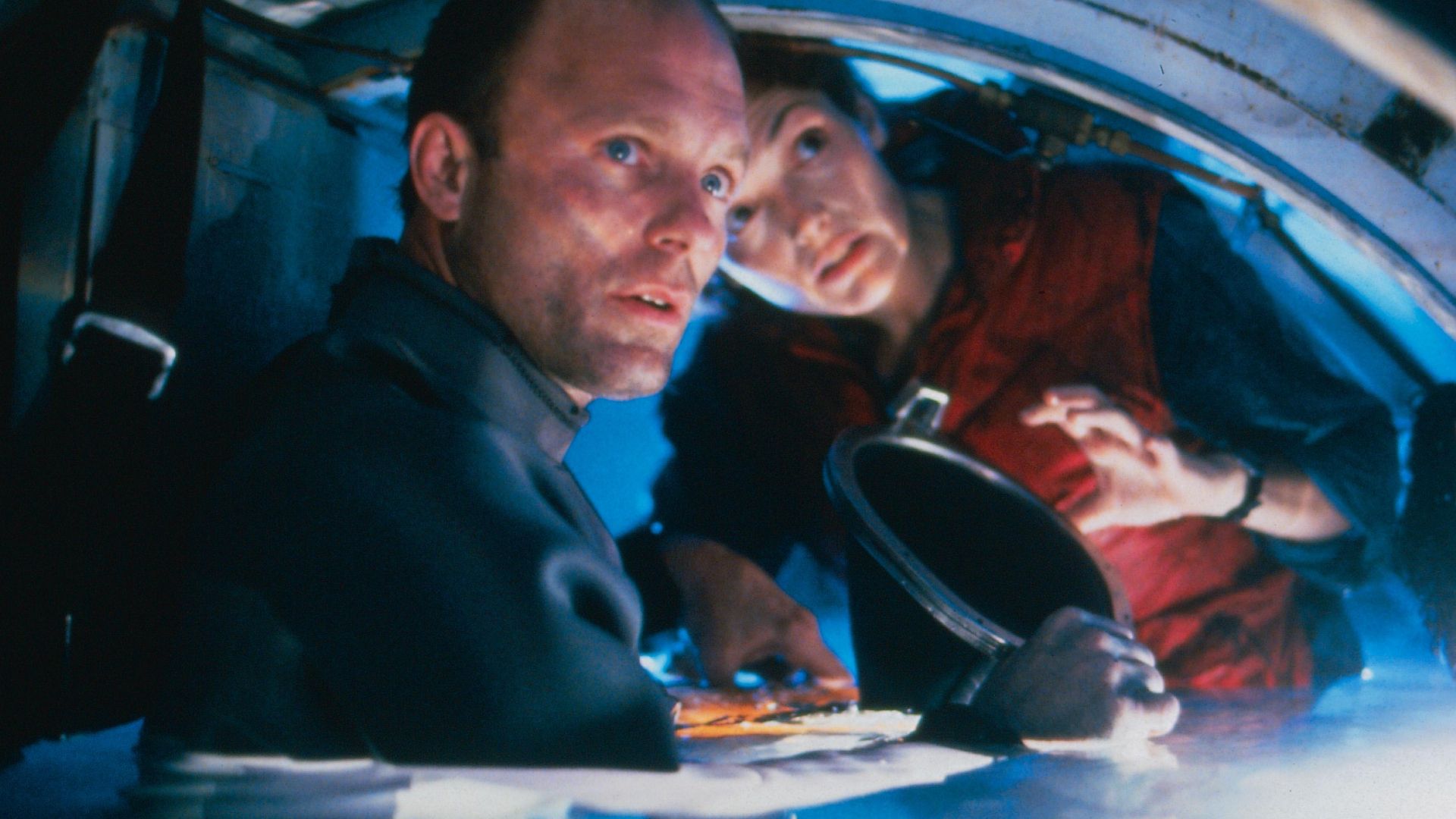
Most people assume James Cameron dislikes Piranha II: The Spawning the most from his 1980s work. It’s a classic example of the many low-budget animal attack movies that followed the success of Jaws. While it’s gained a cult following as a “so-bad-it’s-good” film – it only has a 4% rating on Rotten Tomatoes – Cameron actually considers The Abyss to be his worst movie. Luckily, he quickly made up for it with hits like The Terminator and Aliens.
At a recent Q&A, director James Cameron shared that while he was pleased with how The Abyss was made, he wasn’t happy with the final cut. He felt the theatrical version was altered too much based on early audience reactions, and didn’t live up to his vision. However, this assessment doesn’t quite reflect the film’s quality. The Abyss remains visually stunning – it even won an Oscar for Best Visual Effects – and is well-made in every other aspect, earning it a strong 89% rating on Rotten Tomatoes.
Something Terrifying Lurks in the Ocean in ‘The Abyss’
20th Century Studios
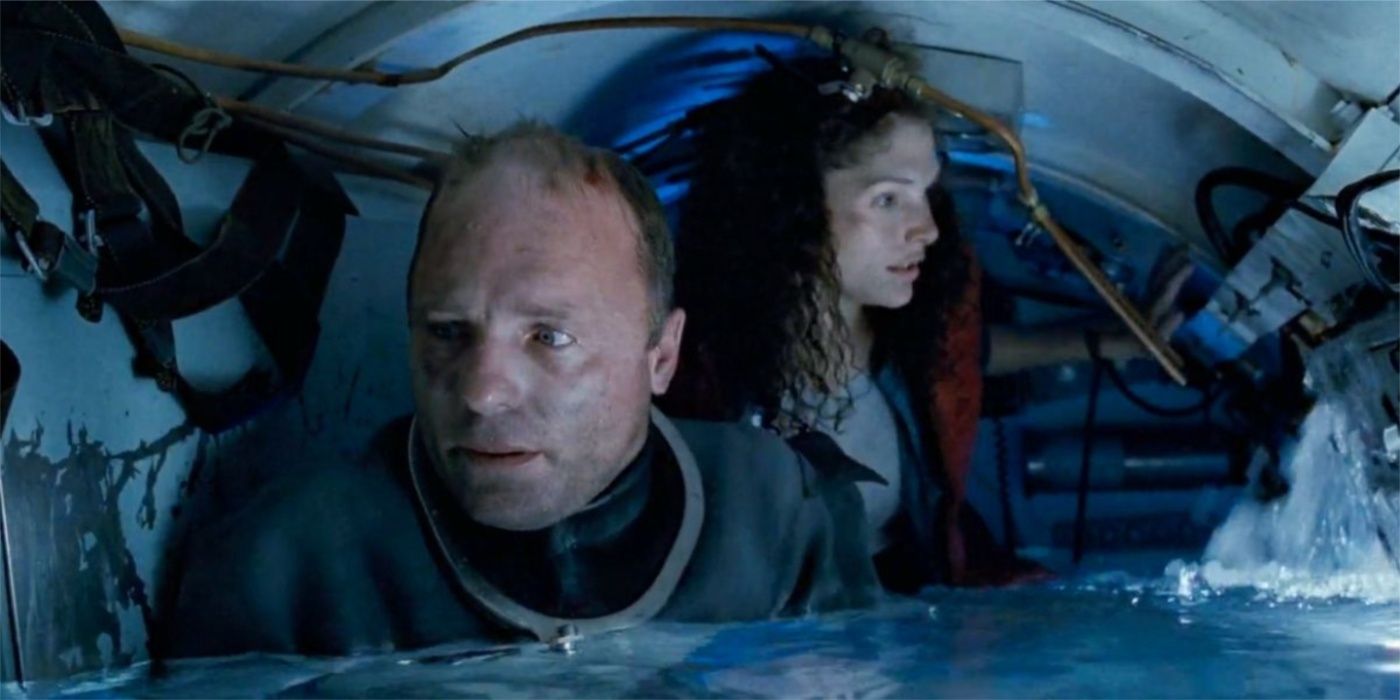
Cameron directed and Gale Anne Hurd produced The Abyss, building on her previous work funding films like The Terminator and Aliens. The movie centers on a rescue mission after the USS Montana, an American nuclear submarine, sinks following an encounter with a strange underwater object near the Cayman Trough.
As a hurricane bears down, the U.S. Navy secures Deep Core, an underwater drilling facility, hoping to stabilize the situation. Virgil “Bud” Brigman (Ed Harris), the rig’s foreman, must work with a team of Navy SEALs commanded by the stern Lt. Hiram Coffey (Michael Biehn). Things become complicated when the team encounters bizarre events and possible signs of alien life. To make matters worse, Lt. Coffey starts to lose his grip on reality due to the psychological effects of deep-sea pressure. Can they complete their mission?
James Cameron first conceived the idea for the film when he was a teenager. Inspired by a high school science talk given by Francis J. Falejczyk – a pioneer in liquid breathing – Cameron wrote a short story about ocean researchers. He continued to revise and develop this story over many years.
James Cameron began developing the idea for The Abyss while working on Aliens. A National Geographic documentary he watched on set, showcasing underwater remotely operated vehicles in the North Atlantic, inspired him and producer Gale Anne Hurd to create an underwater film. Their personal lives were also eventful during this time: Cameron and Hurd married before starting The Abyss, separated during the film’s planning stages, and divorced two months after filming began. Hurd later married director Brian De Palma.
James Cameron’s Superior Post-80s Films Owe a Lot to ‘The Abyss’
20th Century Fox
This director has a long-standing fascination with the sea, evident throughout his career. While he’s created many adventurous films, he consistently returns to ocean-based stories. It’s a curious relationship – he seems both captivated by and fearful of the water. He consistently finds fresh and exciting ways to depict the physical experience of being in and around the ocean. Ultimately, his film The Abyss is the primary reason for his strong connection to aquatic themes.
Cameron doesn’t need to regret making The Abyss because it inspired him to create even better films, like Titanic and Avatar. During a recent Q&A, he admitted that working on The Abyss was crucial to his success with Titanic. He explained that it taught him to focus on the core emotional story of a film, rather than getting lost in special effects.
While a few independent films had experimented with water effects before, they didn’t really go anywhere – it often looked amateurish. This sci-fi thriller was the first to truly embrace large-scale, practical underwater filming. Director Cameron captured the powerful movement of water – its force, energy, and speed – incredibly well. As reported by Ian Blair in Starlog Magazine, the actors and crew spent a full week training for underwater diving in the Cayman Islands. The film was primarily shot in large tanks at a disused nuclear power plant, a technique Cameron would later reuse for the water scenes in Titanic.
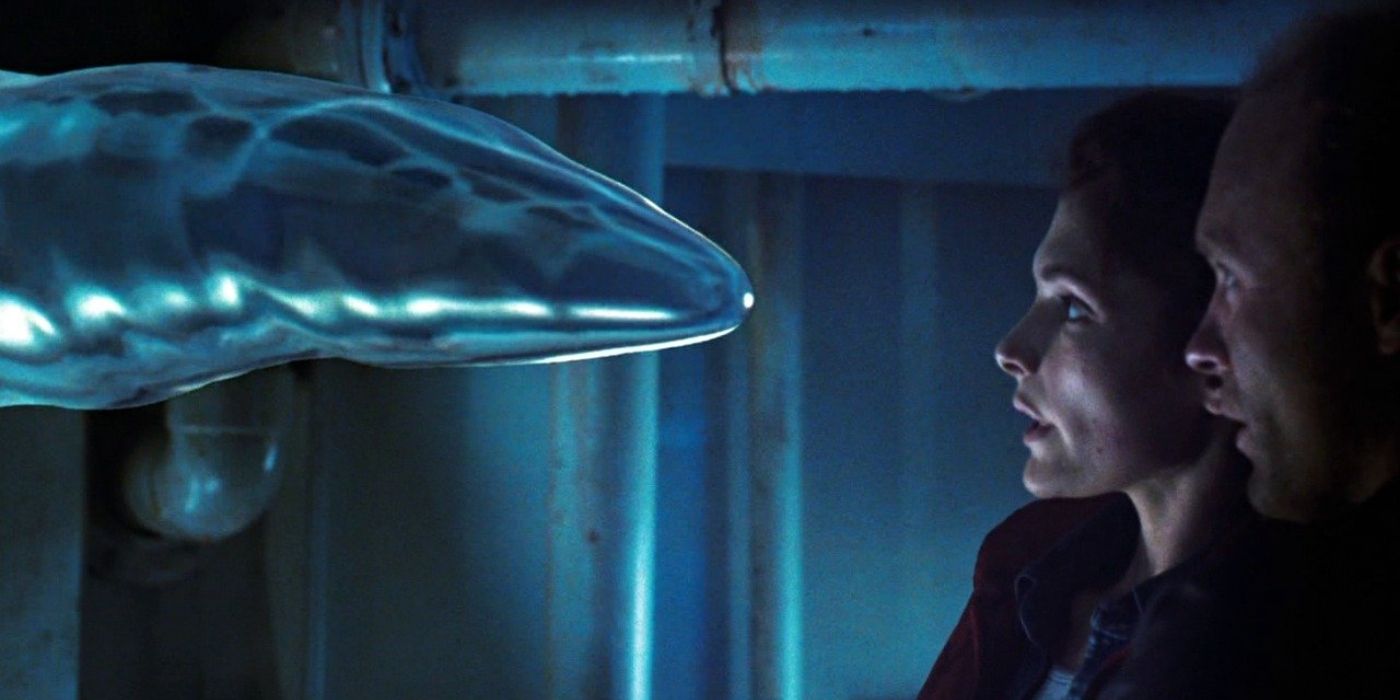
The film featured a groundbreaking visual effect – a water tentacle that could mimic different faces, nicknamed the “pseudopod.” This was one of the earliest significant uses of computer-generated imagery (CGI) in a movie, created by the special effects company Industrial Light & Magic (ILM). It paved the way for iconic scenes like the shape-shifting liquid metal effects in Terminator 2: Judgement Day and the sophisticated performance-capture technology used in Avatar.
Cameron and his team spent an incredible amount of time underwater – 10 hours a day, six days a week, for ten straight weeks. He became deeply connected to the ocean through this experience, both for his films and personally. He went on to make many deep dives, even beyond 11,000 meters, and visited the Titanic wreckage 33 times. In 2012, he famously made a solo journey to the Challenger Deep, believed to be the deepest point in the world.
‘The Abyss’ Preaches Peace, Making it a Relevant and Timeless Film

20th Century Studios
It’s understandable why James Cameron has mixed feelings about The Abyss. The film was difficult to produce—some actors became unhappy—and it earned only $90 million in theaters. Considering he’s now one of the highest-grossing directors ever, that result doesn’t quite meet his expectations—he prefers films that earn billions. Despite this, The Abyss is a surprisingly thoughtful film, blending dark ideas and unusual themes into a powerful and unified story. In fact, it’s arguably more intelligent and has a stronger political message than many of his more famous movies.
The artwork doesn’t rely on subtle criticism; its message is direct and impactful. It strongly criticizes both extreme militarism and humanity’s habit of turning to violence to solve issues. The character of Coffey represents a narrow-minded, aggressive military type whose actions nearly lead to global destruction, and the artwork as a whole challenges the military’s claim to be a force for protection when it so often causes harm.
In the end, the aliens choose not to destroy humanity, not out of pity, but because they recognize that many humans are good people who shouldn’t be punished for the actions of others. This includes the main character and his wife.
On the issue, Cameron wrote:
The film initially aimed to depict a doomsday scenario where humanity is evaluated by a more advanced civilization. We are ultimately deemed worthy of being saved thanks to an ordinary man who embodies the best parts of us – specifically, our ability to love and our willingness to sacrifice for others.
The film The Abyss suggests that kindness and connection, not force, are what truly improve the world. In the extended ending, aliens reveal to Bud a montage of human warfare from news coverage. They then demonstrate their power by creating enormous tsunamis, but ultimately prevent them from causing destruction. When Bud questions their mercy, the aliens show him a heartfelt message of love sent between Bud’s wife, Lindsey, and himself – a message sent before their recent separation and constant arguments.
The film’s core message gives it lasting relevance, and many consider it James Cameron’s most significant work. Similar to the original The Day the Earth Stood Still, its strength lies in its message, rather than spectacle and action – elements Cameron frequently uses in his other films. Because of this, Cameron clearly values the film, often discussing it in interviews and teaching settings.
Read More
- Trails in the Sky 2nd Chapter launches September 17
- Paradox codes (April 2026): Full list of codes and how to redeem them
- Crimson Desert’s Momentum Continues With 10 Incredible New Changes
- PRAGMATA ‘Eight’ trailer
- Pragmata Shows Off Even More Gorgeous RTX Path Tracing Ahead of Launch
- How Could We Forget About SOL Shogunate, the PS5 Action RPG About Samurai on the Moon?
- Hulu Just Added One of the Most Quotable Movies Ever Made (But It’s Sequel Is Impossible To Stream)
- Why is Tech Jacket gender-swapped in Invincible season 4 and who voices her?
- Dragon Quest Smash/Grow launches April 21
- Xbox Game Pass Users “Blown Away” by New Exclusive Game
2025-12-06 22:19