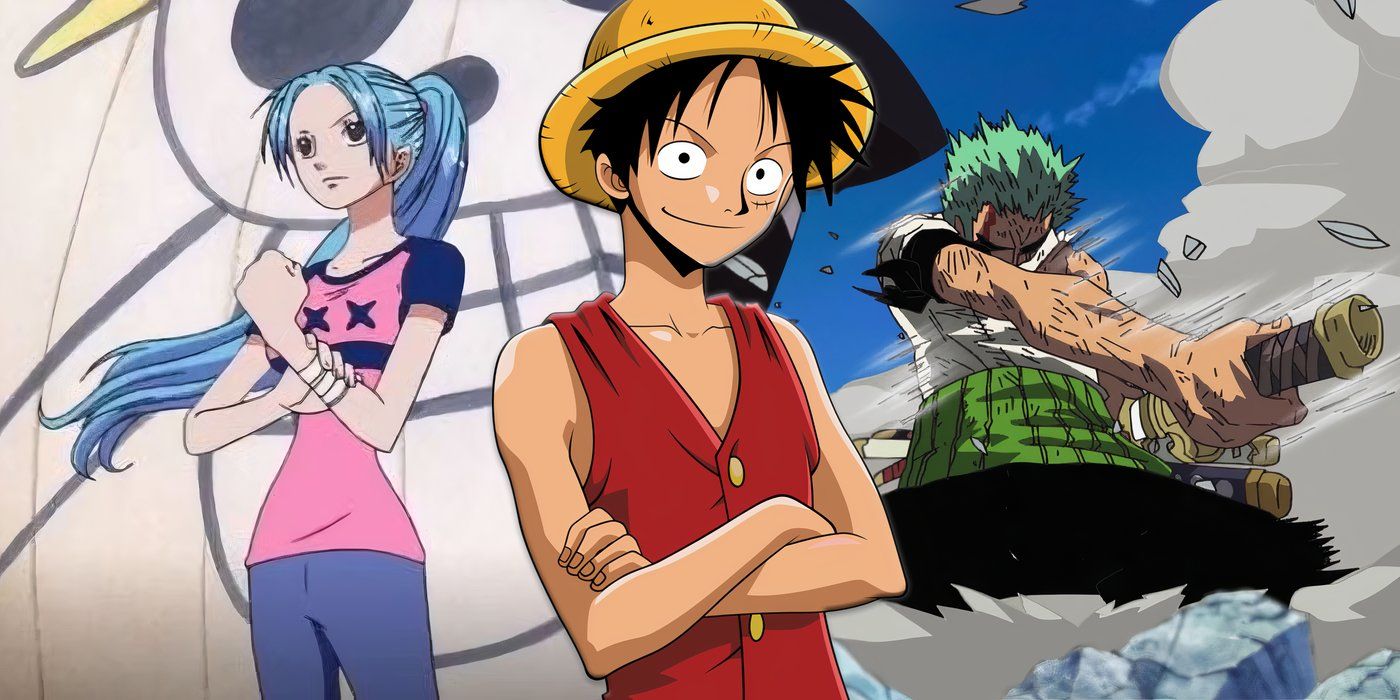
One Piece is an incredibly long-running anime, starting as a manga in 1997 and debuting on television in 1999. Very few anime series have lasted this long, and even fewer have maintained such high quality for almost three decades. One Piece is particularly notable for its detailed world, grand story, and complex characters, making it a truly essential watch for anime fans.
Even though One Piece has a lot of content – over 1,100 chapters and episodes – fans agree it’s worth the time to get into. The series isn’t perfect, but its flaws aren’t serious enough to dismiss it. Ultimately, if someone doesn’t enjoy One Piece, that’s more a matter of personal preference than a problem with the anime itself.
One Piece Redefined Worldbuilding & Longform Storytelling for Anime
Anime is known for creating incredibly detailed worlds, like the Soul Society in Bleach and the Shinobi Nations in Naruto. We also see fascinating, mysterious settings in shows like Neon Genesis Evangelion and Haruhi Suzumiya, and truly magical worlds in anime like That Time I Got Reincarnated as a Slime. However, one anime truly excels above all others in its worldbuilding.
The world-building in this story is remarkably detailed and realistic. By focusing on the Straw Hat pirates, the story beautifully highlights the vastness and wonder of this world. Each new adventure not only takes the crew to exciting places, but also enriches the world itself, leaving it a little better than before.
I’m absolutely fascinated by how Eiichiro Oda builds his world in One Piece! It’s not just window dressing – the setting, history, and rules of the world drive the story forward. It’s like the world itself is a character! Even though the story takes place across thousands of islands, everything feels connected, and Luffy’s journey is bringing it all together – even places the Straw Hats haven’t visited yet. It’s incredible how everything ties in!
One Piece is a landmark achievement in long-form storytelling. Its success stems from a richly detailed world where every character and event feels connected and purposeful. Creator Eiichiro Oda has also maintained consistent themes throughout the series’ nearly thirty-year run, creating even more connections within the larger story.
The Grand Line is a prime example of how worldbuilding and storytelling work together in One Piece. By episode 63, the Straw Hat crew arrives at this incredible location and spends the rest of their journey within this specific, relatively small area of the world. Some viewers point out that Oda hasn’t fully explored the other seas and islands, but the story itself doesn’t seem to need those additional locations.
It really shows how talented Eiichiro Oda is that he’s been able to tell such a lengthy story while primarily focusing on a relatively small part of the world. Hundreds of episodes have followed the Straw Hat pirates as they journeyed through Paradise, the first half of the Grand Line, and even more have covered the second half, called the New World. As of Episode 1153, Luffy still hasn’t found the legendary treasure that gives the series its name.
What makes the Grand Line so exciting is that each island feels like a completely different anime world. For example, the Alabasta arc has a desert setting inspired by Islamic design, while Fish-Man Island explores an underwater civilization. Sky Island reveals societies that live among the clouds, and Wano Country is based on historical Japan. More recently, the Egghead and Elbaph arcs have taken the crew from futuristic technology to a medieval atmosphere.
Even though the islands are very different from each other, the story flows logically from one point to the next, maintaining a consistent feel. This is further enhanced by hints about what’s to come and the rich history revealed throughout the narrative. And that’s not even considering everything else the story offers.
Countless Characters Play Countless Critical Roles in One Piece
One Piece features a remarkably large cast of characters, even compared to other popular action anime like Bleach and Naruto. What’s truly impressive is that the author, Oda, has given many of these characters significant roles in the overarching story. While other series have many characters, One Piece stands out due to the depth and variety of its cast – including friends, enemies, rivals, and everything in between.
The Grand Line is incredibly crowded with ships – beyond counting, really! Eiichiro Oda, the author, somehow keeps everything straight, but even dedicated fans need to stay updated on what’s happening to fully understand the story and who’s involved. However, you don’t need to know everything to see how important and connected these characters are.
Considering just the pirate crews, there are at least a dozen powerful groups capable of significantly impacting the world, particularly with the Final Saga beginning. These pirates aren’t simple stereotypes; while they may exhibit some familiar tropes, most are well-developed individuals with their own unique goals. From the lasting legacy of the Roger Pirates to the growing danger of the Blackbeard Pirates, One Piece features a diverse and compelling cast of pirate characters.
Unlike the chaotic pirates, the World Government is clearly being built up as a major final enemy in the series. Even with many strong characters appearing within its ranks, One Piece consistently shows that the Marines and even the highest authorities like the Five Elders only represent one piece of the larger story. The introduction of the main villain, a mysterious figure named Imu, doesn’t alter this – the series still emphasizes that multiple perspectives are important and deserve to be explored, and this is a core element of what makes One Piece compelling.
It’s become increasingly obvious that One Piece is a story built on intricate connections and clashes, where every interaction can change what happens next. Kingdoms rise and fall, but not due to simple luck. Instead, the real power comes from individuals – or groups of people influenced by strong leaders. All of these elements combine to create a rich and vibrant world.
One Piece Uses Joy & Freedom to Say Something Bigger
While fate is a factor in One Piece, it’s less central than Luffy’s focus on freedom and happiness. It appears Luffy was destined to reshape the world as a savior, fighting for those in need. The Wano Saga confirmed this path, but ultimately, Luffy has always prioritized bringing joy to others above all else.
At first glance, One Piece seems like a lighthearted adventure about a stretchy pirate and his cheerful journey across the ocean. However, Luffy’s constant happiness isn’t just a fun detail – it’s central to the story’s message. The creator, Eiichiro Oda, skillfully uses joy and freedom, often presented in a humorous way, to offer a powerful commentary on power structures and what it truly means to be free. Because of this, when Luffy and his crew bring happiness back to places like Arabasta, Wano, and Dressrosa, it feels like a real political act, not just a symbolic one.
Freedom is a central theme in One Piece. It’s not just an idea, though – it’s shown through everyday actions like how characters live, love, enjoy food, and express themselves without needing anyone’s approval. The Pirate King, in the story, can be anyone they choose. While Roger didn’t embrace the title until the very end, Luffy sees it as becoming the most free person on the ocean. One Piece cleverly challenges typical action anime by portraying the liberation of everyone as the ultimate achievement.
Even in the face of death and loss, the pursuit of happiness and freedom remains strong. Characters like Gol D. Roger, Portgas D. Ace, Kozuki Oden, Donquixote Corazon, Pedro, and Ida (as seen recently) all faced their ends with smiles. The World Government can try to control people, but it can’t suppress true joy or the desire for freedom that unites them.
One Piece argues that happiness, strong friendships, and exciting adventures aren’t ways to escape pain—they’re actually powerful ways to cope with it. The creator, Eiichiro Oda, often shows moments of pure joy right alongside intense violence, making happiness itself a form of rebellion. The series suggests that real freedom comes from feeling connected to others and having compassion. This idea is perfectly captured by the character Nika, the Sun God, who literally laughs in the face of the world’s problems.
It’s become common to write off One Piece because it’s so long and its art style can seem childish. However, the reality is that Eiichiro Oda’s masterpiece is incredibly well-developed and ambitious, easily ranking among the best stories ever created. Ignoring One Piece means missing out on a brilliant example of long-form storytelling that justifies its length and celebrates the enduring strength of hope.
Read More
- Everything You Need To Know About Nikki Baxter In Stranger Things’ Animated Spinoff
- The Boys Season 5, Episode 5 Ending Explained: Why Homelander Does THAT
- After 11 Years, Black Clover Officially Ends With Final Release (& Crowns a New Wizard King)
- Gemma Arterton spy thriller Secret Service based on hit novel gets release date confirmed on ITV
- Welcome to Demon School! Iruma-kun season 4 release schedule: When are new episodes on Crunchyroll?
- 7 Most Brutal Avengers Villains, Ranked by Threat Level
- Miranda Kerr Shares “Quick” Procedure She Got Before Met Gala 2026
- ‘The Bride!’ Review: Jessie Buckley Breathes Life into a Monstrous Mess
- 5 Neglected Pokemon That Have the Fewest Cards in the Pokemon TCG
- New Dragon Ball Super Leaks Confirm the 2026 Remake Was Always a Mistake
2025-12-09 01:12