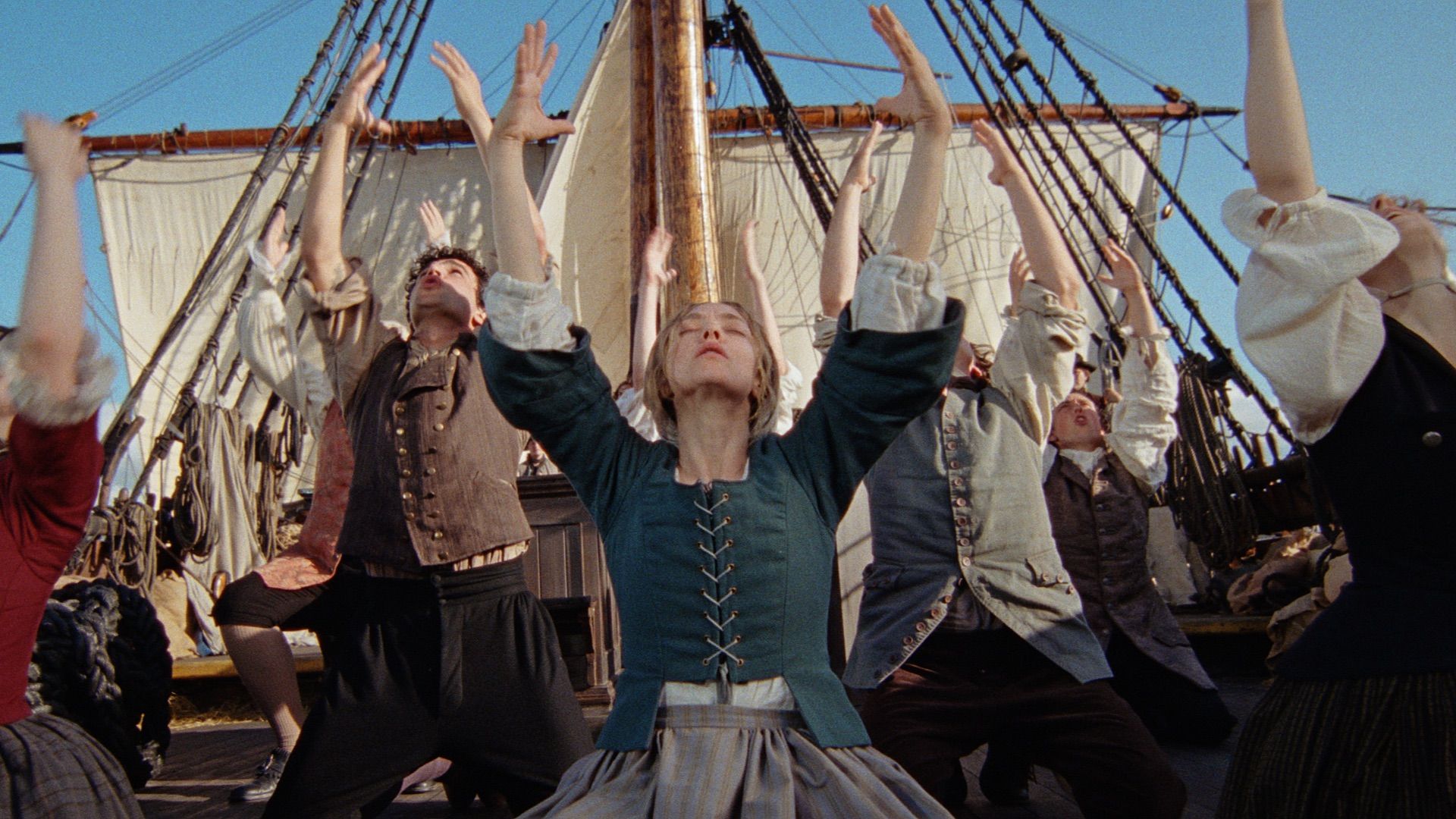
Honestly, you might not recognize their names yet, but I think Brady Corbet and Mona Fastvold are the most exciting directing duo in Hollywood right now. Corbet’s latest, The Brutalist, which just won an Oscar this year, is a really powerful and impressive film – a sweeping story about what it means to be an immigrant. But as amazing as that is, I actually think Mona Fastvold has outdone him. Her film, The Testament of Ann Lee, is just breathtaking. It’s a really bold, visually stunning, and almost musical take on the life of the woman who started the Shaker movement back in the 1700s. It’s the kind of film that really stays with you.
This film offers a remarkably immersive and powerful theatrical experience, tracing the journey of the Shakers from England to America. What’s impressive is it portrays their religious beliefs with respect and avoids being critical or dismissive – a difficult balance to achieve. Ann Lee, the central figure, believed she was the Second Coming of Christ and was deeply revered by her followers; her words were almost considered sacred. Amanda Seyfried delivers a compelling performance, making Ann Lee’s convictions believable, especially considering the immense hardships she faced earlier in life, which seemed to naturally lead her towards faith. While the film keeps a slight emotional distance, preventing us from fully knowing Ann Lee as a person rather than a religious icon, that’s the most criticism one can offer of this bold and remarkably original film, likely to be a standout of 2025.
The Shakers, originally a branch of the Quakers, were known for their energetic and passionate worship, which involved intense dancing believed to be the presence of the Holy Spirit. The film vividly portrays these revival meetings with expertly choreographed dances featuring expressive arm movements, foot stomping, and powerful shaking. Composer Daniel Blumberg enhances these scenes with adapted Shaker spirituals, creating an immersive soundscape filled with emotion. Combined with his evocative musical score—featuring pulsing cellos, ringing chimes, and soaring violins—Blumberg, much like his work on the award-winning film The Brutalist, firmly grounds the viewer in the film’s unique atmosphere, complementing the visuals perfectly.
Many filmmakers might portray Ann Lee’s intense devotion to God as a mental illness, or question her stability. However, the film’s director remains respectful of her journey. The detailed setting vividly recreates mid-1700s England, a harsh time when even children faced severe punishment. Young Ann Lee’s religious inclinations become extreme after she witnesses her parents being intimate and is then punished by her father for confronting them. This experience solidifies her belief that sex is a sin that separates people from God. Her marriage to the cruel Abraham (Christopher Abbott) and the subsequent, devastating loss of all four of her children – each dying before their first birthday – reinforce this belief. Having seen only pain and tragedy connected to physical intimacy, Ann Lee concludes that celibacy is the only path to true spiritual connection.
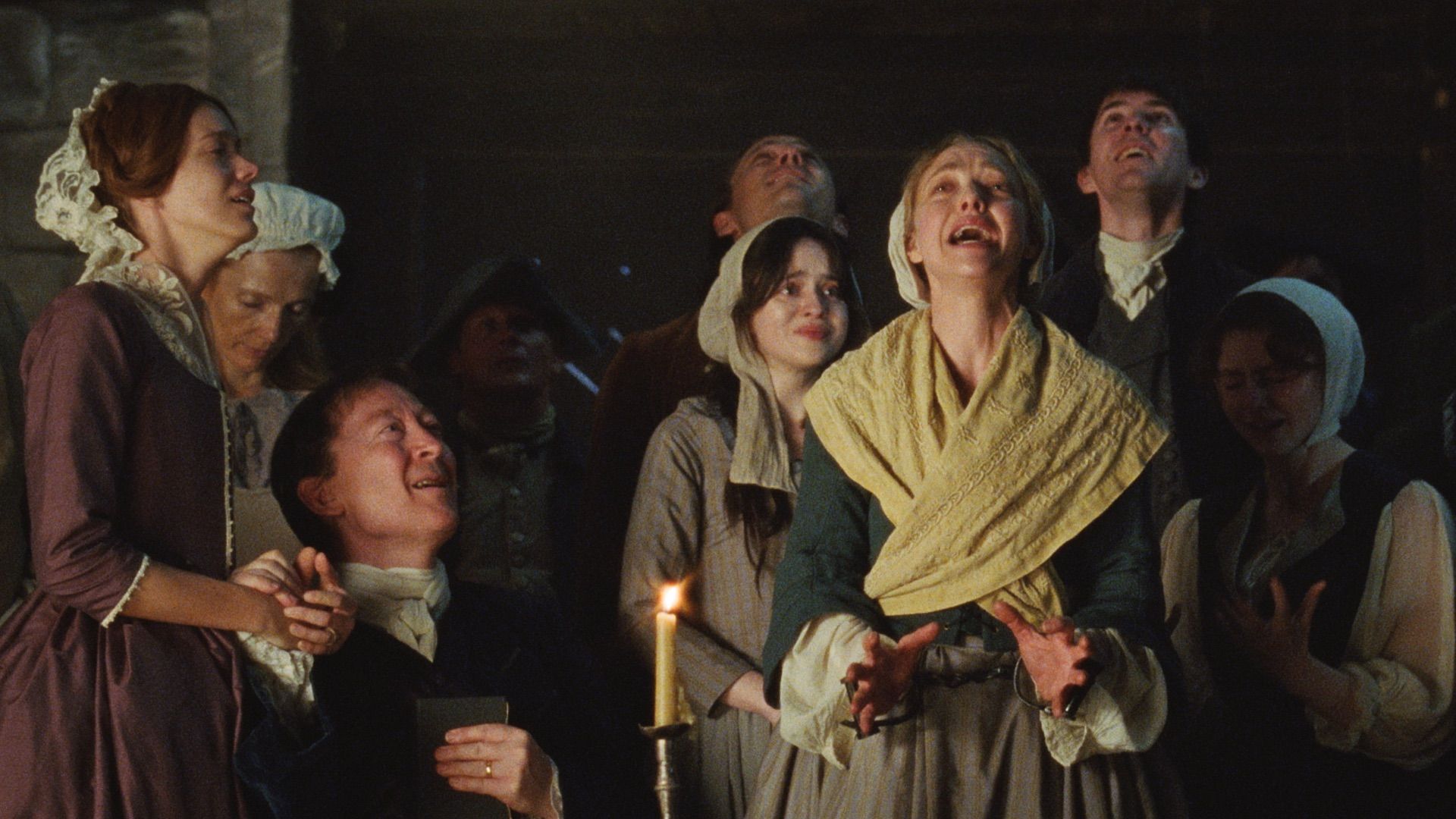
Abraham isn’t pleased with Ann Lee’s decision to remain celibate and strongly objects to it. However, the film doesn’t fully explore their marriage – Abraham’s feelings about Ann Lee’s increasing religious devotion beyond just the lack of intimacy, or her journey to becoming a religious leader. Instead, the story focuses on Ann Lee as she, along with her brother William and follower Mary, travels to America on a dilapidated ship with her growing group of believers. Once they arrive in New York in 1774, the narrative becomes more predictable, and some of the film’s bolder choices feel a bit strange. Despite this, the film is a compelling companion to The Brutalist; while that film questions America’s promise of individual success and capitalism, this one examines early America’s idea of itself as a place of religious freedom. Both films suggest these foundational American ideas are admirable, but flawed. Once Ann Lee and her followers, known as the Shakers, establish themselves in New York, they face increasing hostility that quickly escalates to violence.

Similar to how Corbet worked with The Brutalist, Fastvold achieves a remarkably polished look for The Testament of Ann Lee despite a relatively modest $10 million budget. The film feels fully realized, reflecting her complete artistic vision. Cinematographer William Rexer deserves particular praise for beautifully capturing the spiritual power of the Shaker dances and creating a rich, classic atmosphere in the dimly lit scenes. The entire production has a carefully crafted feel, portraying a harsh world with moments of heavenly beauty. Ultimately, the film’s message might not be strictly religious; the Shakers’ practice of celibacy fostered a strong sense of community, and that idea – people uniting for a shared purpose – feels especially relevant today.
MovieWeb Report
Immerse yourself in the cinematic universe with the latest movie news, reviews, and exclusive content from MovieWeb.
MovieWeb Report
The Testament of Ann Lee, from Searchlight Pictures, opens in theaters on December 25.
Read More
- Adam Levine Looks So Different After Shaving His Beard Off
- Trails in the Sky 2nd Chapter launches September 17
- After AI Controversy, Major Crunchyroll Anime Unveils Exciting Update
- PRAGMATA ‘Eight’ trailer
- Hulu Just Added One of the Most Quotable Movies Ever Made (But It’s Sequel Is Impossible To Stream)
- Xbox Game Pass Users “Blown Away” by New Exclusive Game
- Dragon Quest Smash/Grow launches April 21
- Dialoop coming to Switch on June 17
- Why is Tech Jacket gender-swapped in Invincible season 4 and who voices her?
- How Could We Forget About SOL Shogunate, the PS5 Action RPG About Samurai on the Moon?
2025-12-22 21:38