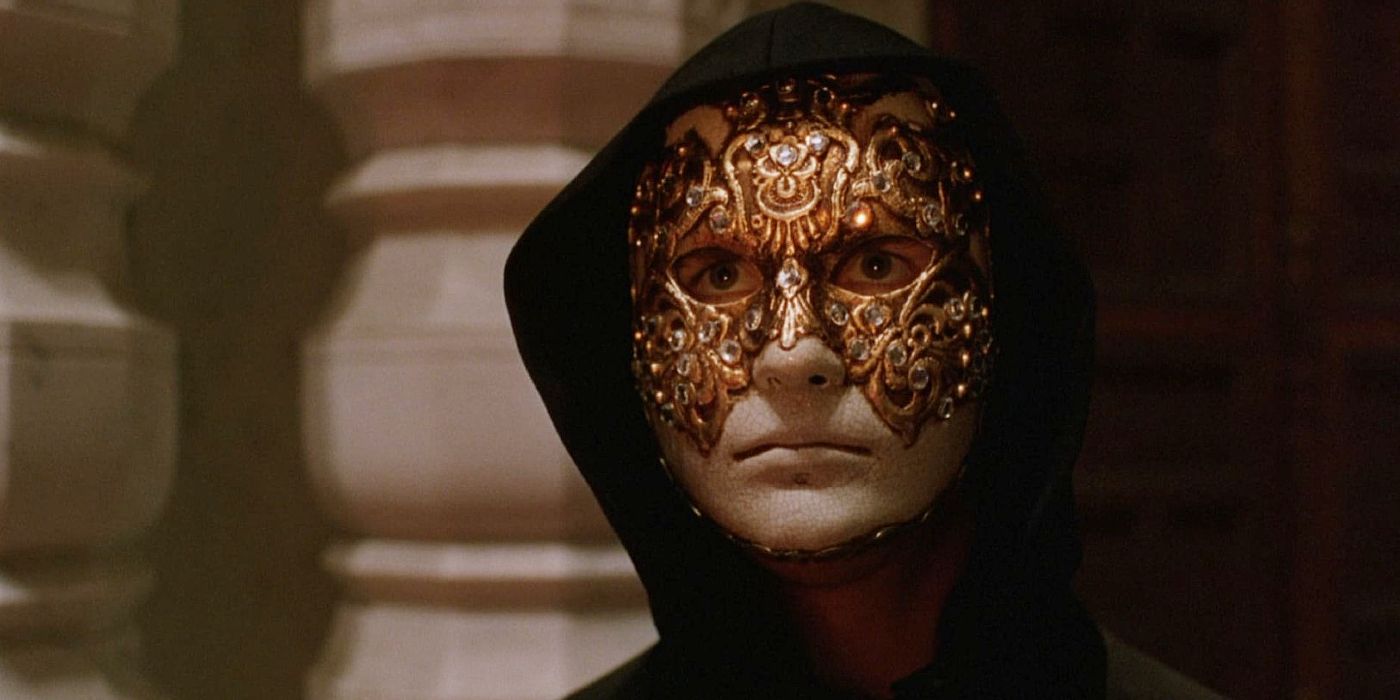
It’s hard to imagine Tom Cruise in a movie about a secret sexual society, especially while wearing a trench coat. However, Stanley Kubrick’s last film, Eyes Wide Shut (1999), is surprisingly a dark and complex story set during the holidays. Though released in July, the entire film takes place during Christmas in New York City, using the cheerful holiday season to create a sense of unease. Originally marketed as a provocative thriller featuring Tom Cruise and Nicole Kidman, the film has become known for its critical look at the behavior of the wealthy and powerful.
You know, even after 25 years, Eyes Wide Shut still gets under my skin. It’s holding strong with a 76% on Rotten Tomatoes, and honestly, it feels more relevant now than ever. It’s not just a movie about a couple struggling, it’s genuinely creepy – a horror film about the hidden barriers between the powerful and the rest of us. And what’s really brilliant is how Kubrick sets this whole unsettling story against the backdrop of Christmas – all those bright lights and parties just make the darkness feel even more disturbing. It’s a secret Christmas masterpiece, truly.
Stanley Kubrick Utilizes Christmas as a Camouflage for Power
These films use the holiday theme in a unique and unexpected way. The director is known for meticulously controlling every detail of his shots, and he chose Christmas specifically because it represents a perfect facade of joy and happiness.
The movie is lit almost entirely by Christmas tree lights. They appear in every setting – from lavish mansions and cramped apartments to storefronts and city streets. However, instead of creating a warm, inviting atmosphere, the lights have a strange, almost unsettling, glow.
The movie’s hazy, dreamlike visuals are central to its message. The lighting creates a deceptive sense of security, almost like a drug for the characters. The film begins with a lavish Christmas party thrown by the wealthy and influential Victor Ziegler (played by Sydney Pollack). Initially, it appears to be a perfect holiday scene – complete with formal wear, champagne, a large Christmas tree, and pleasant conversation.
The scene appears perfect – smiles and polite behavior everywhere. However, this pleasant facade hides a disturbing reality. While a party is happening below, Ziegler is upstairs confronting a frightening situation: a woman, unconscious from a drug overdose. This contrast forms the central conflict of the story.
The holiday often justifies overindulgence. It allows those with power and privilege to come together, drink freely, and act on their basest desires, all masked as festive cheer. The elaborate lights downstairs served to divert attention from a hidden tragedy upstairs – a clever deception, where the more dazzling the Christmas decorations, the more deeply a dark secret is concealed.
The film portrays the holiday season as a facade – a cheerful disguise that hides deeper problems and decay within society. This idea of things not being what they seem is reflected in the movie’s visuals, which primarily use two contrasting colors: the warm glow of Christmas lights and the cold, artificial blue of the city streets.
Gold symbolizes the false comfort enjoyed by the wealthy – the parties, money, and security. Blue represents the harsh reality that exists beyond their world. Throughout the movie, Bill Harford moves between these two contrasting environments. He ventures from the safe haven of his apartment into the cold city streets, actively seeking conflict. Each Christmas tree he encounters serves as a reminder of the life he wants to reclaim and the cost of maintaining his current existence.
Tom Cruise’s Character Discovers an Ugly Truth
Although the marketing for Eyes Wide Shut emphasized its sensual themes and focused on a New York City couple, the film is fundamentally about power dynamics. It explores the contrast between those who hold wealth and influence and those who serve them, and how the protagonist’s existing beliefs about the upper class shape his experiences.
Dr. Bill Harford sees himself as important and successful – a well-off doctor living in a prime location who proudly displays his credentials. He believes he’s on equal footing with the wealthy people he knows. However, the movie spends its runtime repeatedly demonstrating that he’s actually an outsider, merely a service provider despite his appearance.
I still can’t shake the bathroom scene at Ziegler’s party – it’s just awful. The way Ziegler calls Bill upstairs isn’t a request for help from a friend, but an order to an employee. It’s sickeningly clear Ziegler doesn’t care about the woman who’s overdosed, only about protecting his precious party and avoiding a scandal. He sees Bill as nothing more than someone to fix a problem, like a plumber dealing with a leak – completely dehumanizing.
Ziegler essentially wants the mess cleaned up quickly so he can return to his party. This incident reveals the underlying power dynamics that the festive atmosphere attempts to mask – a harsh reality of life in big cities where the well-being of people, particularly vulnerable women, is often disregarded. This tension comes to a head during the film’s dramatic finale, which unfolds around a pool table in Ziegler’s library.
This 13-minute scene is widely considered a masterpiece of dialogue in film. After accidentally discovering a secret and disturbing event, Bill believes he’s witnessed a murder and demands an explanation. Ziegler calmly leads him aside, offers a drink, and then systematically manipulates Bill into questioning his own perceptions. Ziegler insists everything Bill saw was staged, a deception, and claims the woman died peacefully. Despite his soothing, paternal tone, Ziegler’s words carry a chilling and unmistakable threat.
There’s this line from Ziegler to Bill – ‘Life goes on, until it doesn’t’ – and it really stuck with me. It feels like the perfect encapsulation of how the powerful operate. He basically confesses he was present at… something significant, acknowledges what went down, and then casually implies there will be zero consequences for anyone involved. It’s chilling, honestly. Because, as he sees it, they are the ones writing the rules, so they’re untouchable. It’s a bleak reminder of how the system works, or doesn’t work, for those at the top.
Forget about fairness or compassion – this world runs on power and wealth. If you have enough money, you can control what’s considered real. Bill doesn’t leave because he believes what Ziegler says, but because he understands he’s outmatched. He’s an outsider in a dangerous place, and he’s fortunate to escape unharmed. The film suggests Bill’s only protection is staying silent and going along with things.
The Chilling Ending Makes Eyes Wide Shut a Perfect Christmas Thriller
Since its release in 1999, Eyes Wide Shut has taken on a new meaning. With growing public awareness of corruption among the wealthy and powerful, the film no longer feels like a far-fetched fantasy. Instead, it seems like a prescient warning that we didn’t heed. The unsettling scene at the mansion isn’t frightening due to its visuals—the costumes and atmosphere—but because it eerily resembles a high-level corporate event.
The system is highly structured and controlled, with layers of security and administrative processes. It’s a disturbingly ordinary bureaucracy built on exploitation, and the similarities to real-world abuses of power are clear. Think of a hidden estate where powerful people and wealthy backers conceal their involvement, while vulnerable women are treated as if they have no value. Kubrick didn’t require any special foresight; he simply grasped the dynamics of power itself.
As a film buff, what really struck me about this movie was its clever take on power. It wasn’t about shadowy figures lurking in secret; it was about those in power being right out in the open, shielded by their money and a shared understanding that silence is survival. The masks weren’t just a stylistic choice, either. They created a system where anonymity meant safety for everyone. It’s a really chilling idea – basically, everyone knows if one person breaks the code, they all fall, so nobody ever speaks up. It’s a kind of twisted, mutual self-preservation.
The idea of “passwords” is central to the film. To gain access to the secret gathering, Bill needs to say the password, “Fidelio,” which means faithfulness in Latin—an ironic twist, given his intention to be unfaithful. However, the film reveals that the true key isn’t the word itself, but rather one’s social standing. Bill knows the password, but he’s discovered because he lacks the necessary status to be accepted.
Subscribe for Deeper Takes on Secret Holiday Masterpieces
Subscribe for Deeper Takes on Secret Holiday Masterpieces
When you sign up, you’ll receive newsletters and promotional emails from us and agree to our Terms of Service and Privacy Policy. You can opt out of these emails at any time.
Bill clearly doesn’t fit in; he’s an outsider in a world of influence. This feeling really connects with viewers today who often feel like success is impossible, no matter how hard they try. Throughout the story, the idea of people being treated as commodities – bought and sold – remains central.
The movie’s last scene isn’t set in a traditional place like a church or a house, but in the famous toy store, FAO Schwarz. It’s a brightly lit, overwhelming space filled with huge displays of stuffed animals, especially bears. While completely different from the earlier, somber ritual, it serves the same purpose: fulfilling wants and needs through purchasing things.
Bill, Alice, and their daughter Helena are in a store. Helena is excitedly running around, pointing at toys she wants, which hints at a repeating pattern – she’s learning how to be a shopper. However, the way the camera focuses on her feels unsettling. She drifts away from her parents and heads towards a group of stuffed tigers, mirroring the circle of women seen in a ritual.
Two men dressed in black are observing her from a distance, and their presence feels like she’s being led away. This could be random, or it might be a hidden message from the director. The film suggests that in a world driven by money, even innocence can be bought and sold. The cheerful atmosphere of the toy store is presented as a starting point for the much more extravagant party at the Ziegler residence.
This movie doesn’t offer easy answers. Typically, a character like Bill would report a dangerous group to the authorities and be seen as a hero. But in Eyes Wide Shut, Bill reacts like many of us would: he retreats. He returns home, confides in his wife, and they both decide to act as if the unsettling experience never occurred, choosing the safety of denial over confronting the truth.
Eyes Wide Shut is a uniquely compelling holiday film because it delves into the darker, hidden aspects of the season, something rarely seen on screen. Kubrick strips away the festive surface to expose a cynical world where wealth buys power and people are easily discarded, making it a truly remarkable movie.
Read More
- Tekken 8 Fans Furious as Tifa Tipped for Street Fighter 6 Instead
- Nintendo Switch 2 Reportedly Getting Remake of One of the Best PS3 and Xbox 360 Games
- 10 Movies That Were Banned in Different Countries For Random Reasons
- Gold Rate Forecast
- Welcome to Demon School! Iruma-kun season 4 release schedule: When are new episodes on Crunchyroll?
- See Kaia Gerber & Lewis Pullman’s Vanity Fair Oscars Party Date Night
- Michael Jackson Biopic’s Record-Breaking Debut Unseats 2026’s Biggest Box Office Hit On U.S. Chart
- The Fairly OddParents’ Creator Reveals Who Timmy Ended Up With
- Blake Lively Alleges $64 Million Fallout From Justin Baldoni Conflict
- Shocking News: 25% of Europeans Are Now Crypto Investors! What’s Going On?
2025-12-25 04:43