
First appearing 81 years ago, Aquaman is one of the oldest superheroes in comic book history. He’s rare among heroes from the Golden Age because DC Comics didn’t drastically reinvent him when comics changed in the Silver Age—he remained largely the same, much like Superman, Batman, and Wonder Woman. Despite his long history, Aquaman’s popularity has fluctuated, and the portrayal of him in the SuperFriends cartoon unfortunately led to him being widely mocked for many years.
While DC Comics aimed to simplify its complex history with Crisis on Infinite Earths, Aquaman and Atlantis were largely overlooked. That changed in 1990 with The Atlantis Chronicles, where writer Peter David updated the myths surrounding Atlantis. Although it took a few years for these changes to fully take hold, David revisited the character in 1993 with Aquaman: Time and Tide. This story reimagined Aquaman for a modern audience and launched what is considered the character’s most successful period.
Peter David’s Aquaman Run Rebuilt the Character Into Something Special
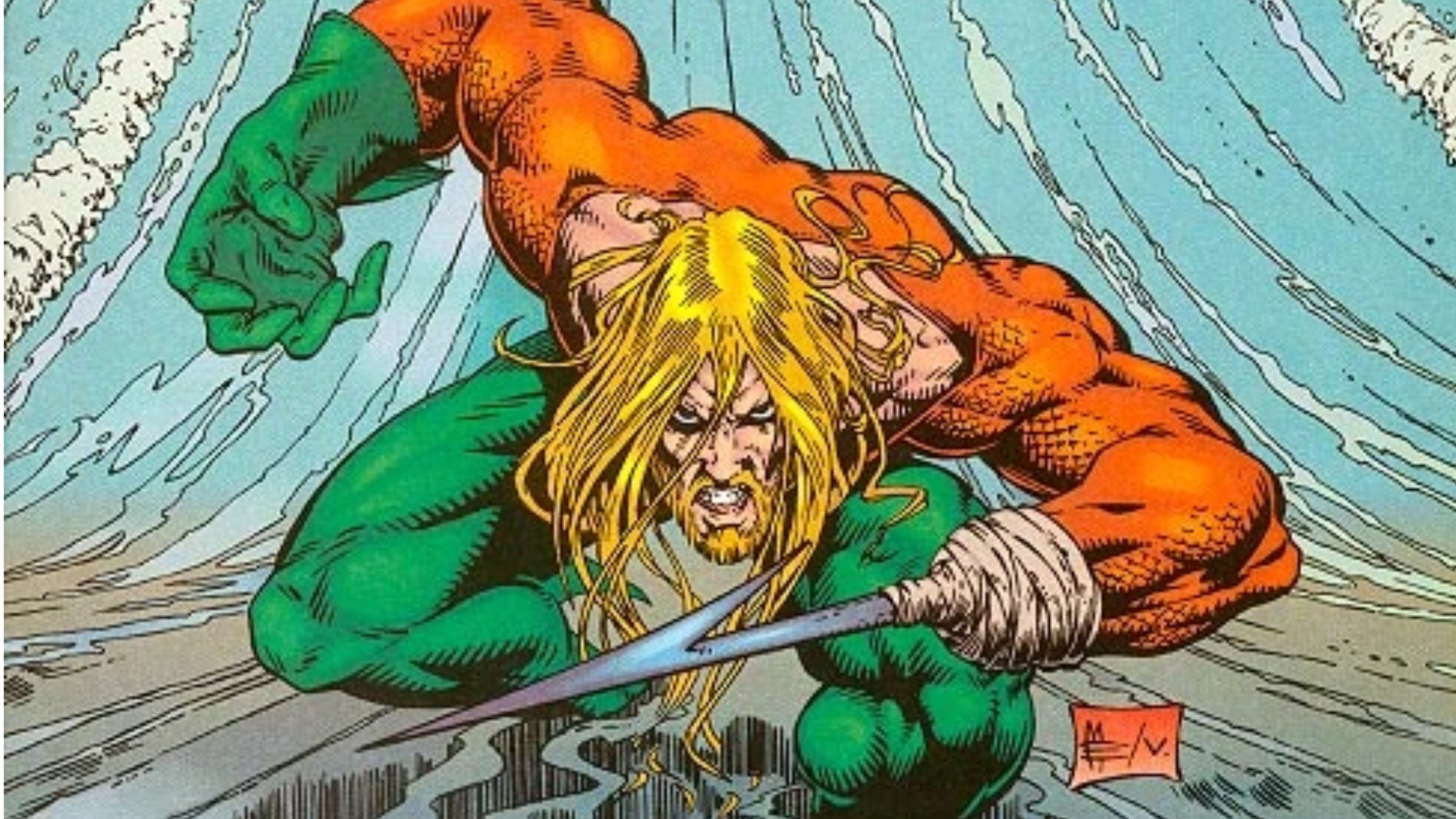
David’s recent Aquaman stories didn’t drastically change the character’s established background. DC Comics had already built a rich history for Atlantis and explored Arthur Curry’s dual heritage – sometimes portraying him as fully Atlantean, other times as purely human. However, these new versions gave Aquaman a more classic DC origin story: his father had a romance with an Atlantean princess, resulting in Arthur’s birth on land. He was raised among humans until called upon to defend Atlantis from his brother, Ocean Master, a longtime Aquaman foe.
As a big Aquaman fan, I always felt like his backstory needed a little polish. While David’s updates helped streamline things and give him a solid modern origin, the real issue wasn’t where he came from, but how the old SuperFriends cartoon portrayed him as basically helpless. The writer really tried to address that in a couple of clever ways. First, they redefined his ability to talk to fish – it wasn’t just talking, it was actually aquatic telepathy! That was a huge upgrade, because it meant he could use those powers on anyone, not just marine life. He couldn’t control fish, but he could read minds, communicate telepathically, and pull off some really cool mental feats thanks to the connection to their brains. But the biggest, most impactful change didn’t happen until issue #2 of the Aquaman (Vol. 5) series.
While fighting Charybdis, Arthur lost his left hand to piranhas. He replaced it with a hook and harpoon, giving him new ways to attack and capture enemies. His costume also underwent a transformation, trading his orange and green outfit for gladiator-style armor. David wanted Arthur to appear as a powerful and skilled warrior—someone intimidating and capable, even on land. The story emphasized Arthur’s strength, invulnerability, and fighting abilities, turning him into a more combat-focused hero.
Peter David revitalized Aquaman, making it clear this wasn’t the character fans remembered. He did this by reimagining supporting characters – Aqualad became Tempest, and Dolphin replaced Mera as Arthur’s love interest – and shifting the focus from villains like Ocean Master and Black Manta to ancient sea gods and Lovecraftian monsters. The series also introduced political storylines and transformed Aquaman into a powerful, Thor-like king. This approach was a huge success, captivating readers and earning the character a devoted following. Fans finally saw Aquaman as a strong and respected ruler, a change that started with Peter David’s run on Aquaman (Vol. 5).
Peter David Planted the Seeds for Aquaman’s Greatest Successes
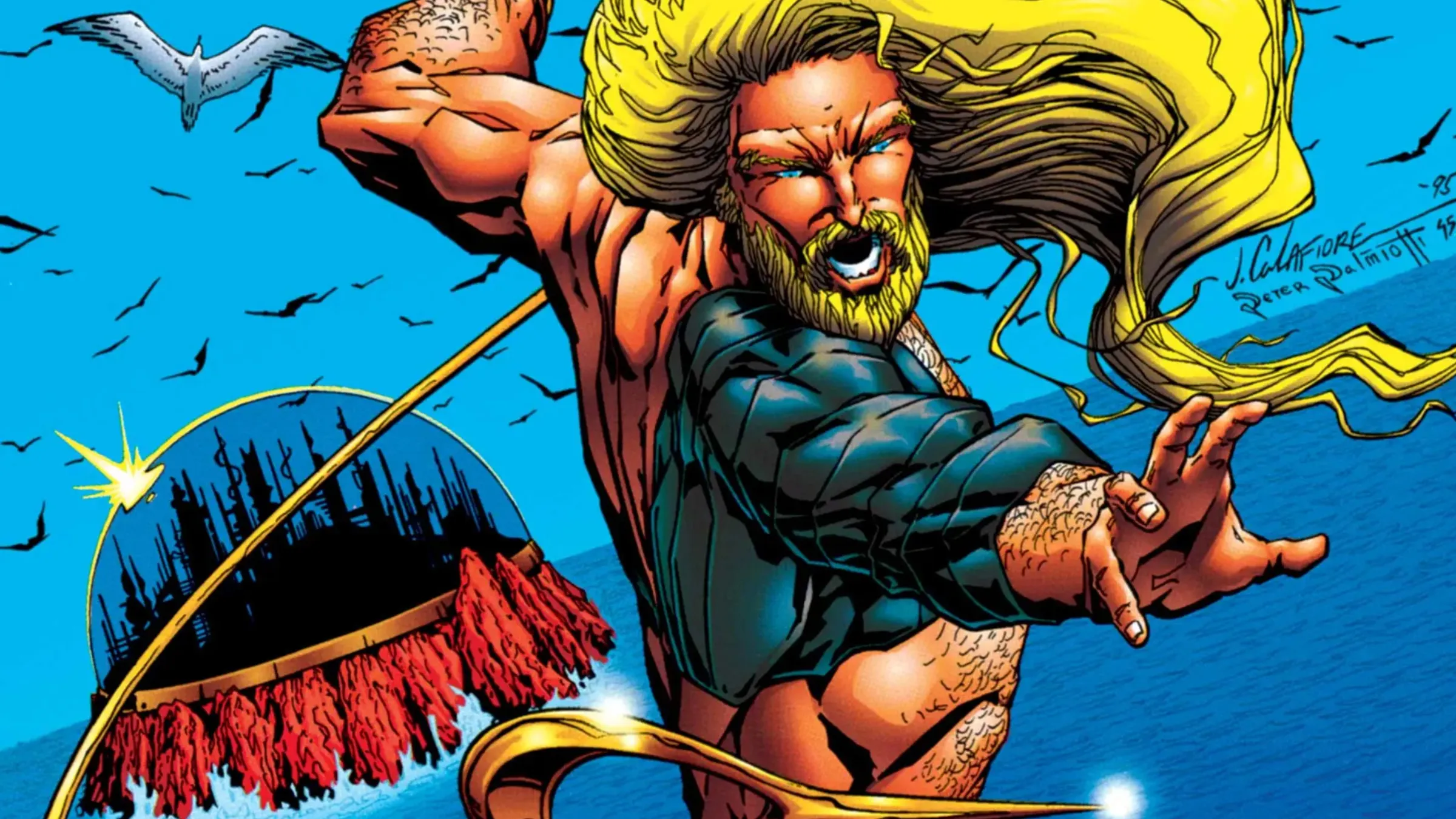
When Peter David took on the task of revitalizing Atlantis and Aquaman in the early 1990s, he faced a significant challenge. His efforts to make this part of the DC Universe compelling were remarkably successful. The fifth volume of Aquaman was the character’s most popular in decades, leading to appearances throughout the DC Universe and even a romantic storyline with Wonder Woman in JLA. David brought Aquaman to a peak that subsequent writers – including Peter Tomasi, Patrick Gleason, Kurt Busiek, and Jackson Guice – wouldn’t achieve again for many years.
Aquaman didn’t regain major popularity until the 2010s with the comics Brightest Day and Aquaman. These stories heavily drew inspiration from the work of writer Peter David, who portrayed Aquaman as a seasoned warrior king – a confident and highly skilled leader. David’s take on the character proved successful, and most subsequent Aquaman stories have built upon his foundation. Ultimately, Peter David redefined Aquaman, helping him become the iconic hero he was always meant to be.
https://comicbook.com/comics/news/10-greatest-dc-stories-of-the-2020s/embed/#
Read More
- Marvel Officially Confirms Deadpool’s Most Brutal Redesign
- Nintendo Switch 2 Reportedly Getting Remake of One of the Best PS3 and Xbox 360 Games
- Welcome to Demon School! Iruma-kun season 4 release schedule: When are new episodes on Crunchyroll?
- Crunchyroll Confirms New Isekai Anime Releases for 2026 and Beyond (With Major Returns)
- Michael Jackson Biopic’s Record-Breaking Debut Unseats 2026’s Biggest Box Office Hit On U.S. Chart
- The Boys Season 5, Episode 2’s Soldier Boy Ending Twist Changes Everything for Homelander & Butcher
- 5 Best Open-World Games You Can Beat In A Weekend
- Gold Rate Forecast
- All 61 Episodes 90s Cult Classic Sci-Fi TV Show That Was Famously Canceled Twice Were Just Added to Tubi
- 10 Movies That Were Banned in Different Countries For Random Reasons
2025-12-29 01:15