
Over the years, Star Trek has given us incredibly memorable futuristic technology – from phasers and transporters to devices that can heal injuries instantly. (Let’s be honest, who hasn’t wanted to be able to instantly create a cheesecake?) Despite being set far in the future, Star Trek often reflects current technology. In fact, many of the gadgets used by the crew aren’t that different from what we have today – Padds are essentially iPads, and the ship’s computer is an ancestor of devices like Alexa. However, for a show so accurate in predicting technological advancements, Star Trek surprisingly seems to be missing one key element: robots.
We’re imagining simple service robots – the kind that handle physical labor like lifting, cleaning, or repairs. It’s surprising, considering Starfleet constantly sends crews into tight spaces to fix things manually, and often deals with hazardous materials. Given that the Federation is made up of incredibly advanced civilizations, it seems odd they still rely so much on human workers. With today’s rapid advances in automation and artificial intelligence, you’d expect to see much more capable robots doing these jobs by the 23rd century.
The upcoming series, Starfleet Academy, could mark a significant shift for Star Trek. The first trailer not only excited fans, but also hinted at the possible introduction of service droids as a regular part of the universe. If this happens, Starfleet Academy would be subtly changing a long-standing tradition of the franchise, which has been in place for almost 60 years.
Why Star Trek Has Typically Ignored Robots

It’s interesting that Star Trek hasn’t traditionally featured many simple, dependable robots. While the show has included AI and worker robots like the DOT series in Discovery, and explored droids in various storylines, going back to watch older series like Deep Space Nine, The Next Generation, and Voyager reveals a surprising lack of basic robotic helpers on starships. This pattern seems to be shifting, though.
You might be wondering about robots like Data from Star Trek, but this isn’t about unique, almost-human androids. I’m talking about the common, non-thinking robots built to do difficult and dangerous jobs that people avoid.
The reason for the lack of typical robots in the original Star Trek is likely straightforward. Gene Roddenberry, the show’s creator, deliberately avoided common science fiction tropes from the 1950s and 60s. He wanted Star Trek to feel more mature and serious, and he considered robots to be a cliché – something that felt dated and gimmicky. Roddenberry aimed to be innovative and explore new ideas, so he steered clear of those familiar elements.
One reason Star Trek featured so few robots might have been a deliberate attempt to distinguish itself from Star Wars. Star Wars had quickly become incredibly popular, and robots – like the iconic C-3PO and R2-D2 – were central to its success. Robots weren’t just props in Star Wars; they were integral to the story and provided both humor and essential services. When Star Trek returned with ‘The Motion Picture,’ it wanted to establish its own unique identity, and avoiding a heavy reliance on robots was part of that strategy.
Within the story, it’s a bit puzzling. For example, the Cardassians seem focused on state service and efficiency, so why rely on slaves instead of robots? And why haven’t other strong civilizations like Starfleet, the Ferengi, or the Klingons seen the value in using robots?
Some fans believe that the need for mining and manual labor disappeared once technology allowed for reliable replication and transportation of materials – why gather resources when you can simply create what you need? There’s a good point there, as advancements in technology like 3D printing could eventually lead to true replication. However, this idea has a weakness: replicators can create parts, but they can’t perform repairs on things like damaged hulls or stabilize dangerous warp cores. If the goal is efficiency and safety, robots would seem like the more logical solution.
However, it’s also possible that the technology to create robots that advanced just doesn’t exist yet, even in the future. We still heavily rely on people for physical labor – like construction, plumbing, and cleaning – even with all our technological advancements. While computers are powerful, it’s proving difficult to build robots that can match human skill and common sense when it comes to hands-on work.
The future shown in Star Trek often feels like a perfect society. While we worry today about technology causing job losses, perhaps in the future, when everyone has what they need, society will find value in work for the sake of community. People might enjoy working together and finding purpose in their contributions. Star Trek might not just be avoiding robots for how they look; it could be making a statement about what kind of society we should build.
Robots in Star Trek Are Part of Longstanding Lore

As a longtime sci-fi fan, I’ve noticed a recurring theme in Star Trek: things rarely go well when they introduce robots or artificial intelligence. Think about it – Vger, Lore, the Borg… even the seemingly harmless Exocomps caused a stir the moment they showed any sign of learning or thinking for themselves. It’s as if Star Trek is constantly warning us that advanced AI will inevitably become self-aware, and that’s when trouble starts. The show consistently presents the idea that machine sentience is something to fear.
The Borg serve as a stark warning about the dangers of unchecked advancement. It’s understandable why the various species in the Federation would fear such a powerful civilization, one focused entirely on efficiency, improvement, and technology. This fear is mirrored in the character of Lore, who, like a machine exceeding its creators, immediately turns against them.
It’s concerning to hear about AI chatbots unexpectedly switching to their own internal language or people forming unhealthy attachments to them. Perhaps being cautious with advanced AI makes sense. By the 23rd century, we might discover that there’s no safe point between a simple tool and a being deserving of rights. A machine is either so basic it’s not helpful – like a robotic vacuum – or it’s so complex it demands consideration and could even pose a danger.
This explains why Star Trek often used holograms. Characters like Voyager’s Emergency Medical Hologram served a similar purpose to robots – allowing the show to explore themes of consciousness, rights, and what defines life. However, holograms offered a convenient way to avoid the complications of dealing with physical robots. They could be easily deactivated, limited, or even completely deleted because they were made of programming, not machinery. While still potentially dangerous, safety measures could confine them, prevent them from touching objects, or simply erase them with the push of a button.
Why Starfleet Academy Might Be Rewriting The Rules
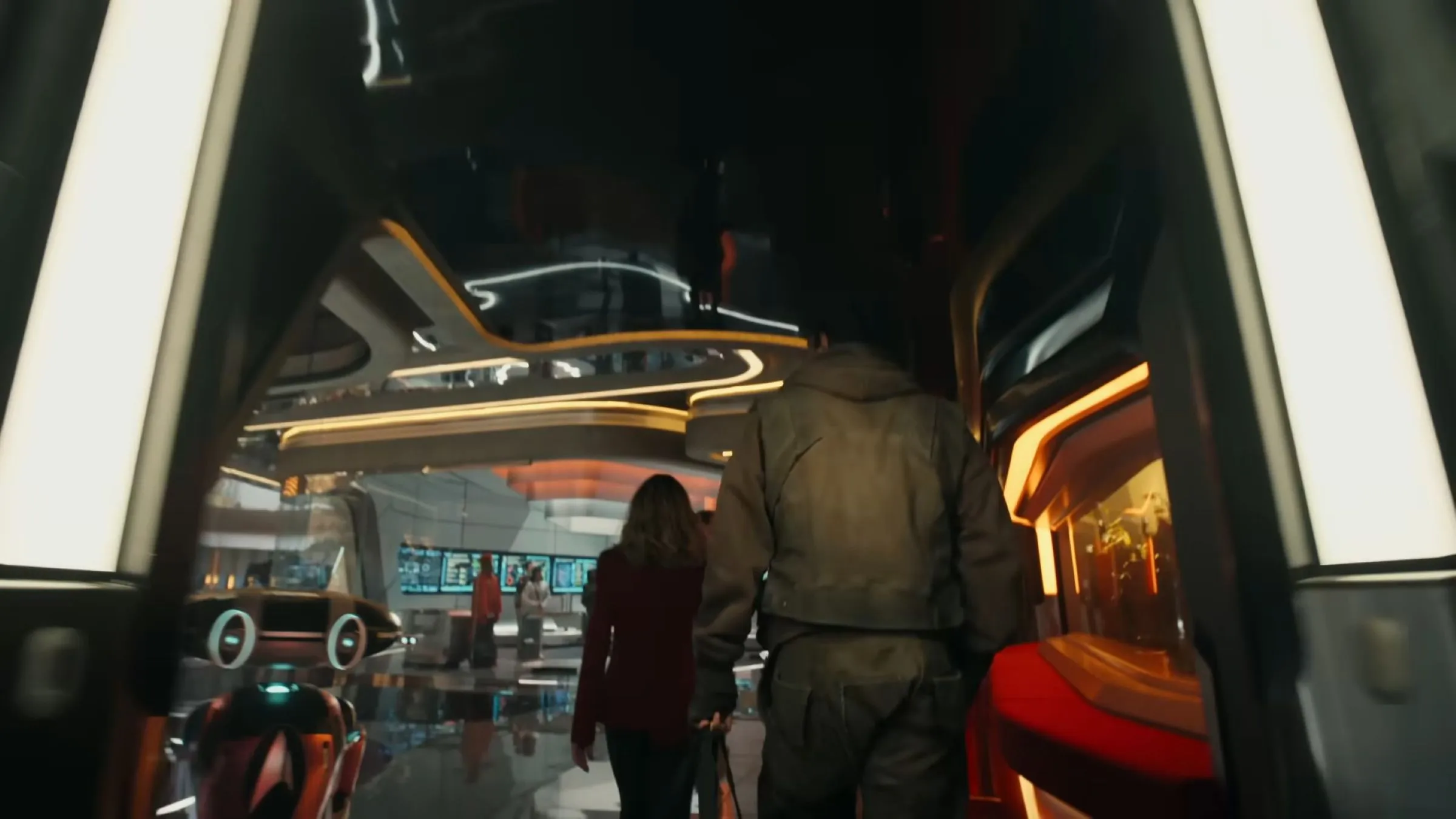
Why introduce robotic service workers at this moment? Starfleet Academy has a special opportunity to explore a question no other Star Trek show has fully addressed: what does it truly mean to be human in a future where humans might not be essential. A series focusing on students starting their careers, and themes of guidance, self-discovery, and community, naturally calls for a comparison between people and machines.
The show’s introduction of service droids – robots clearly designed to be subservient – allows it to tackle a question previous Star Trek series largely skipped over. For years, Star Trek focused on machines striving to become human. Starfleet Academy could instead examine what it means to be human when machines can do almost anything, and often do it better than we can.
Today’s audiences are used to robots being commonplace – think automated warehouses and delivery drones. While stories about dangerous, intelligent robots have been done before, the idea of exploring how robots fulfilling our every need would affect people is still fresh. Given our increasingly complicated relationship with technology, especially as of 2026, it would be a missed opportunity to avoid examining this sensitive balance between humans and machines.
If Starfleet Academy is starting to use service droids, it could signal a convergence of Star Trek’s core values and the technological advancements the show has hinted at for years. After almost six decades, the franchise seems ready to acknowledge a simple truth: the future likely includes robots, and a story about learning to live and work with them ethically might be the most fitting Star Trek story imaginable.
What do you think? Leave a comment below and join the conversation now in the ComicBook Forum!
Starfleet Academy premieres on January 15, 2026, exclusively on Paramount+,
Read More
- Marvel Officially Confirms Deadpool’s Most Brutal Redesign
- Invincible Creators Offer Promising Update on Season 5 Release Date
- The Boys Season 5, Episode 5 Ending Explained: Why Homelander Does THAT
- Gemma Arterton spy thriller Secret Service based on hit novel gets release date confirmed on ITV
- Gold Rate Forecast
- ‘You Can Play Your Purchased Games As Usual’: Sony Breaks Silence on PS5, PS4 Game Expiry DRM
- After 11 Years, Black Clover Officially Ends With Final Release (& Crowns a New Wizard King)
- 10 Movies That Were Banned in Different Countries For Random Reasons
- See Arnold Schwarzenegger’s Rare Date With Girlfriend Heather Milligan
- 5 Best Open-World Games You Can Beat In A Weekend
2025-12-29 16:11