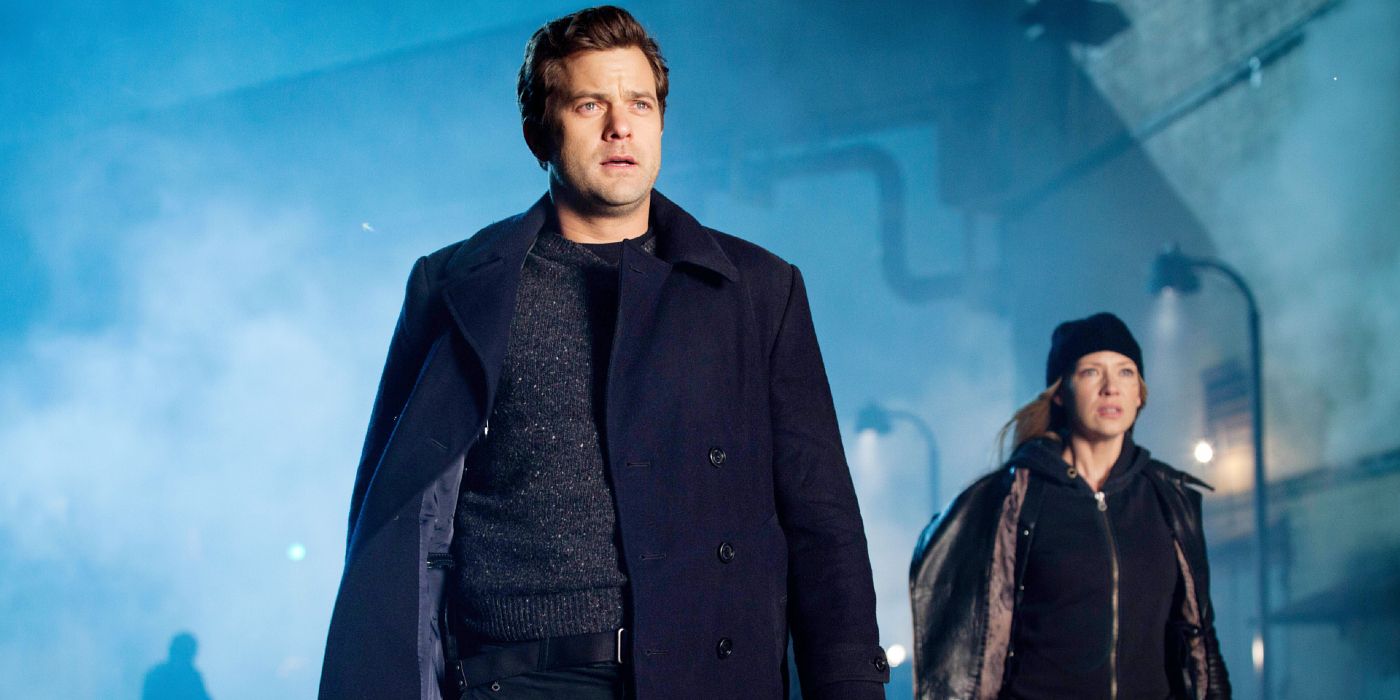
When it first aired on Fox in 2008, the show stood out as different from most science fiction series on network television. The premiere episode was a lengthy 82 minutes and immediately established the show’s key ingredients: intense action, gruesome imagery, and a complex conspiracy.
The first episode of Fringe took a risk by trusting its audience. It presented a complex story with unusual and unsettling elements, assuming viewers could follow along. This approach created a powerful and memorable introduction that stands out as one of the most dynamic and daring pilots in the science fiction genre.
Fringe’s Plane Crash Hooked a Generation of Sci-Fi Fans
Flight 627 appears to be a typical flight, with passengers casually talking. However, a terrifying event quickly unfolds: the passengers begin to melt. This shocking incident thrusts FBI Special Agent Olivia Dunham (Anna Torv) into the strange and unsettling world of fringe science.
The series immediately throws you into the action with a shocking and disturbing opening scene. This bold choice signals that the show won’t shy away from difficult or intense moments. By making events like the plane crash feel realistic, it heightens the tension and draws viewers in.
It doesn’t take long to realize the plane crash wasn’t just a random accident. It’s connected to something much bigger – they call it the “Pattern,” and it’s a huge mystery. Figuring this out is what leads Olivia to Walter Bishop, a brilliant but troubled man locked away in a mental institution, and his son, Peter. She really needs their help to unravel everything.
From the very beginning, Fringe establishes itself as something different. A bigger picture is gradually revealed, and seemingly small details turn out to be surprisingly significant.
Walter, Olivia, and Peter are the Best Part of Fringe
Olivia’s life is turned upside down when her boyfriend is murdered by the person responsible. This devastating event fundamentally alters how she approaches finding the truth. Her investigation leads her to Walter Bishop, a man who spent nearly twenty years in a mental institution after being convicted of manslaughter for his controversial experiments.
Walter is helpful, but he needs his son Peter’s permission to leave the facility, making Peter’s involvement essential. Peter acts as the voice of reason, explaining Walter’s ideas, challenging what everyone assumes, and keeping the team functioning. However, Peter’s cautious and distant personality balances out Walter and completes the dynamic between the three of them.
Peter often mediates between Olivia and Walter, frequently soothing his father or keeping Olivia from taking unnecessary risks. This dynamic adds depth to the show and creates some truly memorable sci-fi moments, but the series wouldn’t succeed without the central relationship between these three characters. Unlike The X-Files, Fringe explores complexities beyond the initial case, and that’s what makes the core cast so engaging – they demonstrate that everything has hidden depths.
Fringe’s Pilot Felt Bigger Than Network Sci-Fi
One of the things that really sets Fringe apart as a sci-fi show is its scope. The first episode is grand and ambitious, but it unfolds at a good pace without feeling drawn out. Instead of lengthy explanations, the show reveals its backstory through the action itself.
This show clearly takes inspiration from J.J. Abrams’ style of storytelling, using mysteries that unfold slowly and sometimes remain unsolved. However, it also incorporates a more traditional, case-of-the-week structure, which broadens its appeal and allows the sci-fi elements to expand into a larger, more ambitious story.
Despite its production costs, the show boasts impressive special effects and a high-quality feel. No expense was spared, and the pilot episode actually looks more like a recent science fiction series than something from its original era. Looking back, it was remarkably innovative for its time.
Fringe’s Opening Set the Standard for the Series
The first episode quickly introduces all the major themes and ideas the show will explore. It creates a strong sense that once the story gets moving, it won’t let up. Right from the beginning, we see hints of the costs of progress, the dangers of unchecked investigation, and the personal struggles of gifted individuals.
The first episode of Fringe immediately establishes a connection with viewers, hinting at exciting developments to come. Even on its own, it’s a satisfying science fiction story, offering a complete narrative while also suggesting a larger, more complex world. When it first aired, audiences responded positively to its bold and ambitious approach.
The first episode of Fringe is a remarkably strong start for a science fiction show. It boldly blends different genres without hesitation. Revisiting it today, the pilot feels like a perfect example of what television can achieve when it trusts viewers and fully commits to its ideas. Fringe set a high standard, and that first episode perfectly demonstrates what happens when a show refuses to compromise its vision.
Read More
- Best Controller Settings for ARC Raiders
- Meet the cast of Good Omens season 3: All the actors and characters
- Mark Zuckerberg & Wife Priscilla Chan Make Surprise Debut at Met Gala
- Nippon Sangoku Is The Best New Post-Apocalyptic Anime of Spring 2026
- Review: Final Fantasy Tactics: The Ivalice Chronicles (PS5) – Still the Benchmark for Turn-Based Tactics
- 7 Great Marvel Villains Who Are Currently Dead
- FRONT MISSION 3: Remake coming to PS5, Xbox Series, PS4, Xbox One, and PC on January 30, 2026
- Welcome to Demon School! Iruma-kun season 4 release schedule: When are new episodes on Crunchyroll?
- Elon Musk’s Mom Maye Musk Shares Her Parenting Philosophy
- The Boys Season 5 Officially Ends An Era For Jensen Ackles’ Soldier Boy
2026-01-12 05:07