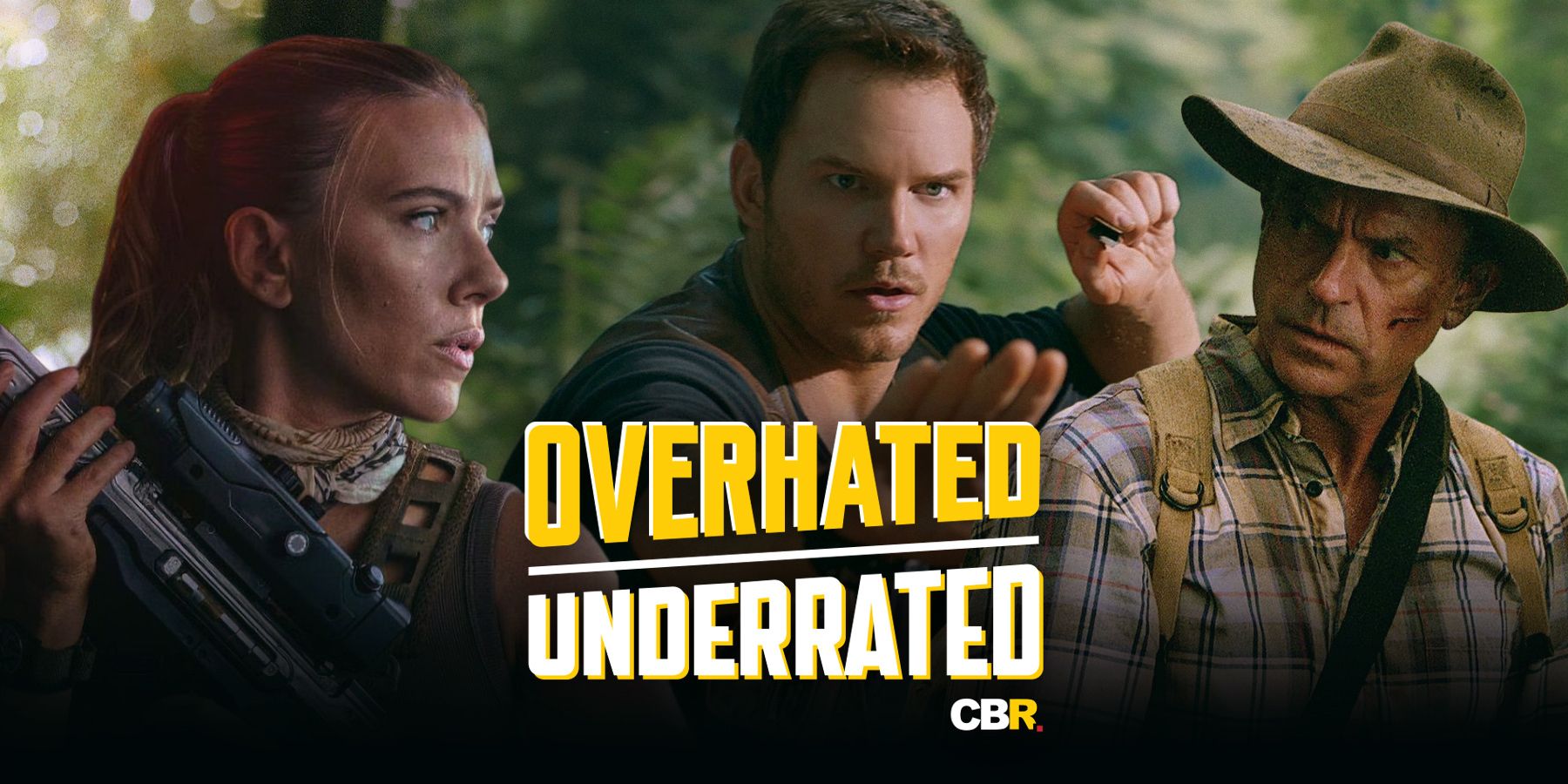
Dinosaurs are incredibly popular, and I’m definitely not alone in saying so! For many of us, our fascination with these creatures began with the original Jurassic Park – a truly amazing film and, in my opinion, a perfect example of how to do a dinosaur movie right. While the film’s success spawned several sequels, opinions on those are much more divided, particularly regarding the fifth installment.
Although Fallen Kingdom was financially successful, many fans were disappointed. Critics disliked the movie’s shift in mood, the decision to release dinosaurs into the wild, and its exploration of cloning beyond just dinosaurs. However, upon closer examination, this often-criticized Jurassic Park sequel actually fits logically within the established world of the franchise.
Jurassic World: Fallen Kingdom is the Most Emotional and Darkest Sequel
Revisiting the Jurassic Park and Jurassic World films often feels emotionally detached. While characters do develop, their stories rarely explore feelings beyond fear or anger. Ian Malcolm’s efforts to save his girlfriend in The Lost World: Jurassic Park are a notable exception, though it’s interesting that this film is also one of the most debated sequels.
In Jurassic World: Fallen Kingdom, the filmmakers prioritized emotional storytelling, which meant stepping away from some of the classic Jurassic Park action. A key focus was the connection between people and dinosaurs. When Mount Sibo erupts, destroying Isla Nublar, many characters try to rescue the dinosaurs, even though they were created artificially. This culminates in a deeply sad scene where a dinosaur tragically dies in the lava, mirroring its first appearance in the original film.
The same emotional tension exists between them. Having lost her home, she feels like an outsider, and he’s always been her protector, raising her from the beginning. With the rest of their pack gone, the story subtly reveals how he copes with the possibility of losing her after she’s shot, and how they both fight to survive.
I don’t think those lighter moments really work for this film, considering its serious tone. The movie uses some odd camera angles – like when Claire dramatically points at a chair – and relies on overly sentimental scenes, such as Blue appearing to cry during surgery, to try and evoke emotion.
Despite a few awkward or cheesy scenes, the film remains intensely dark and emotionally gripping. A smaller version of the Indominus Rex frightens a young girl in a large house, effectively highlighting the danger this creature poses. This incident reinforces the idea that dinosaurs and humans shouldn’t coexist, even though the film explores that very scenario.
Ultimately, the weakest part of Jurassic World: Fallen Kingdom was the plot involving unscrupulous businesspeople creating dinosaur weapons and selling them at auction. However, the underlying emotions driving this plot are what make this film the most intense and unsettling in the entire Jurassic World series.
Jurassic World: Fallen Kingdom’s Controversial Plotlines Make Sense
When Jurassic World: Fallen Kingdom came out, fans had three main complaints: not enough scenes on the island, a surprising reveal, and the choice to release dinosaurs into the world. While many thought letting the dinosaurs roam free was a mistake, these controversial parts of the story were actually essential for the future of the Jurassic World series.
I’ve always been a huge fan, but let’s be real – everyone knew Mt. Sibo was going to blow, it is an active volcano! And after four movies already taking place on dinosaur-filled islands, even though people enjoyed Jurassic World, it started to feel a little…samey. That’s why Fallen Kingdom switching things up with a move to a mansion felt so strange – and honestly, I think that jarring change was intentional, setting the stage for something bigger.
The reveal that Maisie Lockwood was a clone of Benjamin Lockwood’s daughter felt surprisingly different from classic Jurassic Park storylines – even considering the Indoraptor. This idea was foreshadowed through Ian Malcolm’s constant warnings about the dangers of genetic manipulation, and Dr. Grant’s earlier observation that life always finds a way. While the clone storyline is unusual, it felt both predictable and necessary for the plot to unfold.
A key moment in Fallen Kingdom occurred when Maisie released the dinosaurs, declaring, “they’re alive, like me.” Ironically, only a clone herself had the power to make that decision, and her actions were both impulsive and destructive. However, as Dr. Malcolm pointed out to John Hammond in the original Jurassic Park, that’s simply how nature works. The story needed these events to unfold as they did, and it’s a strong example of a filmmaker pursuing their vision fully, even if it proved controversial.
These story developments aren’t necessarily meant to be popular, but they logically fit within the overall story. Once the initial conflict was introduced, some difficult consequences and errors were inevitable. Ultimately, Jurassic World: Fallen Kingdom took a risk by trying something new, recognizing audiences wanted a change. Without that willingness to deviate from the familiar, we might not have a continuation of the story today.
Fans Love Dinosaurs, But Jurassic World: Fallen Kingdom Needed to Be Different
The thrill of seeing dinosaurs like T. rex and Velociraptors is what initially draws people to these movies. However, beyond Jurassic Park and Primitive War, there aren’t many films that truly capture that excitement. With Jurassic Park, fans are always hoping for more story and a return to the original experience. Once a movie series gets going, it’s difficult to appreciate each installment on its own merits, as the overall storyline takes precedence.
Jurassic World: Fallen Kingdom built upon the story that began with the original Jurassic Park in 1993, and its plot directly followed events from previous films. This approach kept the dinosaur-focused storyline engaging and allowed it to evolve. Now, shows like Jurassic World: Chaos Theory and future installments are expanding on the consequences introduced in Fallen Kingdom.
This isn’t about convincing you to enjoy Jurassic World: Fallen Kingdom. It’s about explaining why the film was necessary – flaws and all – to set up the most compelling direction for the entire series. With the dinosaurs now loose, their future – whether they’ll survive or become extinct – remains uncertain, as Jurassic World: Rebirth demonstrates.
Despite being risky, Jurassic World: Fallen Kingdom had to take some bold steps. Not only did the story require it, but changing things up can actually make audiences appreciate the original even more.
Despite straying from the original formula with its last two installments, the Jurassic World series remained a summer blockbuster. While audiences still enjoy dinosaurs, they often need to see something new before appreciating a return to familiar territory. Jurassic World: Fallen Kingdom, however, proved divisive, with many viewers disliking it and others simply not engaging with the film at all.
I think what I really appreciate about Fallen Kingdom is that it was the first movie in the series to really dive into the tricky stuff like genetic engineering and cloning. It doesn’t quite reach the heights of the first film or The Lost World, but honestly, the franchise needed it to push things forward. Looking back at all seven movies and the two TV shows, it’s a weird and wonderful world they’ve built, and I give them credit for taking risks and trying something different.
Check in in two weeks when Jamie Parker tackles an underrated and forgotten superhero series.
Read More
- Gold Rate Forecast
- Forza Horizon 6 Car List So Far: Confirmed Highlights, Cover Cars, DLC, and Rewards
- 10 Greatest Manga Endings of All Time
- 10 Most Powerful Versions of Superman, Ranked
- 38 Years Later, Murder, She Wrote’s Most Overlooked Episode Still Pulls Off TV’s Greatest Crossover
- Mark Zuckerberg & Wife Priscilla Chan Make Surprise Debut at Met Gala
- Elon Musk’s Ex Ashley St. Clair Reveals When Romance Became “Weird”
- Forza Horizon 6 PC Issues: Fix Crashes, Stuttering, Steam Errors, and Game Pass Problems
- Why There’s No New Episode Of From S4 This Weekend (May 24) & When The Show Returns
- GBP CNY PREDICTION
2026-01-15 20:12