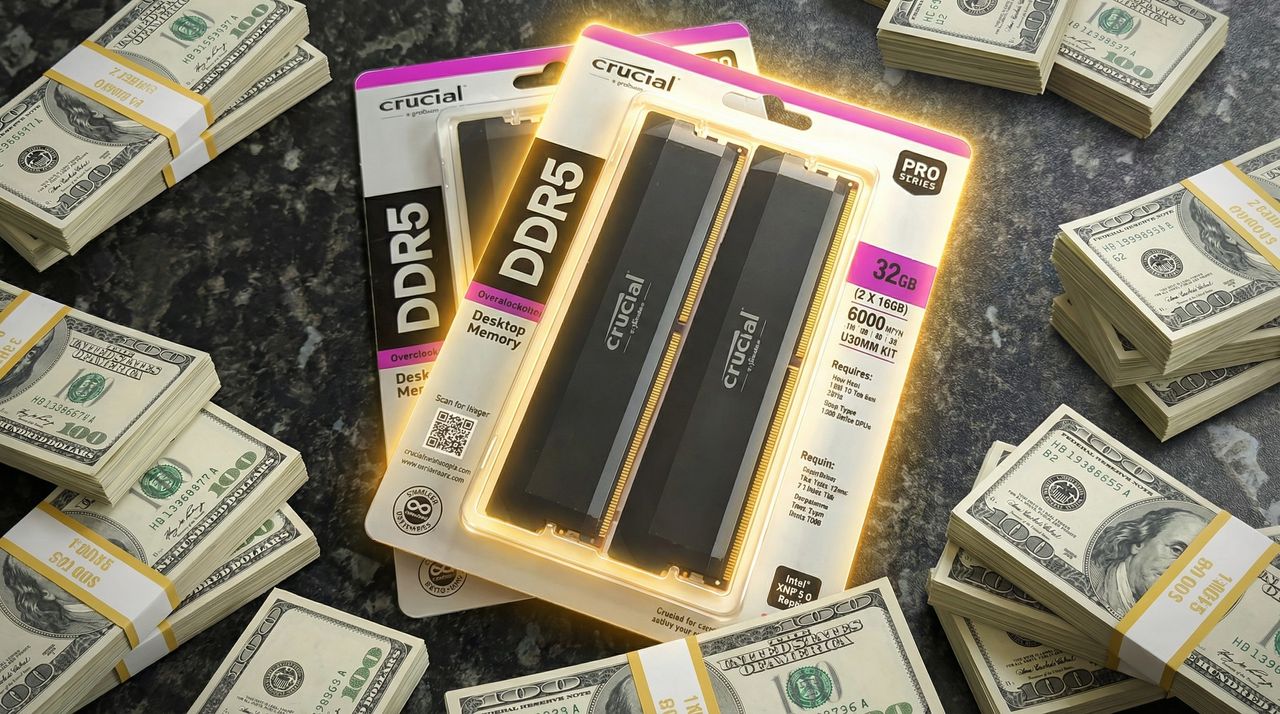
A recent Wall Street Journal report indicates that the current shortage of computer hardware—which is causing prices of consumer technology to rise—isn’t likely to improve in the near future.
There’s a significant shortage of memory and storage – including both SSDs and traditional hard drives – and it’s largely because of the growing demand from artificial intelligence. Many believe we’re only seeing the beginning of AI’s impact on storage needs.
As an analyst, I’m seeing a significant impact from the surge in AI. Datacenters powering models like ChatGPT and Gemini need a lot of DRAM and NAND memory. What’s concerning is that major AI companies are securing DRAM supplies years ahead of time, essentially limiting availability – and driving up costs – for everyone else.
A new report indicates that AI datacenters will consume 70% of all top-tier DRAM memory chips by 2026. This high demand has already caused memory prices to jump around 50% in the last quarter of 2025, and experts predict they’ll increase by another 70% in 2026 as shortages continue.
RAM prices are incredibly high right now, making it difficult to upgrade your computer. Here’s some advice on how to deal with the inflated costs.
Industry analysts at IDC and Omdia both predict a very unstable year for the PC market. Although major companies like Lenovo, HP, Dell, and ASUS are trying to manage supply issues, IDC estimates potential sales declines of as much as 9%. This forecast is likely to be updated throughout 2026.
Get ready for the RAM squeeze to hit all consumer tech in 2026

The recent Wall Street Journal report isn’t really about personal computers. It focuses on DRAM and NAND chips, which are essential components in almost all the digital devices we use every day – including phones, laptops, TVs, cars, and smart home devices.
AI datacenters rely on a special type of memory called HBM, but it’s actually made from the same basic memory chips used in regular computer RAM. Because AI is so profitable, Micron recently announced it will stop making its Crucial consumer RAM brand by late 2025 to dedicate all its resources to serving the AI industry.
The growing demand from AI companies is squeezing out other buyers of memory chips, which could cause problems for many industries. We might see delays in building data centers, higher prices for things like laptops and TVs, and even chip shortages for car manufacturers – potentially leading to the same production delays we saw during the pandemic.
Christopher Mims, Wall Street Journal
Even though the top three DRAM makers – Samsung, Micron, and SK Hynix, who together supply 90% of the global market – are increasing their production capacity with new or expanded facilities, demand will still far exceed the available supply.
According to TrendForce’s Avril Wu, the recent increase in production isn’t expected to significantly impact the global supply of DRAM until 2028. Counterpoint Research’s MS Hwang told the WSJ that major DRAM manufacturers are already committed to selling their production capacity for 2027 and 2028.
Is this a far-fetched idea, or a realistic forecast? Some believe that artificial intelligence is contributing to a shortage of computer hardware, which could lead to the decline of locally-owned PCs and a shift towards renting computing power through cloud services.
The report ends with another statement from Hwang, who believes manufacturers will pay any price for memory chips. It really makes you wonder, though – how much *we*, as consumers, are willing to spend on the technology we rely on every day?
(via Tom’s Hardware)
Read More
- GBP CNY PREDICTION
- Elon Musk’s Mom Maye Musk Shares Her Parenting Philosophy
- Elon Musk’s Ex Ashley St. Clair Reveals When Romance Became “Weird”
- 10 Best Free Games on Steam in 2026, Ranked
- Mark Zuckerberg & Wife Priscilla Chan Make Surprise Debut at Met Gala
- Forza Horizon 6 Car List So Far: Confirmed Highlights, Cover Cars, DLC, and Rewards
- 10 Greatest Manga Endings of All Time
- Hollow Knight: Silksong Guide – All 30 Lost Flea Locations
- 38 Years Later, Murder, She Wrote’s Most Overlooked Episode Still Pulls Off TV’s Greatest Crossover
- 20 K-Dramas That Nailed the Perfect Ending
2026-01-19 18:10