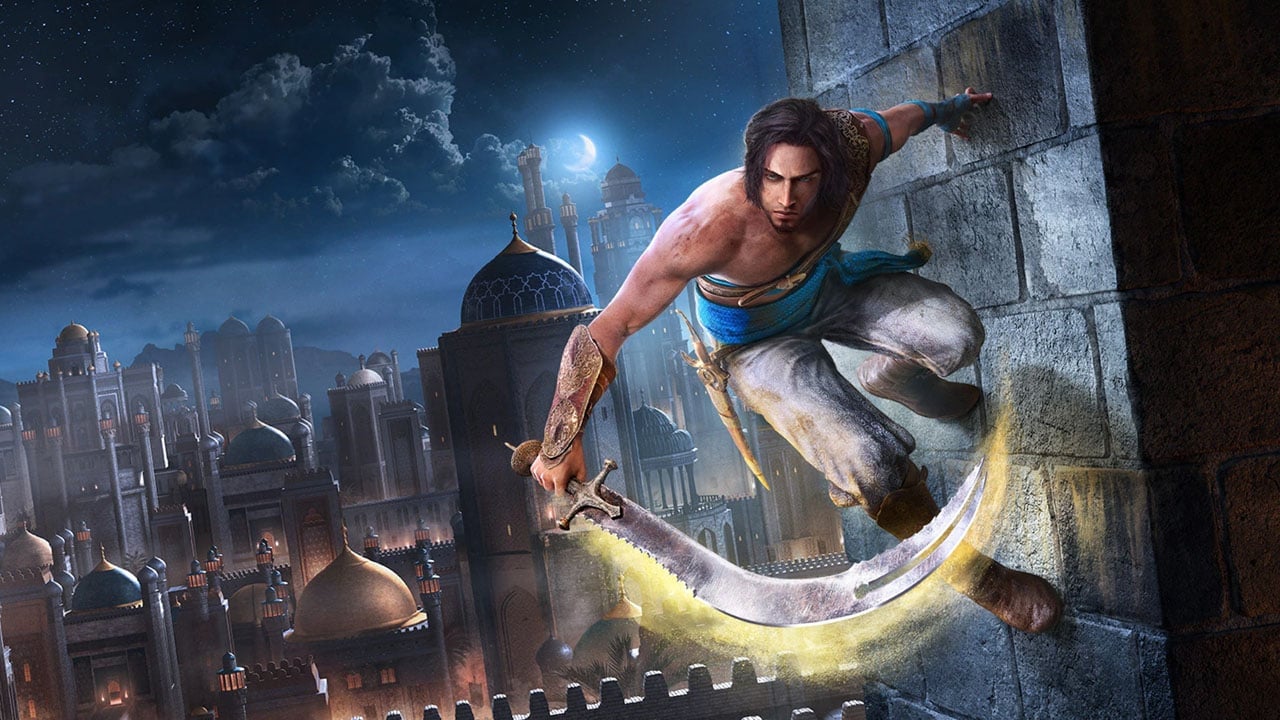
Okay, so this is a bummer – Ubisoft just cancelled a bunch of games they were working on. I was really looking forward to the Prince of Persia: The Sands of Time remake that was supposed to come out in 2026, but that’s off the table now. It’s not just that one though, they also scrapped four other games – including three totally new ideas we hadn’t even heard about yet – plus a mobile game. They’re basically hitting the reset button on a bunch of projects.
In addition to these changes, Ubisoft is giving seven of its games more development time to improve their quality and ensure they deliver lasting value. This means one game, which hasn’t been announced yet and was previously scheduled for 2026, will now be released in 2027.
As a big Ubisoft fan, it’s a little tough to hear, but they’re going through a huge overhaul right now. They’re trying to get back to making really amazing games and build a more stable future. That means they’ve had to cancel or postpone some projects, and they’re changing things up at a few of their studios. They’re also focusing on cutting costs in the short term so they can prioritize quality and make sure the games they do release are both good and profitable in the long run. It’s a bit of a reset, but hopefully it leads to some incredible experiences down the line.
Here is the full press release:
Ubisoft is making significant changes to its structure, how it operates, and the games it focuses on, with the goal of boosting creativity and achieving long-term, stable growth.
Today, Ubisoft announced significant changes to how it operates, organizes its teams, and chooses projects. These changes are meant to help the company regain its position as a creative leader, become more flexible, and quickly improve its financial performance, ultimately setting it on a path to long-term, stable growth and increased profits. This will be achieved through three key areas of focus:
- A new operating model;
- A refocused portfolio with a meaningfully revised three-year roadmap;
- And the rightsizing of the organization.
Ubisoft is making significant changes because the market for big-budget games is becoming more competitive, and it’s getting harder to build lasting brands with rising development costs. However, high-quality games still have the potential to be very profitable. While Ubisoft has improved the quality of its games recently, the current market demands a more substantial overhaul of how the company operates to deliver exceptional games at competitive prices.
With these changes in mind, we’re excited to announce a new approach to how we create games. We’re becoming more focused on our players and organizing our teams around the types of games they love. This means faster decision-making, more flexibility, and the ability to quickly respond to what players want. We’re also streamlining our organization to work more efficiently and effectively.
The updated way we’ll work will help us better deliver on our core strategy: creating immersive Open World Adventures and games built for a ‘Games as a Service’ model. We’ll achieve this through focused investments, increased expertise in key areas, and the latest technology, including a significant push into Generative AI to enhance player experiences.
Yves Guillemot, the CEO of Ubisoft, explained that making top-tier games is becoming more difficult and expensive, and building successful franchises is a bigger challenge. However, when those games do succeed, they can be incredibly profitable. Because of this, Ubisoft is making significant changes to how it operates. The goal is to ensure long-term, sustainable growth by focusing on creating high-quality games built around two key areas: large, open-world adventures and games designed from the start as ongoing, live services.
We’re restructuring around ‘Creative Houses’ – self-contained teams that handle both game development and publishing. This will give players a more consistent experience with our games. Each House will focus on a specific genre and brand, with its own leadership and budget. This new, decentralized approach allows for quicker decisions and is supported by shared, high-quality services that each House can rely on.
To help our Creative Houses thrive, we’re updating our plans for the next three years and speeding up efforts to streamline our costs and structure. This means we’ll be ending some projects we’re currently working on and giving more time to others to ensure they’re the best they can be and deliver lasting value. We’ll also be closing some studios and continuing to reorganize the company. These were tough decisions, but they’re essential to build a stronger, more efficient, and sustainable business for the future.
These changes represent a major shift for Ubisoft, demonstrating our commitment to tackling current issues and building a stronger future. While this restructuring will affect our financial performance in the next couple of years (2026 and 2027), it will ultimately position us for lasting growth and improved financial stability. Ubisoft is now focused on regaining its creative edge and delivering long-term value to both players and investors.
A New Operating Model to Support Ubisoft’s Strategic Focus
Ubisoft is restructuring with five main creative teams, called Creative Houses. These teams will be backed by a network offering development support, essential shared services, and a streamlined headquarters. The new structure will be fully in place by early April.
By streamlining how we work and giving more responsibility to the teams actually creating our games, Ubisoft will be able to innovate faster and work more efficiently. This new structure will also help us focus our talented people and resources on the most promising projects.
To help this new way of working succeed, the company plans to have all teams back in the office five days a week, with the option to work from home on a limited number of days each year. This change is designed to boost teamwork, encourage the sharing of ideas, and improve how teams work together. Being in the office together is crucial for staying competitive, fostering creativity, and achieving success in the demanding AAA gaming market.
Five Creative Houses, Built on a Decentralized Model
This change centers around a new, more flexible way of working, organized into five Creative Houses. These combined teams will operate differently in three key ways:
- They will combine game development and go-to-market functions with a gamer-centric approach, and be fully responsible for brand development, content strategy as well as editorial direction;
- They will be shaped by distinct creative ‘genres’ led by dedicated high-profile, incentivized teams with a unique set of expertise in those genres;
- They will have full financial ownership and account for economic performance.
They will be driven by clear objectives and guiding principles:
- A gamer centric approach, shaped by a unique set of skills and expertise towards a distinct creative ‘genre’ and a dedicated leadership team incentivized for long-term, cash generating revenue growth.
- Each Creative House will be organized around a distinct creative genre and designed to concentrate deep expertise in specific types of player experiences. Each Creative House will be responsible for fully owning the gamer relationship, developing must-play experiences for specific audiences and engaging player communities earlier and constantly throughout the development process.
- CH1 (Vantage Studios), focused on scaling and extending Ubisoft’s largest and established franchises to turn them into annual billionaire brands;
- Brands: Assassin’s Creed, Far Cry, Rainbow Six
- CH2 dedicated to competitive and cooperative shooter experiences;
- Brands including The Division, Ghost Recon, Splinter Cell
- CH3 designed to operate a roster of select, sharp Live experiences;
- Brands including For Honor, The Crew, Riders Republic, Brawlhalla, Skull & Bones
- CH4 dedicated to immersive fantasy worlds and narrative-driven universes;
- Brands including Anno, Might & Magic, Rayman, Prince of Persia, Beyond Good & Evil
- CH5 focused on reclaiming position in casual and family-friendly games.
- Brands including Just Dance, Idle Miner Tycoon, Ketchapp, Hungry Shark, Invincible: Guarding the Globe, Uno, Hasbro
- CH1 (Vantage Studios), focused on scaling and extending Ubisoft’s largest and established franchises to turn them into annual billionaire brands;
- In addition, there are four new IPs currently in development, including March of Giants. Ubisoft will communicate on their respective creative home at a later stage.
- Each Creative House will benefit from dedicated leadership with a clear creative mandate and accountability. These leadership teams will include high-profile talent coming from the industry. They will be tasked with attracting and developing top-level, specialist talent, and supported by incentive schemes aligned with creative success, player engagement and long-term value creation.
- Each Creative House will be organized around a distinct creative genre and designed to concentrate deep expertise in specific types of player experiences. Each Creative House will be responsible for fully owning the gamer relationship, developing must-play experiences for specific audiences and engaging player communities earlier and constantly throughout the development process.
- Full Creative and Brand Responsibility as Well as Financial Ownership
- Each Creative House will have end-to-end responsibility for its portfolio, overseeing the full creative and brand scope from development to publishing (brand, marketing and sales go-to-market strategy). They will also be financially accountable, both in terms of P&L and cash generation. This structure will sharpen strategic focus, reinforce execution discipline and ensure that investment decisions will be taken closer to where value is created.
- The model also enhances visibility into development pipelines, milestones and key risks, supporting more informed decision-making throughout development cycles.
At Group Level, A New Organization Supporting Each Creative House
The team plans to create a simpler, more efficient structure to support all of our creative teams, helping us maintain cost-effectiveness and avoid unnecessary complications. This new structure will include:
- The Creative Network, which will bring together a powerful set of studios providing best-in-class production capacity and cross-functional creative expertise serving the Creative Houses. Operating within a structured, project-by-project collaboration framework, the Creative Network studios can deliver both co-development or endto-end mandates under the strategic direction of each Creative House.
- Core Services providing the backbone of Ubisoft’s ecosystem and acting as an enabler for the Creative Houses and the Creative Network. They will focus on delivering scalable technology, production capabilities and operational excellence across the Group and will notably be responsible for:
- Production services including production standards and tools, localization, playtests, game analytics, QA/QC.
- Technology and infrastructure including game engines, online services, GenAI initiatives, IT infrastructure.
- Business operations and services including media planning execution, influencer and direct-to-player capabilities, pricing and distribution management, customer support.
We’re streamlining our central team to concentrate on key areas like long-term planning, oversight, tracking progress, and smart investment decisions.
The company’s new way of working will be supported by a redesigned central team. This team will define the company’s overall direction, provide resources to individual teams (called Creative Houses), and stay informed about changes in the industry, like new technologies and market trends. Specifically, it will manage talent, communications, legal matters, and how money is invested, making sure these areas all support the company’s long-term goals, financial success, and overall value.
Introducing a Refocused Portfolio With a Meaningfully Revised Roadmap
With the gaming market becoming more competitive, and as we finalize a new way of operating, Ubisoft recently reviewed all of our upcoming games. This led to a strategic decision to concentrate on our strongest titles, shift resources to support them, and revise our plans for the next three years. Our goal is to deliver consistently high-quality open-world adventure games and significantly improve our position in the growing ‘Games as a Service’ market, as shown by our recent acquisition of the ‘March of Giants’ project. This revised plan is designed to set our development teams up for success. As a result of these changes, we are taking the following steps:
- Ubisoft has discontinued six games that do not meet the new enhanced quality as well as more selective portfolio prioritization criteria at Group level. These include Prince of Persia: The Sands of Time remake as well as four unannounced titles, including three new intellectual properties, and a mobile title.
- In parallel, the Group will allocate additional development time to seven games in order to ensure enhanced quality benchmarks are fully met and maximize long-term value creation. This includes the unannounced title initially planned for FY26, that has been delayed to FY27.
We’re speeding up efforts to cut costs, streamline the company, and make our structure more efficient.
Ubisoft is working to cut costs and improve how it operates. This involves becoming more efficient, flexible, and ensuring spending aligns with its key goals for creating great games. To achieve this, the company is streamlining its organization, carefully managing hiring, and may sell off some assets. The focus is on investing in areas that will deliver the most value.
To improve efficiency and respond to changes in the market, the company has been making changes to its studio locations. This month, we closed our mobile studio in Halifax and the studio in Stockholm. We’ve also reorganized operations in Abu Dhabi, RedLynx, and Massive.
We now expect to achieve our cost reduction program – at least €100 million in fixed cost savings compared to fiscal year 2024-25 – by March 2026. This is a year earlier than originally planned, as the initial target was to complete the program by fiscal year 2026-27.
Continuing its progress, the Group is launching a final phase of its cost-saving program. The goal is to cut fixed costs by another €200 million over the next two years, bringing the total cost reductions since the beginning of fiscal year 2022-23 to around €500 million. This will lower total fixed costs to approximately €1.25 billion by March 2028, compared to €1.75 billion in fiscal year 2022-23.
We’ve updated our short-term financial expectations due to a significant shift in our investment strategy and a thorough re-evaluation of our plans for the next three years.
As Ubisoft changes its strategy, it’s adjusting its plans for releasing games and the types of games it will make. Because of this, the company is withdrawing its previous financial forecasts for 2026-27 and will share updated projections in May 2026.
For FY2025-26, Ubisoft now expects:
- Net bookings of around €1.5bn, translating into approximately -€330m gross margin reduction vs. guidance, mainly reflecting:
- Changes to the current FY26 quarter release pipeline following the updated roadmap
- Decision to postpone negotiations on certain partnerships in the context of the Group’s new operating mod
- Non-IFRS EBIT of around -€1bn, mainly reflecting both the impact of the updated FY26 net bookings assumptions described above and the following transformation-related decisions that led to a one-off accelerated depreciation of around €650m:
- The discontinuation of six games
- The allocation of additional time to seven titles with updated revenue expectations reflecting a persistently more selective market
- Free cash flow of between -€400m and -€500m
- Non-IFRS net debt of between €150m and €250m as of year-end FY26, with a cash and cash equivalents position of between €1.25bn and €1.35bn vs. prior guidance of around €1.5bn
Ubisoft is projecting net bookings of around €330 million for the third quarter of its 2025-26 fiscal year. This is largely due to strong performance from partnerships and continued success with older games. The quarter included the release of the well-received game Anno 117: Pax Romana and the Avatar: Frontiers of Pandora expansion, “From the Ashes,” which both players and critics enjoyed. More detailed information will be available on February 12.
Read More
- Gold Rate Forecast
- 10 Most Powerful Versions of Superman, Ranked
- GBP CNY PREDICTION
- 10 Best Free Games on Steam in 2026, Ranked
- 007 First Light: Release Date, Story, Gameplay, Cast, Editions, and Platforms
- Superman’s 7 Best Power-Ups, Ranked
- Forza Horizon 6 Car List So Far: Confirmed Highlights, Cover Cars, DLC, and Rewards
- 10 Greatest Manga Endings of All Time
- DOGE PREDICTION. DOGE cryptocurrency
- Black State Trailer Showcases Ray-Traced Reflections and DLSS 4 Performance
2026-01-21 20:06