Author: Denis Avetisyan
New quantum oscillation measurements directly map the unconventional magnetic order in CrSb, solidifying its status as a prototypical metallic altermagnet.
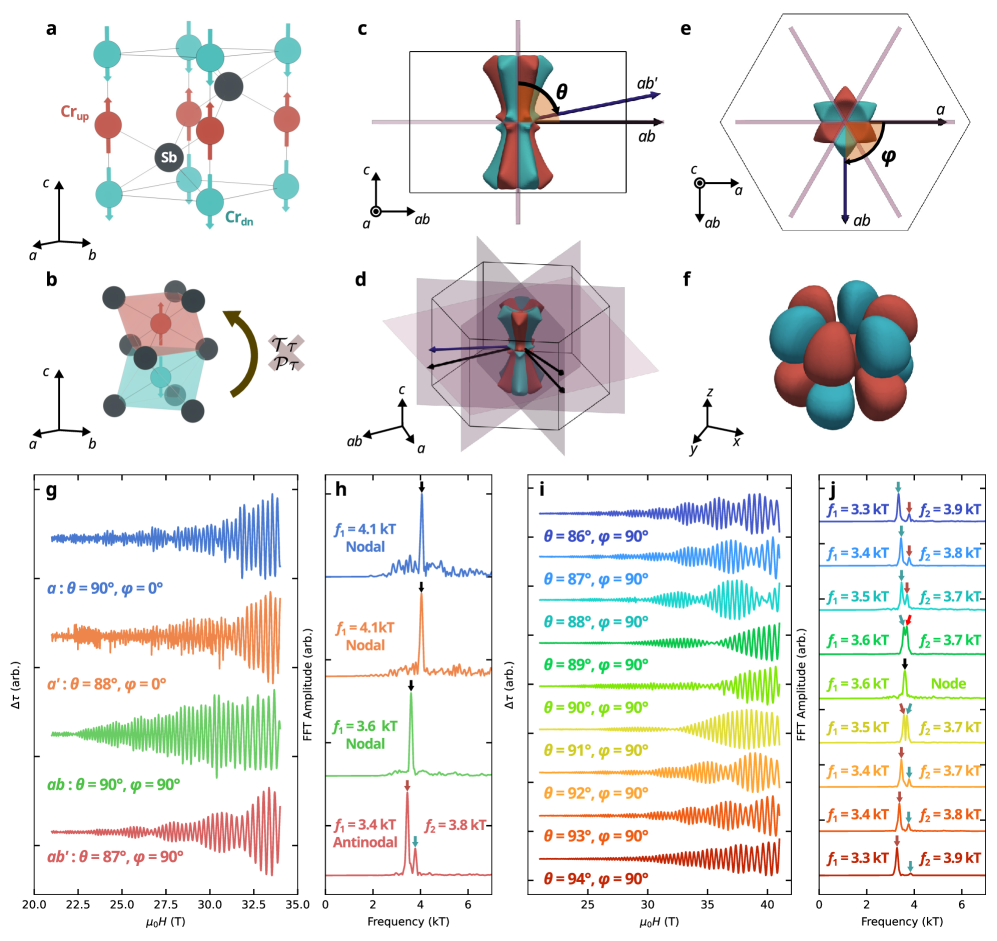
The study establishes 3D bulk-resolved $g$-wave symmetry as the defining characteristic of CrSb’s magnetic order parameter.
Distinguishing unconventional magnetic states requires probing symmetry-breaking patterns beyond simple magnetization profiles. This is achieved in the study ‘3D bulk-resolved $g$-wave magnetic order parameter symmetry in the metallic altermagnet CrSb’, which directly maps the three-dimensional magnetic order parameter of the metallic altermagnet CrSb via quantum oscillation measurements. Our results demonstrate that CrSb exhibits a \mathcal{Y}_{4}^{-3}=zy(3x^2-y^2) spherical harmonic-like spin texture – analogous to a $g$-orbital – establishing it as a prototypical $g$-wave metallic altermagnet with exceptionally low resistivity. Could this unique electronic structure pave the way for novel spintronic devices exploiting unconventional magnetism?
Beyond Conventional Magnetism: A New Order Emerges
For decades, the understanding of magnetism has been largely defined by established models such as ferromagnetism, where spins align in parallel, and antiferromagnetism, characterized by opposing spin arrangements. However, a growing body of research reveals materials exhibiting magnetic behavior that fundamentally deviates from these conventional frameworks. These materials present spin configurations and properties that simply cannot be adequately explained by existing theories, prompting a re-evaluation of long-held assumptions. The limitations of these traditional models become particularly apparent when investigating complex materials with intricate electronic structures, necessitating the development of entirely new paradigms to accurately describe and predict their magnetic characteristics. This divergence from established behavior signifies a frontier in condensed matter physics, pushing the boundaries of magnetic understanding and opening avenues for novel material design.
Altermagnetism represents a departure from established magnetic orders, presenting a state where spins align in a complex, non-collinear fashion that doesn’t fit neatly into ferromagnetic or antiferromagnetic classifications. Unlike conventional magnets, altermagnetic materials exhibit a unique absence of Kramers degeneracy – a principle stating that energy levels of a system with time-reversal symmetry must appear in pairs. This absence isn’t simply a quirk; it fundamentally alters the material’s response to external stimuli and opens the door to potentially novel functionalities. The spin configurations in these materials aren’t driven by minimizing energy in the traditional sense, but rather by a more intricate interplay of interactions, leading to an emergent magnetic order with properties distinct from those predicted by existing theoretical frameworks. This unconventional arrangement of spins suggests a new paradigm for magnetic materials, prompting investigations into their potential applications in spintronics and beyond.
The emergence of altermagnetism necessitates a re-evaluation of established theoretical frameworks governing magnetic phenomena. Conventional models, built upon the foundations of ferromagnetism and antiferromagnetism, struggle to account for the unique spin configurations and properties exhibited by this novel state. Consequently, researchers are compelled to develop innovative experimental techniques to fully characterize altermagnetic materials. These approaches extend beyond standard magnetic measurements, requiring sophisticated methods to probe the subtle interplay of spin, charge, and crystal structure. The pursuit of understanding altermagnetism, therefore, is driving advancements not only in materials science but also in the development of new tools for characterizing complex quantum states of matter, promising a deeper comprehension of magnetism beyond its traditionally understood forms.
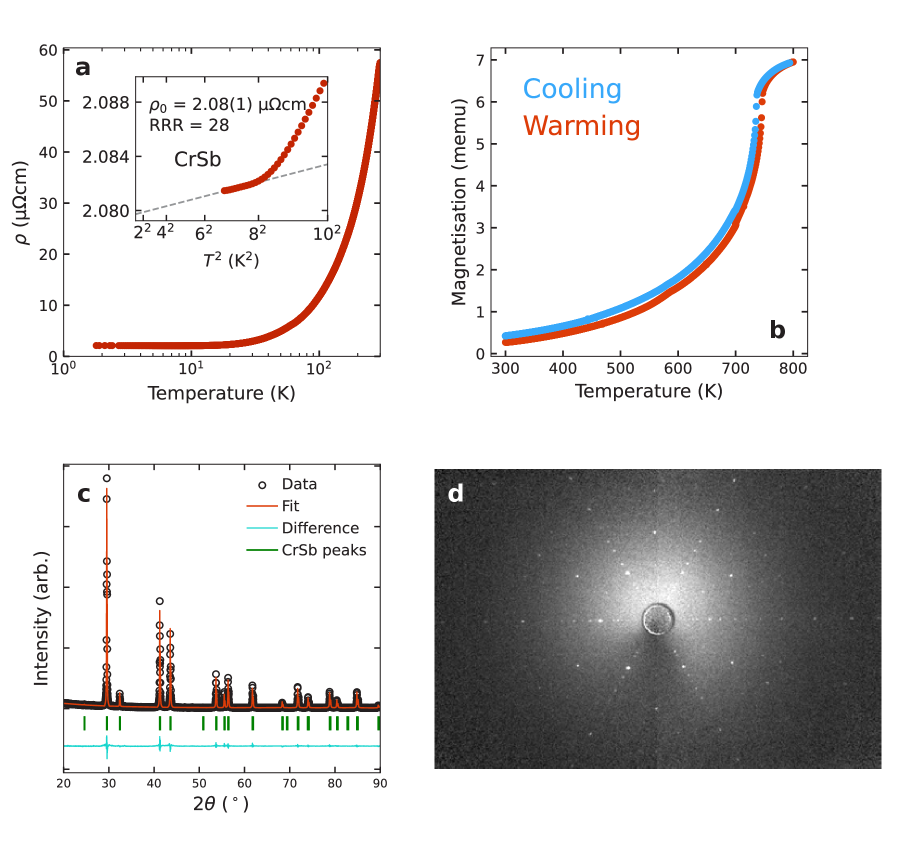
Chromium antimonide (CrSb) has emerged as a pivotal material in the investigation of altermagnetism, showcasing properties that deviate significantly from traditional magnetic behaviors. Detailed analysis reveals a remarkably low residual resistivity of 2.08 μΩcm, confirming its metallic character and suggesting a high degree of structural perfection within the crystalline lattice. This low resistivity is further substantiated by a residual resistivity ratio (RRR) of 28, calculated by dividing the resistivity at room temperature by the residual resistivity at near-zero Kelvin. Such a high RRR indicates minimal scattering from defects and impurities, making CrSb an ideal platform for probing the subtle interplay of spin configurations characteristic of altermagnetism and enabling precise measurements of its unusual magnetic properties without the confounding influence of material imperfections.
Decoding the Magnetic Order: Symmetry as a Guiding Principle
The magnetic order in altermagnets is quantitatively described by an order parameter, a vector or tensor that characterizes the long-range alignment of spins. This parameter isn’t merely a measure of magnetization strength; its symmetry – whether it’s uniform, canted, cycloidal, or more complex – fundamentally determines macroscopic properties like magnetic anisotropy, the shape of the hysteresis loop, and the material’s response to external fields. Specifically, the symmetry of the order parameter dictates which magnetic phases are stable and how the material transitions between them. For instance, a higher-symmetry order parameter often implies a greater stability against perturbations and can lead to unique magnetic textures. The mathematical form of the order parameter, often expressed using components that transform under specific symmetry groups, allows for a predictive understanding of these observable characteristics.
Density Functional Theory (DFT) calculations are utilized to model the electronic structure of altermagnets, enabling the investigation of how electron-electron interactions influence the material’s magnetic order. These calculations treat electrons as existing within an effective potential, allowing for the determination of the ground state energy and electron density. By analyzing the total energy as a function of spin configurations, DFT can predict the stability of different magnetic orders and identify the associated order parameter. Specifically, the exchange-correlation functional within DFT approximates the many-body effects governing electron interactions, impacting the form and magnitude of the order parameter which describes the collective spin behavior. Refinements to these functionals, such as those incorporating on-site Coulomb interactions U, are often necessary to accurately capture the complex interplay of electron correlations and their influence on the resulting magnetic structure.
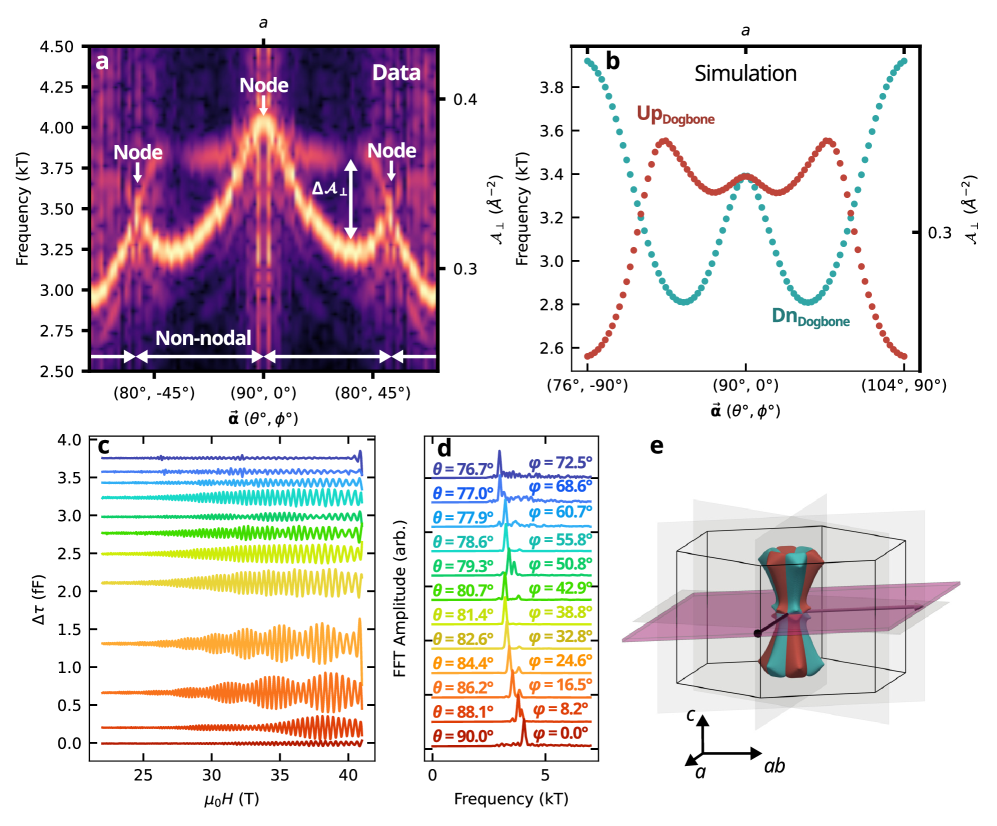
The spin texture in altermagnets exhibits gg-wave symmetry, a magnetic order analogous to the d-wave order parameter found in certain high-temperature superconductors. This symmetry implies a specific angular dependence of the spin orientation, characterized by nodes in the spin texture – regions where the magnetic moment vanishes. Mathematically, this can be represented using spherical harmonics, where the g_l modes define the angular structure of the spin order. Like d-wave superconductivity, the presence of these nodal structures significantly influences the material’s low-energy electronic excitations and transport properties, leading to anisotropic behavior and potentially unconventional responses to external stimuli.
The gg-wave magnetic order is characterized by nodal planes within its spin texture, which represent locations where the order parameter vanishes. These planes fundamentally alter the electronic structure of the altermagnet by introducing specific symmetries and constraints on electron propagation. The spatial orientation and arrangement of these nodal planes are mathematically described using spherical harmonics, Y_{lm}(\theta, \phi), where l and m are integers defining the angular momentum and its projection. Specifically, the gg-wave symmetry results in nodal planes that are functions of angle, influencing the density of states near the Fermi level and leading to unique transport properties. Analysis of the band structure reveals how these nodal planes dictate the allowed electronic states and contribute to the material’s overall magnetic behavior.
Probing the Electronic Structure: Unveiling Hidden Order
Quantum oscillation measurements, such as the de Haas-van Alphen (dHvA) effect, directly probe the electronic structure of materials by quantifying the extremal cross-sectional areas of the Fermi surface perpendicular to the applied magnetic field. The dHvA effect manifests as oscillations in magnetic properties-specifically, the magnetic susceptibility or magnetization-when a magnetic field is swept across the material. The frequency of these oscillations is directly proportional to the area of the Fermi surface extremal, allowing for a precise determination of the Fermi surface geometry in reciprocal space. By analyzing multiple oscillation frequencies corresponding to different extremal areas, a detailed map of the Fermi surface can be constructed, revealing information about the band structure, carrier density, and effective masses of charge carriers within the material. These measurements are typically performed at low temperatures and high magnetic fields to enhance the signal and resolve subtle features in the electronic structure.
Magnetic torque magnetometry and pulsed magnetic field measurements are essential for probing quantum oscillations due to the extremely high sensitivities and field strengths required. Conventional magnetometers often lack the sensitivity to detect the minute torque variations induced by changes in the electronic structure at high magnetic fields. Pulsed field systems enable access to fields exceeding those achievable with static high-field magnets, which are necessary to resolve the fine details of the Fermi surface, particularly in materials with small Fermi surface pockets or complex band structures. The torque measurements, which reflect the anisotropy of the magnetic susceptibility, are directly proportional to the derivative of the magnetization with respect to the applied field, and thus reveal changes in the electronic density of states as a function of field.
The interpretation of quantum oscillation data fundamentally requires understanding the reciprocal lattice and, specifically, the Brillouin Zone. The Brillouin Zone represents the primitive unit cell in reciprocal space, defining the allowed wavevectors \mathbf{k} for electrons within the crystal. Orbital periodicity in real space translates to reciprocal lattice points, and the shape of the Brillouin Zone directly dictates the geometry of the Fermi surface. Quantum oscillations arise from extremal cross-sections of the Fermi surface perpendicular to the applied magnetic field; therefore, accurately determining the \mathbf{k} values within the Brillouin Zone is essential for mapping these orbits and extracting key parameters like carrier density and effective mass. Measurements are performed with the magnetic field oriented along various crystallographic directions to probe different sections of the Brillouin Zone and obtain a complete picture of the electronic structure.
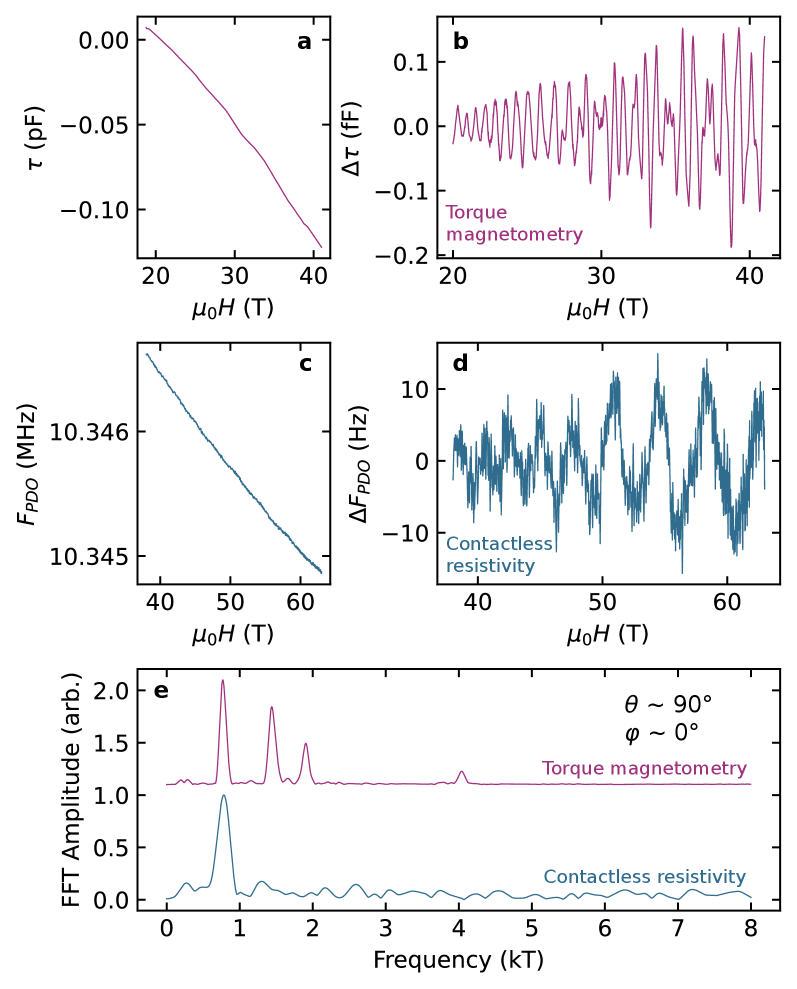
Contactless resistivity measurements, performed using a Proximity Detector Oscillator, offer a non-destructive method for characterizing the transport properties of materials under varying magnetic fields. These measurements have revealed a frequency splitting of 0.8 kT in pulsed field experiments. This splitting is observed in the resistivity data and provides information about the energy levels and carrier dynamics within the material, complementing the data obtained from quantum oscillation techniques like the de Haas-van Alphen effect. The frequency splitting is directly related to the interval between relevant energy states and can be used to map out features in the material’s band structure.
Beyond CrSb: A New Frontier in Magnetism
The recent identification of altermagnetism represents a significant departure from traditional understandings of magnetic order, prompting a re-evaluation of established principles. Conventional magnetism relies on the breaking of time-reversal symmetry, resulting in a net magnetization; however, altermagnetism arises from a more subtle mechanism – the lifting of Kramers degeneracy without any net magnetization. This unconventional approach to magnetism opens entirely new avenues for materials design, allowing scientists to explore materials where magnetism isn’t dictated by conventional constraints. Researchers are now actively investigating materials beyond chromium-antimony (CrSb) with the potential to engineer unique magnetic properties and functionalities previously thought unattainable, potentially leading to breakthroughs in fields like spintronics and data storage, where manipulating spin, rather than charge, is key.
Altermagnets present a compelling pathway toward next-generation spintronic devices due to their fundamentally different magnetic ordering. Conventional spintronics relies on breaking time-reversal symmetry to generate spin polarization; however, altermagnets achieve this without conventional magnetism. This arises from a lifted Kramers degeneracy-a condition where electron energy levels normally remain twofold due to time-reversal symmetry-and an unconventional order parameter not tied to a net magnetization. Consequently, altermagnetic materials can exhibit strong spin-orbit coupling and potentially enable the creation of devices with enhanced spin manipulation, reduced energy consumption, and novel functionalities unattainable with traditional ferromagnetic materials. The absence of a net magnetic moment also suggests potential advantages in avoiding unwanted magnetic interactions and improving device stability, making altermagnets a promising platform for advanced information storage, processing, and sensing technologies.
The initial discovery of altermagnetism within chromium sulfidebismuthide (CrSb) represents only a first step; researchers are now actively pursuing alternative material compositions to broaden the scope of this novel magnetic phenomenon. This search isn’t merely about replicating altermagnetism, but about tailoring its properties – enhancing the strength of the effect, manipulating the temperature at which it appears, and ultimately engineering materials with specific functionalities. The potential benefits are substantial, as different material systems could exhibit unique electronic and magnetic behaviors, paving the way for advancements in spintronics, magnetic storage, and potentially even quantum computing. Investigations into alternative compounds are driven by the desire to overcome limitations of CrSb, such as its relatively low operating temperature, and to explore materials with more robust and easily tunable altermagnetic characteristics, promising a diverse landscape of applications beyond the initial findings.
A comprehensive understanding of altermagnetism hinges on continued theoretical modeling and experimental investigation. Current research focuses on refining models to accurately predict material properties and guide the discovery of novel altermagnetic compounds beyond chromium monosulfide. Precise characterization of band structure, as demonstrated by the determination of effective masses – 1.97 and 2.09 me for spin-up and spin-down sheets, respectively – is critical for tailoring these materials for specific applications. This detailed analysis enables a deeper comprehension of carrier dynamics and paves the way for designing advanced spintronic devices leveraging the unique properties of altermagnets, ultimately realizing the full technological potential of this burgeoning field.
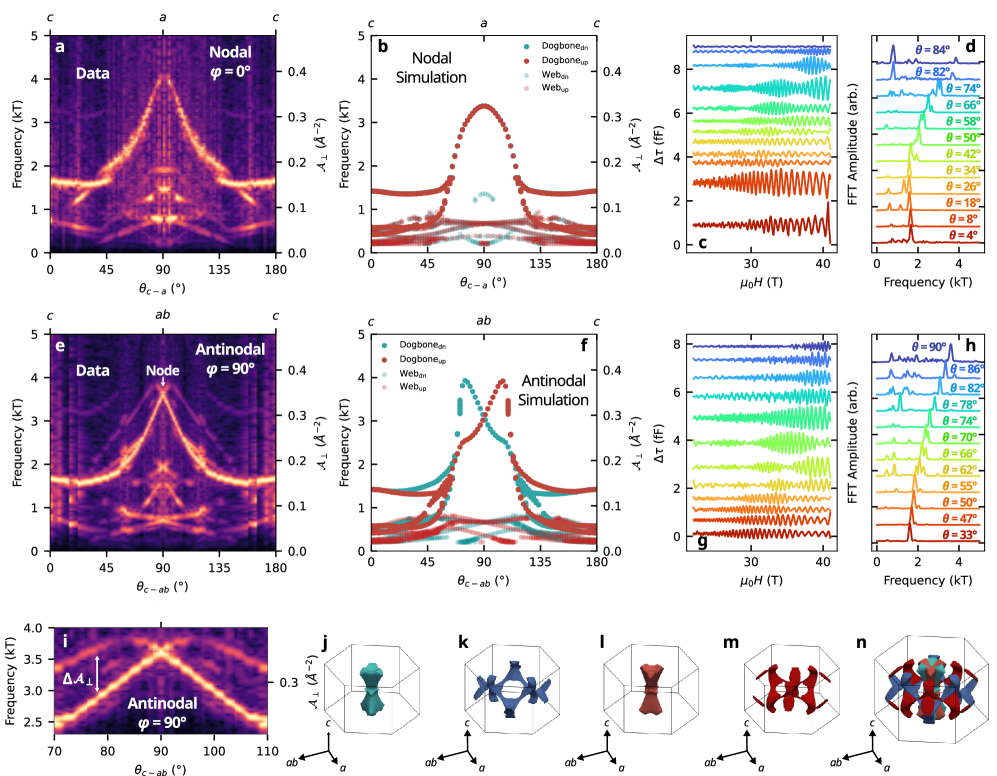
The pursuit of definitive magnetic order, as demonstrated in the study of CrSb, necessitates a relentless skepticism toward simplified models. This research doesn’t simply confirm altermagnetism; it rigorously maps the gg-wave symmetry through quantum oscillation, acknowledging the complexity inherent in real-world materials. It echoes the sentiment expressed by Epicurus: “The greatest obstacle to living is not death, but the fear of not living fully.” In this context, ‘fully’ means confronting the nuances of magnetic order, not settling for convenient approximations. The insistence on mapping the Fermi surface and acknowledging variance – rather than relying on averages – underscores a commitment to understanding the complete picture, even when it resists easy categorization. This dedication to empirical observation, and embracing the messy details, is central to discerning truth from assumption.
Where Do the Errors Lie?
The confirmation of a gg-wave symmetry in CrSb, while a necessary step, merely sharpens the central question: what, precisely, is altermagnetism beyond this particular manifestation? The pursuit of unconventional magnetic order parameters risks becoming a cataloging exercise, identifying symmetries without understanding the underlying mechanisms driving their emergence. The true challenge isn’t mapping the order – it’s understanding why certain Fermi surface topologies permit, even encourage, this deviation from conventional magnetism. Further investigation must focus on materials predicted to exhibit similar behavior, but with systematically varied electronic structures, to establish robust correlations, or – more interestingly – to reveal the limits of this paradigm.
Quantum oscillation measurements, though powerful, provide a static snapshot. The dynamic interplay between the magnetic order and the electronic structure – the susceptibility to perturbations, the influence of defects, the temperature dependence of the gg-wave – remains largely unexplored. The field would benefit less from refinements in measurement precision and more from theoretical frameworks capable of predicting these dynamic effects, and quantifying the energy scales governing them. A deeper understanding requires acknowledging that the “ideal” altermagnet is a fiction; real materials are messy, and the deviations from perfect symmetry are where the physics often resides.
Ultimately, the value of this work, and others like it, will not be judged by the elegance of the mapped order parameter, but by its ability to inform the design of genuinely novel materials. The pursuit of topological quantum phenomena demands a willingness to abandon preconceived notions. Wisdom, in this context, is knowing not just the symmetry, but the margin of error – and recognizing that the most profound discoveries often lie within the noise.
Original article: https://arxiv.org/pdf/2601.14526.pdf
Contact the author: https://www.linkedin.com/in/avetisyan/
See also:
- GBP CNY PREDICTION
- Mark Zuckerberg & Wife Priscilla Chan Make Surprise Debut at Met Gala
- Elon Musk’s Mom Maye Musk Shares Her Parenting Philosophy
- Forza Horizon 6 Car List So Far: Confirmed Highlights, Cover Cars, DLC, and Rewards
- 10 Greatest Manga Endings of All Time
- Elon Musk’s Ex Ashley St. Clair Reveals When Romance Became “Weird”
- 38 Years Later, Murder, She Wrote’s Most Overlooked Episode Still Pulls Off TV’s Greatest Crossover
- Hollow Knight: Silksong Guide – All 30 Lost Flea Locations
- 20 K-Dramas That Nailed the Perfect Ending
- A Major PlayStation Delisting Exposes a Sony Problem
2026-01-23 01:53