Author: Denis Avetisyan
A new theoretical framework proposes harnessing quantum interference to detect gravitational waves, potentially unlocking enhanced sensitivity and probing the quantum nature of gravity itself.

This review details a scheme for gravitational wave detection via photon-graviton scattering and Hong-Ou-Mandel interference, utilizing a field-theoretic approach and entanglement.
Existing gravitational wave detectors rely on macroscopic measurements of spacetime distortion, yet a fully quantum description of gravity remains elusive. This motivates the study presented in ‘Gravitational wave detection via photon-graviton scattering and quantum interference’, which proposes a novel detection scheme based on the interaction between photons and gravitons and leveraging Hong-Ou-Mandel interference. The framework demonstrates that gravitational waves can induce distinguishable phase shifts in entangled photon pairs, encoding the signal in coincidence rates rather than classical intensity, offering a pathway towards enhanced sensitivity and a quantum probe of gravitational phenomena. Could this approach ultimately reveal subtle quantum effects of gravity currently beyond the reach of classical detectors?
The Evolving Horizon: Beyond Classical Limits in Gravitational Wave Detection
Current gravitational wave detectors, such as LIGO-Virgo-KAGRA, function by precisely measuring changes in the lengths of their enormous interferometers – a technique fundamentally rooted in the geometric optics approximation. This approach, while remarkably successful, treats light as rays traveling in straight lines, an oversimplification that becomes increasingly problematic at higher frequencies. As gravitational waves induce ever-faster oscillations in spacetime, the wavelength of the light used in these detectors approaches the size of the instrument itself. This limitation introduces inaccuracies and ultimately restricts the detectors’ ability to perceive fainter, higher-frequency signals, potentially obscuring crucial information about cataclysmic cosmic events like neutron star mergers or the early universe. Consequently, pushing the boundaries of gravitational wave astronomy demands a departure from this classical framework and exploration of more nuanced, wave-based descriptions of light and gravity.
This work establishes a novel framework for gravitational wave detection, moving beyond the limitations of traditional geometric optics by grounding the analysis in the principles of Quantum Field Theory. Instead of treating gravitational waves as mere spacetime distortions, this approach conceptualizes them as streams of quantized particles – gravitons – interacting with the electromagnetic fields within detectors. This fundamental shift allows for a more precise modeling of signal propagation and noise, potentially surpassing the sensitivity limits imposed by classical interferometry. By treating gravity at the quantum level, researchers anticipate a deeper understanding of spacetime itself, opening possibilities for observing phenomena currently beyond the reach of existing gravitational wave observatories and refining the precision with which these cosmic events can be studied.
Current gravitational wave detectors interpret these ripples as distortions in the fabric of spacetime, but a more nuanced understanding, developed in this work, posits that gravitational waves are fundamentally composed of discrete, quantized particles called gravitons. These gravitons aren’t merely causing the spacetime distortions; rather, they directly interact with the electromagnetic field within the detector. This interaction isn’t captured by traditional geometric optics, which treats light as rays propagating through curved spacetime. By framing gravitational waves as a quantum phenomenon – a stream of gravitons – this framework suggests a path toward exceeding the sensitivity limits of classical interferometry. The implications extend beyond simply detecting fainter signals; it opens the possibility of probing the very nature of gravity at the quantum level and potentially revealing information about spacetime itself, currently hidden from view by the approximations inherent in current detection methods.

Unveiling the Interaction: A Quantum Hamiltonian for Photon-Graviton Coupling
The Interaction Hamiltonian is central to modeling the energy exchange between gravitons and photons. This Hamiltonian, derived from the full Lagrangian incorporating both gravitational and electromagnetic fields, quantifies the coupling strength of these interactions. Specifically, it details how the perturbation of spacetime caused by a gravitational wave-mediated by gravitons-affects the momentum and polarization of photons propagating through that spacetime. The resulting terms in the Hamiltonian describe the scattering and absorption/emission processes, ultimately leading to measurable changes in the photon’s state, such as frequency shifts or polarization rotations, and forming the basis for predicting observable effects like gravitational lensing or the modification of cosmological signals. The form of the Hamiltonian is dependent on the chosen gauge conditions and the approximation schemes used to simplify the calculations, but fundamentally describes the rate of energy transfer between the gravitational and electromagnetic degrees of freedom.
The mathematical description of photon-graviton interaction necessitates the adoption of specific gauge conditions to simplify calculations and ensure physically meaningful results. Gravitational waves are most naturally treated within the Transverse-Traceless (TT) gauge, which eliminates longitudinal modes and scalar contributions, focusing solely on the propagating tensorial degrees of freedom. Simultaneously, the electromagnetic field is consistently described using the Coulomb gauge, \nabla \cdot \mathbf{A} = 0, which fixes the vector potential’s divergence and avoids unphysical solutions. Employing these gauges allows for a clear separation of variables and facilitates the derivation of the Interaction Hamiltonian, leading to a tractable quantum mechanical framework for analyzing the effects of gravitational waves on photons.
Modeling the interaction between photons and gravitational waves necessitates tracking the evolution of the photon’s quantum state, represented by its Density Matrix ρ. Utilizing the Interaction Hamiltonian, the time evolution of ρ is governed by the Liouville-von Neumann equation, allowing for a quantitative prediction of how a gravitational wave alters photon properties such as polarization and frequency. Derived equations demonstrate a direct relationship between the gravitational wave strain h and the changes observed in the photon’s Density Matrix, specifically showing that the induced changes are proportional to h^2 for weak field approximations. This methodology enables precise calculation of observable effects, such as photon scattering and induced phase shifts, attributable to the gravitational wave interaction.
Echoes in Phase: Detecting Time Delays and Quantum Interference
The interaction between photons and gravitational waves (GWs) induces a measurable time delay in photons propagating through the GW field. This time delay, though exceedingly small, results in a phase shift detectable through interferometric methods. The magnitude of this phase shift is directly proportional to the amplitude of the GW and the path length of the photon within the GW. Specifically, the phase shift \Delta \phi is determined by the integral of the GW strain along the photon’s trajectory, effectively quantifying the accumulated time delay. Detection relies on the precision measurement of this phase difference between photons that have, and have not, traversed the GW, allowing for the characterization of the GW itself.
The alteration of a photon’s phase due to gravitational waves results in a measurable Gravitational Phase shift. Detection of this shift leverages quantum interference effects, notably Hong-Ou-Mandel (HOM) interference, a phenomenon where indistinguishable photons exhibit a probability less than one of coinciding at a beam splitter. The sensitivity of HOM interference to phase differences allows for detection of extremely small phase shifts induced by gravitational waves, surpassing the limitations of classical interferometry which is constrained by the shot noise limit. By utilizing quantum correlations, the precision with which the Gravitational Phase can be determined is improved, enabling the potential for more sensitive gravitational wave detectors.
The effect of a gravitational wave (GW) on a photon’s quantum state can be mathematically described using the Displacement Operator D(\alpha). This operator, when applied to the initial photon state |0\rangle, introduces a shift in both the photon’s position and momentum, directly proportional to the GW’s amplitude and duration. Specifically, the operator modifies the state as D(\alpha)|0\rangle = |0\rangle + \alpha a^\dagger |0\rangle, where α is a complex parameter quantifying the GW-induced displacement and a^\dagger is the creation operator. The resulting phase shift, directly related to the imaginary component of α, can be precisely quantified through this operator, enabling the calculation of expected interference patterns and providing a means to detect extremely weak GW signals through measurements of those patterns.

Refining the View: Antenna Patterns and Advanced Detector Configurations
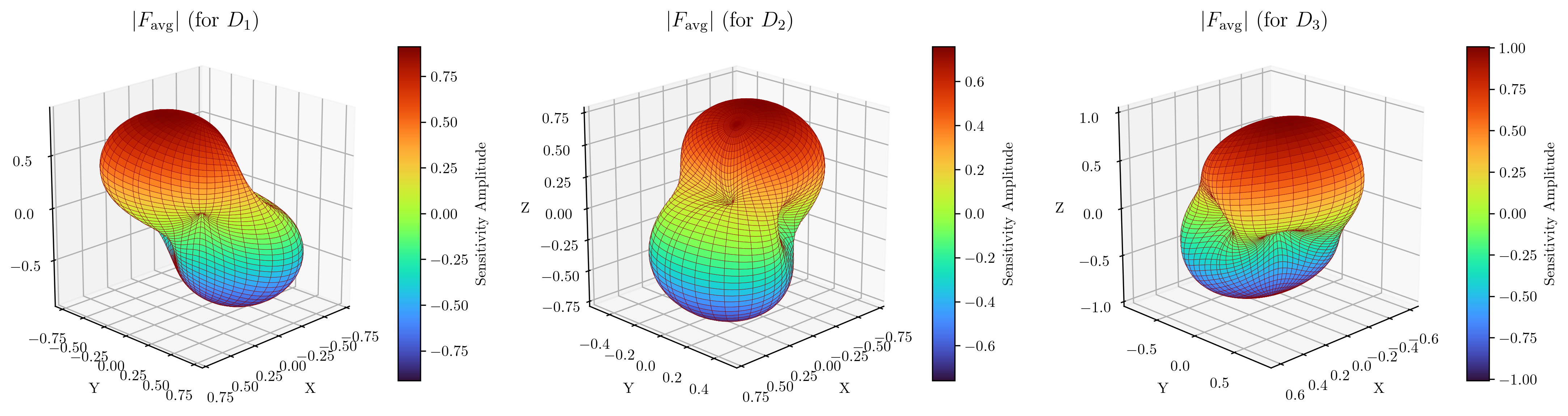
A gravitational wave detector’s ability to register faint ripples in spacetime hinges critically on its Antenna Pattern Function. This function doesn’t imply a physical antenna, but rather mathematically describes how the detector’s sensitivity varies depending on the direction from which a gravitational wave arrives. Effectively, it maps the detector’s ‘view’ of the universe, highlighting directions where it is most responsive and suppressing those where it is less so. Because detectors aren’t equally sensitive to waves approaching from all angles, understanding and carefully modeling this directional response – the Antenna Pattern Function – is paramount for accurately interpreting detected signals and extracting meaningful astrophysical information. F_{+}(\theta, \phi) and F_{\times}(\theta, \phi) specifically quantify the detector’s response to the two independent gravitational wave polarizations, and their precise calculation is essential for maximizing detection probability and source localization.
Gravitational wave detection hinges on the precise characterization of a detector’s sensitivity to incoming signals from different directions – a property defined by its antenna pattern function. Recent work has moved beyond classical approximations by applying principles from quantum mechanics to derive highly detailed expressions for the key components of this function, denoted as F_{+} and F_{\times} . These refined expressions account for subtle quantum effects previously overlooked, enabling a more accurate modeling of detector response. Consequently, researchers can now optimize detector configurations and data analysis pipelines to maximize the probability of detecting faint gravitational wave signals, ultimately enhancing the ability to probe the universe’s most energetic events and test the predictions of general relativity.
Recent investigations explore detector arrangements beyond the traditional linear configuration, with the Pyramidal Configuration emerging as a particularly promising design for gravitational wave observation. Directional sensitivity analyses reveal this arrangement significantly enhances the ability to pinpoint the origin of a gravitational wave source, a process known as source localization. This improvement stems from the configuration’s unique response to different gravitational wave polarizations; it exhibits heightened sensitivity to certain polarizations that are often weaker in signals detected by linear detectors. Consequently, the Pyramidal Configuration doesn’t merely increase the amount of signal detected, but also refines the precision with which its direction can be determined, potentially unlocking insights into astrophysical events previously obscured by localization uncertainties.
The pursuit of gravitational wave detection, as detailed in this work, inherently acknowledges the ephemeral nature of signals and the constant struggle against decoherence. Any improvement in sensitivity, any refinement of the quantum metrology techniques described, ages faster than expected as technology relentlessly advances. This resonates with the observation that even the most precisely calibrated instruments are subject to the arrow of time. As Blaise Pascal noted, “All of humanity’s problems stem from man’s inability to sit quietly in a room alone.” While seemingly disparate, Pascal’s sentiment speaks to the fundamental challenge of isolating a signal-a gravitational wave, in this case-from the noise of existence, a noise that, like time itself, is ever-present and irreducible. The proposed scheme, leveraging Hong-Ou-Mandel interference, represents a focused attempt to momentarily still that noise, a fleeting victory against entropy.
What Lies Ahead?
This exploration of gravitational wave detection via photon-graviton interaction, and its reliance on the delicate balance of quantum interference, reveals a familiar truth: systems learn to age gracefully. The proposed scheme, while theoretically compelling, inevitably encounters the limitations inherent in translating quantum ideals into macroscopic reality. Noise, decoherence, and the practical challenges of generating and maintaining entangled states represent not insurmountable obstacles, but rather the friction against which any sensitive measurement must operate.
The true value may not reside in achieving an immediate, dramatic improvement in detection sensitivity-though that remains a worthy aspiration. Instead, the persistent refinement of such schemes allows a deeper understanding of the boundary between the quantum and classical realms. The pursuit of detecting the quantum nature of gravity itself might be less about finding a signal and more about meticulously mapping the processes that obscure it.
Future work will likely focus on mitigating these obscuring processes, not necessarily by eliminating them, but by learning to interpret their influence. Sometimes observing the process, understanding how a system degrades, is more informative-and ultimately more fruitful-than trying to speed it up. The decay itself contains the information.
Original article: https://arxiv.org/pdf/2601.20553.pdf
Contact the author: https://www.linkedin.com/in/avetisyan/
See also:
- GBP CNY PREDICTION
- 10 Most Powerful Versions of Superman, Ranked
- Gold Rate Forecast
- DOGE PREDICTION. DOGE cryptocurrency
- 007 First Light: Release Date, Story, Gameplay, Cast, Editions, and Platforms
- Forza Horizon 6 Car List So Far: Confirmed Highlights, Cover Cars, DLC, and Rewards
- EUR CNY PREDICTION
- Superman’s 7 Best Power-Ups, Ranked
- 10 Greatest Wii U Games of All Time, Ranked
- CNY RUB PREDICTION
2026-01-29 07:34