Author: Denis Avetisyan
A next-generation Super Tau-Charm Factory promises unprecedented precision in measurements of the tau lepton and its potential to reveal new physics beyond the Standard Model.
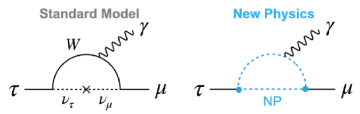
This review details the scientific opportunities offered by a Super Tau-Charm Factory for studying tau lepton decays, CP violation, and tests of lepton flavor universality.
Despite the successes of the Standard Model, fundamental questions regarding lepton flavor, \mathcal{CP} violation, and the search for physics beyond its confines remain open. This paper, ‘Overview of tau lepton physics at a super tau-charm facility’, reviews the potential of a future Super Tau-Charm Factory to address these challenges through precision measurements of tau lepton decays and searches for new phenomena in hadronic and leptonic channels. By outlining the current status of key measurements – including spectral functions, \mathcal{CP} asymmetries, and tests of lepton flavor universality – we highlight several open issues where a dedicated facility could provide crucial insights. Will a Super Tau-Charm Factory unlock the secrets hidden within the decays of the tau lepton and illuminate pathways to a more complete understanding of fundamental particle physics?
The Fleeting Glimpse: Probing Reality Through Tau Decay
The tau lepton, a fundamental particle akin to the more familiar electron, presents a unique opportunity for high-energy physics despite its incredibly brief existence – decaying within picoseconds. This fleeting lifespan doesn’t diminish its utility; instead, the tau’s relatively large mass – approximately 1777 times that of the electron – amplifies its sensitivity to subtle effects predicted by the Standard Model (SM). Because of this substantial mass, the tau interacts more strongly with hypothetical, heavier particles that may exist beyond the SM, making it an exceptional probe for new physics. Precision measurements of the tau’s properties, such as its mass and how it decays, serve as a rigorous test of the SM’s predictions and can reveal deviations that would signal the presence of undiscovered particles or forces. The tau, therefore, functions as a powerful ‘window’ into the fundamental structure of the universe, allowing physicists to search for phenomena that lie beyond the current understanding of particle physics.
The tau lepton’s fleeting existence necessitates exceptionally precise measurements of its fundamental properties to rigorously test the Standard Model. Scientists focus intently on characteristics such as its mass and the rates at which it decays into other particles, comparing experimental results against the incredibly accurate theoretical predictions provided by the SM. Even minute discrepancies between observation and prediction can be profoundly significant, potentially indicating the influence of undiscovered particles or forces. These deviations wouldn’t necessarily represent a failure of the Standard Model, but rather a beacon guiding physicists toward the ‘new physics’ that lies beyond its current framework – a realm where heavier particles interact with the tau, altering its expected behavior and offering a glimpse into the universe’s deeper mysteries. The precision required is immense, demanding innovative detector technologies and data analysis techniques to sift through background noise and isolate the subtle signatures of physics beyond the Standard Model.
The search for physics beyond the Standard Model receives a unique impetus from the tau lepton, as any deviation in its measured properties could unveil previously unknown particles or forces. The Standard Model, while remarkably successful, leaves several fundamental questions unanswered, and subtle discrepancies in tau decay characteristics-such as rates or the distribution of decay products-offer a sensitive probe for new physics. These deviations wouldn’t necessarily manifest as large, obvious signals, but rather as tiny, statistically significant shifts from predicted values. Discovering such anomalies would be akin to finding a crack in a seemingly perfect edifice, potentially opening entirely new avenues of research and reshaping the current understanding of the universe at its most fundamental level, hinting at the existence of \text{BSM} particles interacting with the tau.
![Current experimental results place upper limits on <span class="katex-eq" data-katex-display="false"> au</span> lepton-flavor-violating branching fractions, as compiled in Ref. [10].](https://arxiv.org/html/2601.20423v1/x4.png)
Unveiling Strong Interaction Dynamics Through Tau Decay
Hadronic tau decays, resulting from the decay of tau leptons into hadrons, offer a distinctive means of probing the strong interaction as described by Quantum Chromodynamics (QCD). Unlike high-energy collider experiments that directly produce strongly interacting particles, tau decays provide a controlled environment where the initial state is known and the energy scale is relatively low, typically around Q^2 \approx m_{\tau}^2. This allows for the detailed study of hadron production in a regime where perturbative QCD calculations are challenging, but still potentially verifiable. The analysis of the decay products-specifically, the measurement of hadronic spectral functions-provides information about the fundamental parameters and dynamics of the strong force, complementing other experimental and theoretical approaches to QCD.
Spectral functions, obtained from the analysis of hadronic tau decays, represent the probability distribution of energy arising from strong interaction processes. These functions are directly related to the two-point correlation function of hadronic currents, which can be expressed as a dispersion integral. By precisely measuring the spectral function, particularly its integral over energy, allows for the determination of \alpha_s, the strong coupling constant. The integral relates to the total hadronic cross-section, and its normalization is sensitive to \alpha_s. Consequently, deviations in the measured spectral function from theoretical predictions, based on perturbative QCD and operator product expansion, provide constraints on the value of \alpha_s and test the validity of QCD calculations.
The ALEPH experiment at the Large Electron-Positron collider contributed substantially to the precise determination of hadronic tau decay spectral functions, which are critical for testing Quantum Chromodynamics (QCD). By meticulously measuring the decay products of the tau lepton, ALEPH was able to map these spectral functions and extract a value for the strong coupling constant, α_s, of 0.332 ± 0.013, evaluated at a momentum transfer of m_τ^2. This measurement, derived from experimental data, provides a stringent test of perturbative QCD predictions and is in excellent agreement with values obtained from global electroweak fits, validating the precision achievable through analyses of hadronic tau decays.
The determination of the strong coupling constant, \alpha_s, from hadronic τ decays yields a value of 0.332 at m_\tau^2. This result aligns with determinations of \alpha_s obtained through global electroweak fits, which incorporate data from multiple high-energy physics experiments and theoretical calculations. The consistency between these independent measurements validates the precision of the tau decay analysis and confirms its utility as a complementary method for probing the Standard Model parameters, specifically those related to the strong force.

Precision Facilities: Charting the Past, Present, and Future
The discovery of the tau lepton at the Stanford Positron-Electron Acceleration Ring (SPEAR) in 1975, using the Mark I detector, represented a significant advancement in particle physics. Prior to this, the existence of a third, heavier lepton was theoretically predicted to maintain lepton universality within the Standard Model. The Mark I experiment detected the tau lepton through its decay into hadrons and a neutrino, confirming its mass to be approximately 1.78 GeV/c2. This discovery completed the third generation of leptons – the electron, muon, and tau – and solidified the Standard Model’s framework for classifying fundamental particles. The observation relied on identifying the distinctive decay signatures of the tau amidst the background events produced in e^+e^- collisions at SPEAR.
Following the initial discovery of the tau lepton, the Beijing Spectrometer (BES) and the Belle experiment at the KEKB collider conducted dedicated studies that substantially improved the precision of its properties. BES, utilizing low-energy electron-positron collisions, provided precise measurements of the tau’s decay modes and contributions to e^{+}e^{-} \rightarrow \tau^{+}\tau^{-}. Belle, operating at higher energies, allowed for detailed studies of tau decays involving various hadronic states and provided a more accurate determination of the tau lepton mass. These experiments reduced the uncertainty in the tau mass measurement from approximately 0.4 MeV/c² to below 0.2 MeV/c², and significantly expanded the catalog of observed tau decay modes, contributing to a more complete understanding of lepton universality and testing the Standard Model.
The SuperKEKB accelerator is currently operating to maximize the production of tau lepton pairs for precision measurements. As of 2024, the facility has achieved an instantaneous luminosity of 0.5 \times 10^{35} \text{ cm}^{-2} \text{ s}^{-1}. Development efforts are focused on further increasing luminosity, with a stated goal of achieving an improvement of one order of magnitude – reaching 5 \times 10^{35} \text{ cm}^{-2} \text{ s}^{-1}. This increased luminosity directly translates to a higher event rate for tau pair production, allowing for more detailed studies of tau lepton properties and decay modes.
The proposed Super Tau-Charm Facility (STCF) is designed to significantly advance precision measurements in tau and charm physics. Projected luminosity exceeds current facilities, enabling data collection rates sufficient to measure the tau lepton mass with a precision of 0.12 MeV/c^2 . This improvement in precision relies on increased integrated luminosity and advanced detector technologies, allowing for detailed studies of tau decays and searches for physics beyond the Standard Model. The facility aims to collect an integrated luminosity of up to 10^{12} inverse picobarns, facilitating statistically powerful analyses of rare decay modes and precise determination of fundamental parameters.
![The <span class="katex-eq" data-katex-display="false"> au</span> pair production cross section varies with center-of-mass energy, as depicted in data from Ref.[48].](https://arxiv.org/html/2601.20423v1/x1.png)
Beyond the Standard Model: The Promise of Unveiling New Physics
The tau lepton, a heavier cousin of the more familiar electron, presents a unique opportunity to probe the boundaries of the Standard Model through highly precise measurements of its decay properties. Scientists are particularly interested in searching for Lepton-Flavor-Violating (LFV) decays, processes where a tau transforms into a different lepton – such as an electron or muon – alongside other particles. The Standard Model strictly forbids these LFV events; therefore, observing them would be a definitive signal of new physics at play, potentially involving undiscovered particles or forces. These searches rely on the tau’s relatively short lifespan and its various decay modes, demanding experiments capable of reconstructing these decays with exceptional precision to distinguish genuine LFV signals from background noise. The sensitivity of these measurements hinges on collecting large datasets and employing advanced analysis techniques to isolate the incredibly rare instances where lepton flavor is demonstrably violated.
Lepton-Flavor-Universality (LFU) posits that each generation of leptons – electrons, muons, and taus – should interact with the fundamental forces in an identical manner, differing only by their mass. However, subtle deviations from this principle could signal the existence of new particles or forces that selectively couple to these leptons. Experiments meticulously compare the rates of processes involving different lepton flavors; for instance, observing a decay rate significantly different for muons versus electrons in the same process would strongly suggest new physics at play. These potential violations aren’t merely theoretical curiosities; they provide a crucial window into physics beyond the Standard Model, hinting at the existence of undiscovered interactions and potentially resolving some of the model’s outstanding mysteries, such as the origin of neutrino masses or the nature of dark matter.
The Super Tau Charm Factory (STCF) represents a significant leap forward in the search for physics beyond the Standard Model, primarily due to its exceptional luminosity – a measure of the collision rate within the detector. This high luminosity allows physicists to meticulously investigate exceedingly rare decay modes of particles like the tau lepton, events that are typically obscured by more common processes. By collecting a vastly larger dataset than previous experiments, the STCF dramatically increases the probability of observing these subtle signals, potentially revealing evidence of new particles or forces mediating interactions not predicted by current theory. The facility’s design specifically targets these rare events, offering a unique opportunity to probe beyond established physics and address fundamental questions about the nature of matter and energy.
The Super Tau Charm Factory (STCF) is poised to establish unprecedented precision in the search for subtle violations of fundamental symmetries. Projections based on a decade of collected data indicate the facility will be capable of measuring the Tau Electric Dipole Moment with an upper limit of 3.89 \times 10^{-{18}} \, \text{e cm}, a sensitivity far exceeding current constraints. Furthermore, the STCF anticipates a statistical sensitivity of 9.7 \times 10^{-4} for detecting Charge-Parity (CP) violation in tau decays with an integrated luminosity of 1 inverse abarn (1 \, \text{ab}^{-1}). These measurements promise to rigorously test the Standard Model and potentially reveal the presence of new physics through discrepancies in these fundamental particle properties, offering a powerful probe of interactions beyond current understanding.

The pursuit of a Super Tau-Charm Factory isn’t about constructing a definitive answer, but cultivating a space for discovery. This facility, as described in the study, will inevitably reveal unforeseen complexities within tau lepton decays and spectral functions. As Friedrich Nietzsche observed, “There are no facts, only interpretations.” The precision measurements sought aren’t about establishing immutable truths, but about refining the lens through which the Standard Model is viewed. Long-term stability of any initial assumptions will prove illusory; the true value lies in the emergent behavior revealed as the system-this experimental ecosystem-evolves and diverges from its predicted state. The search for CP violation, for instance, won’t confirm a theory, but rather necessitate a re-evaluation of the existing framework.
The Horizon Recedes
The pursuit of spectral functions at a Super Tau-Charm Factory isn’t about finding answers, but meticulously charting the shape of ignorance. Each precision measurement of hadronic decays will not resolve a mystery, but rather reveal finer gradations of what remains unknown. The facility itself, conceived as a solution, will inevitably become a monument to the questions it failed to silence. One anticipates, with a certain melancholy, the emergence of systematic errors that will mirror the inherent ambiguities of the underlying physics.
The search for CP violation and deviations from lepton flavor universality, framed as ‘new physics’, is a hopeful fiction. It assumes the Standard Model is a flawed structure awaiting correction, rather than a particularly resilient pattern of observed phenomena. The facility will likely refine the parameters of that pattern-tightening the constraints on where novelty cannot hide-before it reveals any genuine surprise.
The true legacy won’t be a list of discoveries, but a higher-resolution map of the boundary between knowledge and the void. It’s a boundary destined to recede with every step forward, a constant reminder that the most interesting questions are always just beyond the reach of any single instrument, any single paradigm, any single factory, however ‘super’ it may be.
Original article: https://arxiv.org/pdf/2601.20423.pdf
Contact the author: https://www.linkedin.com/in/avetisyan/
See also:
- Best Controller Settings for ARC Raiders
- The Boys Season 5 Officially Ends An Era For Jensen Ackles’ Soldier Boy
- Review: Final Fantasy Tactics: The Ivalice Chronicles (PS5) – Still the Benchmark for Turn-Based Tactics
- Nippon Sangoku Is The Best New Post-Apocalyptic Anime of Spring 2026
- Mark Zuckerberg & Wife Priscilla Chan Make Surprise Debut at Met Gala
- Elon Musk’s Mom Maye Musk Shares Her Parenting Philosophy
- 10 Greatest Manga Endings of All Time
- The Witcher 3 Officially Reveals Stunning New Ciri Figure Coming 2026
- The WONDERfools ending explained: What happened to the Child of Eternity?
- 7 Great Marvel Villains Who Are Currently Dead
2026-01-29 14:19