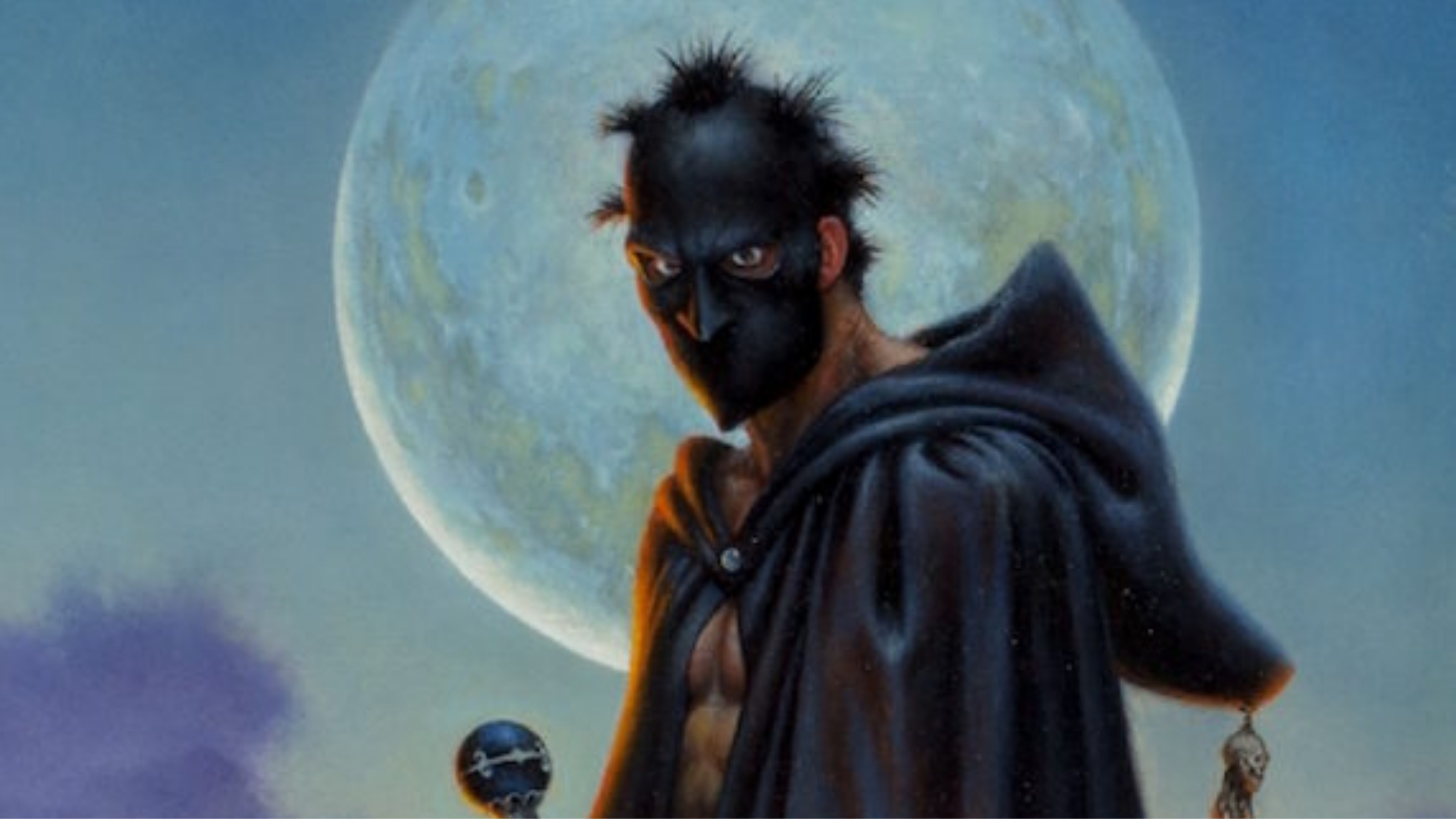
Science fiction frequently explores what seems impossible, featuring things like futuristic technology, distant planets, intelligent life from other worlds, and concepts like time travel. However, some sci-fi books are challenging to adapt into movies or TV shows not just because of their ideas, but because of how those stories are told. These novels often use unique writing techniques to push storytelling boundaries and explore themes that film and television struggle to capture.
As a sci-fi fan, it’s been amazing to see books like Dune and Do Androids Dream of Electric Sheep? become huge movies. But there are still some novels that just seem… impossible to adapt. Seriously, you could give them a massive budget, the best special effects, and a brilliant director, and I still think it wouldn’t capture what makes the book special. We’re seeing attempts with books like Dan Simmons’ Hyperion, which is cool, but the novels on this list? I honestly think they’re just too difficult to even try and bring to the screen.
5) Dragon’s Egg by Robert L. Forward
Robert L. Forward’s Dragon’s Egg is famous for being difficult to imagine while reading it. This is because the story’s main characters, the Cheela, are so different from us that it’s hard to picture their lives. They live on a neutron star with incredibly strong gravity – millions of times stronger than on Earth. These tiny creatures, about the size of sesame seeds and flattened by the gravity, live and evolve at an astonishing speed. While years go by for humans, entire Cheela lives happen in just minutes.
Trying to bring the Cheela to life on screen presents huge challenges, mainly visual ones. Stop-motion animation might seem too cartoonish, and computer-generated imagery would likely look silly or too human-like. Even if the look of the Cheela was perfected, it would be incredibly difficult to show their vastly different sense of time and how physics affects them. The author, a physicist, carefully explains these concepts in the book, but a film would need to show them. As a result, Dragon’s Egg has never been seriously considered for a movie or TV adaptation, and it’s widely considered a science fiction story that simply doesn’t translate well to visual media.
4) The Culture Series by Iain M. Banks
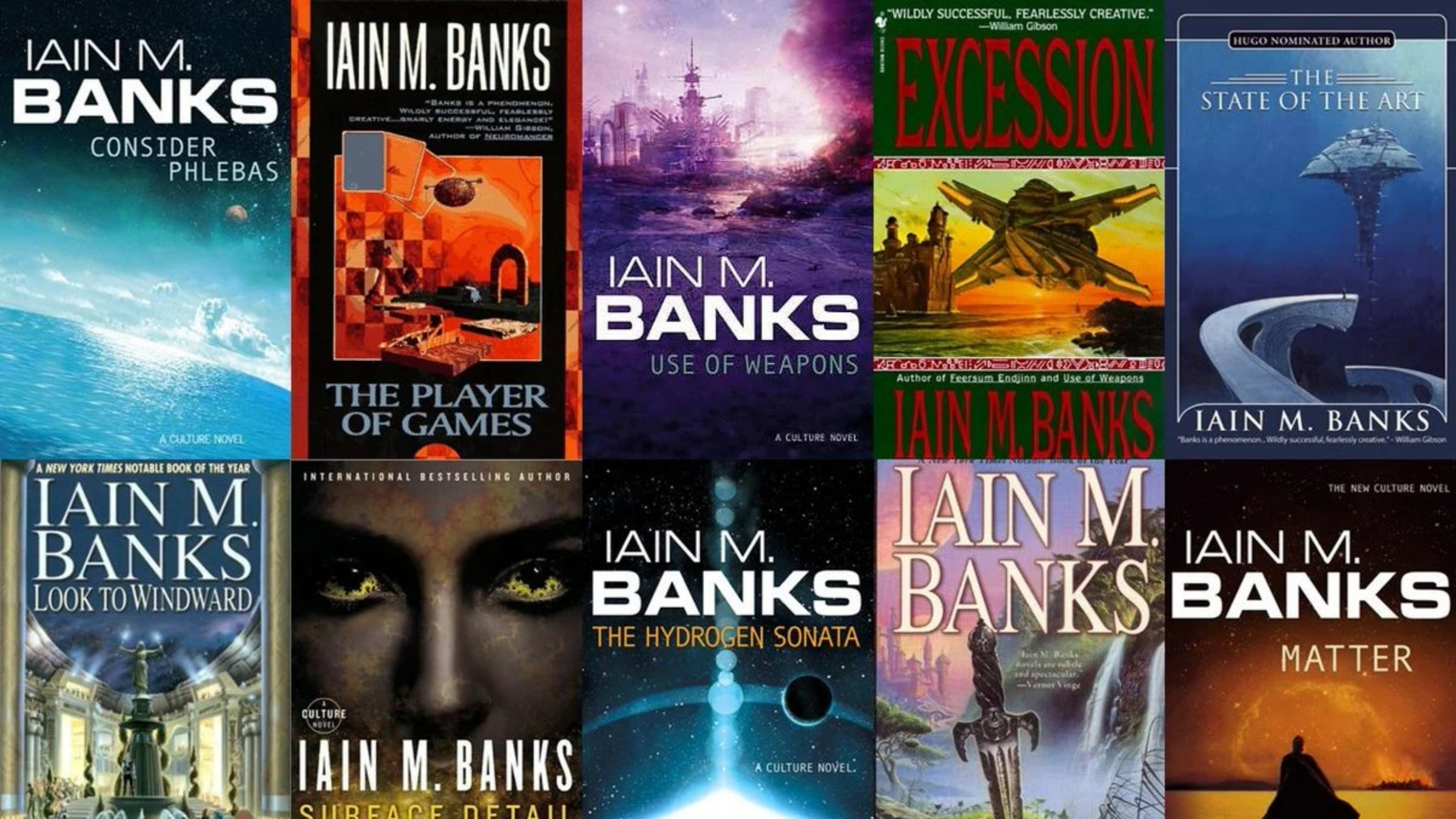
I’ve always thought the Culture novels by Iain M. Banks would make amazing movies or shows. They’ve got everything you’d want – spaceships, cool aliens, big battles, and unbelievably powerful artificial intelligences. But what really makes them special is the complicated ideas they explore. A lot of people say those ideas – about a perfect society run by AIs and whether it’s okay for them to get involved with civilizations that aren’t as advanced – would be impossible to show on screen, and I can see why it’s a challenge. It’s not just about the action; it’s about why things happen.
Exploring the ethics in Iain M. Banks’s work is a complex process, full of contradictions and rarely offering easy answers. Banks himself often seemed to enjoy exploring these difficult moral areas. Adapting his work for film or television risks oversimplifying these nuances, turning complex issues into simple good versus evil scenarios or focusing solely on action. If that happens, the unique and thought-provoking nature of the Culture series is lost, becoming just another science fiction story. The books encourage deep thought and reflection, something most mainstream movies don’t prioritize. An attempt was made to adapt Consider Phlebas, but the project ultimately failed, reinforcing the idea that the novels are difficult to translate to the screen. Amazon acquired the rights with plans for a TV series, but it was cancelled after Banks’s death, reportedly because the creative team struggled with the story’s intricate details and vast scope.
3) The Baroque Cycle by Neal Stephenson

Neal Stephenson’s The Baroque Cycle is a sprawling and lengthy series – almost 3,000 pages long! Comprised of Quicksilver, The Confusion, and The System of the World, it feels less like a traditional trilogy and more like eight interconnected stories that jump across time and place. The series explores the origins of modern science, finance, code-breaking, and global politics, but frequently pauses to explain complex topics like economic principles or the fundamentals of calculus, sometimes at the expense of forward momentum.
Neal Stephenson’s The Baroque Cycle isn’t built around traditional storytelling. It doesn’t follow a typical three-act structure, have a clear main character, or maintain a fast pace. Instead, the books are enjoyable because of their lengthy tangents – detailed conversations, letters, essays, and historical notes that wouldn’t necessarily work well as a visual drama. It would be a challenge to adapt for television, even a high-quality series, because the story’s core isn’t always the most important thing. Though other Stephenson novels, like Snow Crash, are currently being adapted for the screen, The Baroque Cycle has never gained traction in Hollywood. While studios have occasionally looked into the possibility, especially with the recent popularity of historical dramas, no adaptation has ever moved forward.
2) The Book of the New Sun by Gene Wolfe
Gene Wolfe’s The Book of the New Sun is known for being a challenging science fiction novel, and its complexity is central to the story. The narrative is told from the perspective of Severian, a torturer who claims to remember everything perfectly, but is actually a very untrustworthy narrator. Throughout the book, he leaves out important information, misinterprets the world around him, and uses old-fashioned language that makes futuristic technology seem like something from the Middle Ages.
I think what makes Gene Wolfe’s The Book of the New Sun so amazing is how much it makes you work as a reader. You’re constantly piecing things together, trying to understand this world through Severian’s eyes, and realizing that what seems like magic is actually just really old, forgotten technology. That’s something a movie just couldn’t capture – it would instantly show you everything, instead of letting you experience it filtered through Severian’s perspective. It really needs to be a book. Still, I heard there was some talk back in the late 80s and early 90s about adapting it, specifically focusing on a really shortened version of The Shadow of the Torturer, but it never got past the very beginning stages of getting the rights.
1) Ancillary Justice by Ann Leckie
The science fiction novel Ancillary Justice has gained a reputation for being difficult to adapt into a film due to its unique narrative style. The story is told through the eyes of Breq, who is the remaining part of an enormous starship AI that used to control many human bodies at the same time. Breq doesn’t simply recall these bodies – she was all of them, experiencing life through each one simultaneously. The novel frequently moves between current events and memories of this shared consciousness, blending them together seamlessly.
Showing a character with such a broken sense of self on screen would be incredibly difficult. Any attempt would likely end up being an artistic, independent film – the kind Hollywood usually avoids funding. Simply using a narrator wouldn’t be enough, and visual hints would probably make the character’s confusion and overwhelming experience seem too simple. Even the book’s unusual use of pronouns, consistently referring to everyone as “she,” is a clever way to challenge the reader’s ideas about gender and power, something that would be hard to capture visually. Ancillary Justice makes you experience life from a perspective that isn’t tied to a single body, and that fluid, undefined nature of the main character is precisely why it wouldn’t work well as a movie.
Even though Ancillary Justice won major science fiction awards – the Hugo, Nebula, and Arthur C. Clarke – it hasn’t been picked up for a movie or TV series. While producers have hinted at interest, no official deals have been made. Perhaps that’s a good thing, as it might protect the book’s unique and complex story from being simplified for the screen.
What science fiction book would be a terrible movie? Share your thoughts in the comments and join the discussion on the ComicBook Forum!
Read More
- Best Controller Settings for ARC Raiders
- The Boys Season 5 Officially Ends An Era For Jensen Ackles’ Soldier Boy
- Review: Final Fantasy Tactics: The Ivalice Chronicles (PS5) – Still the Benchmark for Turn-Based Tactics
- Nippon Sangoku Is The Best New Post-Apocalyptic Anime of Spring 2026
- Mark Zuckerberg & Wife Priscilla Chan Make Surprise Debut at Met Gala
- Elon Musk’s Mom Maye Musk Shares Her Parenting Philosophy
- 10 Greatest Manga Endings of All Time
- The Witcher 3 Officially Reveals Stunning New Ciri Figure Coming 2026
- The WONDERfools ending explained: What happened to the Child of Eternity?
- 7 Great Marvel Villains Who Are Currently Dead
2026-02-01 02:11