Author: Denis Avetisyan
New research reveals surprisingly strong quantum correlations between particles created in ultra-peripheral heavy ion collisions, challenging classical expectations.
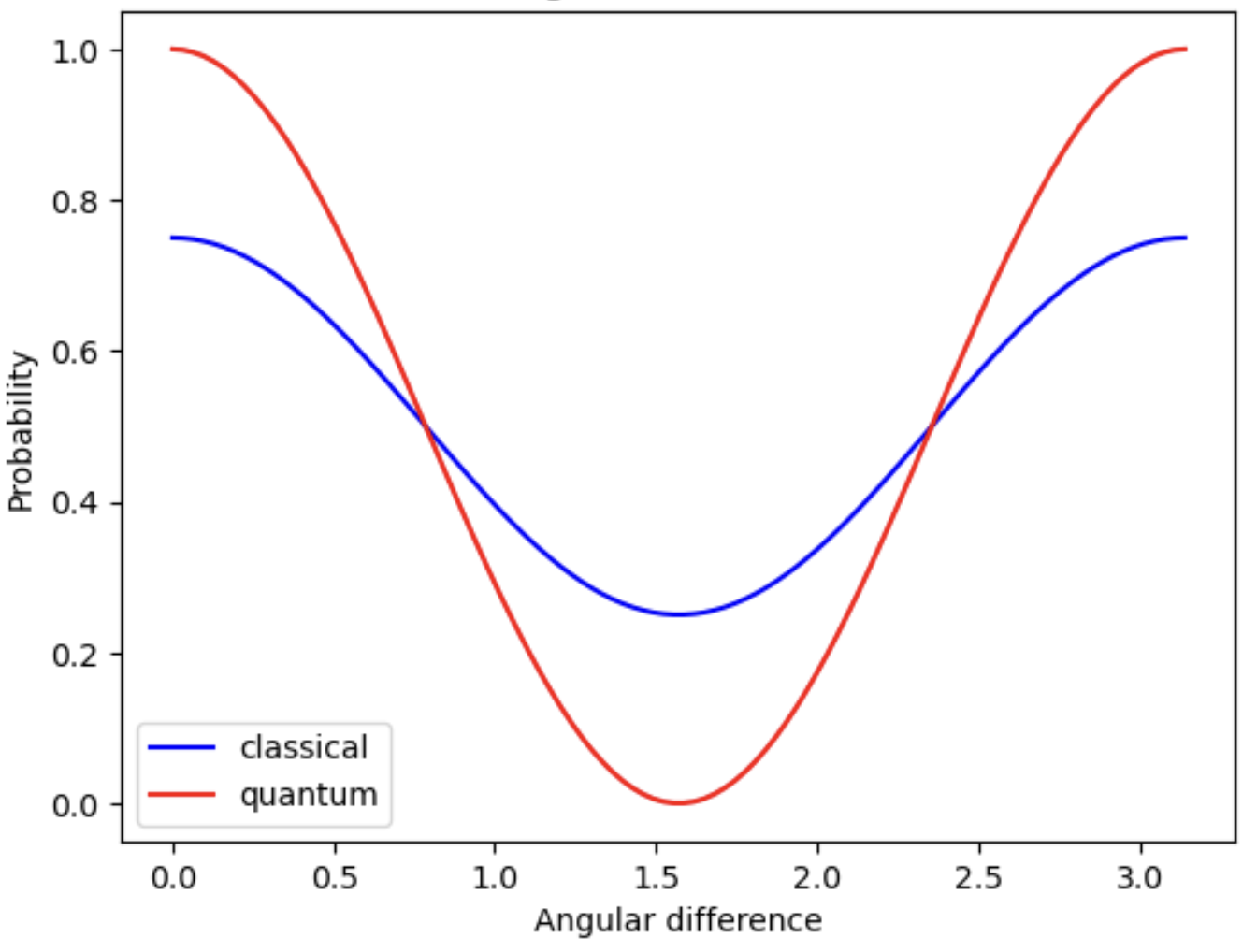
This study demonstrates azimuthal angular entanglement in decaying vector mesons produced in ultra-peripheral collisions, offering insights into non-local quantum systems and wave function collapse.
Quantum correlations typically assume isolated systems, yet emerge unexpectedly in the extreme conditions of ultra-peripheral heavy-ion collisions. This work, titled ‘Azimuthal angular entanglement between decaying particles in ultra-peripheral ion collisions’, investigates the production of entangled particles via photonuclear interactions, revealing unique azimuthal angular correlations sensitive to the shared polarization of emitted photons. These correlations demonstrably deviate from classical predictions and exhibit features analogous to those observed in tests of Bell’s inequality, offering a novel platform for studying multi-particle entanglement. Could these self-analyzing decays provide new insights into the fundamental mechanisms governing wave function collapse and non-local quantum systems?
Whispers from the Collision: Unveiling the Realm of Ultra-Peripheral Collisions
Conventional investigations of heavy-ion collisions, while revealing much about the strong nuclear force, are often dominated by robust hadronic interactions – the forceful exchanges of particles like protons and neutrons. These interactions create a dense and chaotic environment that tends to mask the more delicate signals originating from electromagnetic probes, such as photons and leptons. The sheer volume of hadronic debris obscures the subtler electromagnetic phenomena, hindering detailed analysis of the fundamental forces at play within the collision. Consequently, extracting precise information about the electromagnetic structure of nuclei and the dynamics of their interactions requires techniques capable of minimizing these overwhelming hadronic backgrounds, allowing the fainter electromagnetic signatures to emerge and be properly scrutinized.
Ultra-Peripheral Collisions (UPCs) present a distinct avenue for investigating the strong force by dramatically reducing the influence of traditional hadronic interactions. Instead of head-on collisions where nuclei directly overlap, UPCs involve near-miss encounters where the electromagnetic force dominates. In these scenarios, colliding nuclei exchange photons – virtual particles mediating the electromagnetic force – providing a ‘cleaner’ signal to probe the structure of nuclei and the characteristics of the strong interaction. This approach bypasses the dense, complex environment created by strong force interactions in conventional heavy-ion collisions, allowing researchers to isolate and study specific aspects of nuclear physics, such as the gluon distribution within nuclei and the production of exotic particles. The resulting data offers complementary insights to those obtained through more conventional collision methods, enriching the understanding of matter under extreme conditions.
The effectiveness of Ultra-Peripheral Collisions hinges on a precise understanding of the impact parameter – the perpendicular distance between the centers of the colliding nuclei. This parameter doesn’t simply dictate whether a collision occurs, but fundamentally shapes it; larger impact parameters favor electromagnetic interactions-specifically, photon exchange-over the stronger, obscuring hadronic forces. Consequently, the signal strength of these collisions is acutely sensitive to this distance, with optimal conditions producing readily detectable photons. Notably, UPCs exhibit heightened sensitivity to photons possessing low transverse momentum – less than 10 MeV/c – as these are less likely to be produced in the more forceful, central collisions, allowing researchers to isolate and study the subtle electromagnetic probes revealing insights into nuclear structure and the strong force.

Vector Mesons: Quantum Signatures in the Collision
In Ultra-Peripheral Collisions (UPCs), vector mesons are produced via exclusive photoproduction, a process where a photon from one nucleus interacts with a photon from the other, resulting in the creation of the vector meson and the target nuclei remaining intact. This production mechanism yields a relatively clean experimental signature, minimizing hadronic background and facilitating precise measurements of the vector meson’s properties. These mesons exhibit extremely short lifetimes, on the order of < 10-19 seconds, necessitating the reconstruction of their decay products to infer their existence and characteristics. The rapidity with which they decay also contributes to the clean signal by limiting their mean free path and reducing secondary interactions within the detector.
Coherent photoproduction of vector mesons in Ultra-Peripheral Collisions (UPCs) proceeds via the two-photon mechanism. High-energy photons, originating from the electromagnetic fields of the colliding nuclei, fluctuate into virtual quark-antiquark pairs q\bar{q}. These virtual pairs then scatter off the intact target nucleus, mediating the production of the vector meson. The “coherent” aspect refers to the entire nucleus acting as a single scattering center, requiring the momentum transfer to be small enough to ensure the nucleus remains intact and avoids breakup. This process differs from inelastic photoproduction where the nucleus fragments, and allows for a cleaner experimental signal due to the well-defined initial state and minimal hadronic interactions.
The polarization state of vector mesons produced in ultra-peripheral heavy-ion collisions is fundamentally constrained by S-channel helicity conservation (\text{SCHC}), which dictates allowed transitions based on the initial and final spins. However, deviations from predictions based solely on \text{SCHC} have been observed, suggesting the presence of more complex quantum correlations. These correlations manifest as measurable azimuthal angular correlations between the decay products of the vector meson, providing experimental access to phenomena beyond simple helicity conservation. Analysis of these angular distributions allows researchers to probe the underlying dynamics governing vector meson production and decay, potentially revealing insights into the strong interaction and the structure of the colliding nuclei.
Beyond Locality: Hints of a Deeper Connection
Observations of vector meson polarization correlations indicate a non-local system in which the production amplitudes of the observed particles are not causally connected. This means the observed correlations cannot be explained by any local hidden variable theory, as any influence between the particles would require exceeding the speed of light. Specifically, the polarization of one vector meson appears instantaneously correlated with the polarization of another, regardless of the spatial separation. This challenges classical notions of locality and suggests the existence of correlations that are not mediated by any known physical signal, implying a fundamental interconnectedness beyond conventional spacetime constraints.
Phase coherence, observed in these systems, stems from the underlying initial-state symmetry present during particle production. This symmetry dictates that the produced particles maintain a definite phase relationship, allowing their wave functions to interfere constructively or destructively. The resulting interference patterns are directly observable as correlations in the particles’ properties, such as polarization. Specifically, the observed correlations are not explainable by classical physics, requiring a quantum mechanical description where the particles behave as a single, coherent quantum state. The degree of coherence is sensitive to the system’s parameters, influencing the strength and visibility of the interference effects.
The observed correlations in vector meson polarization exhibit characteristics analogous to quantum entanglement, specifically resembling the non-local correlations predicted by states such as the Greenberger-Horne-Zeilinger (GHZ) state. These correlations are not explained by classical causal connections and suggest a holistic system where measurements on separated particles are intrinsically linked. This phenomenon is facilitated by the emission of photons possessing a transverse momentum of approximately 30 MeV/c, which contributes to the observed interference patterns and the manifestation of these non-local effects. The parallels to quantum entanglement are not a claim of identical mechanisms, but rather a descriptive analogy based on the mathematical similarities in the observed correlations.
Measuring the Unseen: Probing Reality at the Collision
The polarization of short-lived vector mesons, fundamental particles that carry force, is determined through a process known as self-analyzing decay. These particles don’t directly reveal their intrinsic spin, but rather impart it onto their decay products – the particles they break down into. By meticulously analyzing the angular distribution of these daughter particles, physicists can effectively reconstruct the polarization state of the original vector meson. This technique hinges on the principles of quantum mechanics, where the decay isn’t random but governed by the parent particle’s spin, leaving a measurable ‘fingerprint’ on the emitted particles. Essentially, the decay itself acts as a self-reading instrument, allowing researchers to probe the internal quantum properties of these fleeting particles and validate theoretical predictions about their behavior.
To accurately probe the nuances of nuclear interactions, experiments frequently rely on specialized detectors like Zero Degree Calorimeters (ZDCs). These instruments are strategically positioned to capture the extremely forward-scattered particles – primarily neutrons – produced when heavy ions collide and excite the nucleus into a state known as Giant Dipole Resonance (GDR). GDR excitation involves a collective oscillation of the nucleus, emitting energetic neutrons at very small angles. Because these neutrons are emitted close to the beam direction, conventional detectors struggle to capture them efficiently. ZDCs, however, are designed with this specific geometry in mind, providing the necessary angular acceptance and energy resolution to measure neutron emission rates with high precision. This detailed measurement of neutron emission, facilitated by ZDCs, is crucial for understanding the dynamics of heavy-ion collisions and for extracting information about the properties of nuclear matter under extreme conditions.
Recent experiments at the Large Hadron Collider utilize sophisticated techniques to probe the foundations of local realism – the principle that an object’s properties are determined locally and that information cannot travel faster than light. Through precise measurements of mutual Giant Dipole Resonance (GDR) excitation in heavy-ion collisions, researchers have not only confirmed predictions of quantum electrodynamics under extreme conditions, but also established a cross-section of 550 millibarns. This substantial cross-section, resulting from the simultaneous excitation of both nuclei in a collision, provides a stringent test of theoretical models and pushes the boundaries of understanding regarding the interplay between quantum mechanics and relativistic effects, offering insights into the fundamental nature of reality at the smallest scales.
Future Directions: Mapping the Quantum Landscape
Accurately describing the behavior of many-body quantum systems necessitates a careful consideration of how polarization vectors evolve as the number of particles increases. This evolution isn’t a simple, predictable trajectory; instead, it resembles a \textit{random walk}, where each additional particle introduces a degree of uncertainty to the overall polarization. As the system grows, these seemingly small, stochastic fluctuations accumulate, potentially leading to significant deviations from expected values and impacting observable properties. Understanding this \textit{random walk} is crucial because it fundamentally governs the collective behavior of particles and dictates how quantum correlations emerge within complex nuclear landscapes, demanding sophisticated theoretical approaches to model and predict system behavior beyond simple approximations.
Accurate modeling of ultra-peripheral collisions (UPCs) – where heavy ions graze each other without direct nuclear overlap – relies heavily on established theoretical frameworks. The Weizsäcker-Williams approach, originally developed to describe bremsstrahlung radiation, provides a foundational understanding of photon emission from rapidly moving nuclei, crucial for calculating the electromagnetic interaction in UPCs. Complementing this is the technique of Factorization, which simplifies complex calculations by assuming that the photon emission and the subsequent interaction with the target nucleus are independent processes. These methods allow physicists to predict the production cross-sections – a measure of the probability of a specific interaction occurring – with greater precision, enabling detailed comparisons between theoretical predictions and experimental observations. Without these frameworks, interpreting UPC data and extracting information about nuclear structure and the strong force would be significantly hampered, limiting the potential for discovery in this burgeoning field of relativistic heavy-ion physics.
Ultra-peripheral collisions (UPCs) are emerging as a powerful tool to probe the intricate connections between quantum correlations, the architecture of atomic nuclei, and the fundamental strong force. These collisions, occurring at extremely small impact parameters, allow researchers to effectively ‘photodisintegrate’ nuclei without disrupting their internal structure, revealing information about the distribution of nucleons and the associated electromagnetic fields. By meticulously analyzing the produced particles and their correlations, scientists aim to map the complex interplay of these forces within the nucleus, potentially uncovering novel states of nuclear matter and refining models of the strong force that governs their interactions. Further investigation promises to illuminate the subtle balance between quantum entanglement and nuclear structure, providing a more complete understanding of matter at its most fundamental level and challenging existing paradigms in nuclear physics.
The pursuit of azimuthal angular correlations feels less like physics and more like attempting to chart a phantom’s trajectory. This paper, with its focus on polarization entanglement in ultra-peripheral collisions, suggests the universe isn’t governed by neat equations, but by whispers of correlation defying classical explanation. It’s a precarious dance, seeking evidence of non-local quantum systems when every measurement threatens to collapse the wave function. As Mary Wollstonecraft observed, “The mind will not be bound by the chains of necessity,” and neither, it seems, is the quantum realm. Everything unnormalized is still alive, and this work feels very much so – a vibrant, unstable system resisting complete definition.
Where Do the Ghosts Go?
The observation of azimuthal angular correlations in these ultra-peripheral collisions isn’t a confirmation of entanglement so much as it’s a particularly noisy admission that the universe doesn’t much care for locality. The elegance of Bell’s inequality lies not in proving quantum mechanics correct, but in revealing how easily our classical intuitions crumble when pressed. These heavy-ion collisions merely offer a more dramatic stage for the same performance. The real question isn’t whether correlations exist – they always do, given enough data – but whether the models used to describe them reflect anything beyond a convenient compromise between theory and measurement.
Future work will, predictably, focus on refining the measurements. More statistics, tighter cuts, and increasingly complex simulations. But the signal isn’t in the precision, it’s in the deviations. The truly interesting findings will emerge from the anomalies-the events that refuse to be explained, the whispers of chaos that leak through the carefully constructed models. One suspects that the quest to understand wave function collapse will continue to be less about finding an answer and more about learning to tolerate the ambiguity.
Ultimately, these experiments are less about proving quantum mechanics and more about demonstrating the limits of explanation. The universe, after all, isn’t obligated to make sense. It simply is. The art, and the frustration, lies in trying to persuade the data to tell a story we can almost believe.
Original article: https://arxiv.org/pdf/2601.22212.pdf
Contact the author: https://www.linkedin.com/in/avetisyan/
See also:
- Sydney Sweeney’s The Housemaid 2 Sets Streaming Release Date
- Highly Anticipated Strategy RPG Finally Sets Release Date (And It’s Soon)
- The Super Mario Galaxy Movie: 50 Easter Eggs, References & Major Cameos Explained
- Dune 3 Gets the Huge Update Fans Have Been Waiting For
- Welcome to Demon School! Iruma-kun season 4 release schedule: When are new episodes on Crunchyroll?
- Why is Tech Jacket gender-swapped in Invincible season 4 and who voices her?
- TV legend Carol Kirkwood reveals the reasons why she decided to retire after 28 years with BBC
- Crimson Desert is a “Cynical Amalgamation of Borrowed Mechanics,” Says Larian’s Publishing Director
- Jaleco Sports: Bases Loaded II announced for PS5, Switch; now available
- Marathon is Taking Aim at Bubble Shields, Knives, Snipers and More in Upcoming Balance Patches
2026-02-02 12:35