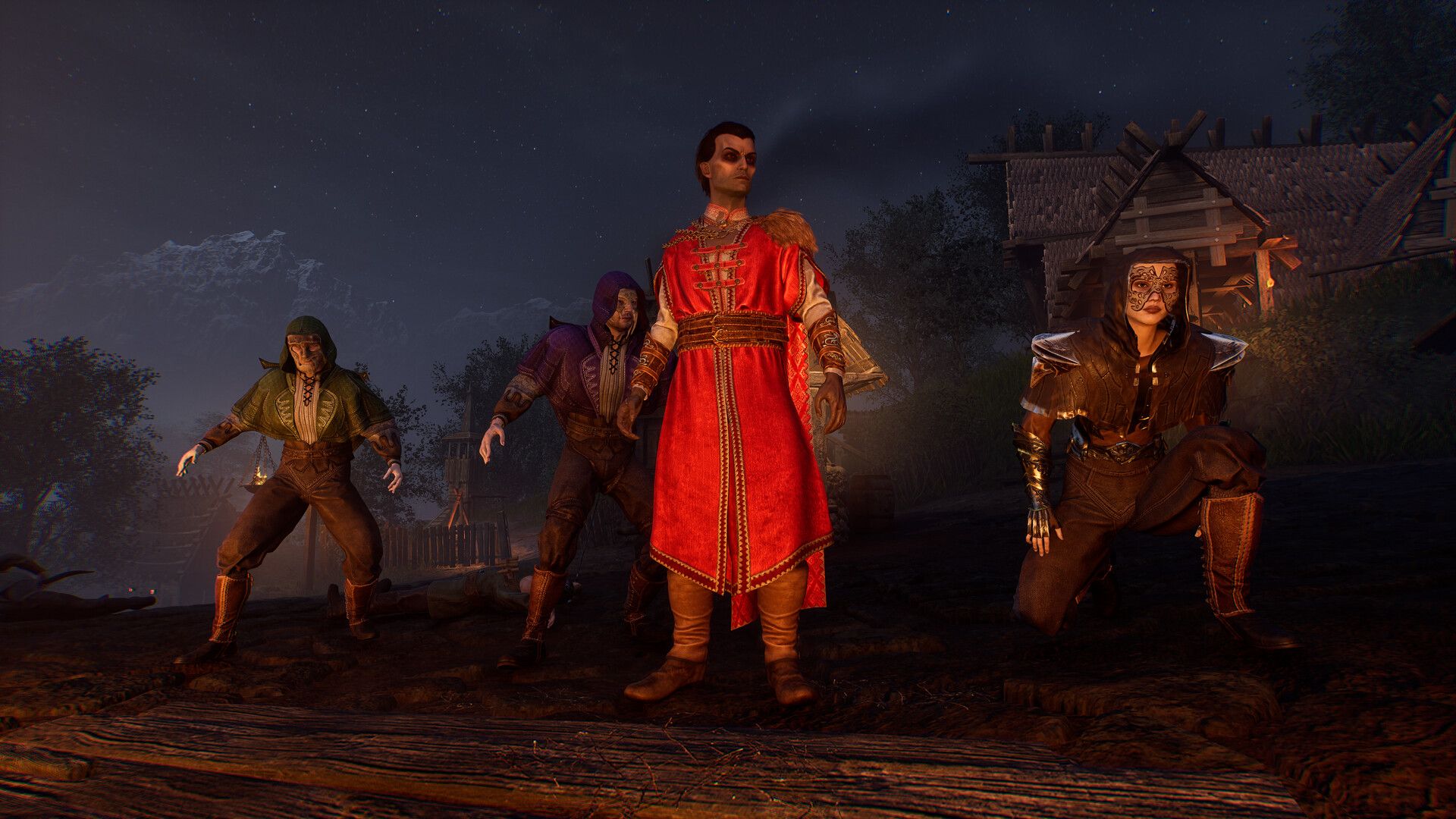
Open-world survival games are common now, and many studios have tried their hand at the genre. With Vampires: Bloodlord Rising, Mehuman Games isn’t trying to create something entirely new; instead, they’re taking existing ideas and improving upon them. While the game shows promise, it’s still in Early Access, so it will likely need more development time to fully realize its potential as a vampire-themed survival experience.
Mehuman distinguishes itself from other games with its over-the-shoulder camera angle, its focus on using minions to automate tasks, and a detailed social system that lets you interact with normal people, not just hunt them. After playing solo for over seven hours, I was able to thoroughly explore the main features of Vampires: Bloodlord Rising.
Unlike many survival games where the story feels secondary, the narrative is a key part of this experience. It explains why you and other vampires are forced into hiding after an invasion, and then sets you on a path to take back what was lost. We also learn about the main character, Dragos, and his strong desire to honor the wishes of his lost master. The beginning of the game cleverly uses the story to guide players through the core gameplay mechanics, acting as a natural tutorial.
Sangavia draws inspiration from traditional dark fantasy and gothic settings, featuring castles and villages built from stone. The Inquisition actively hunts down vampires, sometimes taking control of entire villages to eliminate them. While the world isn’t entirely unique, it’s still enjoyable to explore, offering a diverse range of environments. You begin in a peaceful area, but quickly expand into neighboring regions, each with its own distinct biome. For example, Hell’s Chasm is a mineral-rich, fiery landscape, while the Fey Marshes are a swampy area teeming with ingredients for alchemy.
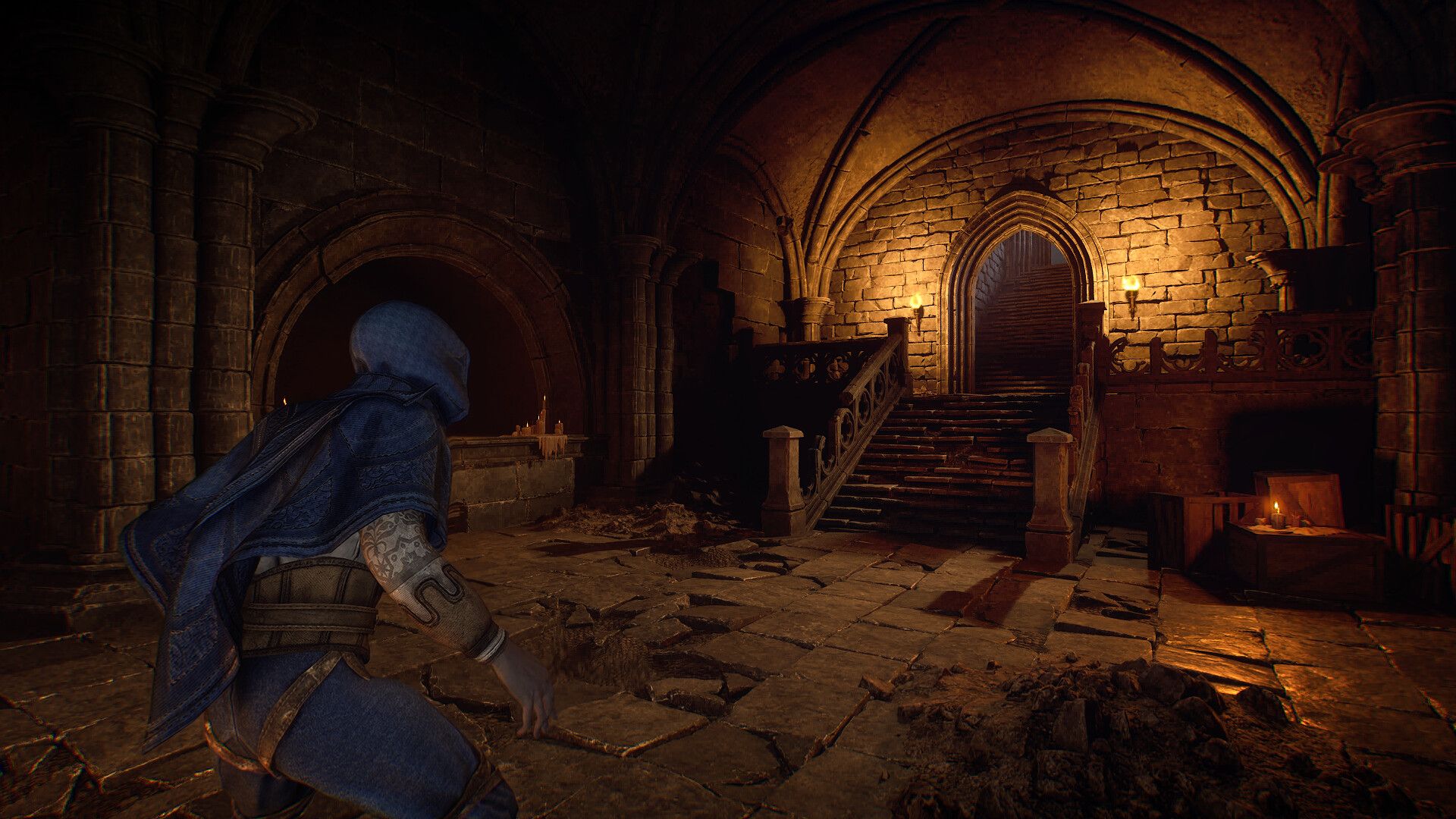
“Sangavia feels like a mash-up of classic dark fantasy and gothic imagery.”
Despite being an early version of the game, the world is impressively large. Luckily, getting around isn’t a chore, thanks to quick travel options like stagecoaches and your character’s fast movement. However, the size also means the world can feel empty at times. While there are interesting locations on the map, they’re often spread out across long, unremarkable landscapes. These locations usually consist of enemy camps, and defeating enemies rewards you with skill points. The day/night cycle doesn’t seem to have much impact on gameplay. You can instantly return to your castle at any time, so you won’t be caught out in the sun. This is useful, as being exposed to daylight quickly depletes your health and resources, potentially leading to death unless you find shade.
You progress at your own pace and decide when to explore new areas. At the start, the Inquisition prevents you from entering these zones with a magical barrier. To break this barrier bit by bit, you need to consistently power your castle’s core—which seems to represent your master—unlocking areas one by one.
Even while living in your castle, you’ll have tasks to manage. You’ll need protection from the sun, so building a coffin to rest in is essential. Gathering materials like wood, stone, clay, and mud is also important, as these are used to build more complex structures. The crafting system is generally well-designed; it takes a little getting used to, but it becomes quite intuitive once you understand it and have a clear idea of what you want to build. Fortunately, Vampires: Bloodlord Rising offers a more enjoyable way to handle these tasks: by using minions.
Whenever I feel like it, I can head into town and hang out with the humans. If I’m wearing my Noble outfit, they don’t freak out and actually give me a little something each night as a tribute. Talking to them is really useful because I quickly fill my journal with gossip about people I could turn into vampires. It tells me what they’re good at, what they like, and even if they have any annoying habits, like being a thief. Once I find someone interesting and turn them, they come back to my castle and wait for my instructions.
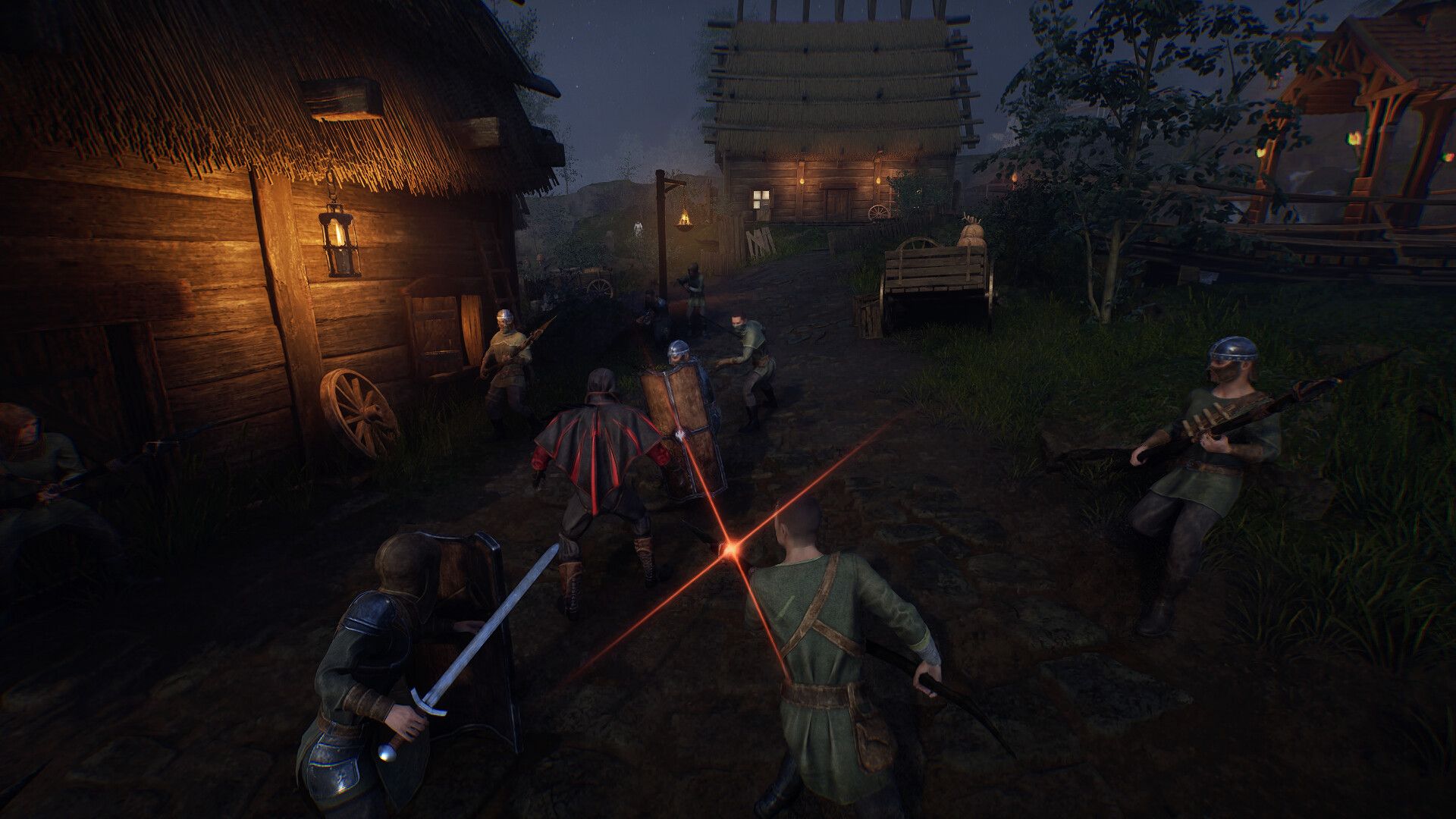
While you’re dressed in the Noble garments, creatures won’t immediately attack and will instead offer a nightly payment as tribute.
I quickly realized this game requires a lot of waiting, especially when you’re starting out. I had two helpers – one collecting resources and another crafting – but they were surprisingly slow, particularly without better tools. Surprisingly, adding more helpers didn’t always help; it could actually create new problems. For example, if one helper couldn’t find a needed material like mud or sand, it would stop everything else, like building projects. This also meant my screen constantly filled with messages about missing resources, which was frustrating.
The game’s crafting system feels limited, and it takes a surprisingly long time to find better armor, even if you explore extensively. This often forces you to depend on leveling up your skills, which isn’t always satisfying. The skill tree has some cool abilities, but unlocking them requires a lot of repetitive gameplay, and early on, you’ll mostly just get small improvements to things like health or stamina.
As a vampire in Vampires: Bloodlord Rising, you don’t have to constantly worry about feeding. Your blood drains slowly, and you can replenish it by feeding on humans or animals. While humans quickly fill you up, they risk attracting unwanted attention from the Inquisition. Animals, especially larger ones, can actually keep you going for a while with little effort – just chase down a deer or rabbit! It’s a relief not to be constantly managing your hunger, especially since maintaining your castle’s core – and progressing to new areas – depends on your blood reserves.
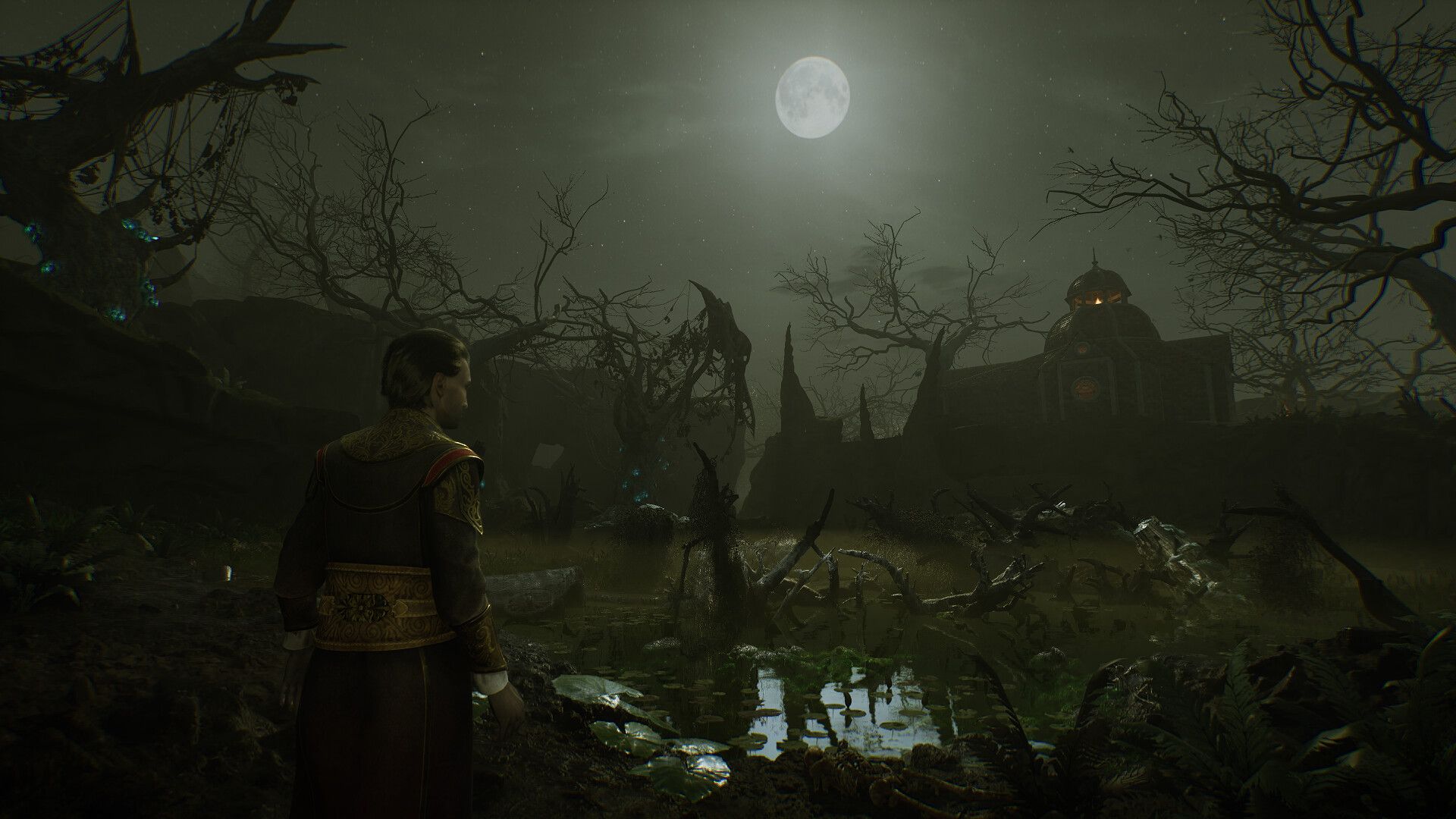
“Even your own personal crafting-based progression feels quite bottlenecked.”
The combat feels unrefined and repetitive. Battles usually consist of repeatedly pressing attack buttons, with occasional attempts to block or dodge. This basic system becomes even more frustrating on uneven ground, as enemies and even your own character can slip and stumble during fights. Currently, most encounters involve fighting groups of similar enemies, and the only real variation is occasionally facing an opponent with more armor.
The graphics in Vampires: Bloodlord Rising are inconsistent. Distant landscapes look beautiful, but up close, textures appear blurry and characters lack detail. The different environments – mountains, forests, and swamps – don’t offer much visual variety, as they all feel somewhat drab. On the plus side, the sound design is consistently good, and voice acting doesn’t suffer from disruptive audio glitches.
Right now, Vampires: Bloodlord Rising offers between 10 and 20 hours of engaging gameplay before things start to feel a bit samey. Playing with friends helps, as building and designing your castle together is a lot of fun. However, the game is currently held back by a lack of compelling boss battles and a repetitive survival grind, making it hard to fully recommend. The game has a solid base, but it needs more work – things like better boss fights, more diverse enemies, and a more streamlined crafting system – to really shine.
This game was reviewed on PC.
Read More
- Best Controller Settings for ARC Raiders
- FRONT MISSION 3: Remake coming to PS5, Xbox Series, PS4, Xbox One, and PC on January 30, 2026
- Mark Zuckerberg & Wife Priscilla Chan Make Surprise Debut at Met Gala
- Meet the cast of Good Omens season 3: All the actors and characters
- Nippon Sangoku Is The Best New Post-Apocalyptic Anime of Spring 2026
- Review: Final Fantasy Tactics: The Ivalice Chronicles (PS5) – Still the Benchmark for Turn-Based Tactics
- 7 Great Marvel Villains Who Are Currently Dead
- Welcome to Demon School! Iruma-kun season 4 release schedule: When are new episodes on Crunchyroll?
- Wistoria: Wand and Sword Season 2 release schedule: When are new episodes out?
- The Boys Season 5 Officially Ends An Era For Jensen Ackles’ Soldier Boy
2026-02-04 16:42