Author: Denis Avetisyan
New simulations leverage the power of GPU computing to model the complex interactions of strongly correlated electrons, offering insights from nuclear magnetic resonance data.
This work details a CUDA-accelerated simulation package for investigating spin dynamics in strongly correlated electron systems and its application to interpreting NMR observables.
Understanding the interplay between electronic correlations and emergent phenomena in condensed matter systems remains a central challenge in modern physics. This is addressed in ‘Dynamic Simulations of Strongly Coupled Spin Ensembles for Inferring Nature of Electronic Correlations from Nuclear Magnetic Resonance’, which details a novel, highly efficient simulation package-accelerated with CUDA-for modeling the dynamics of interacting nuclear spins influenced by strongly correlated electrons. By simulating nuclear magnetic resonance (NMR) spin echo experiments within a mean-field framework, the authors demonstrate how subtle asymmetries and pulse-dependent shifts in the spectral domain can be leveraged to probe the range and anisotropy of electronic interactions. Could this approach unlock new pathways for characterizing exotic states of matter and extracting hidden information from NMR spectra in strongly correlated materials?
Unveiling the Subtle Dance of Quantum Interactions
The pursuit of novel quantum phenomena hinges on a deep understanding of strongly correlated electron systems, materials where electron interactions dictate behavior far beyond simple, independent particle models. These systems promise revolutionary technologies, but traditional computational methods often falter when confronted with the long-range nature of these interactions. Unlike materials governed by weak correlations, where electrons largely behave independently, strongly correlated systems exhibit collective behavior – a consequence of electrons ‘feeling’ each other across significant distances. This presents a substantial challenge, as accurately modeling these extended interactions requires immense computational power and sophisticated theoretical approaches, hindering the ability to predict and ultimately harness the exotic properties-like high-temperature superconductivity-that arise from these complex relationships.
The behavior of complex materials often hinges on subtle interactions between electrons, arising from quantum mechanical correlations that extend beyond simple, localized effects. These correlated interactions profoundly influence a material’s macroscopic properties – from its electrical conductivity and magnetic order to its potential for superconductivity – but pose a significant challenge to computational modeling. Accurately capturing these long-range correlations demands immense computational resources, as the number of interacting electrons scales rapidly with system size. Traditional methods, while effective for simpler systems, struggle to efficiently describe the intricate interplay of these correlations, often necessitating approximations that sacrifice precision. Consequently, predicting the behavior of strongly correlated electron systems remains a frontier in materials science, requiring the development of novel theoretical frameworks and computational techniques to bridge the gap between model and reality.
Nuclear Magnetic Resonance (NMR) stands as a uniquely sensitive technique for examining the delicate electronic landscape within complex materials. By detecting the subtle magnetic moments of atomic nuclei, NMR can reveal information about the distribution of electrons and the interactions between them-interactions crucial for understanding emergent material properties. However, translating the raw NMR signal into precise, quantifiable data regarding these electronic correlations presents a significant hurdle. The observed frequencies and linewidths are influenced by a complex interplay of factors, requiring sophisticated theoretical modeling and data analysis to disentangle the specific contributions of long-range electronic interactions from other broadening effects. Despite these challenges, ongoing advancements in NMR techniques and computational methods continue to refine the ability to map and characterize these hidden interactions, offering a powerful pathway towards designing materials with tailored functionalities.
The realization of materials with truly remarkable properties, like those displaying unconventional superconductivity, hinges on a detailed understanding of the intricate interplay between electrons within the material. Accurate computational modeling of these electron-electron interactions – often subtle and extending over significant distances – is therefore paramount. These interactions dictate the collective behavior of electrons, influencing everything from electrical resistance to magnetic susceptibility. Without precise simulations, researchers are hampered in their ability to predict and ultimately design materials exhibiting these exotic behaviors, limiting progress in fields like energy transmission and quantum computing. Advanced algorithms and increased computational power are steadily refining these simulations, offering a pathway to tailor material properties and unlock a new era of technological innovation.
Constructing a Simulation Framework for Extended Interactions
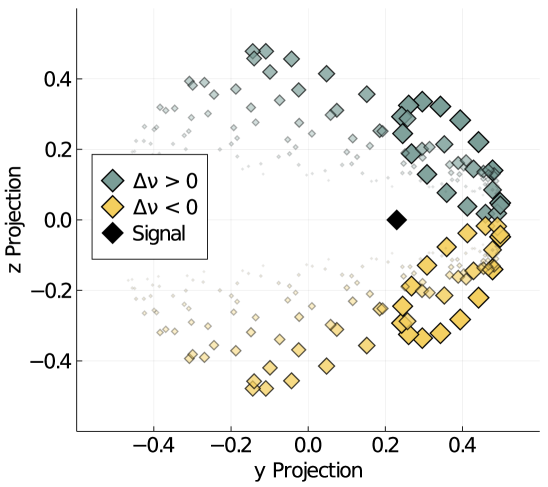
The SpinEchoSimulation method was implemented to numerically model Nuclear Magnetic Resonance (NMR) experiments, with a specific focus on incorporating the effects of Long-Range Interactions (LRI) between nuclear spins. This simulation calculates the time-domain signal resulting from a pulse sequence mimicking a spin echo experiment. The simulation accounts for both the direct interaction between neighboring spins and the indirect interactions mediated through multiple spins, effectively capturing the influence of LRI on the overall signal. The resultant simulated signal is then available for further analysis, allowing researchers to investigate the relationship between LRI parameters and observable NMR spectral features. The method is designed to be flexible, accommodating various spin systems and interaction topologies to accurately represent diverse material properties.
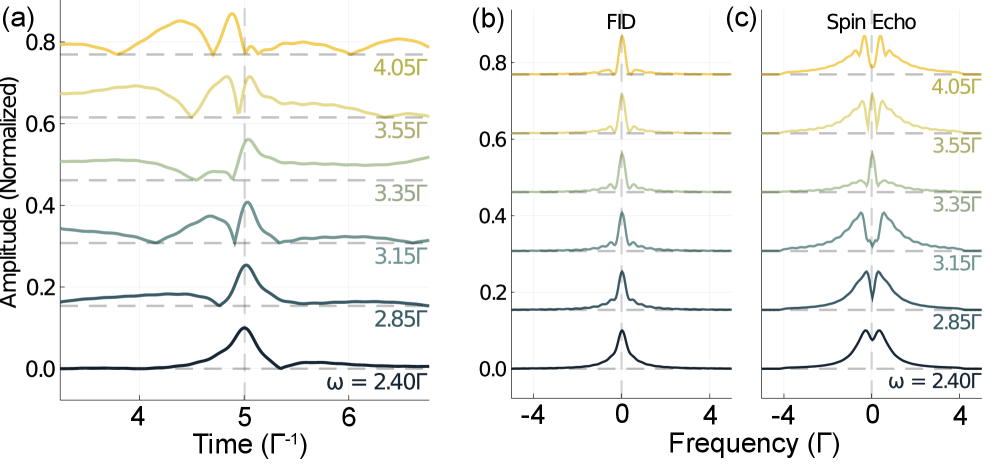
Spectral analysis is integral to extracting electronic property information from the simulated Nuclear Magnetic Resonance (NMR) signals. The SpinEchoSimulation method generates signals that are then subjected to Fourier transformation to produce a frequency-domain spectrum. Key spectral features, including peak positions, widths, and intensities, are directly correlated with parameters describing the material’s electronic structure, such as hyperfine coupling constants and electronic relaxation times. By systematically varying simulation parameters and observing the resulting changes in the spectral features, quantitative relationships between the NMR signal and the underlying electronic properties can be established. This allows for the non-destructive characterization of materials and the investigation of phenomena like electron spin resonance (ESR) and nuclear spin interactions.
The simulation framework facilitates a systematic investigation into how the magnitude of InteractionWeight affects key spectral features within the generated NMR signals. By varying this parameter, which quantifies the strength of long-range interactions between nuclear spins, the framework allows for the observation of corresponding changes in parameters such as peak positions, linewidths, and overall spectral shape. This capability enables the determination of the relationship between interaction strength and observable spectral characteristics, providing a means to correlate simulation results with experimental data and ultimately extract information about the underlying electronic properties of the material being modeled. Analysis focuses on how alterations to InteractionWeight impact the fidelity of the simulated spectra, and how these changes can be linked to the physical parameters defining the system.
The initial implementation of the simulation framework utilized a Mean Field Approximation to manage computational demands. This approximation simplifies the many-body problem by replacing the interactions between individual spins with an interaction with an average field created by all other spins; while introducing a degree of error, it enables rapid prototyping and establishes a baseline against which the accuracy of more complex calculations can be evaluated. Specifically, the approximation decouples the spin dynamics, allowing for calculations to be performed on individual spins interacting with this effective field, rather than explicitly modeling all pairwise interactions – a significant reduction in computational complexity, particularly for systems with a large number of spins.
Accelerating Computation Through Parallel Processing
To address computational limitations in the SpinEchoSimulation, a CUDA implementation was developed utilizing the parallel processing architecture of NVIDIA GPUs. This approach enabled the partitioning of simulation tasks into numerous concurrent threads, each executed on the GPU’s multi-core processors. The CUDA implementation directly exploits the Single Instruction, Multiple Data (SIMD) capabilities of the GPU, significantly increasing throughput compared to a serial CPU-based implementation. By offloading computationally intensive portions of the simulation to the GPU, we were able to substantially reduce overall execution time and enable more complex and detailed simulations.
The initial implementation of the SpinEchoSimulation was developed in Julia; however, computational limitations necessitated a transition to a parallel computing architecture. Utilizing CUDA, the simulation was re-engineered to leverage the parallel processing capabilities of NVIDIA GPUs. Benchmarking revealed a substantial reduction in processing time, with the CUDA implementation achieving a 100x speedup compared to the original Julia implementation. This performance improvement enabled significantly faster data acquisition and analysis, facilitating more comprehensive simulations and ultimately improving the accuracy of the results.
Prior to implementing the CUDA-accelerated simulation, computational limitations necessitated the use of the Mean Field Approximation to reduce complexity. This approximation simplifies interactions between particles, potentially sacrificing accuracy. The achieved 100x speedup with CUDA enabled the removal of this approximation, allowing for a more complete and accurate representation of the underlying physical interactions within the Spin Echo Simulation. This transition resulted in simulations capable of capturing subtle effects previously inaccessible, ultimately improving the reliability and precision of the determined spectral features and their relationship to electronic interactions.
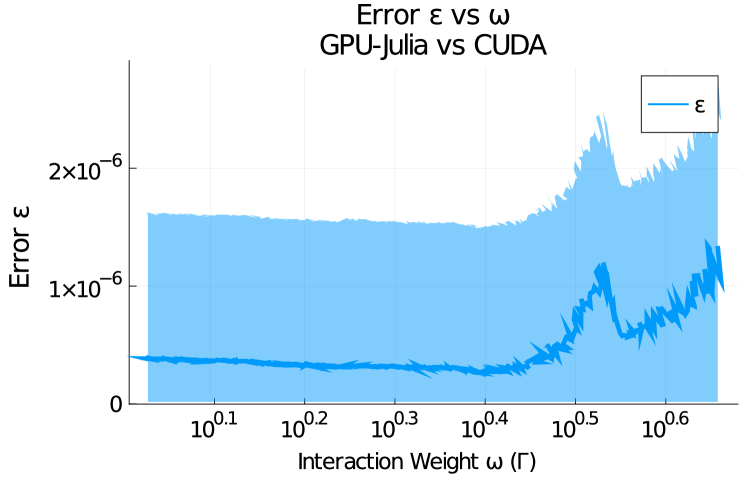
The simulations, executed using both CUDA and GPU-Julia implementations, demonstrate a high degree of accuracy in determining the correlation between spectral features and underlying electronic interactions. Quantitative analysis reveals an average error of 10^{-7} across all tested parameters, with a standard deviation of 10^{-6}. This level of precision allows for detailed investigation of the influence of electronic interactions on spectral linewidth and other key spectral characteristics, providing a robust dataset for further analysis and validation of theoretical models.
Uncovering the Implications for Unconventional Superconductivity
Simulations reveal a compelling relationship between long-range interactions and the Knight shift-a change in the nuclear magnetic resonance signal-observed in materials displaying Floquet-induced superconductivity. This connection arises because extended interactions fundamentally alter the electronic structure, enhancing the density of states near the Fermi level and promoting Cooper pairing. The Knight shift, typically associated with spin fluctuations, is demonstrably linked to these interaction-induced changes in the electronic spectrum, offering a novel pathway to understand and predict unconventional superconductivity. Specifically, the simulations show that strengthening the long-range interactions leads to a pronounced increase in the Knight shift, indicating a stronger coupling between the superconducting electrons and the magnetic moments within the material. This direct correlation provides a crucial validation of theoretical models and opens avenues for tailoring material properties to optimize superconducting performance.
Analysis of the simulated spectral functions reveals a complex interplay between electronic states in these unconventional superconductors, offering crucial details regarding their pairing mechanisms. These features, specifically the emergence of distinct peaks and their evolution with varying parameters, suggest a departure from traditional Bardeen-Cooper-Schrieffer (BCS) theory. The observed spectral weight distribution indicates that pairing isn’t solely driven by s-wave symmetry, but likely involves more complex, anisotropic pairing scenarios. Further investigation of these spectral fingerprints allows researchers to map out the Fermi surface topology and identify the dominant electronic correlations responsible for superconductivity, potentially guiding the design of novel materials with enhanced critical temperatures and unique properties. This detailed characterization of the electronic structure provides a powerful lens through which to understand the fundamental principles governing these exotic states of matter.
Researchers have demonstrated the ability to computationally chart the progression of superconductivity by systematically adjusting the strength of electron interactions within simulated materials. This capability, achieved through precise manipulation of the ‘InteractionWeight’ parameter in their models, allows for the prediction of how a superconducting state emerges and evolves under varying conditions. By observing the simulated material’s response to these tuned interactions, scientists can effectively screen potential compounds and pinpoint those most likely to exhibit enhanced superconducting properties. This predictive power represents a significant step forward in materials discovery, offering a virtual laboratory for identifying promising candidates before costly and time-consuming physical experimentation begins, ultimately accelerating the development of next-generation superconducting technologies.
A significant advancement in materials science now allows for the computational modeling of superconductivity at an unprecedented scale. Researchers have developed a framework capable of simulating a 100 \times 100 lattice – encompassing 10,000 interacting spins – providing a detailed view of the complex quantum phenomena driving these materials. This enhanced capability moves beyond simplified models, enabling the prediction of material behavior and the identification of subtle features crucial for optimizing superconducting properties. By virtually ‘testing’ different material compositions and configurations, scientists can accelerate the discovery process and design novel compounds with the potential for higher critical temperatures and improved performance in various technological applications, ultimately paving the way for more efficient energy transmission and advanced quantum technologies.
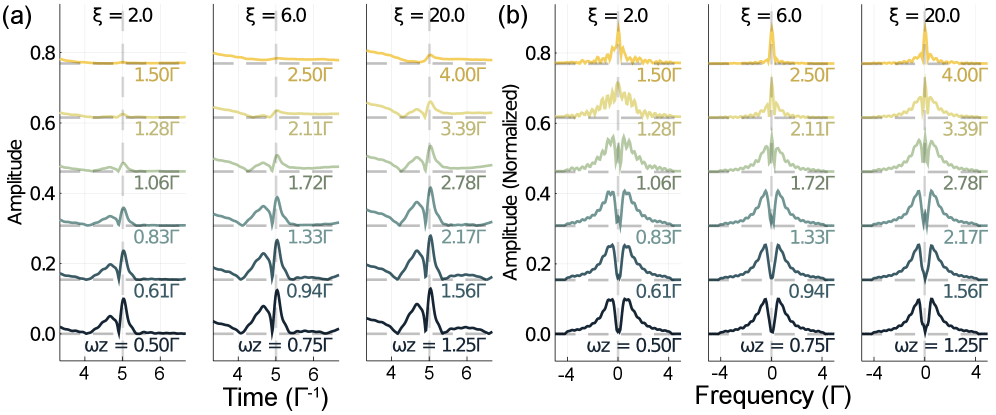
The development detailed within this research-a CUDA-based simulation package for modeling strongly correlated electron systems-echoes a fundamental challenge of technological advancement. As the article outlines, accurately capturing spin dynamics requires navigating complex interactions and validating simulations against experimental Nuclear Magnetic Resonance data. This pursuit of precision and fidelity aligns with Hannah Arendt’s observation that, “The distinction between violence and acting-between the purposeful and the arbitrary-is crucial.” The simulation isn’t merely a calculation, but a constructed representation of physical reality, and its validity hinges on the careful consideration of underlying assumptions and the rigorous testing against observable phenomena. Just as Arendt cautions against the unthinking application of force, this work demonstrates that computational power demands a corresponding ethical and scientific responsibility to ensure the modeled world reflects-and does not distort-the truths it seeks to uncover.
Where Do We Go From Here?
The acceleration of simulations, as demonstrated by this work, presents a familiar paradox. Someone will call it progress, and someone will misinterpret the results. The ability to model strongly correlated electron systems with increased efficiency does not, in itself, address the fundamental challenge of extracting meaningful physical insight from complex numerical data. The simulations refine the how, but leave the why largely untouched. The fidelity of the mean-field approximations, and the inherent limitations of representing quantum many-body systems on classical architectures, remain critical constraints.
Future development will undoubtedly focus on scaling these simulations to even larger systems, and incorporating more sophisticated theoretical treatments of electron correlation. However, a more pressing need may be the development of robust validation strategies. Simulations, no matter how efficient, are only as reliable as the experimental data used to calibrate and verify them. A rigorous coupling between theoretical modeling and high-resolution Nuclear Magnetic Resonance experiments is essential to avoid building elaborate castles on foundations of assumption.
Efficiency without morality is illusion. The ease with which these models can now be generated risks an over-reliance on computational results, potentially obscuring the underlying physics. The true test of this work-and of the field-will not be the speed of the simulations, but the depth of understanding they afford.
Original article: https://arxiv.org/pdf/2602.02732.pdf
Contact the author: https://www.linkedin.com/in/avetisyan/
See also:
- The Super Mario Galaxy Movie: 50 Easter Eggs, References & Major Cameos Explained
- 10 Best Free Games on Steam in 2026, Ranked
- Sydney Sweeney’s The Housemaid 2 Sets Streaming Release Date
- Why is Tech Jacket gender-swapped in Invincible season 4 and who voices her?
- All 13 Smash Bros. Characters in the Super Mario Galaxy Movie
- Welcome to Demon School! Iruma-kun season 4 release schedule: When are new episodes on Crunchyroll?
- Forza Horizon 6 ‘Prologue’ gameplay
- WTH?! Twitter Drops Fake Daredevil: Born Again Season 2 Spoilers as Character Return Confirmed
- Dune 3 Gets the Huge Update Fans Have Been Waiting For
- What happened to Soldier Boy in The Boys?
2026-02-05 04:32