Author: Denis Avetisyan
New research suggests quantum entanglement among neutrinos emitted from supernovae could significantly improve our ability to determine the fundamental ordering of neutrino masses.
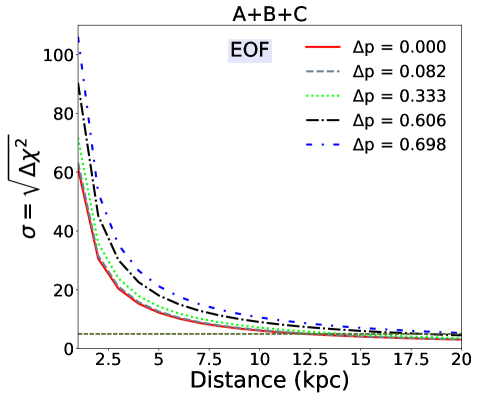
Utilizing quantum effects, the DUNE detector may achieve enhanced sensitivity in resolving the neutrino mass hierarchy via supernova neutrino flavor evolution.
Establishing the neutrino mass ordering remains a fundamental challenge in particle physics, hindered by the complexities of neutrino oscillations. This research, ‘Exploring supernova neutrino mass ordering at DUNE via quantum entanglement’, investigates the potential of leveraging quantum entanglement to enhance sensitivity to this ordering using data from the Deep Underground Neutrino Experiment (DUNE). By framing supernova neutrino oscillations through the lens of quantum entanglement-quantified via metrics like entanglement of formation-we demonstrate that this approach provides a complementary framework for analyzing neutrino flavor evolution and extends the achievable detection range for a definitive mass ordering determination. Could entanglement-based observables unlock new avenues for precision neutrino physics and a more complete understanding of stellar collapse events?
Decoding Stellar Demise: The Language of Supernova Neutrinos
The catastrophic collapse of a massive star’s core, culminating in a supernova, stands as one of the most energetic and fundamentally important events in the cosmos. This implosion isn’t solely a spectacle of light and expanding debris; it is, crucially, a prodigious source of neutrinos. Billions upon billions of these nearly massless particles are released in a matter of seconds, carrying with them approximately 99% of the gravitational energy released during the collapse. This immense neutrino flux isn’t simply a byproduct, but a direct consequence of the extreme densities and temperatures within the collapsing core-conditions where electrons and protons combine to form neutrons, releasing a flood of ν_e neutrinos. Detecting and deciphering the signals from these stellar messengers promises an unprecedented glimpse into the inner workings of stellar death and the very nature of matter under conditions unattainable on Earth.
The collapse of a massive star into a supernova isn’t simply a spectacular visual event; it’s a prodigious source of neutrinos, nearly massless particles that stream outwards, carrying information directly from the stellar core. These neutrinos, unlike photons which frequently scatter, escape virtually unimpeded, providing an unparalleled glimpse into the otherwise hidden processes occurring during the star’s final moments. By meticulously detecting and analyzing the energy spectra and arrival times of these particles, physicists can probe the extreme densities, temperatures, and magnetic fields at play – conditions unattainable in any terrestrial laboratory. This ‘neutrino archaeology’ promises to validate or refine current models of stellar collapse, nucleosynthesis – the creation of heavy elements – and the fundamental physics governing matter under the most extreme conditions imaginable, offering a unique window into the engine of cosmic creation and destruction.
The interpretation of supernova neutrino signals is profoundly complicated by the inherent properties of these elusive particles. Neutrinos readily change “flavor” – a quantum mechanical phenomenon known as oscillation – transitioning between electron, muon, and tau types as they travel vast cosmic distances. This oscillation dramatically alters the initial neutrino spectrum, scrambling information about the conditions within the collapsing star. Furthermore, accurately reconstructing the supernova’s core physics demands a precise understanding of how neutrinos interact with matter – both within the star and, crucially, within the detectors used to observe them. These interactions, governed by the weak nuclear force, are notoriously difficult to model, introducing uncertainties in energy measurements and event reconstruction. Consequently, sophisticated theoretical frameworks and large-scale detector experiments are essential to disentangle the effects of oscillation and interaction, ultimately allowing scientists to decode the wealth of information encoded within these fleeting messengers from stellar death.
Tools for the Hunt: Modeling and Detecting Elusive Neutrinos
The SNOwGLoBES (Simulating Neutrino Observatories with GLoBES) framework is a modular simulation package used to model neutrino interactions and detector responses for various experiments, with a particular focus on supernova neutrino detection. It allows researchers to propagate neutrinos through matter, account for energy losses and oscillations, and simulate the resulting signals in detectors like Super-Kamiokande, IceCube, and future liquid argon detectors. The framework incorporates detailed detector geometries and response functions, enabling accurate prediction of event rates, energy spectra, and directional information. Users can customize detector parameters, neutrino source models, and analysis chains, making SNOwGLoBES a versatile tool for assessing detector capabilities and optimizing data analysis strategies for supernova neutrino astronomy.
Supernova neutrino simulations necessitate the use of theoretical models to estimate the emitted neutrino flux, with the Garching Supernova Model being a prominent example. This model calculates the neutrino production rate based on the complex physics occurring during core-collapse, considering factors such as the mass of the progenitor star, its metallicity, and the details of the implosion process. The Garching model predicts the number of neutrinos emitted across different energy spectra and flavors – electron, muon, and tau neutrinos – as a function of time post-bounce. These predicted fluxes, expressed in units of neutrinos per square centimeter per second (\nu / cm^2 s) , are crucial inputs for detector simulations, allowing researchers to predict the expected signal strength and characterize the potential for detection by experiments like DUNE.
The Deep Underground Neutrino Experiment (DUNE) employs Liquid Argon Time Projection Chamber (LArTPC) technology to detect neutrinos produced by supernovae and other sources. This technology allows for the three-dimensional reconstruction of neutrino interactions within the argon volume, providing detailed information about neutrino energy and direction. DUNE’s far detector will contain 17 kilotons of liquid argon, significantly exceeding the scale of previous detectors and enabling a substantial increase in detection probability. Furthermore, the use of multiple argon detectors, coupled with a near detector for neutrino beam characterization, will reduce systematic uncertainties and provide unprecedented sensitivity to neutrino oscillation parameters and rare decay modes, improving the capacity to observe the comparatively weak signals from distant supernovae.
Unveiling the Quantum Code: Neutrino Oscillations and Entanglement
Neutrino oscillations represent a quantum mechanical phenomenon where neutrinos change flavor – electron, muon, and tau – as they propagate. This alteration of flavor composition is governed by the Pontecorvo-Maki-Nakagawa-Sakata (PMNS) matrix, which defines the mixing angles \theta_{12}, \theta_{13}, \theta_{23} and dictates the probability of transitioning between flavors. The Mikheyev-Smirnov-Wolfenstein (MSW) effect further modulates these oscillations due to interactions with matter, specifically electrons, within the medium the neutrinos traverse. This matter-enhanced oscillation is dependent on neutrino energy and the electron density of the material, leading to resonant amplification of certain flavor transitions. Consequently, the observed neutrino flux at a detector differs significantly from the initial production ratios, necessitating oscillation parameters to be determined through careful analysis of neutrino event rates and energy spectra.
Neutrino oscillations, the phenomenon where neutrinos change flavor during propagation, are not solely described by individual neutrino properties but necessitate consideration of quantum entanglement. The superposition of mass eigenstates that define neutrino flavor evolution introduces correlations between neutrinos, creating an entangled state. This entanglement is not merely a theoretical construct; its degree directly impacts the precision with which oscillation parameters can be determined and extends the sensitivity range for measurements like the neutrino mass ordering. Specifically, the entanglement within the neutrino system affects the coherence of the oscillation process and influences the ability to distinguish between different mass hierarchies, ultimately affecting the experimental reach of neutrino detectors.
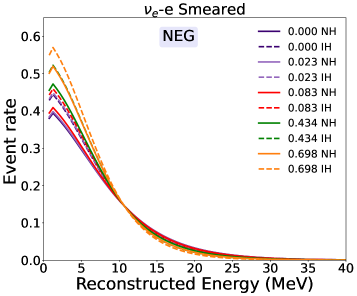
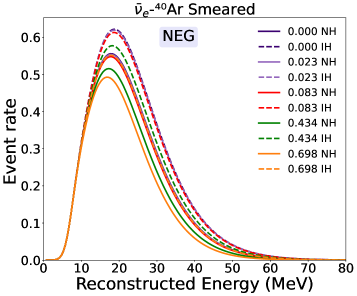
Quantification of entanglement within neutrino systems is achieved through metrics including Entanglement of Formation, Concurrence, and Negativity. These measures assess the degree of quantum correlation between neutrinos, impacting the sensitivity of neutrino oscillation experiments. Specifically, simulations demonstrate that increased entanglement can extend the detectable distance for a 5σ mass ordering sensitivity – the ability to definitively determine the hierarchy of neutrino masses – to up to 21 kiloparsecs (kpc). This extension is contingent on specific entanglement scenarios and assumes optimal experimental conditions for maximizing the benefits of quantum correlations in neutrino detection.
The Full Picture: Interactions and the Path Forward
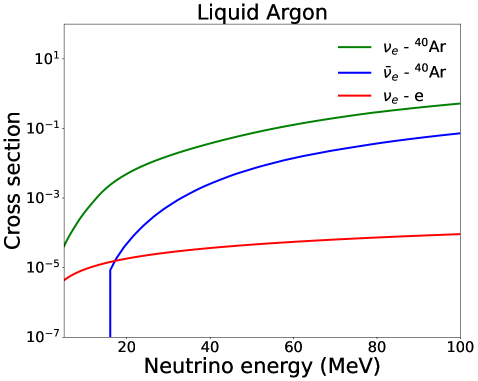
Detecting neutrinos from a supernova – the explosive death of a massive star – is incredibly challenging, and accurate modeling of these events demands a comprehensive understanding of how neutrinos interact with matter. These elusive particles don’t simply appear; they reveal themselves through specific interactions within detector materials. Two key processes are particularly important: Charged Current (CC) interactions, where a neutrino exchanges a W boson with a nucleon, changing the neutrino’s flavor, and Elastic Scattering, where a neutrino collides with an electron, transferring energy and direction. Each interaction type provides unique information, but also presents distinct signatures that must be carefully disentangled from background noise. Failing to account for the nuances of both CC interactions and Elastic Scattering – their differing rates, energy distributions, and directional dependencies – leads to systematic errors in reconstructing the supernova’s distance, intensity, and even the fundamental properties of the neutrinos themselves. Therefore, precise modeling of these interaction channels is paramount for extracting meaningful insights from these rare and valuable cosmic messengers.
The quest to understand supernovae and the fundamental properties of neutrinos hinges on a synergistic approach – the development of sophisticated simulation frameworks coupled with the deployment of next-generation detectors like the Deep Underground Neutrino Experiment (DUNE). These advanced simulations meticulously model the complex interactions of neutrinos produced in the cataclysmic deaths of stars, allowing scientists to predict the expected signals with unprecedented accuracy. DUNE, with its massive scale and innovative technology, is designed to capture these elusive particles and measure their energies and flavors. By comparing the observed data with the simulation predictions, researchers can not only confirm theoretical models but also unravel the mysteries surrounding neutrino mass ordering, supernova mechanisms, and the broader evolution of the universe. This powerful combination promises to transform stellar messengers from enigmatic signals into a rich source of astrophysical and particle physics insights.
Recent investigations into supernova neutrino detection reveal a significant correlation between entanglement optimization and the achievable sensitivity distance for determining the neutrino mass ordering. Specifically, the study demonstrates that maximizing entanglement – quantified by Δp = 0.698 – within detection ‘Channel A’ extends the 5σ sensitivity range to an impressive 21 kiloparsecs. While ‘Channel B’ achieves a more limited 2 kiloparsecs under the same conditions, a comprehensive analysis incorporating data from Channels A, B, and C collectively pushes the sensitivity boundary to 19 kiloparsecs. These findings highlight the crucial role of entanglement strategies in enhancing the capabilities of next-generation neutrino detectors, paving the way for a more detailed understanding of these elusive particles and the stellar events that produce them.
The pursuit of understanding neutrino mass hierarchy, as detailed in this research, mirrors a systemic approach to complex problems. Just as the DUNE detector relies on the interconnectedness of quantum entanglement to enhance detection capabilities, so too does a robust system demand comprehension of its entirety. Henry David Thoreau observed, “It’s not enough to be busy; you must look to see that you’re busy with the right things.” This sentiment resonates deeply with the core concept of this study; it isn’t merely about detecting neutrinos, but about leveraging the fundamental relationships between them – the entanglement – to unlock a more complete understanding of the universe’s building blocks. The research highlights that a clear signal emerges not from increased computational power, but from a refined understanding of the system’s inherent structure.
The Horizon of Detection
The pursuit of the neutrino mass hierarchy, as illuminated by this work, is not merely a question of measuring a parameter, but of mapping the architecture of flavor evolution. The demonstrated enhancement via quantum entanglement offers a potential extension of the DUNE detector’s reach, yet it simultaneously introduces new tension points. Any optimization of detection sensitivity invariably alters the very system under observation; the signal becomes inextricably linked to the method of its retrieval. This is not a failure of the approach, but a fundamental characteristic of complex systems.
The inherent challenge lies in disentangling the genuine signal from artifacts introduced by the entanglement enhancement itself. The MSW effect, already a nuanced process, becomes further complicated by the correlated behavior of the neutrino ensemble. Future research must therefore focus on rigorously characterizing these emergent correlations, developing analytical tools that can differentiate between intrinsic features of the mass hierarchy and those induced by the detection strategy.
Ultimately, the horizon of detection is not a fixed boundary, but a shifting landscape. Each refinement of the experimental apparatus, each algorithmic innovation, reshapes the observable universe. The architecture of the system – its behavior over time – dictates the limits of knowledge, not a diagram on paper. The next step is not simply to increase sensitivity, but to understand the full implications of the measurement process itself.
Original article: https://arxiv.org/pdf/2602.04800.pdf
Contact the author: https://www.linkedin.com/in/avetisyan/
See also:
- FRONT MISSION 3: Remake coming to PS5, Xbox Series, PS4, Xbox One, and PC on January 30, 2026
- Best Controller Settings for ARC Raiders
- Welcome to Demon School! Iruma-kun season 4 release schedule: When are new episodes on Crunchyroll?
- Taylor Sheridan’s Gritty 5-Part Crime Show Reveals New Final Season Villain
- The Boys Season 5 Officially Ends An Era For Jensen Ackles’ Soldier Boy
- ‘The Bride!’ Review: Jessie Buckley Breathes Life into a Monstrous Mess
- Invincible Season 4 Episode 4 Post-Credits Unveils a Demonic Return & More
- From season 4 release schedule: When is episode 2 out on MGM+?
- Mark Zuckerberg & Wife Priscilla Chan Make Surprise Debut at Met Gala
- Meet the cast of Good Omens season 3: All the actors and characters
2026-02-05 21:23