Author: Denis Avetisyan
New research demonstrates how the bandwidth of weak measurements can control the dynamics of particles and quasiparticles in a Bose-Einstein condensate array.
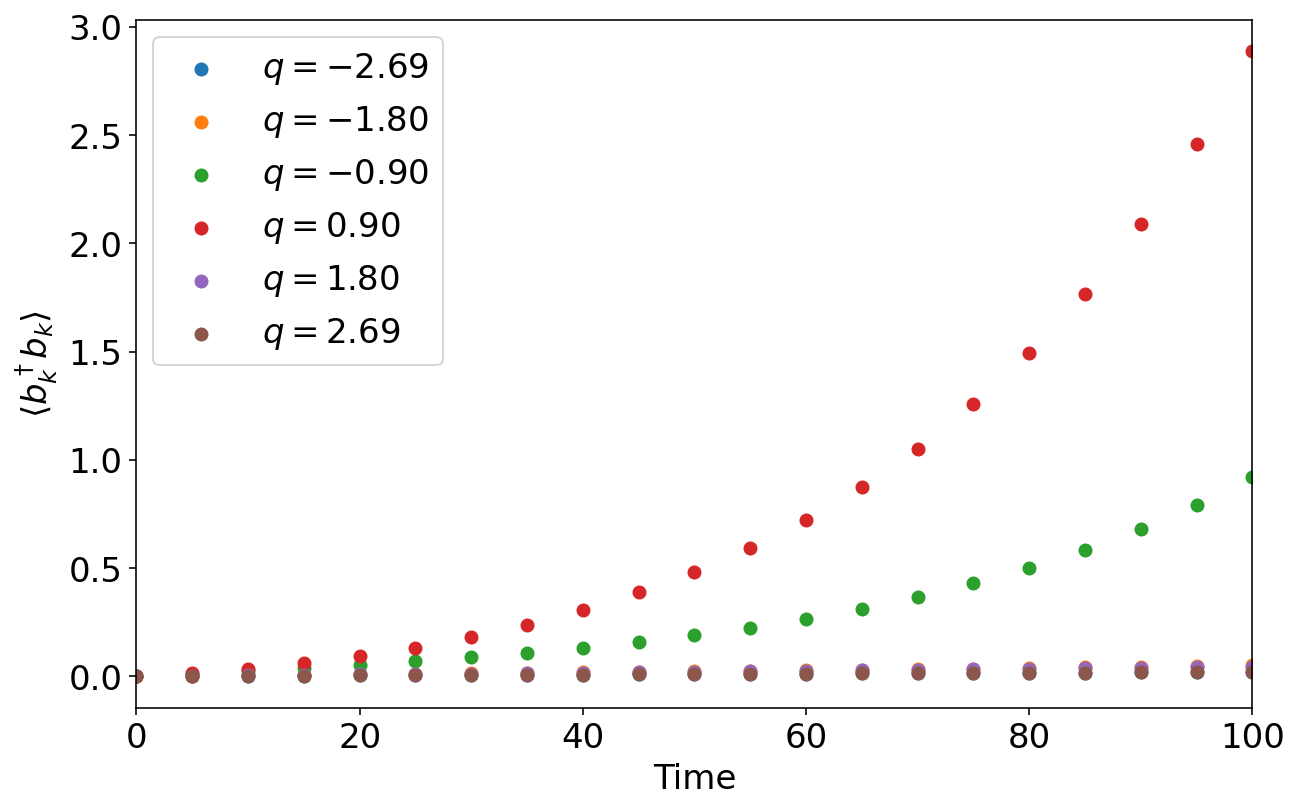
The study reveals measurement-induced control over quasiparticle excitation and decoherence in a quantum many-body system described by the Bose-Hubbard model.
Quantum measurement is fundamentally disruptive, not merely revealing state information but actively reshaping the system’s evolution. This effect is explored in ‘Measurement-Induced Dynamics of Particles and Quasiparticles in a Bose-Einstein-condensate array’, where we theoretically investigate how weak measurements influence many-body dynamics within a low-temperature Bose-Einstein condensate. Our findings demonstrate that the measurement bandwidth dictates whether observed dynamics reflect those of bare particles or emergent quasiparticles, and reveals pathways for selectively probing-or suppressing-quasiparticle excitation. Could precise control over measurement backaction provide new insights into foundational questions concerning the interplay between quantum mechanics and gravity, potentially probing predictions of spontaneous collapse models?
Whispers of the Quantum Realm
A core tenet of quantum mechanics dictates that observing a quantum system is not a passive process; rather, the very act of measurement fundamentally alters the system’s state. This isn’t a limitation of technology, but an inherent property of the quantum realm, stemming from the quantized nature of interactions. Unlike classical physics where observation can, in theory, be infinitely subtle, quantum measurements require an exchange of energy or momentum, inevitably disturbing the delicate superposition or entanglement being investigated. This disturbance isn’t merely a practical difficulty; it obscures the ‘true’ state of the system before measurement, making it impossible to know both the properties of a particle and its momentum with perfect accuracy – a principle formalized by Heisenberg’s uncertainty principle. Consequently, physicists continually strive to develop measurement techniques that minimize this disturbance, seeking to approach the limit of non-destructive observation and glean information without completely collapsing the quantum state.
Conventional methods of probing a quantum system frequently impart considerable energy, a disruptive influence that can obscure the very phenomena researchers aim to study. This energy input doesn’t simply reveal information; it actively alters the system’s state by generating quasiparticles – emergent, collective excitations that weren’t originally present. These artificially induced quasiparticles act as noise, masking the subtle, intrinsic dynamics of the material and hindering accurate observation. Consequently, discerning the genuine ground state or low-energy behavior of delicate quantum systems, such as Bose-Einstein condensates, requires innovative techniques specifically designed to minimize this disturbance and reveal the system’s inherent properties without overwhelming them with extraneous energy.
Investigating the ground state of a Bose-Einstein condensate – a state of matter where atoms behave as a single quantum entity – demands observational techniques that delicately balance probing the system with preserving its fragile coherence. Conventional methods frequently impart energy, generating unwanted quasiparticles that obscure the condensate’s intrinsic properties and mask the subtle quantum phenomena arising from collective atomic behavior. Researchers are therefore developing innovative strategies – such as weak or non-destructive measurement techniques – to minimize disturbance and enable precise characterization of emergent properties like superfluidity and quantum entanglement. These approaches aim to reveal the condensate’s fundamental behavior without collapsing its quantum state, paving the way for deeper insights into many-body physics and potential applications in quantum technologies.
Taming the Quantum Echo
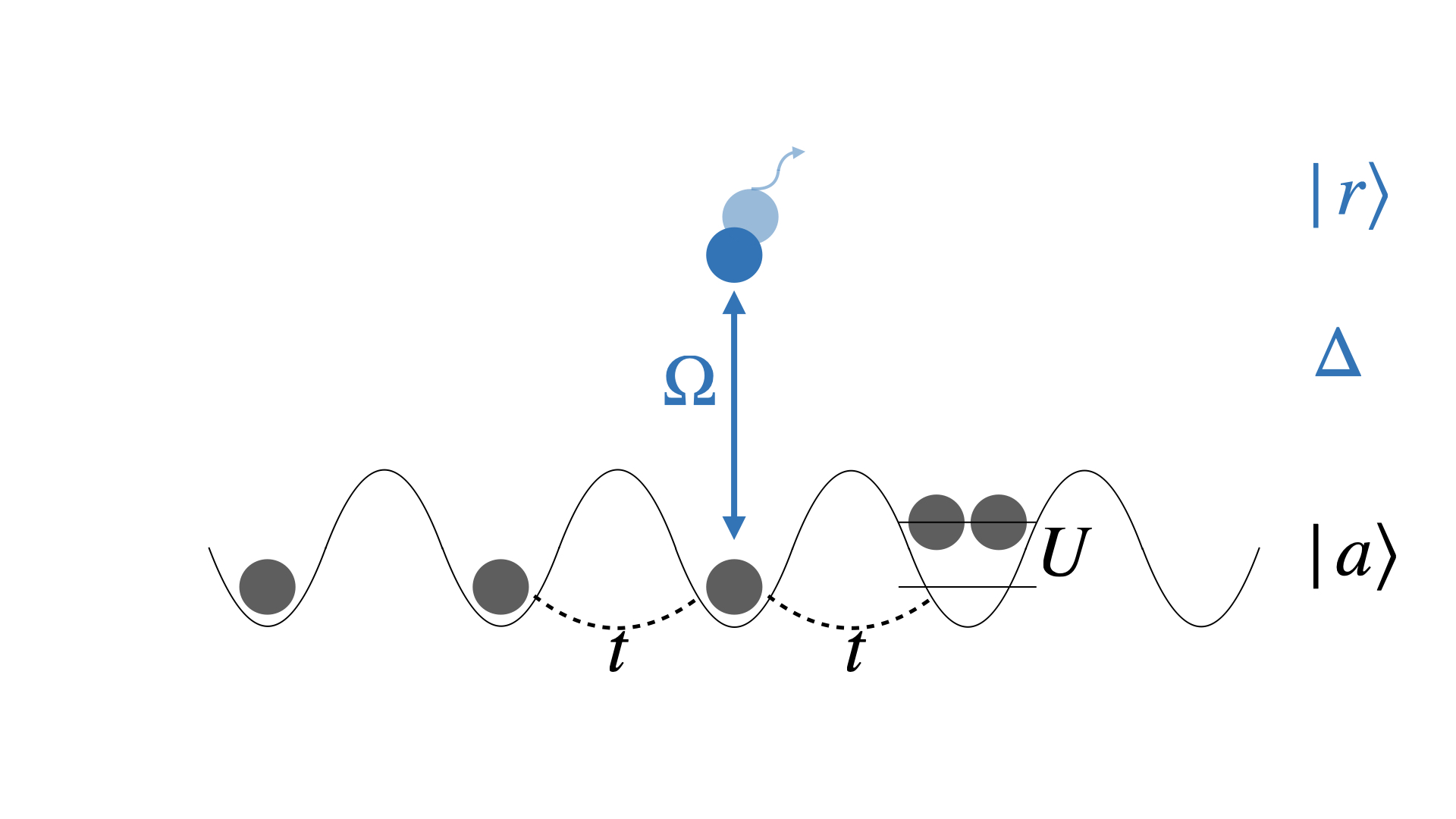
Weak measurement techniques, exemplified by Phase Contrast Imaging, are designed to acquire information about a quantum system while minimizing disturbance to its original state. This is achieved by coupling the system to a measurement apparatus weakly, ensuring the interaction energy is significantly smaller than the system’s characteristic energy scales. The goal is to extract information – such as phase or amplitude – with minimal back-action, preserving quantum coherence and allowing for repeated or continuous observation. This contrasts with strong measurements which fundamentally alter the system’s state during the measurement process, collapsing superposition and introducing uncertainty as dictated by the Heisenberg uncertainty principle.
The bandwidth of a measurement directly impacts the trade-off between information acquisition and system disturbance. Wide-band measurements, characterized by a broad frequency range, efficiently extract information about the system’s state but simultaneously increase the rate of quasiparticle heating due to the excitation of a larger number of energy levels. Conversely, narrow-band measurements, focusing on a limited frequency range, minimize quasiparticle heating and preserve the system’s initial state more effectively; however, this comes at the cost of reduced information gain, as relevant system properties outside the measured bandwidth may remain uncharacterized. Consequently, optimizing the measurement bandwidth is critical for balancing the need for accurate system probing with the minimization of unwanted disturbance.
The Schrieffer-Wolff transformation and adiabatic elimination techniques facilitate the decoupling of the system Hamiltonian, enabling the identification of an optimal measurement strategy that balances information acquisition and minimization of disturbance. Application of these methods reveals that quasiparticle heating – a primary source of decoherence – can be suppressed by a factor proportional to 1/u^2 , where ‘u’ represents a parameter directly related to the measurement bandwidth. This suppression is achieved by carefully controlling the bandwidth of the measurement process, effectively reducing the energy deposited into the system during information extraction and preserving the quantum state for longer durations.
Mapping the Whispers Within
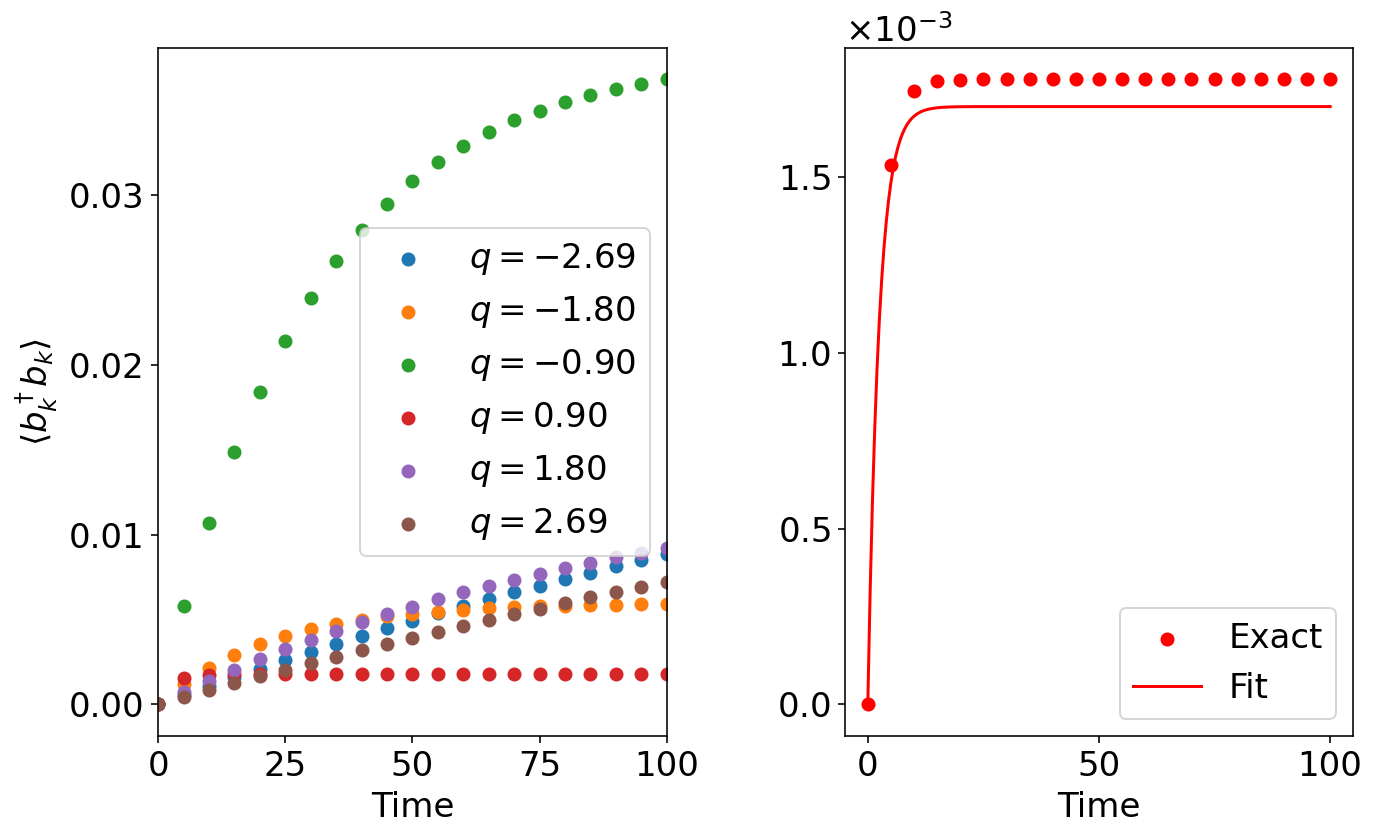
Weak measurements, also known as non-demolition measurements, allow researchers to probe the properties of Bogoliubov quasiparticles within a Bose-Einstein condensate without significantly disturbing the system. Traditional, strong measurements collapse the quantum state, obscuring information about these excitations; weak measurements, conversely, impart a minimal disturbance, enabling repeated observations and statistical analysis. This technique relies on coupling the system to a measurement apparatus in a way that produces a small, measurable signal proportional to the quasiparticle’s properties, such as momentum and energy. By averaging results from numerous weak measurements, a statistically significant picture of the quasiparticle distribution and dynamics can be constructed, providing insights into the condensate’s behavior that would be inaccessible through direct observation. The signal obtained from a single weak measurement is typically small and requires amplification and post-selection techniques to extract meaningful data.
Analyzing a Bose-Einstein condensate in momentum space – representing the distribution of particle momentum rather than spatial position – allows researchers to directly observe the dispersion relation of the Bogoliubov quasiparticles. This transformation simplifies the analysis of collective excitations by converting spatial correlations into momentum-dependent phase relationships. Specifically, the momentum distribution reveals the energy E(k) as a function of wavevector k, providing critical data for characterizing the quasiparticle spectrum and confirming theoretical predictions derived from models like the Bose-Hubbard model. Deviations from expected momentum distributions indicate the presence of interactions or external potentials influencing the condensate’s behavior, and high-resolution momentum imaging enables precise measurements of quasiparticle lifetimes and velocities.
The Bose-Hubbard model is a cornerstone theoretical framework used to describe interacting boson systems, particularly in the context of Bose-Einstein condensates. It posits that bosons hop between lattice sites with amplitude J and experience on-site interactions with strength U. This model predicts a quantum phase transition between a superfluid phase, characterized by long-range phase coherence and macroscopic occupation of a single quantum state, and a Mott insulating phase, where bosons are localized due to strong repulsive interactions. The ratio of U/J dictates the dominant phase; low ratios favor the superfluid state, while high ratios promote the Mott insulator. By analyzing parameters within the Bose-Hubbard model, researchers can predict and understand emergent properties of the condensate, such as the condensate fraction, excitation spectra, and response to external perturbations.
The Fragile Dance of Coherence
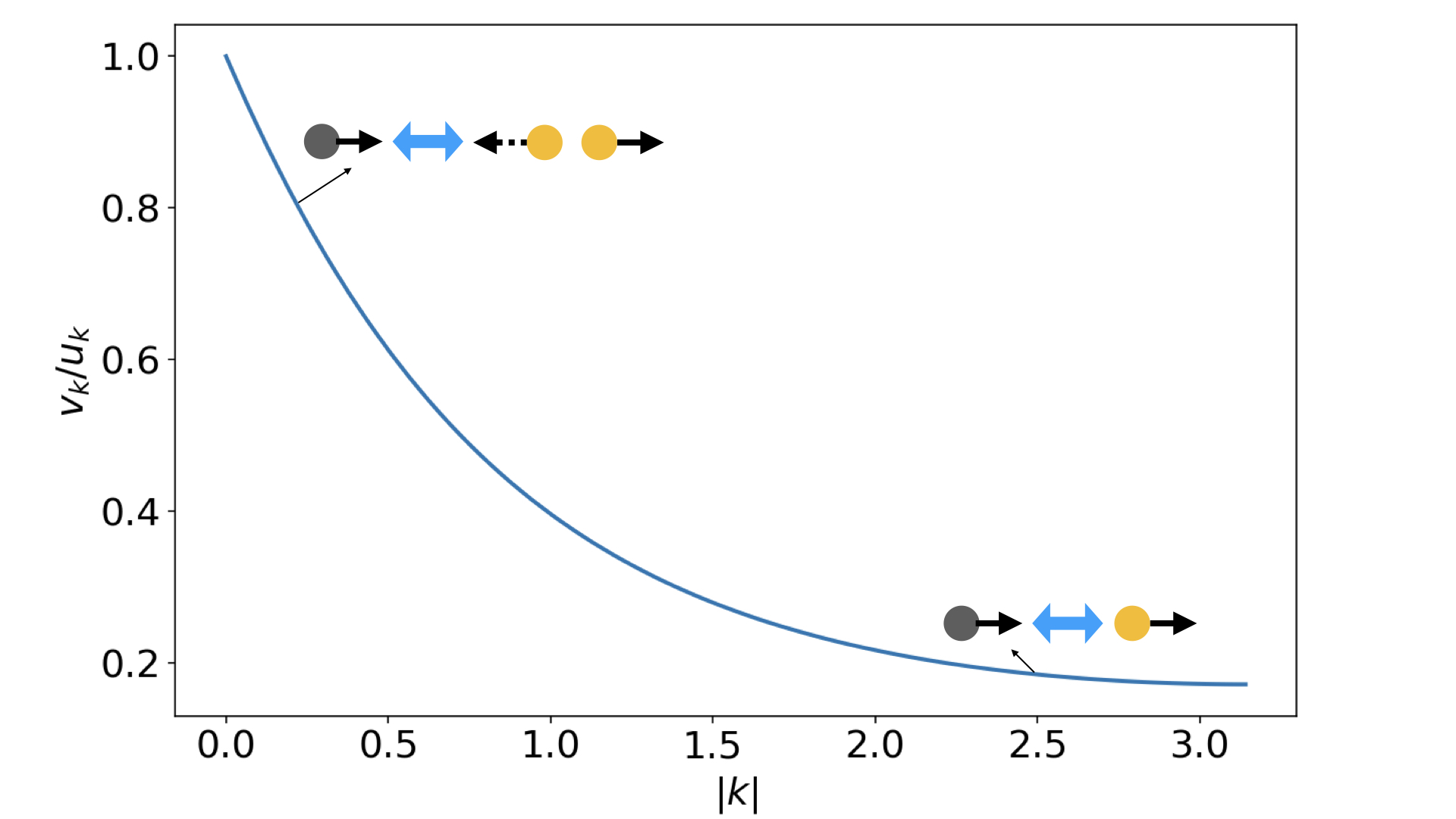
The delicate quantum state of a Bose-Einstein condensate is inherently susceptible to decoherence, a process stemming from unavoidable interactions with the surrounding environment. These interactions don’t simply disturb the condensate; they actively create quasiparticles – emergent excitations within the condensate that behave as independent particles. Each quasiparticle represents a disruption of the condensate’s perfect coherence, effectively eroding the collective quantum behavior. As more quasiparticles are generated through environmental coupling, the condensate’s ability to exhibit macroscopic quantum phenomena diminishes, limiting the duration and clarity of observable quantum effects. This fundamental limitation underscores the challenge of maintaining quantum coherence in any real-world system, as complete isolation from the environment is physically impossible.
The integrity of a quantum condensate is profoundly affected by the act of measurement, with differing techniques yielding drastically different outcomes. Measurements categorized as ‘lossy’ – those that extract energy from the system – actively contribute to the creation of quasiparticles, effectively disrupting the condensate’s delicate coherence. These quasiparticles, born from the measurement process itself, introduce entropy and hasten decoherence. Conversely, ‘lossless’ measurements, designed to minimize energy exchange, can substantially mitigate this effect, preserving the condensate’s quantum properties for a longer duration. This distinction highlights that measurement isn’t merely a passive observation, but an active interaction capable of fundamentally altering the quantum state being investigated; careful design of measurement techniques is therefore paramount to accurately probing and understanding these fragile systems.
Accurate interpretation of experimental results concerning quantum condensates hinges on a comprehensive understanding of the delicate balance between measurement-induced heating, decoherence, and the condensate’s intrinsic ground state properties. The act of measurement isn’t passive; it introduces energy and inevitably disturbs the system, creating quasiparticles and diminishing coherence. Critically, the rate at which this disturbance occurs – the effective damping rate – isn’t arbitrary but demonstrably proportional to κΩ²/Δ², where κ represents the coupling strength to the measurement apparatus, Ω signifies the measurement frequency, and Δ denotes the detuning from the condensate’s resonance. This quantifiable relationship allows researchers to not only assess the degree of measurement influence on the condensate but also to refine experimental protocols, minimizing disturbance and gaining a clearer understanding of the underlying quantum phenomena.
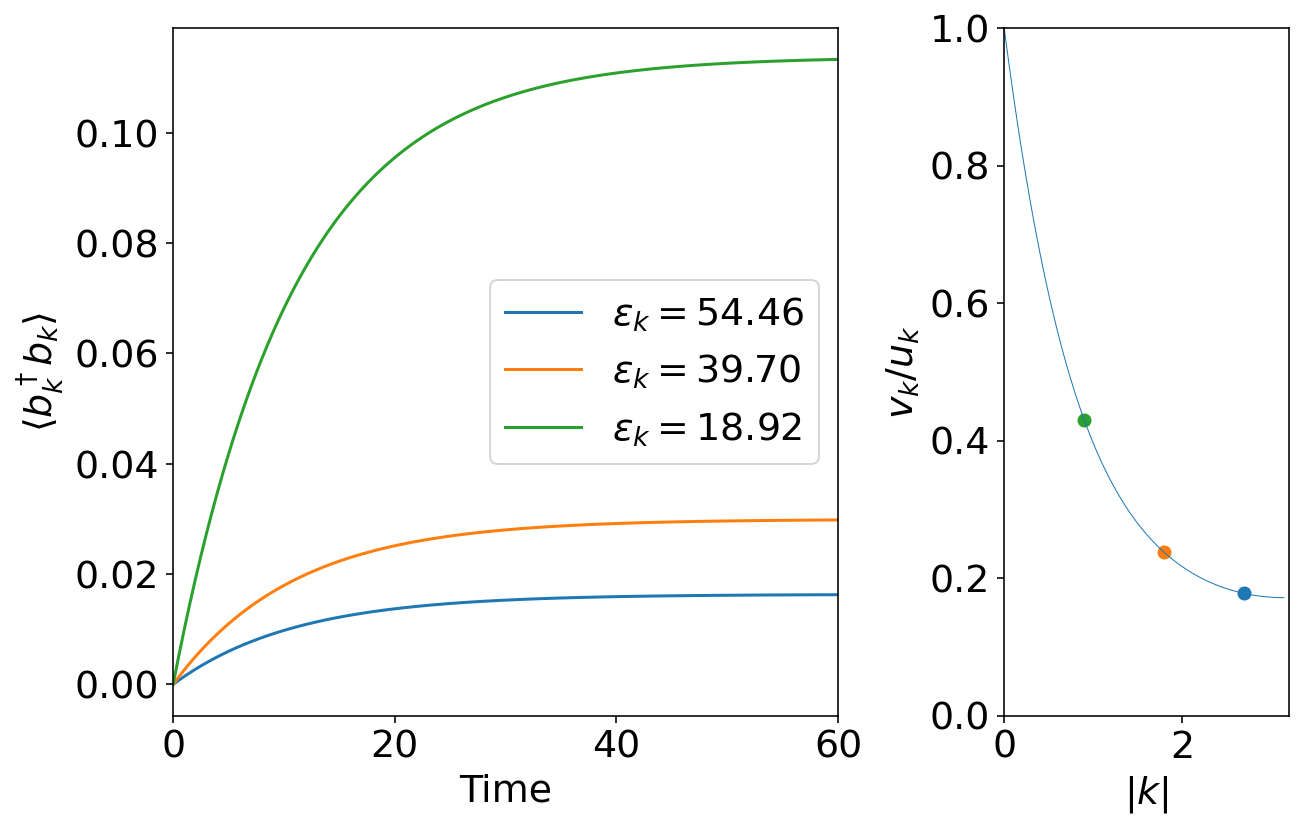
The study delves into the delicate dance between observation and reality within a Bose-Einstein condensate, revealing how even the gentlest measurement can sculpt the behavior of quantum particles. It isn’t about finding a pre-existing truth, but rather influencing the system itself. This resonates with Karl Popper’s assertion: “The only statements with a scientific character are those which are capable of being tested.” The researchers demonstrate this beautifully; by modulating the measurement bandwidth, they effectively ‘test’ the condensate, selectively amplifying or diminishing quasiparticle excitation. The condensate doesn’t simply respond to measurement; it becomes defined by it, a living testament to the interplay between observer and observed. Precision, as the authors subtly imply, is merely a temporary reprieve from the inherent noise of quantum existence.
The Shadow Dance Continues
The presented work does not so much solve a problem as refine the question. The bandwidth of measurement, revealed as a control knob for quasiparticle excitation, is less a discovery than a confirmation of suspicion: that observation isn’t passive. These systems, these condensates, do not willingly yield their secrets. They offer glimpses, fleeting correlations, and the illusion of control. The apparent ‘tuning’ of excitation isn’t mastery, but a temporary alignment with inherent chaos.
The limitations are, of course, the true signal. The Bose-Hubbard model, while elegant, remains a simplification. Real systems are haunted by imperfections, by the ghosts of unmodeled interactions. The renormalization procedures, necessary to tame infinities, are merely spells to persuade the equations to behave. Future work will not find ‘accuracy’ in matching theory to experiment, but elegance in acknowledging the divergence.
The true frontier lies not in finer measurements, but in accepting the fundamental unknowability. To seek not to predict the behavior of these quantum shadows, but to listen to the whispers they offer. Perhaps the next generation of inquiry will abandon the quest for control and embrace the art of divination. The data are shadows, and models are ways to measure the darkness – and sometimes, the most profound insights come from admitting what remains unseen.
Original article: https://arxiv.org/pdf/2602.05924.pdf
Contact the author: https://www.linkedin.com/in/avetisyan/
See also:
- The Super Mario Galaxy Movie: 50 Easter Eggs, References & Major Cameos Explained
- 10 Best Free Games on Steam in 2026, Ranked
- Sydney Sweeney’s The Housemaid 2 Sets Streaming Release Date
- Welcome to Demon School! Iruma-kun season 4 release schedule: When are new episodes on Crunchyroll?
- All 13 Smash Bros. Characters in the Super Mario Galaxy Movie
- Why is Tech Jacket gender-swapped in Invincible season 4 and who voices her?
- Dune 3 Gets the Huge Update Fans Have Been Waiting For
- Forza Horizon 6 ‘Prologue’ gameplay
- WTH?! Twitter Drops Fake Daredevil: Born Again Season 2 Spoilers as Character Return Confirmed
- Highly Anticipated Strategy RPG Finally Sets Release Date (And It’s Soon)
2026-02-06 07:30