
Kyoto Animation released The Disappearance of Haruhi Suzumiya in Japan on February 6, 2010. For those unfamiliar with the anime community of the late 2000s, this date is still remembered because the studio had recently faced criticism from fans. The film was seen as a turning point, proving to many that Kyoto Animation still maintained its high quality and creative ability.
Originally a series of novels by Nagaru Tanigawa, The Melancholy of Haruhi Suzumiya became a hugely popular anime. The story centers on Haruhi, a high school girl who unknowingly has the power to alter reality. Her ordinary classmate, Kyon, finds himself drawn into her strange club, the SOS Brigade, which also includes an alien, a time traveler, and someone with psychic abilities. The series cleverly mixes humor, science fiction, and thoughtful commentary about how stories work. It was a major cultural phenomenon in the mid-to-late 2000s.
That misstep was the “Endless Eight” arc. During the summer of 2009, Kyoto Animation aired eight episodes that essentially retold the same story, with slight changes in animation and direction, but a deliberately repeating storyline. Whether viewers saw it as an artistic experiment or a long-running joke depended on how much they enjoyed being playfully misled by a very skilled animation studio.
Why “Endless Eight” Became Controversial

The show’s central concept—repeatedly looping the same summer vacation for its characters and the audience—was a smart and fitting way to explore themes of existentialism. However, it demanded a lot of viewers, requiring them to watch what essentially felt like the same episode multiple times. While some appreciated the impressive effort of subtly changing each iteration with new animation and performances, many others felt the show deliberately wasted their time.
The negative reaction was overwhelming, going far beyond typical fan complaints. Before the storyline even concluded, a former director from Kyoto Animation, Yamamoto, supposedly apologized for the studio, stating he’d opposed the idea from the start and considered the creative choices unacceptable. Even the voice actress for the character Haruhi felt compelled to apologize. That really shows how strong the criticism was.
People often overlook the core issue: the frustration stemmed from a broken trust. Fans worried that if Kyoto Animation could drastically alter a cherished series like this, what other changes might they make? More importantly, they questioned whether the new direction would still provide the satisfying emotional resolution that Haruhi fans had long anticipated.
Then KyoAni Dropped a 162-Minute Movie
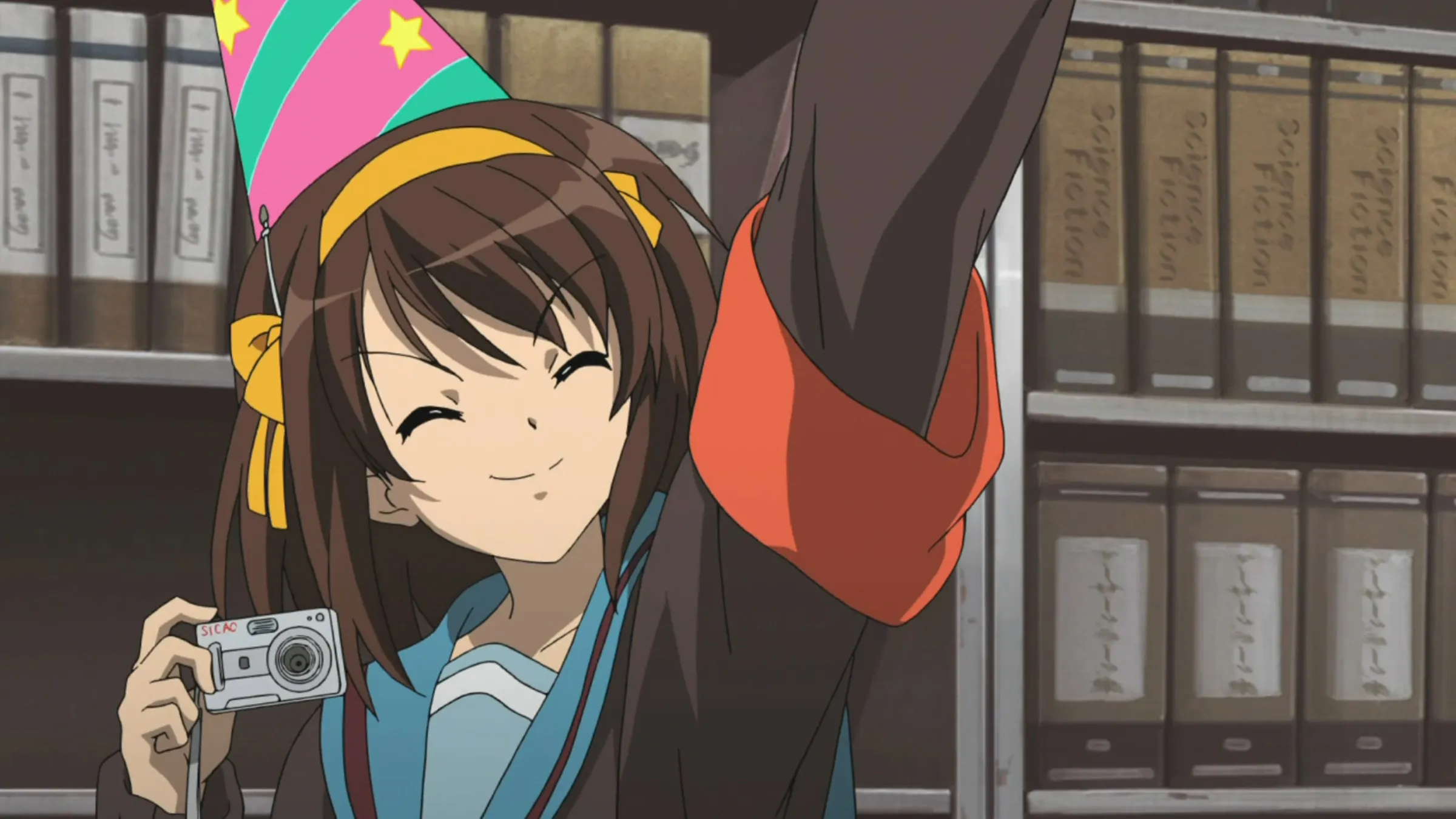
Less than a year after the criticism surrounding Endless Eight, Kyoto Animation released The Disappearance of Haruhi Suzumiya. This 162-minute film was a lavish, full-length adaptation of a popular Haruhi novel, and it was clearly made with a large budget and high production values. Many viewers felt it was Kyoto Animation’s attempt to regain favor with fans, and the film’s ambitious scope reinforced that idea – it really felt like the studio had put everything into it.
While Endless Eight spread a small story over two months, Disappearance does the reverse. It takes a complex and emotionally charged idea and gives it the space and clarity it deserves. It still feels like Haruhi, but it unfolds at a cinematic pace, demanding the viewer’s full attention, unlike the weekly cliffhangers of the original series. A key to its success is the focus shift to Kyon. The TV series usually portrays Kyon as an observer, reacting to Haruhi’s actions. Here, he’s the one making tough decisions. Instead of relying on a quirky structure, the story asks us to follow a character as he confronts a problem that steadily grows more intense in a logical way.
The movie currently has an 8/10 rating on MyAnimeList, which is a respectable score for a film in a long-running series. However, more interesting than the score itself is how people talked about it. After a previous installment, Endless Eight, discussions were often filled with frustration and doubt. But with Disappearance, the conversation changed to appreciation for how well it was made, and people started recommending it as one of the best anime movies based on a TV show. Back in 2010, those recommendations carried weight. Fans were always categorizing shows – whether they were ‘good to watch weekly,’ ‘good overall,’ or ‘only enjoyable if you already knew the series.’ Disappearance definitely fell into the ‘good overall’ category. It felt rewarding for longtime fans, but it also worked as a complete story with a clear beginning, middle, and end.
Revisiting Disappearance feels particularly poignant now. Sadly, one of the film’s directors, Yasuhiro Takemoto, was a victim of the 2019 Kyoto Animation arson attack. He not only wrote many of the episodes from the Endless Eight series, but also played a key role in directing the film that many fans consider a highlight of the franchise. It’s important to acknowledge this directly because it challenges simple interpretations. This wasn’t a case of flawed creators versus talented ones. Rather, it was a studio taking a chance with a unique weekly format, and then later demonstrating impressive skill in crafting a full-length movie.
What do you think? Leave a comment below and join the conversation now in the ComicBook Forum!
https://comicbook.com/anime/list/10-best-kyoto-animation-anime-list/embed/#
Read More
- The Super Mario Galaxy Movie: 50 Easter Eggs, References & Major Cameos Explained
- 10 Best Free Games on Steam in 2026, Ranked
- Sydney Sweeney’s The Housemaid 2 Sets Streaming Release Date
- Skate 4 – Manny Go Round Goals Guide | All of the Above Sequence
- Welcome to Demon School! Iruma-kun season 4 release schedule: When are new episodes on Crunchyroll?
- Why is Tech Jacket gender-swapped in Invincible season 4 and who voices her?
- Overwatch 2 G.I. Joe Crossover Launches July 1: Join the Battle Between Heroes and Villains
- Best coins for today
- Forza Horizon 6 ‘Prologue’ gameplay
- 10 Best Supporting Actress Oscar Wins That Are Indisputable
2026-02-06 23:13