Author: Denis Avetisyan
New research suggests that the quantum reality experienced by observers within a de Sitter space can emerge from a broader description of a ‘baby universe’ and its statistical properties.
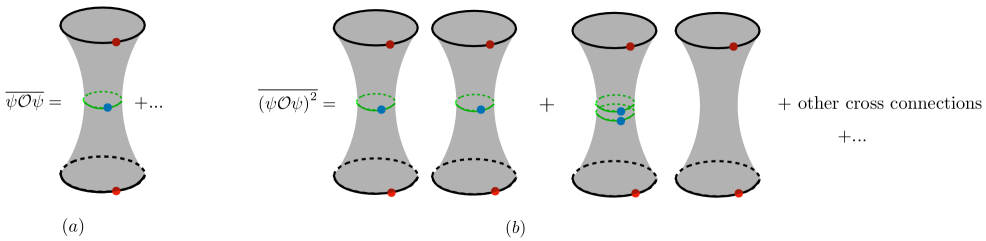
This work demonstrates a consistent quantum mechanical framework for de Sitter observers by leveraging the Hartle-Hawking state and the holographic principle within a single-state universe.
The apparent conflict between the one-state proposal for closed universes and the emergence of standard quantum mechanics for internal observers presents a foundational challenge in theoretical cosmology. This is addressed in ‘It from Bit”: The Hartle-Hawking state and quantum mechanics for de Sitter observers, which demonstrates that consistent quantum behavior within de Sitter space arises from a classical statistical description encoded in a larger ‘baby universe’ Hilbert space. Specifically, we show that the de Sitter entropy corresponds to coarse-grained entropy of the underlying state, resolving tensions between the one-state property and observed quantum phenomena. Could this framework offer a pathway towards a deeper understanding of information, entropy, and the holographic principle in quantum gravity?
The Universe Encoded: Boundaries and the Illusion of Volume
The Holographic Principle posits a surprising constraint on the universe: all the information contained within a given volume of space can be completely described by data residing on that volume’s two-dimensional boundary, much like a hologram projects a three-dimensional image from a two-dimensional surface. This isn’t merely a statement about efficient data storage; it suggests that our perception of volume itself might be an emergent property, and the true degrees of freedom defining reality reside on the boundary. Effectively, the universe may not need three spatial dimensions to encode its contents; the information defining everything within a space is fundamentally limited by the area of its surface, a concept deeply linked to \frac{A}{4l_p^2}, where A represents the boundary area and l_p is the Planck length. This radical idea challenges conventional notions of locality and dimensionality, implying that the universe could be fundamentally simpler than it appears, with reality potentially “painted” onto a distant, encompassing surface.
The notion that spacetime, as traditionally understood, might not be fundamental represents a radical departure from classical physics. Current models posit information storage as directly proportional to volume – more space, more potential information. However, the holographic principle suggests this is an illusion; all the information contained within a region of space could, theoretically, be encoded on its two-dimensional boundary, like a hologram. This isn’t simply a matter of efficient data compression, but a potential restructuring of reality where the three-dimensional universe experienced is a projection from a lower-dimensional surface. Such a concept implies that our perception of depth and volume arises from information encoded on a distant, encompassing boundary, hinting at a deeper, underlying structure governing the cosmos and challenging long-held assumptions about the nature of space and information itself.
A cornerstone of evidence supporting the holographic principle lies within the seemingly paradoxical behavior of black hole entropy. Classical physics dictates that entropy – a measure of disorder, or equivalently, the information needed to describe a system – should scale with the volume of an object. However, the Bekenstein-Hawking formula, derived from considerations of black hole thermodynamics, reveals a startling deviation: a black hole’s entropy is directly proportional to the area of its event horizon, not its volume. This is expressed mathematically as S = \frac{k_B A}{4l_P^2}, where S is entropy, A is the horizon area, k_B is Boltzmann’s constant, and l_P is the Planck length. This implies all the information about the objects that fall into a black hole is somehow encoded on its two-dimensional surface, suggesting that the three-dimensional volume within is, in a sense, illusory – a projection from information residing on the boundary. The fact that entropy scales with area, rather than volume, powerfully supports the notion that reality itself might be fundamentally holographic, with our perceived three-dimensional universe being an emergent property of information encoded on a distant, lower-dimensional surface.
A pivotal development in understanding the holographic principle lies in the Anti-de Sitter/Conformal Field Theory (AdS/CFT) duality. This theoretical framework posits a precise mathematical correspondence between gravity in a higher-dimensional Anti-de Sitter (AdS) space and a quantum field theory (CFT) living on the boundary of that space. Essentially, it proposes that all physical phenomena occurring within the AdS space – including gravitational effects – can be perfectly described by a quantum field theory residing in one fewer dimension. This isn’t merely an analogy; the duality implies a complete equivalence, meaning any calculation performed in the gravitational theory has a corresponding, identical calculation within the CFT, and vice-versa. The power of AdS/CFT lies in its ability to tackle problems intractable in either theory alone; strong gravitational scenarios can be mapped to weakly coupled quantum field theories, and complex quantum systems can find gravitational descriptions. While our universe isn’t strictly AdS, this duality provides a crucial testing ground and offers profound insights into the nature of spacetime, quantum gravity, and the fundamental limits of information storage, suggesting that the information describing a volume may indeed be fully encoded on its surface.
Modeling the Primordial Cosmos: A Simplified De Sitter Approach
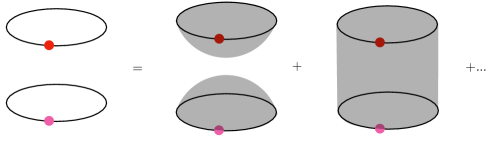
The ToyDeSitterModel is a simplified analytical framework designed to investigate the quantum gravity of de Sitter spacetime. This simplification is achieved by focusing on a reduced gravitational theory, enabling tractable calculations that are otherwise impossible in full quantum gravity. De Sitter spacetime is particularly relevant because it closely approximates the universe during the inflationary epoch – a period of rapid expansion immediately following the Big Bang. By studying quantum effects within this simplified de Sitter context, researchers aim to gain insights into the very early universe, including the origin of cosmic structure and the initial conditions for cosmological evolution. The model facilitates the exploration of quantum fluctuations and their potential role in seeding the large-scale structure observed today, providing a testing ground for theories of quantum cosmology.
Ensemble averaging is a critical technique within the ToyDeSitterModel to address the probabilistic nature of quantum cosmology and the computational challenges arising from the infinite degrees of freedom inherent in quantum gravity. Instead of attempting to define a single, unique initial state for the universe, this method considers a statistical ensemble of possible initial states, weighted by a probability distribution derived from the Hartle-Hawking wavefunction. This approach allows for the calculation of expectation values for physical observables by averaging over this ensemble, effectively smoothing out quantum fluctuations and providing finite, well-defined predictions. The averaging process is essential for dealing with the \mathbb{R} dependence of the wavefunction of the universe and for extracting meaningful information from the inherently complex quantum dynamics of de Sitter space.
The Loop partition function, Z_L, serves as a central element in quantifying the permissible quantum states within the Toy de Sitter model. Analogous to the sphere partition function in Euclidean quantum gravity, Z_L effectively counts the number of quantum gravitational configurations contributing to the wavefunction of the universe. Critically, the value of Z_L directly determines the dimensionality of the Hilbert space describing the system; a larger Z_L indicates a higher-dimensional Hilbert space, and thus a greater number of possible quantum states. This parameter governs the statistical weight assigned to each quantum state, influencing the probabilities calculated through ensemble averaging and ultimately impacting predictions about the early universe.
The Hartle-Hawking state, utilized within the Toy de Sitter model, proposes that the universe possesses no boundary in imaginary time. This ‘no-boundary’ proposal eliminates the need to specify initial conditions at a singular beginning; instead, the wavefunction of the universe is defined by a path integral over all Euclidean four-geometries with the metric identified on its boundary. Specifically, the wavefunction is peaked on geometries that minimize the Euclidean action, analogous to the principle of least action in classical physics. This formulation avoids the problem of defining a beginning to time by effectively ‘closing off’ the universe in the imaginary time direction, treating time as a spatial dimension at the earliest moments. The probability amplitude for observing a particular three-dimensional universe is then determined by integrating over all possible four-geometries that ‘match’ that observed universe on its boundary.
The One State Hypothesis: Embracing Universal Simplicity
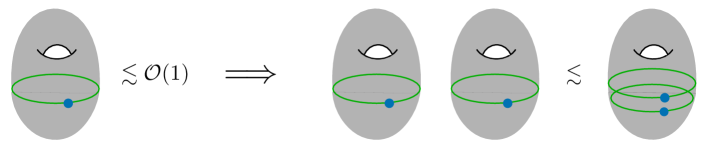
The OneStateStatement posits that a closed universe is fully described by a single, unique quantum state, representing a significant departure from conventional quantum mechanics. This implies the entire universe, as a closed system, doesn’t evolve through a superposition of states or require a vast Hilbert space to define its possibilities. Consequently, all observable properties are determined by this single state, and the probabilistic nature of quantum mechanics, as typically understood, is not inherent to the universe itself, but rather an emergent property of our limited perspective within it. This simplification necessitates a re-evaluation of how quantum degrees of freedom are considered at the universal scale, proposing a fundamental unity rather than multiplicity of states.
The OneStateStatement posits a fundamental limitation on quantum system complexity by asserting that a closed universe is described by a single quantum state, directly challenging the conventional understanding of a quantum system’s expansive Hilbert space. Traditionally, a system’s possible states are represented by a space with dimensions reflecting all potential degrees of freedom; however, this model restricts permissible quantum system dimensionality. The maximum permissible dimension is governed by the parameter Z_L, effectively limiting the number of independent variables required to fully define the system’s state. This constraint implies that while quantum mechanics still applies, the range of physically realizable states within this universe is significantly reduced compared to models allowing for infinite or extremely large Hilbert spaces.
The concept of a BabyUniverseHilbertSpace, which suggests a potentially infinite branching of universes, does not necessarily invalidate the OneStateStatement. Reconciliation is achieved by positing a restriction on the total number of permissible universes; while mathematically the Hilbert space allows for numerous configurations, the physical reality is constrained to a finite, albeit potentially large, set of allowed universes. This limitation stems from the underlying physical parameters governing universe creation and evolution, effectively truncating the Hilbert space and aligning the model with the principle of a single, overarching quantum state encompassing all existing universes within the constrained set. This differs from a truly infinite branching scenario and maintains consistency with the foundational premise of a closed system defined by a single quantum state.
The α-parameter space, crucial for describing the emergence of classical probability from the underlying quantum system, exhibits dimensionality dependent on system characteristics. For general systems, this space is defined by d^2 dimensions, where ‘d’ represents the number of degrees of freedom. However, for systems possessing a rank ‘m’, the dimensionality is reduced to 2dm - m^2. This reduction reflects the constraints imposed by the rank, effectively limiting the number of independent parameters needed to describe the system’s probabilistic behavior. The ensemble of α-sectors, each corresponding to a unique set of α-parameters, collectively defines the possible probabilistic outcomes, thus establishing a connection between the quantum substrate and classical observations.
The Limits of Duality: Confronting the Factorization Puzzle
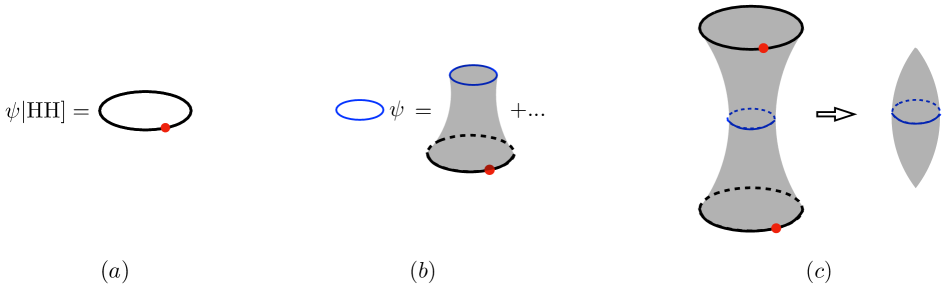
The Anti-de Sitter/Conformal Field Theory (AdSCFT) duality, a cornerstone of modern theoretical physics, proposes a profound connection between gravity in a higher-dimensional spacetime and a quantum field theory residing on its boundary; however, this elegant framework encounters a significant challenge known as the Factorization Puzzle. This puzzle arises when considering wormholes – theoretical tunnels connecting distant regions of spacetime – within the AdSCFT correspondence. Wormholes, in the gravitational picture, seemingly imply non-local connections, yet a consistent dual description in the quantum field theory requires interactions to be local – meaning effects should propagate no faster than the speed of light. Reconciling these seemingly contradictory features is proving difficult, as standard quantum field theory struggles to account for the connectivity implied by wormholes without violating fundamental principles. The challenge lies in finding a way to represent these geometric connections, and the information they transmit, within the strictly local rules governing the boundary field theory, potentially requiring new frameworks to describe how information travels and is encoded in this holographic relationship.
The Factorization Puzzle, at its core, exposes a deep conflict between two cornerstones of theoretical physics: locality and the holographic principle. Locality dictates that an object is only directly influenced by its immediate surroundings – cause and effect are constrained by the speed of light and the fabric of spacetime. However, the holographic principle suggests that all information contained within a volume of space can be encoded on its boundary, implying a non-local connection where distant regions can be intrinsically linked through gravitational effects, like those manifested by wormholes. This presents a challenge: how can a seemingly local reality emerge from a fundamentally non-local description? The puzzle isn’t simply about reconciling two theories, but about understanding if the very notion of a smooth, locally-defined spacetime is an illusion emerging from a deeper, quantum reality where distance and immediate influence are not absolute, and information can travel in ways that defy classical intuition.
The Factorization Puzzle within the AdS/CFT correspondence suggests that current frameworks for understanding spacetime and quantum gravity may be incomplete. Existing theories struggle to reconcile the emergence of wormholes – shortcuts through spacetime – with the principle of locality, a cornerstone of physics stating that an object is directly influenced only by its immediate surroundings. Addressing this tension could require a fundamental shift in how spacetime itself is conceptualized, potentially moving beyond the traditional geometric descriptions. Such a re-evaluation might necessitate incorporating non-local effects or exploring alternative frameworks where spacetime emerges as an approximate, rather than fundamental, entity. This isn’t merely a theoretical exercise; resolving this issue holds the potential to unlock deeper insights into the nature of gravity, black holes, and the ultimate fate of information in the universe.
The resolution of the factorization puzzle within the context of AdS/CFT duality carries profound implications for understanding black hole physics and the long-standing information paradox. Black holes, traditionally considered information sinks, pose a challenge to quantum mechanics, which demands information preservation; however, a consistent holographic description – where gravity in a volume is equivalent to a quantum field theory on its boundary – suggests information isn’t truly lost, but rather encoded. Untangling how information escapes a black hole, potentially via subtle correlations transmitted through wormholes as described by the duality, could fundamentally reshape the theoretical landscape. Successfully addressing this paradox not only offers insights into the nature of spacetime at extreme scales, but also paves the way towards a more complete and self-consistent theory of quantum gravity – one that unifies general relativity and quantum mechanics and resolves the inconsistencies that currently plague both.
The exploration within this paper mirrors a natural process of emergence, much like a coral reef forming an ecosystem from local interactions. It demonstrates how consistent quantum mechanics for de Sitter observers arises not from imposed control, but from the statistical behavior within a larger Hilbert space. This resonates with Hegel’s assertion: “We are not born for happiness; we are born for knowledge.” The paper doesn’t seek to dictate quantum behavior, but to understand it as a consequence of underlying principles-a revelation of knowledge emerging from the structure of the ‘baby universe’ and the principles of factorization, rather than a pre-ordained outcome. This aligns with the idea that order doesn’t require architects; it emerges from the rules governing the system itself.
What Lies Beyond?
The apparent resolution offered by this work-a consistent quantum mechanics arising from statistical mechanics within a larger Hilbert space-feels less like an answer and more like a displacement of the question. The ‘problem’ wasn’t necessarily how quantum behavior emerges, but rather, why one expects it to emerge at all. A universe doesn’t strive for consistency; it simply is. The framework presented suggests that imposed factorization-the neat separation of ‘inside’ and ‘outside’ the de Sitter horizon-is not fundamental, but a local convenience. This hints at a larger structure where such separations are fluid, and the observed quantum world is merely a coarse-grained approximation.
Future work will undoubtedly focus on extending this approach beyond de Sitter space, and exploring the implications for cosmology. However, a more fruitful avenue might lie in relaxing the assumptions about the ‘baby universe’ Hilbert space itself. If the universe truly requires no architect, then the structure of this larger space-its dimensionality, its metric-should arise spontaneously from local rules, not be pre-ordained. The search isn’t for a ‘theory of everything’, but for a minimal set of local interactions that naturally give rise to the illusion of global order.
Ultimately, this path suggests a universe where control is an illusion, and influence is paramount. The Hartle-Hawking state isn’t a starting point, but a snapshot of a continuously evolving, self-organizing system. It is a local description of global dynamics, and to assume it demands explanation is to misunderstand the nature of emergence itself.
Original article: https://arxiv.org/pdf/2602.05939.pdf
Contact the author: https://www.linkedin.com/in/avetisyan/
See also:
- Gold Rate Forecast
- 10 Greatest Manga Endings of All Time
- 10 Most Powerful Versions of Superman, Ranked
- 10 Best Free Games on Steam in 2026, Ranked
- Forza Horizon 6 Car List So Far: Confirmed Highlights, Cover Cars, DLC, and Rewards
- 38 Years Later, Murder, She Wrote’s Most Overlooked Episode Still Pulls Off TV’s Greatest Crossover
- Mark Zuckerberg & Wife Priscilla Chan Make Surprise Debut at Met Gala
- Elon Musk’s Ex Ashley St. Clair Reveals When Romance Became “Weird”
- Forza Horizon 6 PC Issues: Fix Crashes, Stuttering, Steam Errors, and Game Pass Problems
- Why There’s No New Episode Of From S4 This Weekend (May 24) & When The Show Returns
2026-02-07 13:39