Author: Denis Avetisyan
A new framework utilizes localized quantum detectors to investigate the subtle differences between holographic quantum gravity models.
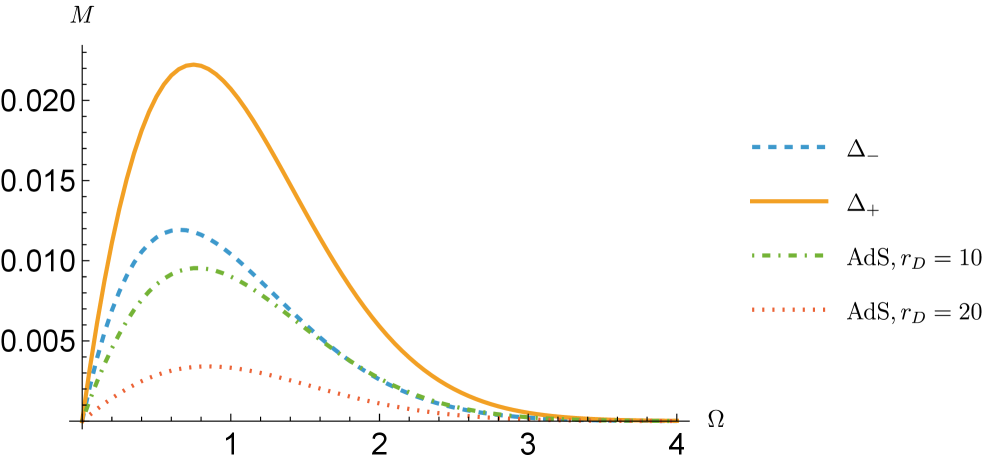
This review details how detector-based resource harvesting can differentiate holographic quantizations and provide operational insights into bulk physics via the AdS/CFT correspondence.
Resolving the tension between quantum information and gravity remains a central challenge in theoretical physics. This is addressed in ‘Probing holographic conformal field theories’, which introduces an operational framework leveraging relativistic quantum-information protocols within the anti-de Sitter/Conformal Field Theory (AdS/CFT) correspondence. By coupling Unruh-DeWitt detectors to holographic conformal field theories and quantifying resource harvesting-specifically ‘mana’-the authors demonstrate a discernible distinction between alternative holographic quantizations. Could detector-based quantum resource theory offer a viable pathway for empirically testing the holographic principle and probing the emergent nature of spacetime?
The Crisis at the Heart of Reality: Reconciling Gravity and the Quantum World
The persistent incompatibility between general relativity, which describes gravity as the curvature of spacetime, and the principles of quantum mechanics represents a foundational crisis in modern physics. While remarkably successful in their respective domains, attempts to directly combine these theories lead to mathematical inconsistencies and nonsensical predictions – infinities that cannot be easily removed. This challenge isn’t merely technical; it suggests a fundamental misunderstanding of gravity at the quantum level. The core problem lies in the fact that general relativity treats spacetime as smooth and continuous, while quantum mechanics dictates that all physical quantities are quantized – existing in discrete, granular units. Bridging this conceptual gap necessitates a novel theoretical framework, one that can consistently describe gravity’s quantum behavior and potentially redefine our understanding of spacetime itself. Physicists are actively exploring avenues like string theory and loop quantum gravity, alongside more radical approaches, all aimed at resolving this long-standing conflict and forging a unified description of the universe.
The Holographic Principle posits a surprising relationship between gravity and information, suggesting that the description of a volume of space can be entirely encoded on its two-dimensional boundary, much like a hologram encodes a three-dimensional image on a two-dimensional surface. This isn’t merely an analogy; the principle proposes a full mathematical equivalence between the gravitational theory within a volume-like the interior of a black hole-and a quantum field theory existing on its bounding surface. Essentially, all the information needed to describe everything happening inside a region of space is contained on its edge, implying that gravity itself may not be a fundamental force, but rather an emergent property arising from the interactions of these boundary degrees of freedom. This radical idea offers a potential pathway to resolving the long-standing conflict between general relativity and quantum mechanics, by reformulating quantum gravity as a problem solvable within the more well-understood framework of quantum field theory.
The intriguing proposition of holographic duality challenges long-held assumptions about the nature of gravity, suggesting it isn’t a fundamental force of the universe like electromagnetism or the strong nuclear force. Instead, gravity may be an emergent phenomenon, much like temperature arises from the collective motion of molecules. This framework posits that what appears as gravitational interaction within a volume of space is actually a consequence of interactions happening on the distant, bounding surface of that space. The mathematics reveals that all the information needed to describe gravity inside a volume is encoded on its boundary, implying that gravity isn’t operating within the space, but is rather ‘projected’ from the interactions happening on its edges. This shift in perspective opens possibilities for describing quantum gravity – a theory uniting quantum mechanics and general relativity – by studying the simpler, potentially quantum mechanical, processes occurring on the boundary, effectively reducing a complex gravitational problem to a more manageable form.
Mapping Gravity to the Boundary: The AdS/CFT Correspondence
The Anti-de Sitter/Conformal Field Theory (AdS/CFT) correspondence postulates a duality between quantum gravity theories defined in an n+1-dimensional Anti-de Sitter (AdS) spacetime and Conformal Field Theories (CFTs) residing on its n-dimensional boundary. AdS space is a maximally symmetric solution to Einstein’s equations with a negative cosmological constant, resulting in a spacetime with constant negative curvature. The CFT, lacking gravity, is defined without the complexities of quantizing gravity, yet contains all information necessary to describe gravitational phenomena in the bulk AdS space. This relationship implies that the CFT provides a non-gravitational description of gravity, and conversely, the AdS space offers a gravitational realization of the CFT.
The AdS/CFT correspondence facilitates the study of strongly coupled quantum gravity through its duality with a conformal field theory. Traditional perturbative methods in quantum gravity often fail when gravitational interactions are strong; however, a strongly coupled system in the bulk AdS space corresponds to a weakly coupled CFT on the boundary. This allows calculations that are intractable in the gravitational theory to be performed using the CFT, and results can then be translated back to the gravitational side. Conversely, problems difficult to solve in the CFT can potentially be addressed by finding a corresponding gravitational description in the AdS space, providing a complementary approach to understanding both systems. This reciprocal relationship is central to the utility of the AdS/CFT correspondence.
The AdS/CFT correspondence establishes a duality where the gravitational dynamics occurring within the bulk Anti-de Sitter (AdS) space are fully described by a Conformal Field Theory (CFT) residing on its boundary; this implies a holographic principle where all information about the bulk is encoded on the lower-dimensional boundary. Consequently, phenomena in the bulk, such as black hole formation and evolution, have a corresponding description in terms of the CFT, allowing calculations of gravitational properties – including black hole entropy and Hawking radiation – through CFT techniques. Furthermore, spacetime geometry within the AdS space, including metrics and curvature, are related to operators and correlation functions within the CFT, enabling the study of gravitational phenomena using the well-defined framework of quantum field theory.
The Holographic Dictionary: Connecting CFT Operators to Bulk Dynamics
The AdS/CFT correspondence establishes a duality between operators in a conformal field theory (CFT) residing on the boundary of Anti-de Sitter (AdS) space and fields propagating in the bulk AdS spacetime. Specifically, each local operator in the CFT corresponds to a bulk field, and the scaling dimension (Δ) of the boundary operator is directly related to the mass (m) of the corresponding bulk field. This relationship is quantitatively expressed by the equation m^2\ell^2 = \Delta(d - \Delta), where \ell is the AdS radius and d represents the dimensionality of the boundary CFT. This equation dictates that the mass of the bulk field is determined by the scaling dimension of the boundary operator, effectively encoding information about the boundary theory within the properties of the bulk field.
The Wightman function, or two-point correlation function \langle \mathcal{O}(x) \mathcal{O}(y) \rangle in the conformal field theory (CFT), directly encodes information about the propagation of fields in the associated Anti-de Sitter (AdS) spacetime. Specifically, the Wightman function acts as the Green’s function for the bulk field, describing how a disturbance at one point in the AdS space propagates to another. The singularities of the Wightman function in the CFT correspond to the propagation of signals in the bulk, and its behavior determines the causal structure of the AdS spacetime. Analysis of the Wightman function allows for the reconstruction of bulk geometry and the determination of dynamical properties of the fields residing within it.
Scalar primary operators constitute the basis for constructing all other operators within the conformal field theory (CFT). These operators are directly associated with bulk scalar fields in the Anti-de Sitter (AdS) spacetime; each scalar primary operator corresponds to a specific bulk scalar field. Interactions between scalar primary operators in the CFT manifest as interactions between their corresponding bulk scalar fields in the AdS space. The dynamics of these bulk scalar fields, including their masses and coupling constants, are therefore determined by the properties of the associated scalar primary operators, and vice versa, establishing a precise mapping between CFT operator dimensions and bulk field characteristics as described by the relation m^2l^2 = \Delta(d - \Delta).
Probing the Vacuum: Quantum Information in Curved Spacetime
Relativistic quantum information offers a unique lens for investigating quantum fields within the dynamic environment of curved spacetime. Traditional approaches often struggle with the complexities arising from gravity’s influence, but this framework circumvents these issues by employing localized probes to extract information. Instead of attempting a global description of the quantum field, the focus shifts to how a limited, spatially defined system interacts with the vacuum – the state with no particles present. These probes, conceptually similar to miniature detectors, don’t simply observe the field; they actively participate in it, allowing researchers to map out the quantum structure of spacetime itself. This technique provides insights into phenomena like Hawking radiation and the nature of the quantum vacuum, potentially bridging the gap between quantum mechanics and general relativity by transforming gravitational effects into observable quantum information.
The seemingly empty vacuum of space is, according to quantum field theory, teeming with virtual particles and fluctuating fields. Unruh-DeWitt detectors represent a theoretical tool to interact with and extract energy from this vacuum; essentially, these accelerated detectors ‘feel’ the quantum fluctuations as real particles. While original models utilized simple two-level systems, advancements have introduced qutrit detectors – quantum systems with three energy levels – offering enhanced sensitivity and the ability to discern more subtle features of the quantum vacuum. By carefully analyzing the response of these detectors to the vacuum, researchers can probe the structure of spacetime itself and, as demonstrated in recent studies, even differentiate between various theoretical frameworks used to describe quantum gravity, revealing differences in the energy harvested – a quantity known as ‘mana’ – between standard and alternative quantization schemes.
This research demonstrates a method for differentiating between possible holographic descriptions of spacetime through the careful measurement of quantum vacuum fluctuations. Utilizing a theoretical ‘qutrit detector’ – an extension of the standard Unruh-DeWitt detector – researchers calculated the amount of extractable energy, termed ‘mana’, from the vacuum under differing boundary conditions. The analysis reveals a discernible difference in mana harvested; the standard quantization procedure yields a significantly larger energy output compared to an alternate, equally valid, quantization. This discrepancy suggests that detector-based resource harvesting offers a practical means of probing the underlying structure of spacetime and potentially selecting between competing holographic models, offering insights into the nature of quantum gravity and the information paradox.
Beyond the Basics: Euclidean CFTs and the Refinement of Holography
Euclidean conformal field theories (CFTs) serve as a robust mathematical arena for investigating the holographic principle, a concept positing a duality between gravitational theories and quantum field theories. Unlike their Minkowski spacetime counterparts, Euclidean CFTs – formulated with time treated as a spatial dimension – avoid some of the technical difficulties associated with defining quantum field theory in curved spacetime. This allows researchers to rigorously analyze correlation functions and operator algebras, providing a well-defined setting to test the consistency of the holographic duality. By focusing on Euclidean signatures, calculations become more tractable, and the mathematical structure of the duality becomes clearer, ultimately paving the way for exploring the relationship between gravity and quantum mechanics in a controlled environment. The use of Euclidean CFTs is not merely a technical convenience; it provides essential tools for understanding how information about gravitational systems might be encoded in the boundary quantum field theory, and vice-versa, furthering explorations into the very fabric of spacetime.
The BTZ/CFT correspondence provides a concrete realization of the holographic principle, specifically linking two-dimensional gravity in the BTZ (Banados-Teitelboim-Zanelli) black hole spacetime to a one-dimensional conformal field theory (CFT). This powerful duality allows physicists to translate problems about gravity – such as understanding the behavior of black holes – into problems about quantum field theory, a framework more amenable to calculation. Crucially, the BTZ black hole, unlike its higher-dimensional counterparts, possesses a relatively simple structure, making it an ideal test case for exploring the fate of information that falls into a black hole. The correspondence suggests that information isn’t truly lost, but rather encoded in the degrees of freedom of the boundary CFT, offering a potential resolution to the black hole information paradox and a deeper understanding of quantum gravity. Through the BTZ/CFT correspondence, calculations on the CFT side can predict the behavior of the black hole, and vice versa, providing a unique tool for investigating the connection between gravity and quantum mechanics.
The holographic principle suggests a deep connection between gravity and quantum field theories, and double-trace deformations offer a powerful tool to explore this relationship. These deformations, applied to the boundary conformal field theory (CFT), effectively introduce interactions within the corresponding bulk gravitational theory-the spacetime ‘inside’ the boundary. By carefully tuning these deformations, physicists can model various gravitational phenomena, including the behavior of black holes and the evolution of the universe. Crucially, this approach allows researchers to study quantum gravity effects-normally obscured by mathematical complexities-through the more manageable framework of the CFT. The ability to map bulk interactions to boundary deformations opens avenues for investigating cosmology, potentially providing insights into the very early universe and the nature of dark energy, as well as refining our understanding of quantum entanglement and information loss in black holes – all by leveraging the predictive power of \mathbb{CFT}.
The exploration of holographic conformal field theories, as detailed in this work, necessitates a careful consideration of how observation itself shapes the perceived reality. This resonates deeply with Aristotle’s assertion, “The ultimate value of life depends upon awareness and the power of contemplation rather than mere survival.” The paper’s focus on localized quantum detectors – essentially, the means by which the holographic system is ‘observed’ – highlights that the act of measurement isn’t passive. Detector-based resource harvesting isn’t simply revealing bulk physics; it’s actively participating in defining it. An engineer is responsible not only for system function but its consequences, and this research underscores that ethics must scale with technology as we probe the fundamental nature of reality.
What Lies Beyond the Horizon?
This work, in its attempt to quantify gravitational phenomena through the decidedly pragmatic lens of resource harvesting, highlights a crucial, if often unstated, truth: the metrics by which a theory is considered ‘successful’ fundamentally shape the physics it reveals. To define quantum gravity as amenable to detector-based observation is to privilege a specific informational perspective, one which implicitly prioritizes accessibility and extractability. The question then becomes not simply can one harvest resources, but at what cost, and for whom? The framework presented here offers a powerful diagnostic, but it is a diagnostic constrained by the very tools employed.
Future investigations must address the limitations inherent in the chosen observational paradigm. Exploring alternative detector models, or even geometries which actively resist straightforward resource extraction, may reveal facets of holographic duality currently obscured. A deeper examination of the relationship between informational gain and the preservation of bulk spacetime structure is paramount; are these fundamentally competing demands, or can a truly holistic quantum gravity reconcile them?
Ultimately, this line of inquiry serves as a potent reminder that physics is not merely about describing the universe, but about defining it. The pursuit of operational definitions of quantum gravity is valuable, but should be tempered with a critical awareness of the values encoded within those definitions. Transparency regarding these embedded assumptions is not simply good practice; it represents the minimum viable morality in an age of increasingly automated cosmological inquiry.
Original article: https://arxiv.org/pdf/2602.07895.pdf
Contact the author: https://www.linkedin.com/in/avetisyan/
See also:
- Solo Leveling’s New Character Gets a New Story Amid Season 3 Delay
- PRAGMATA ‘Eight’ trailer
- Pragmata Shows Off Even More Gorgeous RTX Path Tracing Ahead of Launch
- HBO Max Just Added the Final Episodes of a Modern Adult Swim Classic
- Crimson Desert’s Momentum Continues With 10 Incredible New Changes
- All 7 New Supes In The Boys Season 5 & Their Powers Explained
- How Could We Forget About SOL Shogunate, the PS5 Action RPG About Samurai on the Moon?
- Frieren: Beyond Journey’s End Gets a New Release After Season 2 Finale
- ‘Project Hail Mary’: The Biggest Differences From the Book, Explained
- Hulu Just Added One of the Most Quotable Movies Ever Made (But It’s Sequel Is Impossible To Stream)
2026-02-10 14:11