Author: Denis Avetisyan
A new approach leveraging generative AI is enhancing the search for rare particles created in the extreme conditions of heavy-ion collisions.
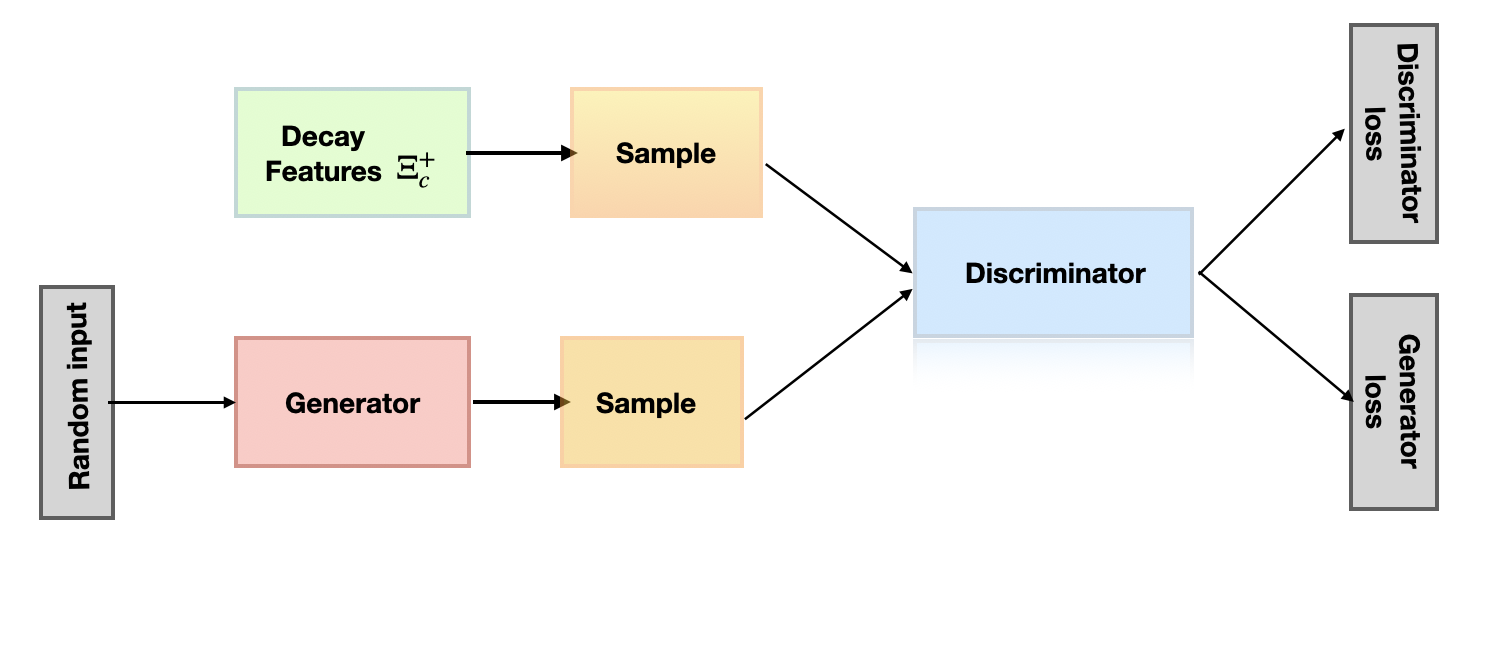
This review details the application of Generative Adversarial Networks to augment data for rare and exotic hadron searches in lead-lead collisions within the ALICE experiment, providing a computationally efficient alternative to traditional Monte Carlo methods.
Extracting signals of rare and exotic hadrons from heavy-ion collision data is fundamentally limited by the scarcity of events and the computational cost of traditional simulations. This work, ‘GAN-based data augmentation for rare and exotic hadron searches in Pb–Pb collisions in ALICE’, investigates a novel approach using Generative Adversarial Networks (GANs) to augment data samples for enhanced sensitivity in searches for these elusive particles. Results demonstrate the successful application of GANs to generate statistically significant synthetic data, effectively overcoming limitations of Monte Carlo simulations and enabling improved reconstruction of complex decay topologies. Could this data augmentation technique unlock new avenues for exploring the quark-gluon plasma and discovering previously unobserved exotic states?
The Elusive Signals Within Chaos
Investigating the Quark-Gluon Plasma, a state of matter thought to have existed shortly after the Big Bang, relies heavily on detecting the fleeting presence of rare hadronic particles created in the extremely energetic collisions of lead ions. These particles, though offering crucial insights into the plasma’s properties, are produced at incredibly low rates-making their detection akin to searching for a handful of needles in a massive haystack of collision debris. The statistical challenge is considerable; distinguishing genuine signals from background noise demands the collection and analysis of enormous datasets, and even then, uncertainties can easily obscure subtle, yet significant, features. Consequently, physicists continually refine experimental techniques and theoretical models to enhance sensitivity and accurately interpret these scarce, but vital, probes of the early universe.
The identification of rare hadronic signatures originating from the Quark-Gluon Plasma in heavy-ion collisions is profoundly hampered by the inherent difficulties in reconstructing these fleeting events. These particles are produced at exceedingly low rates – a needle in a haystack of collision debris – and often decay via complex pathways involving multiple intermediate particles. Traditional reconstruction algorithms, designed for more abundant and simpler decays, struggle to disentangle these intricate topologies and accurately determine the originating particle’s properties. False positives – misidentified background fluctuations – become a significant issue, obscuring the genuine signals and compromising the statistical reliability of any derived conclusions. This necessitates the development of advanced techniques capable of enhancing signal extraction and mitigating the impact of these reconstruction challenges, pushing the boundaries of data analysis in relativistic heavy-ion physics.
The pursuit of understanding the quark-gluon plasma in heavy-ion collisions necessitates a refinement of techniques used to analyze exceedingly rare hadronic events. Traditional statistical methods often falter when confronted with such limited datasets, hindering the ability to discern genuine signals from background noise. Consequently, researchers are actively developing innovative data augmentation strategies – including sophisticated simulation techniques and the intelligent resampling of existing data – to artificially increase the effective sample size. These are coupled with advanced statistical analyses, such as Bayesian inference and machine learning algorithms, which are designed to maximize the information extracted from these sparse signals and rigorously quantify the associated uncertainties. This combined approach not only enhances the sensitivity to subtle phenomena within the plasma but also provides a robust framework for validating theoretical predictions against experimental observations, ultimately pushing the boundaries of what can be learned from these extreme conditions.
Augmenting Reality: A Generative Approach
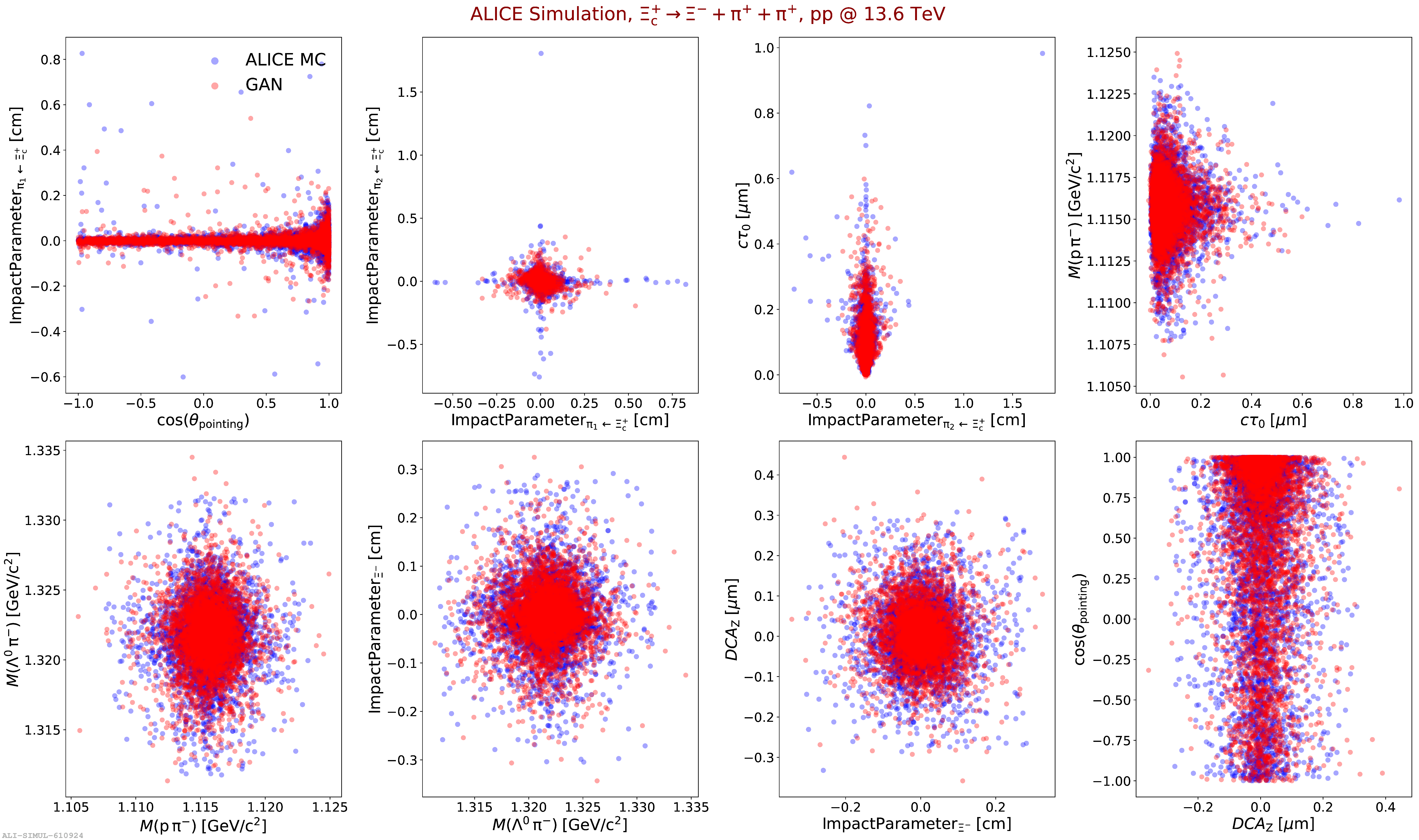
Generative Adversarial Networks (GANs) address data scarcity by learning the probabilistic distribution governing observed event features. This learning process enables the generation of synthetic data samples that statistically resemble the real data. Unlike simple data replication or transformation, GANs model the complex relationships within the feature space, creating novel instances rather than copies. The network doesn’t simply memorize training data; it learns the underlying patterns allowing it to produce data points consistent with the learned distribution. This is particularly valuable when real-world data collection is expensive, time-consuming, or limited due to rare event occurrences, effectively expanding the dataset without introducing identical duplicates.
A Generative Adversarial Network (GAN) architecture is fundamentally composed of two neural networks: a Generator and a Discriminator. The Generator network takes random noise as input and transforms it into synthetic data samples intended to resemble the real data distribution. The Discriminator network receives both real data instances and the synthetic data generated by the Generator. Its task is to classify each input as either real or generated. This adversarial process, where the Generator attempts to “fool” the Discriminator and the Discriminator attempts to correctly identify the source of the data, drives both networks to improve their performance; the Generator learns to produce increasingly realistic synthetic data, while the Discriminator becomes more adept at distinguishing between real and fake samples.
Adversarial training of Generative Adversarial Networks (GANs) facilitates the creation of synthetic data designed to augment existing datasets. The Generator network iteratively refines its output to better mimic the distribution of real event features, while the Discriminator simultaneously learns to differentiate between real and generated samples. This competitive process drives the Generator to produce increasingly realistic synthetic events. The resulting expanded dataset, comprising both real and synthetic data, increases the effective sample size, which directly improves the statistical power of downstream analyses by reducing uncertainties and enhancing the ability to detect subtle signals or effects. This is particularly valuable when real-world data acquisition is limited or expensive.
Quantifying Fidelity: A Statistical Validation
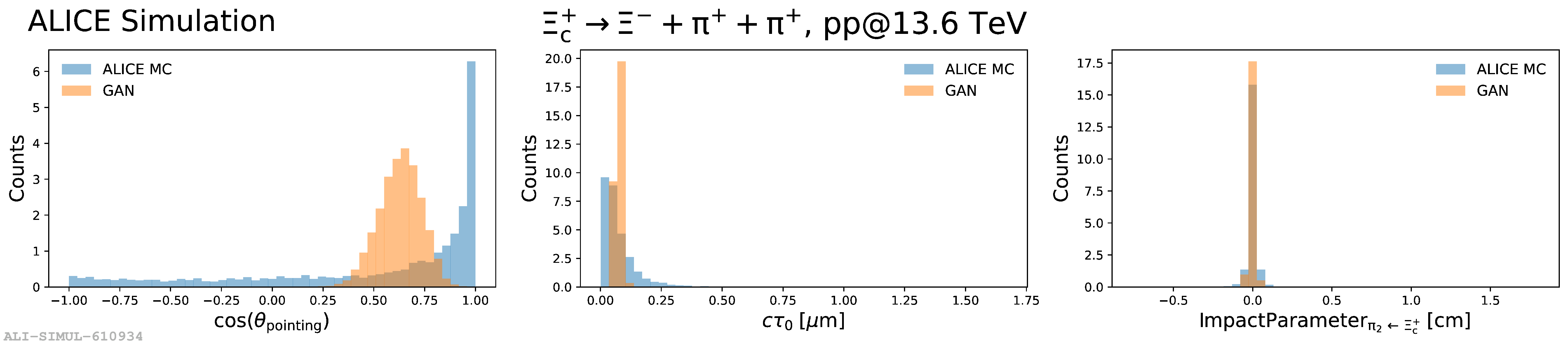
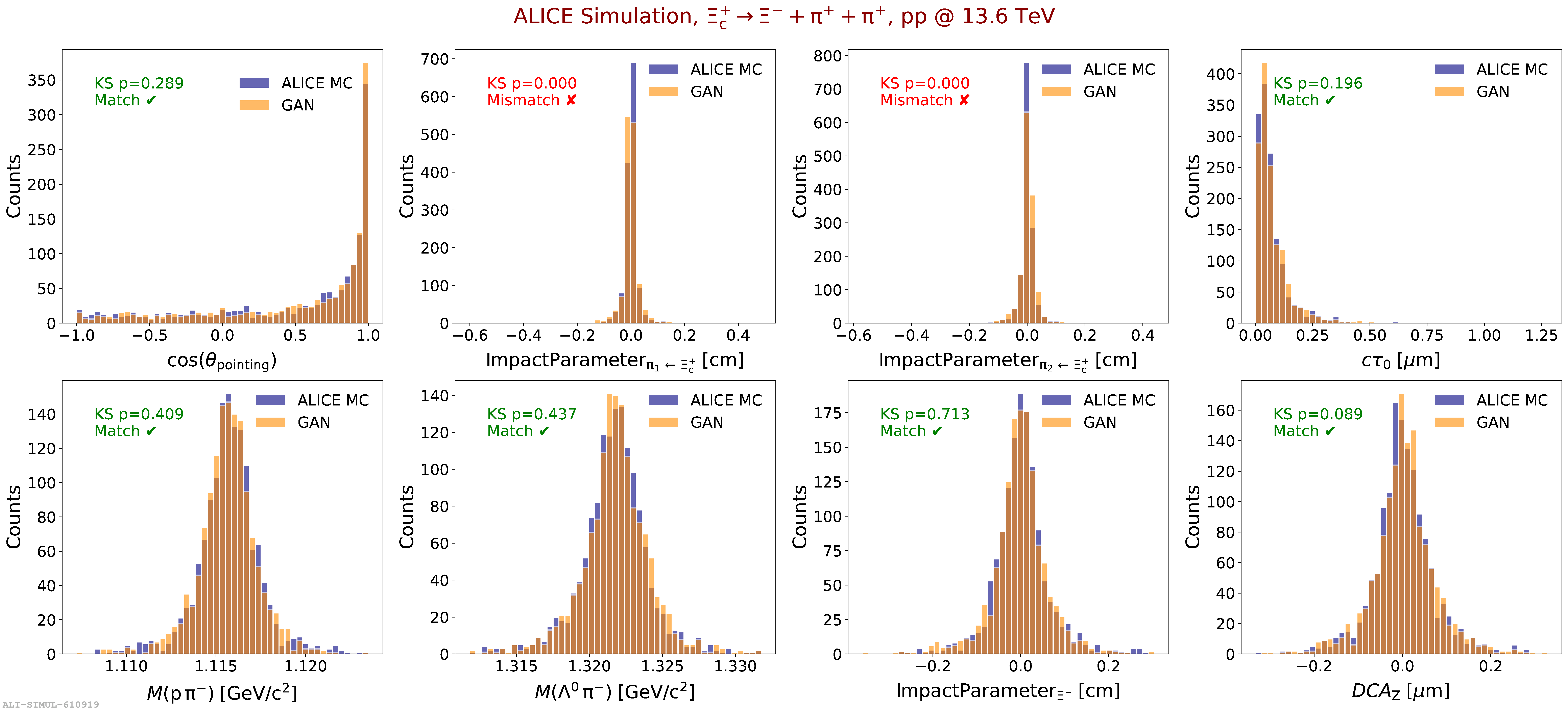
The Kolmogorov-Smirnov (KS) test is utilized as a quantitative metric to determine the similarity between the distributions of features derived from real data and those generated by the Generative Adversarial Network (GAN). This non-parametric test calculates the maximum distance between the cumulative distribution functions (CDFs) of the two samples. The resulting KS statistic, and its associated p-value, indicate the degree of compatibility; a higher p-value suggests that the two datasets are likely drawn from the same underlying distribution. Specifically, reconstructed features are extracted from both the real and generated data, and the KS test is applied to these feature sets to evaluate the GAN’s performance in replicating the statistical properties of the real data.
The Kolmogorov-Smirnov (KS) test yields a p-value representing the probability of observing the given difference between two sample distributions if they were drawn from the same underlying distribution. In the context of Generative Adversarial Networks (GANs), a higher KS p-value – typically exceeding a significance level of 0.05 – indicates a greater likelihood that the generated data distribution matches that of the real data. This suggests the GAN is effectively capturing the characteristics of the real data and producing realistic samples; conversely, a low p-value implies a statistically significant difference between the distributions, indicating the generated data is not sufficiently similar to the real data and thus possesses lower fidelity.
The Generative Adversarial Network’s (GAN) performance was validated through application to the Ξc+ baryon, a rare hadron serving as a benchmark for realistic data generation. The Kolmogorov-Smirnov test was utilized to compare distributions of real and generated Ξc+ features; consistently exceeding a p-value of 0.05 indicates that the generated data is statistically indistinguishable from the real data. This demonstrates the GAN’s capability to produce valid samples for this rare particle, confirming its ability to model complex, high-dimensional distributions even with limited training data.
Expanding Horizons: Precision in a Complex World
The integration of Generative Adversarial Networks (GANs) with established Monte Carlo simulations represents a significant advancement in computational physics. Traditionally, Monte Carlo methods rely on generating a vast number of random samples to approximate complex physical processes; however, the accuracy of these predictions is often limited by statistical uncertainties. GANs offer a pathway to augment these datasets by creating synthetic data points that closely resemble real-world observations, effectively increasing the sample size without the need for additional, potentially costly, experimental or observational data. This seamless integration allows researchers to refine theoretical predictions with greater precision, particularly in scenarios where obtaining sufficient data is challenging. By intelligently expanding the dataset, simulations can more accurately capture subtle effects and improve the reliability of results, opening new avenues for exploring complex phenomena and pushing the boundaries of scientific discovery.
The capacity to investigate the Quark-Gluon Plasma (QGP) – an extraordinarily hot and dense state of matter theorized to have existed shortly after the Big Bang – receives a significant boost through advanced computational techniques. Heavy-ion collisions, recreated in laboratories like the Relativistic Heavy Ion Collider and the Large Hadron Collider, briefly produce QGP, but discerning its properties from the resulting debris is exceptionally challenging. Refined Monte Carlo integration, particularly when augmented by Generative Adversarial Networks, allows physicists to model these collisions with unprecedented detail, effectively isolating the signals originating from the QGP itself. This heightened precision enables exploration of subtle nuances within the plasma – such as its viscosity, equation of state, and collective behavior – offering crucial insights into the fundamental forces governing matter at extreme conditions and furthering understanding of the early universe.
The reduction of statistical uncertainties through GAN-augmented Monte Carlo simulations promises a new era of precision in fundamental physics. These simulations, reliably trained over approximately 1,500 epochs, allow researchers to more accurately model complex phenomena and extract meaningful signals from noisy data. This capability is particularly crucial when investigating the universe’s most extreme conditions, such as those present immediately after the Big Bang or within the cores of neutron stars. By minimizing the impact of random fluctuations, scientists can discern subtle effects previously obscured by statistical limitations, potentially revealing new physics beyond the Standard Model and refining existing cosmological parameters. The enhanced precision facilitates detailed comparisons between theoretical predictions and experimental observations, ultimately leading to a more comprehensive and nuanced understanding of the universe’s fundamental laws.
The pursuit of rare hadron signals within the complex data of heavy-ion collisions demands refinement. This work demonstrates a shift from exhaustive Monte Carlo simulations to a generative approach. GANs offer not an increase in complexity, but a distillation-a focusing of computational resources on signal enhancement. As Albert Camus observed, ‘In the midst of winter, I found there was, within me, an invincible summer.’ This resonates with the study’s core idea: extracting meaningful signals-the ‘summer’-from the overwhelming ‘winter’ of background noise, a task achieved through elegant reduction rather than additive layers of simulation. Clarity is the minimum viable kindness.
Further Horizons
The successful application of generative models to the problem of rare hadron identification is not, in itself, surprising. What is noteworthy is the demonstrated efficiency; a reduction in computational burden is a virtue in any analysis, especially those concerning heavy-ion collisions. The question now shifts from if GANs can assist, to where they offer the most substantial advantage. The current work addresses data augmentation, but the potential extends to full event generation – a prospect demanding careful consideration of systematic uncertainties.
A crucial limitation lies in the fidelity of the generative model. The Kolmogorov-Smirnov test provides a basic validation, but it is a blunt instrument. Future development must focus on more nuanced metrics, quantifying the extent to which the GAN accurately captures the underlying physics – not merely replicating observed distributions. The pursuit of ‘perfect’ simulation is a fool’s errand, of course. The goal is not truth, but an efficient approximation – one that minimizes the impact of statistical uncertainties on the search for fleeting signals.
Ultimately, the true test will be the discovery – or continued absence – of exotic hadronic states. The utility of this technique will be measured not by its elegance, but by its effectiveness. The elegance will fade. The physics, if it exists, will remain. The reduction of complex calculations to a streamlined process represents a pragmatic step, but the next step demands a rigorous examination of the assumptions embedded within the generative framework.
Original article: https://arxiv.org/pdf/2602.12088.pdf
Contact the author: https://www.linkedin.com/in/avetisyan/
See also:
- Trails in the Sky 2nd Chapter launches September 17
- HBO Max Just Added the Final Episodes of a Modern Adult Swim Classic
- PRAGMATA ‘Eight’ trailer
- Solo Leveling’s New Character Gets a New Story Amid Season 3 Delay
- Pragmata Shows Off Even More Gorgeous RTX Path Tracing Ahead of Launch
- Crimson Desert’s Momentum Continues With 10 Incredible New Changes
- Frieren: Beyond Journey’s End Gets a New Release After Season 2 Finale
- Hulu Just Added One of the Most Quotable Movies Ever Made (But It’s Sequel Is Impossible To Stream)
- Dragon Quest Smash/Grow launches April 21
- All 7 New Supes In The Boys Season 5 & Their Powers Explained
2026-02-14 00:36