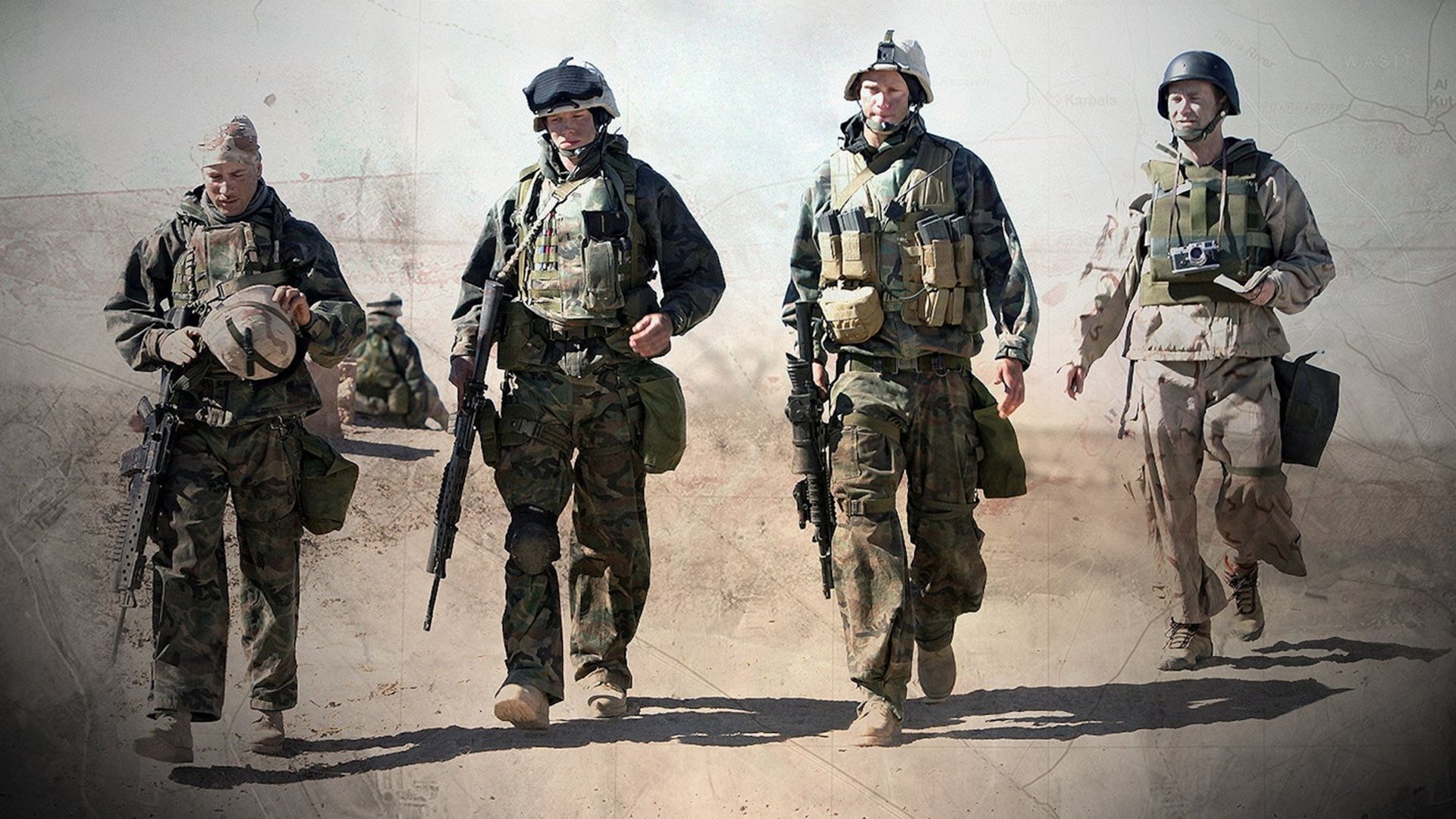
The new HBO miniseries, created by the team behind The Wire, David Simon and Ed Burns, has received mostly positive reviews, though not everyone loves it. The seven-part series tells the story of the Iraq invasion and closely follows the book of the same name by Evan Wright.
In a Rolling Stone article, Evan Wright spent time with the 1st Reconnaissance Battalion of Marines, earning their trust over time and revealing their true characters as the war progressed. This access to unseen realities is what makes Generation Kill a standout war drama on HBO – and also what prevents it from fully connecting with viewers. Like the war itself, the series is complex and challenging, but many people prefer to avoid such difficult truths.
The Accuracy of Generation Kill Works Both For and Against It
Most war stories rely heavily on the established myths surrounding the conflicts they depict. However, when Generation Kill first aired in 2008, it notably avoided defining the Iraq War in those familiar terms.
I served in Iraq with the U.S. Army a couple of years after the events depicted in the series, and maybe that’s why I struggle to easily explain what happened there. I think Generation Kill is a truly excellent war drama because it felt so real to me – I recognized the people and situations. That’s why I feel it hasn’t gotten the recognition it deserves.
I might be a little biased, but I think “Generation Kill” is one of the most realistic war portrayals ever made. I actually had the chance to meet some of the Marines depicted in the series, including Sergeant Rudy Reyes, who was serving in Iraq again at the time. I also volunteered with the Iraq and Afghanistan Veterans of America alongside him, which gave me a unique perspective on the show’s authenticity.
Sergeant Reyes portrayed himself in the miniseries because he felt no other actor could accurately capture his experience. While the show isn’t a perfect recreation of events – and differs from both personal accounts and the book it’s based on – it does streamline the timeline and present events in a more structured, story-like way than how they actually happened.
Even seemingly small details in a story can reveal deeper truths – storytellers call this “the lie that tells the truth.” The way these pieces come together to create a compelling narrative and stir emotions is what makes a story feel real. Unlike some depictions of war, HBO’s Generation Kill feels like the kind of honest, often darkly humorous, stories veterans share with civilians, though those stories are usually met with shock rather than laughter.
Whether it’s small issues like strange connections between candy and the weather, or broken equipment, to larger problems with supply lines and leadership, Generation Kill focuses on the soldiers themselves. But through their stories, the show reveals a larger, often troubling, view of the war and how it was run.
A common phrase once used to describe the strength of the U.S. Army captured it well: “War is chaos, and the United States Army practices chaos daily.” However, this isn’t the main point of this story. Instead, it highlights how truly effective leaders prioritize the survival of their teams, even when facing poor direction from above.
The saying “no plan survives contact with the enemy” is well-known, but as depicted in Generation Kill, situations often arise where there isn’t even a plan to begin with when facing the enemy.
Generation Kill Shatters the Mythic Perception of American Warfighters
Since this miniseries first aired, numerous dramas based on true events have emerged. What makes Generation Kill different is that the story is told from the unique perspective of Evan Wright.
Having served in the military and worked as a journalist, I know how difficult it is to report truthfully and without bias when you’re personally involved. The series illustrates this well – Wright was right there with the Marines, facing the same dangers. It also captures a powerful moment of relief and joy he experienced after surviving combat, expressed through genuine laughter.
Despite their close connection, or maybe because of it, Wright and the HBO series didn’t shy away from showing the complex personalities within Bravo Company. Some, like Trombley, actively sought out combat, enjoyed violence, and even wanted to experience being wounded. For these individuals, the extreme pressure of war was actually easier to handle than everyday life, like grocery shopping or watching television.
Many people are deeply affected by the violence they’ve experienced, and they often try to hide their pain by making jokes or sharing overly detailed stories about their daydreams – everything from romantic fantasies about famous people to everyday things like enjoying a meal. This behavior, though different, highlights how people are shaped by their imperfections. Some Marines felt they were punished for their actions and words as described in the book, but it ultimately became essential reading within the Marine Corps.
Generation Kill doesn’t shy away from showing the mistakes made by some leaders or the problematic actions of certain soldiers. For example, one Marine frightens an Iraqi soldier who had already surrendered. Another Marine confronts him, explaining he wished he hadn’t shaken the man’s hand because of this behavior. The series also highlights the Marines’ concern for the well-being of Iraqi civilians, going beyond simply avoiding unnecessary violence. When they discover drugs in a home, a Marine is told to leave them untouched, with the reasoning that they weren’t there to ruin people’s lives.
There’s this incredibly haunting scene where a soldier shoots at a car coming towards them, and it turns out they weren’t enemies at all – just ordinary people, and a little girl ends up being killed. The way the other soldiers try to comfort him, apologizing even, just makes him feel worse. The interpreter attempts to explain it as simply a misunderstanding due to cultural differences, but it doesn’t help. The really disturbing part is that, technically, according to the rules of engagement, he did nothing wrong, but that just seems to amplify the guilt and the tragedy of it all. It’s a moment that really stays with you.
Generation Kill doesn’t shy away from the harsh realities of war and doesn’t attempt to sugarcoat anything. The characters are complex – they can be insightful one moment and shockingly insensitive the next. The series portrays the Marines as flawed and multifaceted individuals, leaving it up to the audience to grapple with these contradictions.
Generation Kill Doesn’t Tell the Whole Story, but It Captures an Important Part of It
As someone who served, it’s been heartbreaking to see more of my comrades struggle and pass away after returning home than were lost in combat. Sadly, surviving the war wasn’t enough for everyone in our unit. Both actor James Ransone and journalist Evan Wright, who documented our experiences, ultimately succumbed to the lasting emotional wounds of war, even though they weren’t physically harmed in battle.
Popular HBO war dramas usually wrap up their stories neatly, but Generation Kill doesn’t offer that kind of closure. The series ends with the Marines still in Baghdad, watching a video looking back on their experiences, and then simply walking away. Importantly, this wasn’t even the end of their time serving overseas.
While graphic injuries and death are often the most upsetting parts of war stories, audiences generally anticipate them. This series, however, presents these dramatic and emotional moments in a surprisingly detached way, contrasting with typical depictions and showing injured and deceased soldiers and civilians with a casualness that is unsettling.
However, that’s not the most unsettling part of Generation Kill for those who haven’t served in the military. Band of Brothers acknowledges its characters’ imperfections, but frames them in a way that’s easy to understand – either the flaws define who they are, or they show a fundamentally good person cracking under pressure. Generation Kill, though, doesn’t offer viewers that same comfort.
Wright portrays the soldiers realistically, avoiding easy moral judgments. The characters in Generation Kill viewers get to know are generally sympathetic, or at least evoke some pity. Several times, characters point out that the realities of war are fundamentally different from civilian life. When someone acts badly, there’s seldom anyone like the Marine who stood up for the prisoner to offer a dissenting voice.
Other characters might exchange disapproving looks or fall into awkward silence, but that’s usually the extent of the reaction. For example, a Marine once panicked and shot at a car that didn’t obey an order. His commanding officer initially yelled at him, but quickly switched to offering comfort and justifying the incident as simply part of their duty.
Many expect HBO’s war dramas to deliver a clear message, but Generation Kill stands out because it avoids doing so. For those who served in Iraq, particularly during the initial stages of the conflict, this approach feels incredibly real. The show doesn’t offer easy answers; instead, it leaves you with unsettling emotions – a mix of frustration, sadness, and a genuine sense of what it was like, going beyond just the sights and sounds of war like a Humvee’s engine or incoming fire.
Viewers are probably drawn to Generation Kill because it offers a disturbingly realistic look at war. Ironically, this is also the reason the show is often overlooked or dismissed within the war drama genre.
You can find the entire Generation Kill series on DVD, Blu-ray, and streaming on HBO Max. The book it’s based on by Evan Wright is available at all major booksellers.
Found an error? Send it so it can be corrected.
Read More
- 4 TV Shows To Watch While You Wait for Wednesday Season 3
- Gold Rate Forecast
- 10 Best Buffy the Vampire Slayer Characters Ranked
- All 6 Takopi’s Original Sin Episodes, Ranked
- 40 Inspiring Optimus Prime Quotes
- Chill with You: Lo-Fi Story launches November 17
- 10 Most Memorable Batman Covers
- PlayStation Plus Game Catalog and Classics Catalog lineup for July 2025 announced
- Every Creepy Clown in American Horror Story Ranked
- Best X-Men Movies (September 2025)
2026-03-21 13:09