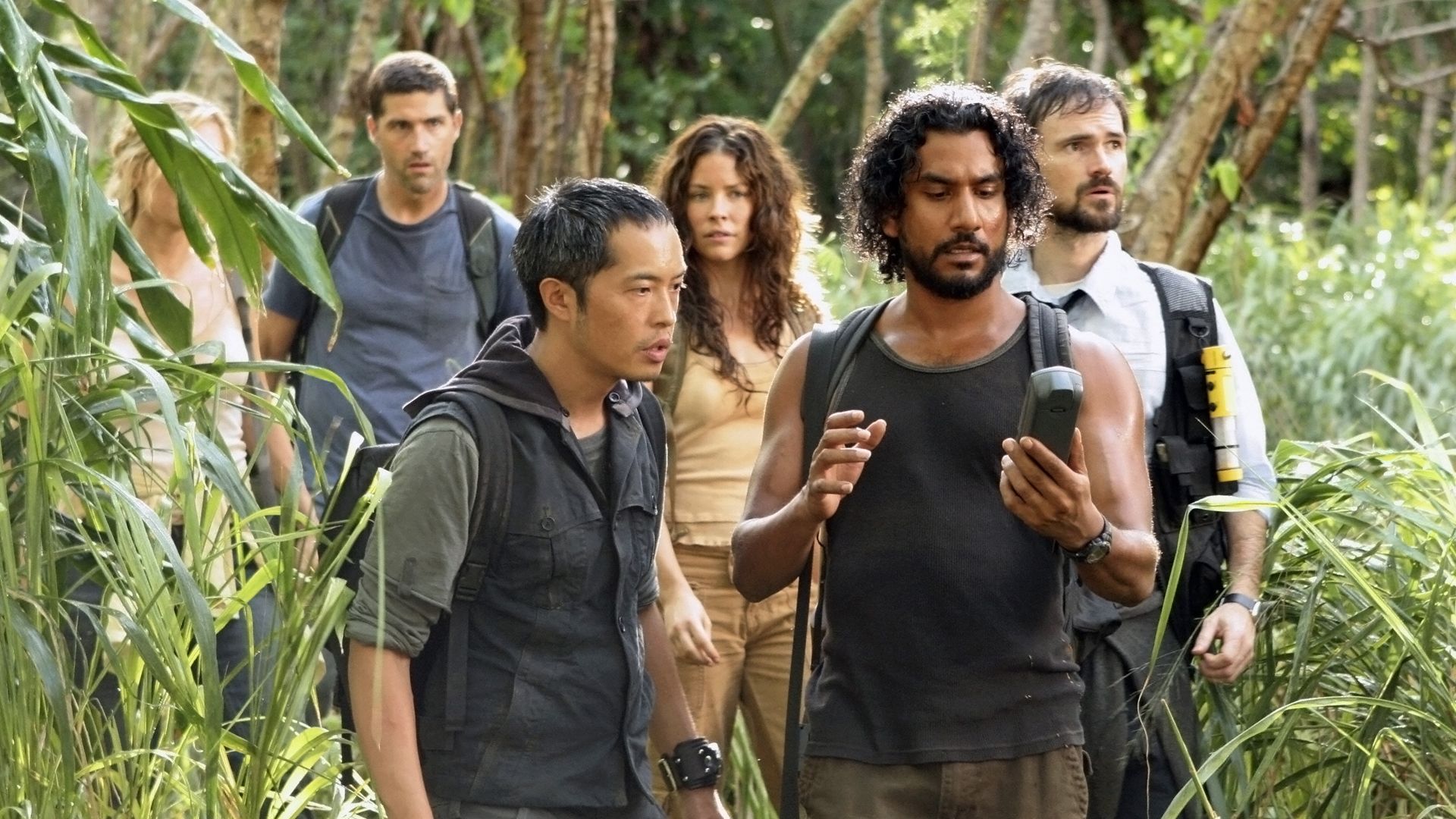
As someone who really enjoyed Lost – and believe me, I did enjoy it – I have to admit, even for a show with such a devoted fanbase, it occasionally lost its way. The fans are incredible, truly dissecting every little detail and building these amazing theories, and I appreciate that dedication. But honestly, I think it sometimes became too complex. I can already hear the objections, and I get it – people who are completely invested don’t want to hear that it felt a little overstuffed or that the plot wandered in too many directions. Still, I think it’s a valid point, even if it’s unpopular.
The new Hulu series, Paradise, has quickly been compared to Lost. While it might not be as complex as Lost, it’s easier to follow but still offers a compelling mystery that encourages viewers to analyze every detail. With only three planned seasons, and the recent completion of its second, Paradise is proving to be a worthy successor to the beloved show.
Paradise Has a Similar Paradox to Lost
As the TV show Lost went on, a major question for viewers was whether the characters who survived the plane crash were truly alive, or if they had actually died and everything that followed happened after death.
Just to refresh everyone who’s still a fan, everything that occurred on the island was real. The characters genuinely crashed the plane and were stranded there, just as the show portrayed. And all the strange things they found – things like the DHARMA Initiative and the smoke monster – actually happened.
Okay, so the big theory about everyone being in purgatory? The finale pretty much proved that wasn’t it. What we did find out was that the flash-forwards and those weird sideways glimpses showed us two things: what happened after they died, like a kind of afterlife where everyone eventually reunited, and a totally different timeline where the plane never went down. Honestly, it was a lot to take in! But that complexity, that mind-bending quality, is what really cemented Lost‘s place as a…
Though Paradise has one more season left, hints suggest a similar approach to storytelling as another show. It’s not about the afterlife, but the use of time travel implies we’re only seeing one possible version of events in a world with many. This new direction is easy to follow because of carefully placed clues and well-timed reveals.
The show slowly reveals its secrets. Throughout the first two seasons, there are clues that Samantha Redmond, nicknamed “Sinatra” (played by Julianne Nicholson), is manipulating time, but this isn’t fully explained until near the end of Season 2. The finale confirms it: Samantha is using a powerful, AI-driven quantum computer that can foresee the future and cause disturbances in the timeline.
Viewers began suspecting something was off long before the show confirmed it – some even noticed clues as early as Billy’s nosebleed. This shows that Paradise is captivating audiences and sparking the same kind of detailed theories as Lost once did. That’s a significant achievement for any series, and it highlights the strong writing of Paradise.
A Masterclass in Flashbacks and Plot Twists
Both Lost and Paradise play with how stories are told. Lost was famous for jumping around in time, and Paradise does something similar. While the main story of Paradise unfolds in a straight line, it’s filled with flashbacks to different periods – years before the massive tsunami, when it first hit, and what seems to be the present day.
Season 2 changes the focus to the world outside the bunker, showing us various characters and how they cope with the aftermath of the disaster without the safety of being underground. Like Lost, which told its story across an island, this season features a sense of discovery as the characters explore their new, isolated environment.
Both shows blend different genres, including drama, adventure, and science fiction. However, Paradise stands out with its intense political storyline. They share a similar atmosphere – the characters are often together but feel isolated, struggling to find a sense of belonging in an unfamiliar and unwelcoming environment.
Both series explore character backstories to add depth, but Paradise is more focused in its approach. It primarily centers on a few key characters: Xavier (Sterling K. Brown), Samantha, Billy, President Cal Bradford (James Marsden), and later, Jane (Nicole Brydon Bloom). Unlike other shows, it doesn’t try to cover everyone’s history.
Both Paradise and Lost feature a central lead character – Xavier and Jack Shephard, respectively – alongside a large supporting cast. However, Paradise focuses more tightly on its key characters, while Lost explored the backstories of many more. This isn’t a criticism of Lost, particularly considering it ran for much longer than Paradise is expected to.
Compared to Lost, which had 121 episodes across six seasons, Paradise will have a much shorter run, likely ending with only 24 episodes. This means Paradise needs to tell its story quickly and effectively, which is a greater challenge.
Despite its complex premise, Paradise consistently surprises viewers with unexpected turns. The story began by revealing the characters were living in an underground bunker, and has continued to shock with revelations like Teri’s survival, Jane’s villainous turn, and the unfolding mystery of Link/Dylan’s identity and his connection to the creation of Alex.
The show masterfully connects all its storylines, from why Samantha originally built the bunker, to Xavier’s part in things, Annie’s importance, how Teri and Link meet, and ultimately, the connection between Link and Samantha. While Lost is full of surprising twists, it can be a lot to follow and demands your complete attention so you don’t miss important clues.
From Michael’s heartbreaking downfall to the iconic scene with Charlie and the boat, this show is a thrilling experience. It’s fast-paced and captivating, but complex enough that you’ll likely want to watch it again to catch all the details.
A Poignant Analysis of Life and Death
Both Lost and Paradise deeply explore themes of life and death, using symbolic storytelling. Lost draws on mythology, while Paradise updates this approach with a focus on technology, contrasting it with a mysterious threat and a secret research team.
Science and its connection to life and death are central themes in both Lost and Paradise. In Lost, the DHARMA Initiative researched ways to change fate and save humanity from extinction. Similarly, in Paradise, Dylan and Henry (played by Patrick Fischler, who also appeared in Lost as a DHARMA Initiative member) were developing a powerful computer that could foresee the future and maybe even enable time travel.
Ultimately, both works aim for the same outcome. Paradise tackles the subject with a contemporary, technology-focused style that may not appeal to everyone, but it connects with younger audiences. Having a concrete example like Alex helps make the machine’s potential feel more achievable and believable.
The connection to Dylan, and the possibility he’s Samantha’s son—either the one she lost or a version from another reality—makes this discovery deeply personal. Unlike shows like Lost, where it’s easy to feel distant, we’re invested because we understand Samantha’s grief, her motivations, and what everyone stands to lose.
A Succinct, Planned Story With Intention
Dan Fogelman, the creator of Paradise, has always known how the show will end, and he’s determined to stick to that plan, even though it’s incredibly popular. This makes people believe Paradise could be as good as Lost. Unlike some shows, it won’t drag on unnecessarily or introduce strange storylines just to prolong its run.
Great TV often has a clear, concise story that unfolds from start to finish. Lost is still a standout example, and appreciating the new show Paradise doesn’t diminish that. However, it makes you wonder if Lost could have been even more impactful with a tighter focus, fewer episodes, and a streamlined plot that cut out some of the weaker story arcs.
Looking back, some storylines from the earlier seasons of Lost, like Kate and Sawyer being trapped in a cage and the entire arc with Paolo and Nikki, feel unnecessary. In contrast, the later seasons, particularly Paradise, are tightly paced and consistently gripping, with each episode building on the last.
I remember when Lost first aired, we all talked about each episode the next day – it felt like an event! Now, with streaming, people just watch everything all at once. It makes me think Lost actually worked because of how it was released weekly. But if Lost was made today, I think Paradise shows exactly how it would be done. It’s a great show, but doesn’t drag things out with super long seasons or an endless run – it’s just the right length for how we watch TV now.
It’s understandable why people keep comparing Paradise to Lost, especially after the second season. Lost is already a classic TV show, and I predict Paradise will become one as well.
Found an error? Send it so it can be corrected.
Read More
- What Song Is In The New Supergirl Trailer (& What It Means For The DC Movie)
- TV legend Carol Kirkwood reveals the reasons why she decided to retire after 28 years with BBC
- Dune 3 Gets the Huge Update Fans Have Been Waiting For
- Robinhood’s Tokenized Stock Fiasco: A Tale of Tokens and Tussles
- After 13 Years, Someone Earned One of the Hardest Achievement Trophies in Gaming
- 5 Best Superman-Centric Crossover Events
- New Open-World “AAAA” Game Coming From Tomb Raider Developer
- Crimson Desert is a “Cynical Amalgamation of Borrowed Mechanics,” Says Larian’s Publishing Director
- Jaleco Sports: Bases Loaded II announced for PS5, Switch; now available
- Digimon Is Getting a New RPG in 2026 (And You Probably Missed It)
2026-04-05 02:11