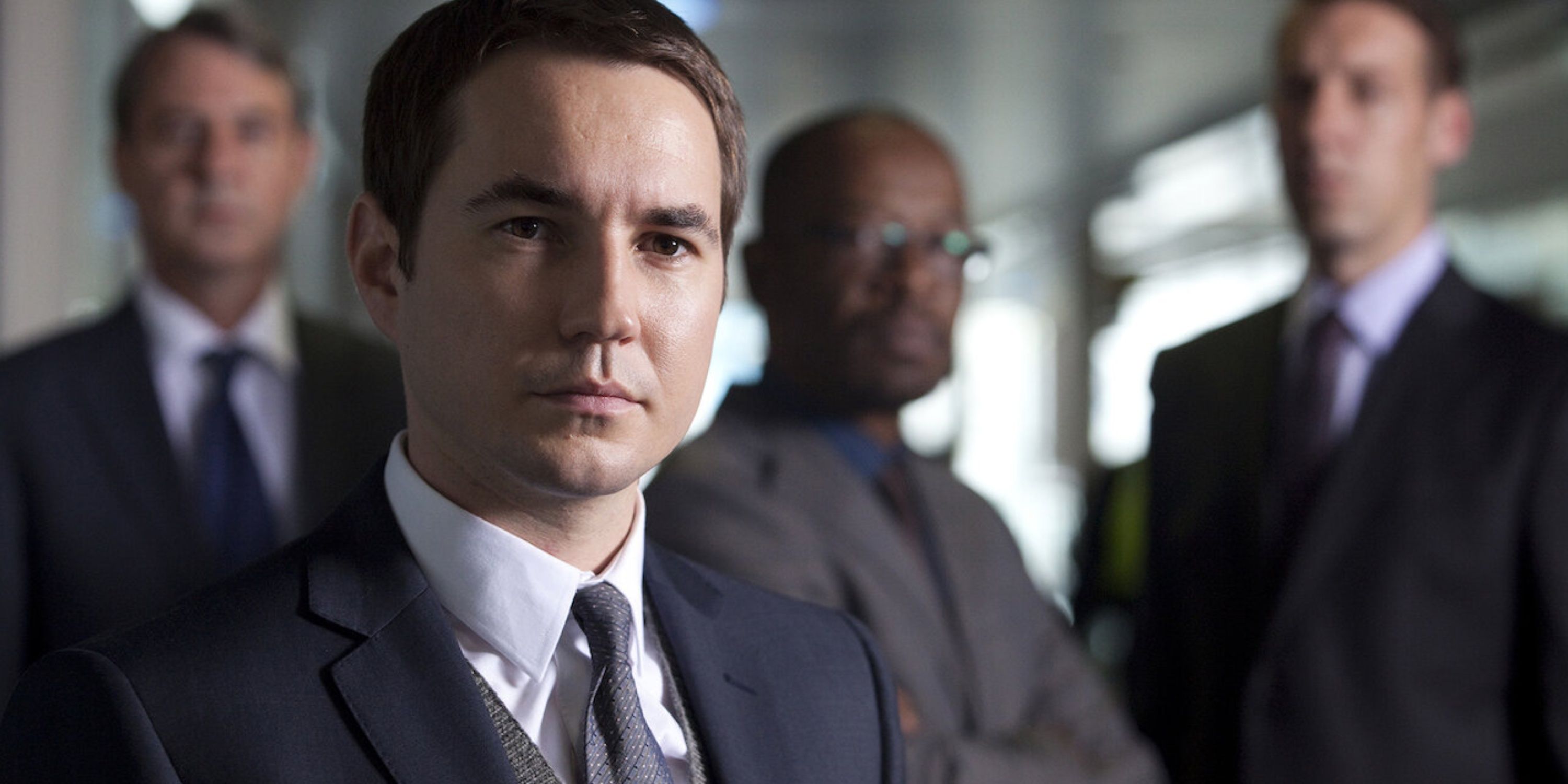
Since it first aired in 2012, Line of Duty has consistently lived up to the praise it receives. The first season, expertly written by Jed Mercurio, is particularly strong, featuring a talented cast and avoiding common clichés of the crime genre. Line of Duty Series 1 is a prime example of television at its finest.
As a critic, I have to say that the first series of this show is brilliantly paced. Jed Mercurio really knows how to build a story, and it all unfolds so satisfyingly as you get drawn into the world of AC-12. The cast is phenomenal – Martin Compston and Vicky McClure are standouts, and you’ve got seasoned pros like Adrian Dunbar and Lennie James adding so much depth. Whether you’re new to the series or revisiting it, trust me, you’ll be hooked from the start. It’s addictive viewing, plain and simple.
Line of Duty Series 1 Revitalizes the Police Drama
It’s tough to find a crime drama that feels fresh and original. So many stories feel familiar, with plots and characters we’ve seen repeatedly. While many shows rely on predictable formulas, Line of Duty comes close to breaking the mold, offering something a little different.
Jed Mercurio had already spent more than 15 years writing for television and had established himself as a successful novelist – both skills are evident in the first season of Line of Duty. TV shows that unfold over multiple episodes can often be inconsistent, either dragging out the story unnecessarily or lacking a solid plan. However, the first series of Line of Duty feels like a well-crafted novel presented as a TV show.
The characters are wonderfully complex, and their inner lives are revealed seamlessly within the story – the show doesn’t need to pause or explain their motivations. The central mystery feels real and unpredictable, which is no surprise coming from a writer whose first TV drama, Cardiac Arrest, was praised by doctors for its accuracy. This isn’t a typical police procedural; it’s a character-driven story that just happens to be set within a police environment.
Ultimately, the first season succeeds because it feels genuine and emotionally resonant. It delivers a compelling story, but it also thoughtfully addresses the questions viewers will have – even the difficult ones. The characters experience realistic consequences for their actions, and the season provides a sense of closure for everyone, though some storylines are left open for future exploration.
While many shows have explored police corruption, this one stands out for its depth and completeness. It doesn’t try to be trendy or add unnecessary storylines; it simply focuses on telling a compelling story, even with a limited number of episodes. This clear focus draws viewers in and keeps them completely invested in the plot, right up to the intense and emotional finale.
Line of Duty Features a Solid Cast
The entire cast of Line of Duty Series 1 deserves praise – everyone delivers a strong performance, with many giving career-best work. However, Martin Compston, Vicky McClure, Adrian Dunbar, and Lennie James truly stand out. They’re all perfectly suited to their roles, and one actor in particular sets an exceptionally high bar for future guest stars. It’s hard to imagine anyone else playing these parts.
Martin Compston and Vicky McClure are well-known actors today, but in 2012 they were still early in their careers. Compston’s character, Steve Arnott, is central to the first season of the show, both in terms of plot and setting the stage for what’s to come. The first series follows Steve as he joins AC-12, establishing the main structure for the entire season.
It’s great how the season starts by showing the event that leads Steve to join the Anti-Corruption unit. This immediately helps viewers understand his motivations and what’s at stake, instead of relying on explanations later on to fill them in.
Kelly Macdonald delivers a gripping and emotional performance that truly drives the series. She immediately connects with viewers, making her character, Steve Arnott, a relatable point-of-view for the audience. Just as the show introduces new cases, Steve is also new to the world of AC-12, experiencing it alongside the viewers.
Vicky McClure previously won a BAFTA for her role in This is England ’86, but her portrayal of Kate Fleming is truly exceptional. A key moment in the first series is when Steve realizes Kate is part of AC-12. McClure brilliantly plays Kate with a sense of experienced weariness, making the reveal genuinely surprising for viewers. Kate and Steve are very different people, and it’s that contrast that makes their working relationship so compelling.
McClure skillfully reveals the vulnerabilities beneath her character’s strong facade, hinting at the psychological toll of undercover work without needing explicit explanation. The final hug between Steve and Kate isn’t just the end of a case; it represents the emotional growth they’ve both experienced throughout the season.
While Steve and Kate drive the main plot, Adrian Dunbar’s portrayal of Ted Hastings, the head of AC-12, and Neil Morrissey as DCI Tony Gates, the initial focus of the investigation, are equally memorable. Dunbar has become a fan favorite thanks to Hastings’ grumpy demeanor, but the character is surprisingly complex. He’s not just a boss giving orders from behind a desk; Hastings actively participates in the action and gets involved in the investigation itself.
While it would have been simple to portray James as a straightforward villain, the show instead presents Tony Gates as a man undone by his own pride. He’s not just a typical antagonist; the writers give him a complex journey, and James portrays him with a heartbreaking vulnerability without eliciting undue sympathy. Although Tony is clearly making mistakes, the audience understands the path that led him there, which ultimately makes the season more powerful.
Line of Duty Series 1 Finds Further Success in the Details
Mercurio expertly crafts a detailed and complex storyline with well-developed characters, and the finale delivers on that promise. By the end of Line of Duty Series 1, the only remaining question is about the larger network of police corruption hinted at throughout the season. The episode clearly shows that Gates’ colleague, Matthew Cottan (played by Craig Parkinson), is involved in something suspicious, but Tony Gates’ story reaches a satisfying conclusion.
The first season has a more satisfying conclusion than later ones. While every season is still enjoyable, the characters introduced afterward aren’t always as compelling as the initial character, Gates. The plot also becomes less believable at times, and a recurring storyline starts to feel repetitive. It seems the creators took big risks with the first season, not realizing how successful it would become.
The show is enjoyable on many levels – whether you’re simply looking for entertainment or analyzing it critically – likely because it focuses heavily on creating its world. A key strength is that writer Mercurio penned every episode, which ensures consistent character development and a well-structured plot.
Carly Paradis’ score builds tension effectively, mirroring the careful pacing of the writing – it subtly hints at emotional moments rather than revealing them outright. The supporting cast gets opportunities to shine, and even the most potentially predictable character, Osborne (played with intensity by Owen Teale), feels nuanced. Visually, the show is striking, using light and color to create atmosphere instead of relying on darkness to convey a sense of hardship.
Despite its realistic and sometimes harsh portrayal of police work, the first series of Line of Duty is ultimately an optimistic crime drama, especially compared to many other shows in the genre. It avoids typical tropes and focuses on relatable, flawed characters – everyone, from Steve Arnott to Tony Gates, feels like an ordinary person. Ultimately, those striving to do the right thing succeed, not through advanced technology or extraordinary skills, but through sheer determination and good instincts.
Someone once observed that people are capable of extraordinary heroism when faced with difficult situations. And the TV drama AC-12, arguably the best since 24 and one of the greatest ever made, perfectly illustrates this point.
Found an error? Send it so it can be corrected.
Read More
- Adam Levine Looks So Different After Shaving His Beard Off
- After AI Controversy, Major Crunchyroll Anime Unveils Exciting Update
- Gold Rate Forecast
- 10 Movies That Were Banned in Different Countries For Random Reasons
- Tekken 8 Fans Furious as Tifa Tipped for Street Fighter 6 Instead
- Dialoop coming to Switch on June 17
- Welcome to Demon School! Iruma-kun season 4 release schedule: When are new episodes on Crunchyroll?
- Japan’s No. 1 Spring 2026 Anime Is the True Successor to an All-Time Great
- Steam Makes Sci-Fi Game 100% Free for 72 Hours
- From season 4 release schedule: When is episode 2 out on MGM+?
2026-04-25 16:48