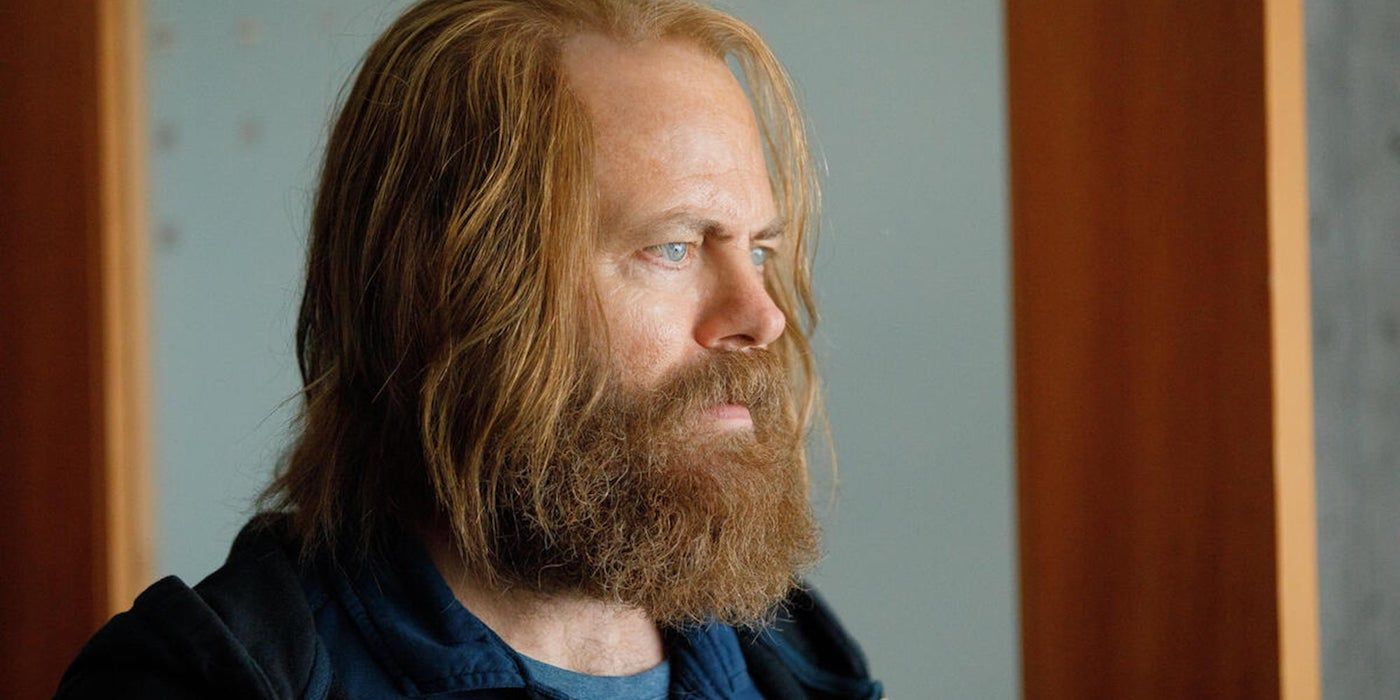
Alex Garland’s new series is an 8-part science fiction thriller that blends mystery, technology, and thought-provoking ideas, offering a rich experience for dedicated viewers. It tackles complex conspiracy theories centered around technology and explores big questions about destiny, free will, and what’s real.
Devs centers around Lily Chan, a software engineer who investigates a powerful tech company following a personal tragedy. What starts as a mystery quickly transforms into a complex, thought-provoking puzzle, moving beyond typical action-thriller tropes. The show tackles serious themes and creates a uniquely unsettling and immersive world.
Devs Features a Mystery Rooted in Silicon Valley Power
Built on secrecy and featuring impressive, yet subtle, campuses, the Devs division is a highly secluded development team closed off to all outsiders. When young engineer Sergei gets a coveted position there, it seems like the peak of his career – but it actually marks his entrance into the world of Devs and the central enigma surrounding it.
Sergei’s unexpected death deeply affects Lily Chan and viewers alike. The government’s explanations feel untrustworthy, and the show Devs quickly challenges our assumptions about what’s really happening. Lily Chan isn’t a typical detective; she’s a relatable and perceptive character who reacts powerfully to events, rather than actively investigating them. Her refusal to believe the official story drives the plot in the early episodes and sets the tone for the entire series.
Lily’s personal search for answers, fueled by both love and grief, reveals a larger, troubling problem. While Amaya seems to be keeping secrets about her company, she’s also protecting an experiment with the potential to fundamentally change how we understand reality.
The team at Devs is creating a computer named Deus. Unlike typical computers, Deus isn’t designed to predict things or improve performance. It’s built to simulate reality itself.
The show reveals its mysteries slowly, trusting viewers to piece things together. It doesn’t rush explanations or rely on complicated storytelling. Instead, the conversations are straightforward and intellectual, even when the topics themselves are ridiculous.
Alex Garland’s Sci-Fi Show Gets Philosophic
I’ve been learning about this incredible machine called Deus, and it’s blowing my mind. It’s a quantum computer designed to explore the very fabric of reality – what things are made of at the tiniest level. The core idea is pretty straightforward, but honestly, it’s hard to fully grasp. Basically, if everything operates according to rules, and those rules can be figured out, then theoretically, we could predict everything that’s happened before and everything that will happen. It’s a wild thought!
In the show Devs, a special device lets the characters see into the past and future. When viewing the past, events initially seem blurry but sharpen as the technology improves, showing exactly what happened. The future, however, appears fixed and unchangeable, as if it’s already been decided. This device represents the idea of hard determinism – the belief that everything that happens is predetermined by previous events.
Forest unexpectedly becomes CEO of Amaya during a heated discussion. He explains his belief in determinism stems from a personal tragedy – the loss of his family in an accident. He had to accept that the events were unavoidable, and views a seemingly divine intervention, or ‘Deus machine,’ as evidence that the world operates according to fixed rules where blame isn’t relevant.
Forest and Lily don’t clash physically; their conflict is based on opposing beliefs. Their interactions unfold through conversations, cryptic predictions, and challenging tests. The series delves into deep philosophical territory when the machine reveals Lily’s future actions to Forest. This is when Devs realizes it has a perceptive viewer who isn’t looking for simple answers, and who is invested in what happens personally.
Alex Garland Tackles Quantum Theory in Devs
As the story progresses, it becomes harder to tell whether Lily’s defiance is a result of her own choices or if it was always meant to happen. Initially, it appears she’s acting on free will, directly challenging the machine by rejecting its expectations and deliberately placing herself in the exact situation the machine had predicted.
As time passes, Lily’s initial act of rebellion becomes more meaningful, evolving into a symbol of hope. She discovers she can challenge what seems unavoidable, and by making her own choices instead of following the machine’s lead, she demonstrates that free will is achievable through her actions.
It doesn’t really matter if Lily’s act of rebellion actually changes anything. The important thing is that she now understands her choices have meaning, and that belief will shape everything she does from now on.
This idea starts to fall apart when small errors appear in the predictions. The developers notice these discrepancies when events don’t unfold as expected. These errors make them question whether everything is predetermined and if there’s only one possible future.
Now that alternative explanations exist, the machine can’t definitively claim to know the truth. The idea of a fixed future falls apart when confronted with the possibility of multiple realities. The show, Devs, introduces the concept of quantum mechanics, suggesting that if the universe branches into different paths, the machine’s predictive ability would fail. Forest rejects this idea because it disrupts his need for control, while Lily embraces it, finding empowerment in the meaning it gives to free will and choice.
Lily and Forest are about to meet, and the machine predicted Lily would be the one to kill him. Everyone expected it to happen, but when the moment arrived, Lily refused to shoot. For a brief time, she made her own choice. Sadly, the machine then released an electromagnetic pulse that killed both of them, completing the predicted outcome.
The story doesn’t have a clear winner or loser. Devs suggests that even chaotic events have a purpose behind them. The real meaning isn’t in the events themselves, but in how people react – it transforms a philosophical debate into a deeply personal and human struggle.
Devs’ Series Finale is Thought-Provoking
Although Lily and Forest technically died, they continue to exist within a virtual world created by a machine called Deus. This reality is built from their own minds and thoughts, allowing them to live on within it.
Forest feels a sense of completion, as his family is reunited with him in a world where people no longer die. Lily gets a fresh start in a world free from the fixed future predicted by the Deus machine. This outcome completely upends everything that came before.
This raises the possibility that if consciousness isn’t tied to objective reality, a machine isn’t simply predicting or observing – it’s actually creating. What the machine produces also hints that our universe might be a simulation, an idea explored further here without offering a definitive explanation. The focus will be on allowing this concept to exist, acknowledging that reality may have different layers.
The ending of the story is handled skillfully, avoiding any big, surprising reveals. Instead, things simply unfold naturally, which fits perfectly with the overall mood of the series. The story doesn’t present a world where good actions are rewarded and bad ones are punished; it’s just a world with its own set of rules that people must follow. The story doesn’t try to answer whether or not the characters truly have free will; it simply presents the situation as it is.
Though it might not become a mainstream hit, Devs is a show built for those who seek it out. The eight-hour series is best enjoyed as a complete experience, and it cleverly uses thriller elements to explore complex philosophical questions while still telling a compelling story.
As a big sci-fi fan, I’ve been thinking about Devs a lot lately, and honestly, it struck me as being less about the tech and more about what we believe. It really makes you wonder, if everything is predetermined, can we even have meaning in our lives? Or is there still a point, even in a universe where free will doesn’t exist? The show doesn’t try to give you answers, which I appreciated. Instead, it just presents these huge questions and lets you wrestle with them yourself. It’s one of those series that genuinely sticks with you long after the credits roll.
Read More
- Gold Rate Forecast
- 10 Most Powerful Versions of Superman, Ranked
- GBP CNY PREDICTION
- 007 First Light: Release Date, Story, Gameplay, Cast, Editions, and Platforms
- Superman’s 7 Best Power-Ups, Ranked
- DOGE PREDICTION. DOGE cryptocurrency
- 10 Best Free Games on Steam in 2026, Ranked
- 10 Greatest Wii U Games of All Time, Ranked
- Forza Horizon 6 Car List So Far: Confirmed Highlights, Cover Cars, DLC, and Rewards
- What happened to Soldier Boy in The Boys?
2026-05-31 19:38