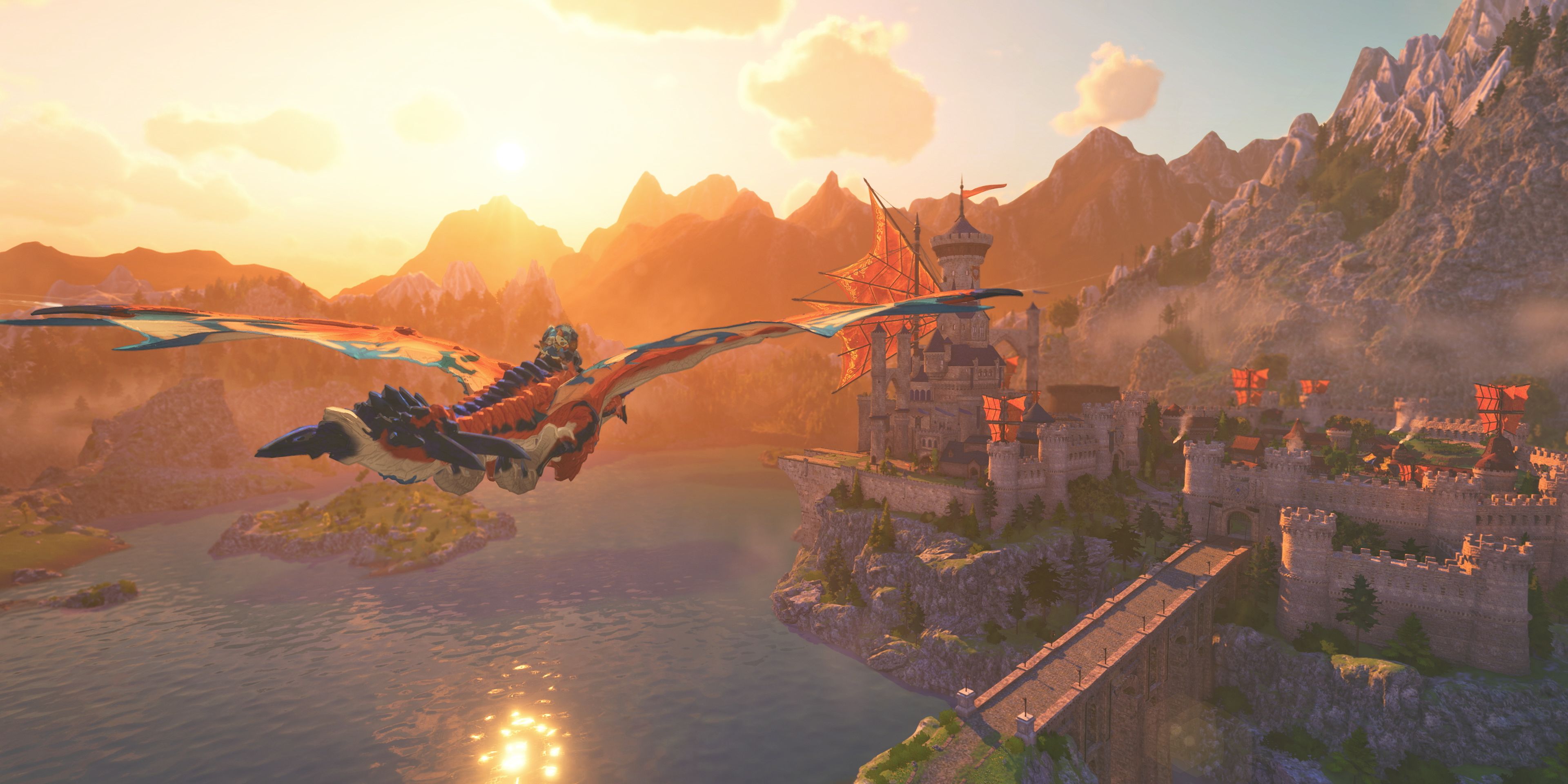
Monster Hunter Stories 3 is a big change for the series, and even for the Stories subseries. It has a new look, more developed characters, and a turn-based combat system, making it quite different from previous Monster Hunter games.
The changes in Stories 3 were well-received, with ScreenRant’s Austin King calling it “the best yet” in a very positive review. It offered a welcome change for fans of the series, particularly after the issues with the recent Monster Hunter Wilds game.
Lee D’Amato from ScreenRant interviewed Kenji Oguro (director), Takahiro Kawano (art director), Daisuke Wakahara (lead game designer), and Ryozo Tsujimoto (executive producer) of Monster Hunter 3. They talked about how the game was made, and how the characters, world, and monsters were designed and changed during development.
A Clear Vision
The unique look of Stories helps set it apart from the core Monster Hunter games. Its art style, inspired by anime, highlights the differences in tone and storytelling. While Monster Hunter focuses on hunting monsters, Stories is about becoming friends with them and rebuilding their habitats through careful management. The main Monster Hunter games are action RPGs with fast-paced, challenging combat, but Stories is a turn-based RPG that emphasizes exploring the world and building a strong team.
The shift in visual style across Stories 1, 2, and 3 wasn’t just a creative choice—it was essential. According to Kawano, Stories 3 moved to Capcom’s RE Engine—the same technology powering games like Monster Hunter Rise, Wilds, and recent Resident Evil titles starting with Biohazard.
We completely rebuilt all the game’s visual elements from the ground up. Because we were switching to a new game engine, we couldn’t reuse the old ones,” Kawano explained. “Fortunately, the RE Engine’s improvements allowed the team to create the high-quality graphics they envisioned.

Throughout the redesign of Monster Hunter Stories 3, the team always had a strong vision for the game’s final appearance. Early in development, they created a prototype using simple elements – a single character, monster, and environment. While the finished game is much more refined, its core visual style – the colors, lighting, and textures – remained consistent from that initial test.
While the art style is a departure from earlier games, it feels like a smooth and logical step forward. The first two Stories games were aimed at younger players, featuring bright, cartoonish graphics and straightforward stories about characters growing up with their Monsties. However, with Stories 3, the creators tried to appeal to a more mature audience by crafting a more intricate story with an adult main character.

Unlike previous games, Monster Hunter Stories 3 doesn’t center around a character’s journey to become a Rider. Instead, it explores the broader idea of Riders themselves – their role, their purpose, and their impact on the world. The game starts with a skilled and experienced Rider, which sets a different mood and lets the developers really focus on the meaning of being a Rider.
The newer story needed a more sophisticated visual style. That’s why the straightforward, cartoon-like graphics of the first two Stories games were replaced with the darker, more detailed (but still unique) look of Monster Hunter Stories 3. The size of the Monsties was also increased to fit the now-older protagonist.
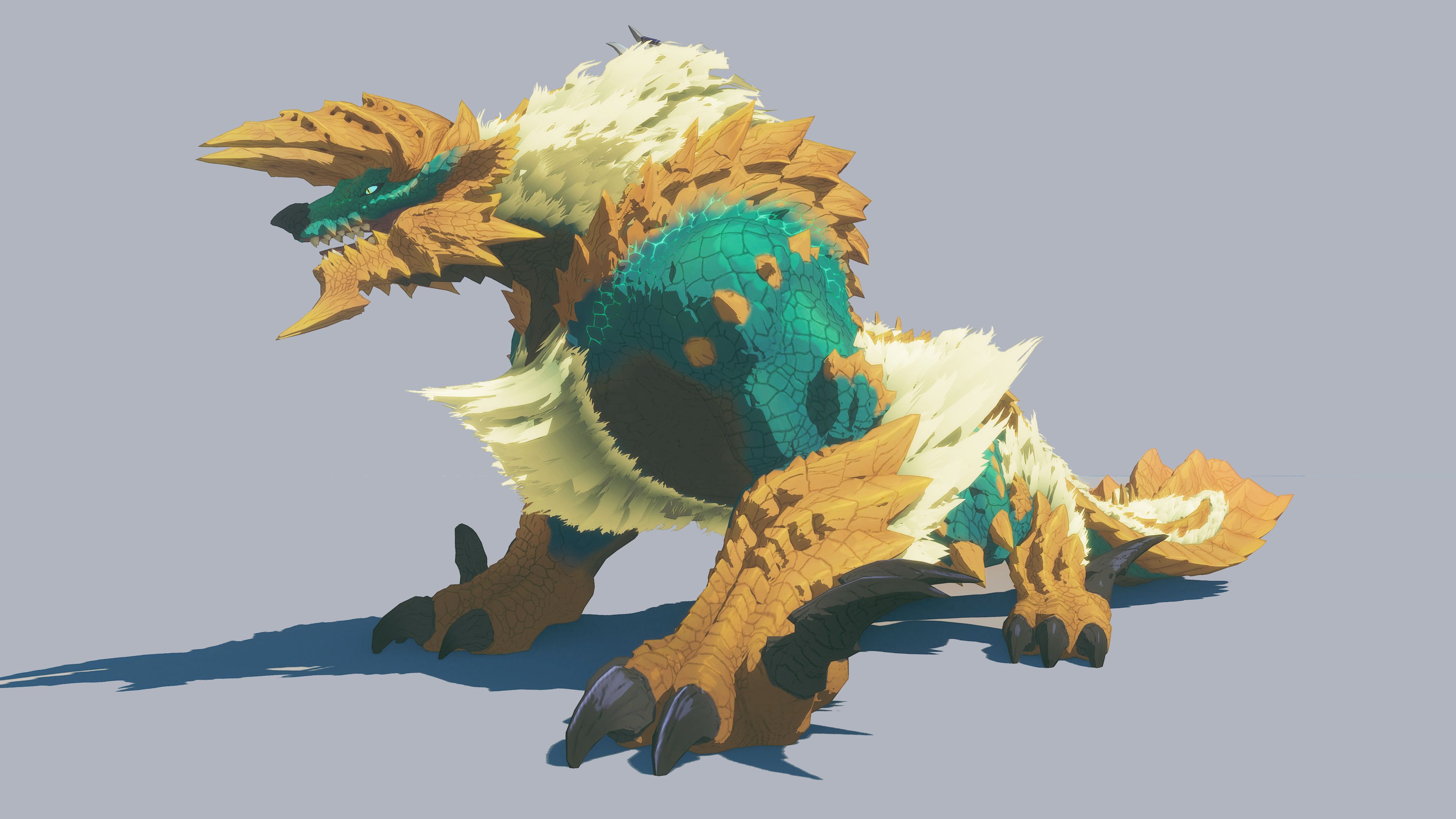
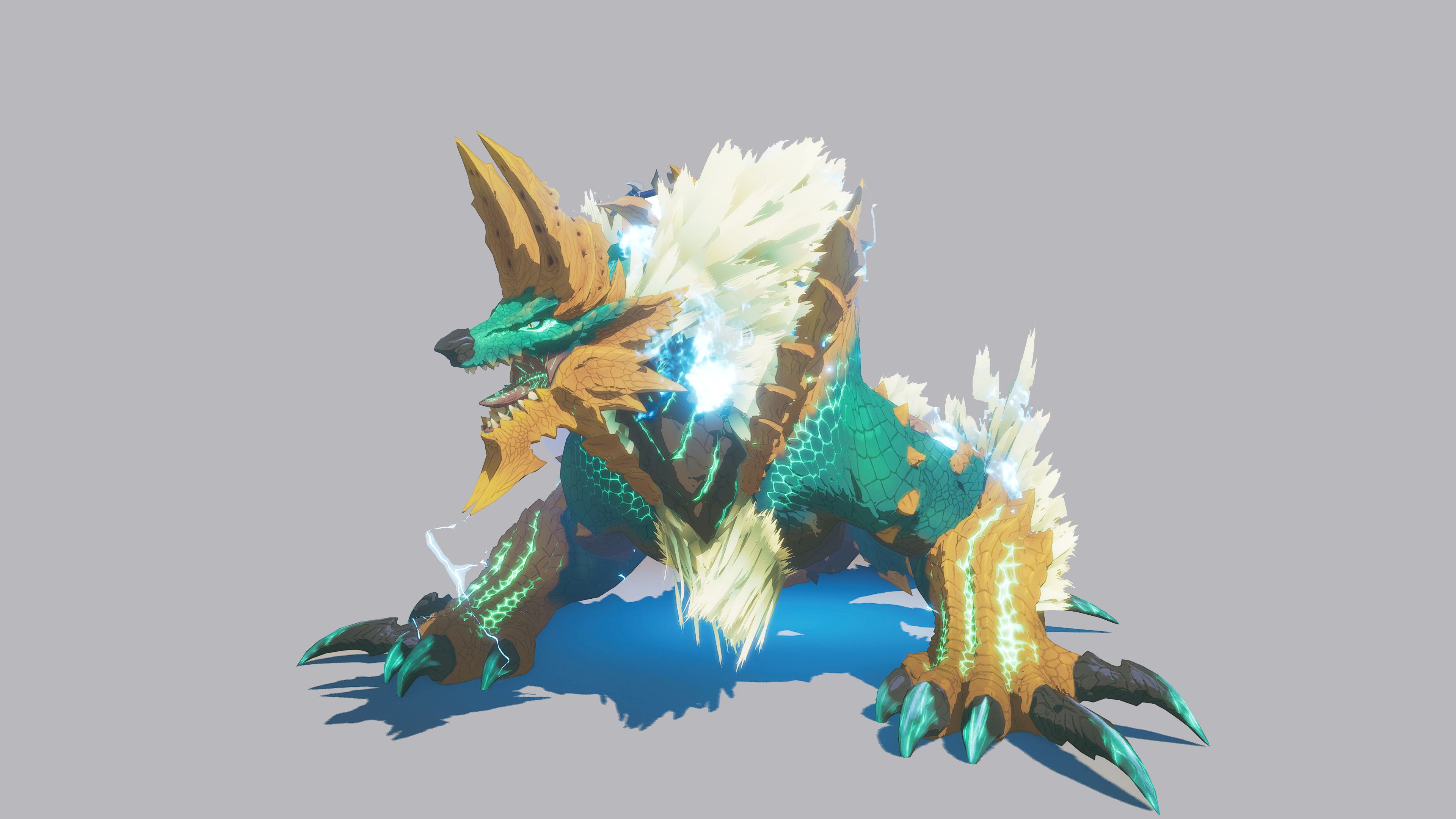
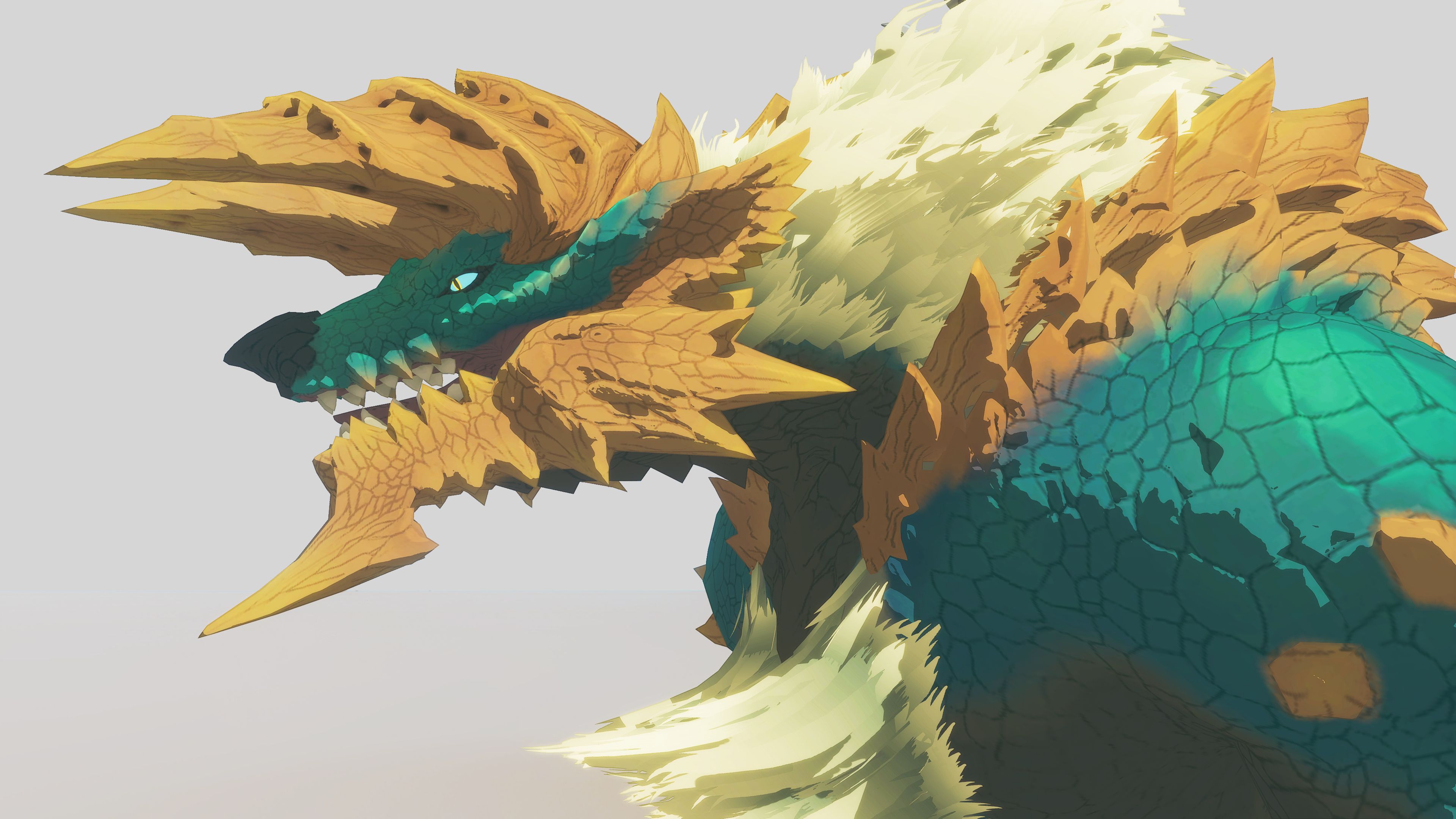
Adapting iconic monsters from the main Monster Hunter series to the new art style of Stories 3 proved challenging. The team especially struggled with Zinogre. In the original games, Zinogre is incredibly detailed, featuring many layers of scales and thick fur. Its intricate design, down to each individual strand of hair, didn’t translate well to the more stylized visuals of Stories 3.
The team tried various techniques to create Zinogre’s fur. Instead of drawing every single hair, they decided to paint groups of fur tufts, which together formed its mane. They also adjusted its colors, choosing a brighter blue than in previous games to fit the art style of Stories.
Character Development

It wasn’t always clear what the characters would end up looking, acting, and sounding like. Kora’s development especially shows this process. Initially, she was envisioned as a middle-aged, stocky man – a type the team called an ‘ojisan,’ which means uncle in Japanese – as you can see in some early artwork.
Kora’s design process shifted when Wakahara pointed out that the group already had a lot of older male characters and suggested adding more diverse characters. The team agreed and started exploring some new design ideas for Kora.
Even after the initial design, Kora’s personality wasn’t fully defined. Early concepts still included aspects of the original male character. The team initially tried making her a seductive and dangerous ‘femme fatale,’ but eventually settled on the look we see in the final game – a character who is both fashionable and capable.
Simon, the main character’s best friend, went through some revisions during the game’s creation. Initially, the developers planned to make his appearance more unusual and distinctive.

To attract a wider audience, the game developers ultimately decided to make Simon immediately appealing, due to certain story elements they didn’t want to reveal. When they saw the revised character design, Tsujimoto, who has guided the development of all three Stories games, praised his team for creating “the most handsome character you’ve designed for the Stories series.”
I always found Thea, the new Ranger who joins your squad pretty early on, to be a really interesting character. It’s cool to learn that her design wasn’t always finalized! Apparently, the developers initially envisioned her as a male character. But somewhere along the way, they decided to make her a girl, while still keeping that slightly rough-and-tumble, innocent vibe. It’s neat to see how characters evolve during development!
Oguro explained that Thea is his favorite character in the game, appreciating both her design and her connection to past games. He described her as similar to the beginner Riders players controlled in Stories 1 and 2, noting that even with the more mature tone of Stories 3, having a new Rider join the team and enjoy themselves adds a nice touch.
The Deviljho’s In The Details

When deciding which monsters to feature in Stories 3, the developers focused on two key questions. First, they considered how well each monster would integrate with the game’s story and central gameplay. Second, they aimed for a diverse and balanced selection of monsters, ensuring no single element or body type was overrepresented.
Because of this, the team couldn’t include every monster they originally planned. They considered bringing back Ahtal-Ka, the challenging final boss from Monster Hunter Generations Ultimate, but ultimately decided against it, and he hasn’t been featured in any games since.
The team loved the idea of Ahtal-Ka – a massive, praying mantis-like creature that builds a fortress using webs – as a spectacular battle location for a game like Stories. However, it would have been too expensive to develop, so they sadly had to cancel the plan.
Plus, Oguro really didn’t agree with Wakahara’s ideas. Wakahara loved creating insect monsters, but Oguro couldn’t stand bugs. This difference often caused arguments during the development of Stories 3, especially when Wakahara wanted to add more insect creatures like Ahtal-Ka.
Everyone loves a good monster, and the development team really worked hard to include a variety of fan favorites. Wakahara especially wanted to feature classic monsters that he remembered fondly from his childhood, but hadn’t appeared much in previous games.

This refers to Yama Tsukami, a massive Elder Dragon that first appeared in Monster Hunter 2. While incredibly impressive, Yama Tsukami hasn’t been featured much in recent main Monster Hunter games because its huge size and limited interactive elements make it challenging to include in an action role-playing game.
Because Stories 3 uses a turn-based system, Wakahara believed Yama Tsukami would be a perfect addition, both in terms of its appearance and how it functions in the game. He even convinced Oguro to include it, along with another one of his beloved classic characters, Nibelsnarf.
Wakahara shared that he particularly likes Canynes – the dog-like monsters that originally appeared as companions in Monster Hunter Rise. Having worked on both Rise and its Sunbreak expansion, he feels a strong connection to their design. He and the team made sure to include some of the customization options from the original game in Stories 3.
Wakahara highlighted that Canynes don’t just change color depending on their element – their physical appearance changes too. He particularly likes the water-elemental Canyne, noting its adorable small ears.

Kawano personally likes the Kulu-Ya-Ku. He worked as the storyboard artist for the monster kinship skill animations and found Kulu-Ya-Ku’s particularly amusing, making it one of his favorites. Tsujimoto shares a similar preference for Brachydios and has been watching with interest how its kinship skill animation has developed over the course of the Stories games.
Oguro’s favorite Pokémon are Dragon-types, especially Velociprey. As a fun challenge during development, he’d often build an entire team of Velociprey, each with a different elemental type, and test them against the game’s final boss.
The game we have now is a well-rounded RPG with a unique look and a complex, engaging story. You can really feel the developers’ love for the Monster Hunter series in the detailed designs of the characters and creatures, and their strong creative direction for the world of Monster Hunter Stories 3.
Read More
- Gold Rate Forecast
- 10 Most Powerful Versions of Superman, Ranked
- GBP CNY PREDICTION
- 007 First Light: Release Date, Story, Gameplay, Cast, Editions, and Platforms
- Forza Horizon 6 Car List So Far: Confirmed Highlights, Cover Cars, DLC, and Rewards
- DOGE PREDICTION. DOGE cryptocurrency
- Superman’s 7 Best Power-Ups, Ranked
- 10 Greatest Wii U Games of All Time, Ranked
- What happened to Soldier Boy in The Boys?
- Kingdom Come Deliverance Update 1.002 Enables Trophies to Be Transferred
2026-06-01 17:39