Georgia is starting to install smart meters in the mountain town of Mestia to stop illegal cryptocurrency mining. Officials say this mining has been putting a huge strain on the country’s power grid. This is part of a larger effort by the government to reduce unauthorized electricity use, which recently spiked in the region, driving up costs for everyone and damaging local power infrastructure.
According to Vice Prime Minister Mamuka Mdinaradze, unauthorized cryptocurrency mining is putting a significant burden on Georgia’s electricity grid, causing disruptions to power supply in some areas.
In 2025, the town of Mestia used 133 million kilowatt-hours of electricity. This is significantly higher than what similar-sized towns in Georgia typically use – around 10 million kilowatt-hours. In fact, Mestia used about 13 times more electricity than comparable towns. Officials believe this difference is due to widespread, illegal electricity usage.
Officials estimate that increased energy use has resulted in at least 20 to 25 million lari in losses – around $9.5 million. This strain on the power grid has also caused blackouts, impacting homes, businesses, and tourism. According to Mdinaradze, all electricity customers in Georgia are effectively paying an extra 1.5 lari (about $0.55) each month to cover the cost of electricity used for illegal mining operations.
Smart meters target excess consumption
Officials are planning to put electricity meters in Mestia and surrounding villages to find and stop illegal cryptocurrency mining. They think this will help them locate places using a lot of extra power and ease the strain on the local electricity grid.
According to Mdinaradze, the reason for installing meters is simply to stop people from stealing electricity. Residents will still get free electricity for their regular household use, but they’ll be charged for any usage beyond what’s considered normal.
Police will help with the installation and make sure everyone follows the rules. The government also stated that anyone using electricity illegally on a large scale or interfering with the program will be investigated and potentially face legal consequences.
Crypto growth brings new challenges
As someone following the crypto scene, it’s interesting to see Georgia becoming more involved with digital assets and blockchain payments. They’ve been actively working with companies in the space lately, testing out new financial tools to update how money is transferred within the country. It feels like they’re trying to embrace the future of finance, but this recent crackdown is a bit of a surprise given that progress.
As an analyst, I’ve been following Tether’s latest move with interest. They’ve teamed up with officials in Georgia to introduce GEL₮, a new stablecoin designed to mirror the value of the Georgian Lari. What’s particularly exciting is the potential for this to speed up payments and cut down on transaction fees. It seems like Tether is also laying the groundwork for wider adoption of blockchain technology within Georgia’s financial system, which could be a significant development.
Bybit, a cryptocurrency exchange, has launched a card in Georgia that lets people use their digital currencies with regular payment systems like Visa and Mastercard. The card also works with Apple Pay and came after Bybit received a payment license in the country at the end of 2025.
Global mining enforcement intensifies
Georgia’s recent actions against illegal cryptocurrency mining are part of a growing trend worldwide. Authorities in several countries are trying to stop unauthorized mining operations that strain power grids. Russia, for example, recently discovered a large illegal mining operation in the Sverdlovsk region.
Russian authorities discovered around 10,000 cryptocurrency mining machines concealed in derelict buildings. Energy companies calculate the illicit operation resulted in damages of almost 1 billion rubles. Police have arrested three individuals and launched criminal investigations related to stolen electricity and fraudulent activity.
Investigators found that the operators illegally bypassed official electricity meters and altered records to hide the fact they were using much more power than they were allowed.
Mining activity remains resilient
Even with increased attempts to regulate it, Bitcoin mining continues at a consistent rate worldwide. The price of Bitcoin fell from around $110,000 to about $70,000 between mid-2025 and early 2026, reflecting the usual ups and downs of the cryptocurrency market.
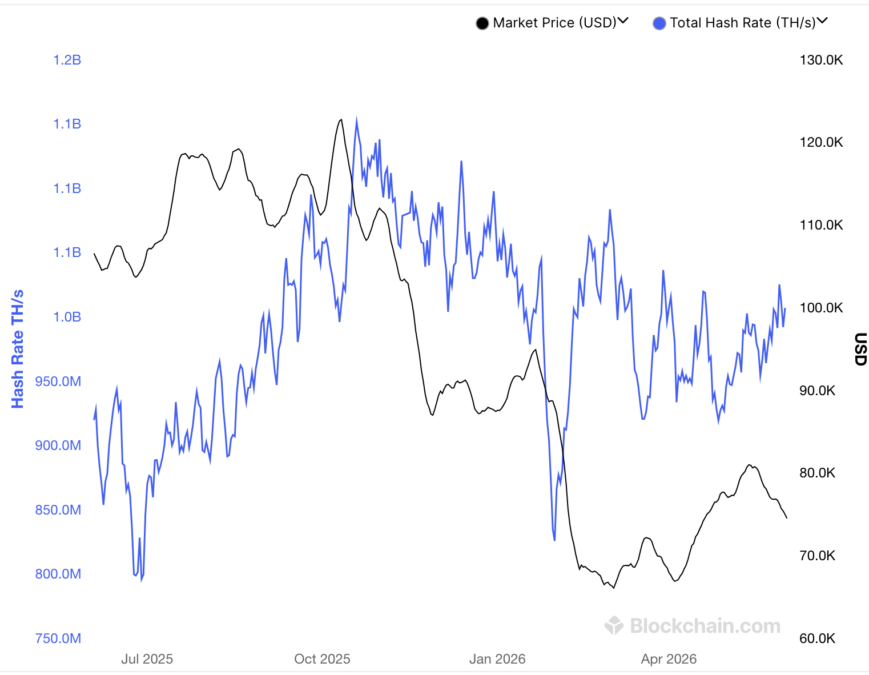
Despite price drops and growing regulatory issues, the network’s overall mining power remained fairly stable, fluctuating between 900 million and 1.1 billion TH/s. This suggests that miners continued to operate at a consistent level.
The data shows the industry has remained steady in its operations, even with increased government attention to electricity use and the pressure large mining operations put on power grids.
Read More
- Gold Rate Forecast
- 10 Most Powerful Versions of Superman, Ranked
- GBP CNY PREDICTION
- 007 First Light: Release Date, Story, Gameplay, Cast, Editions, and Platforms
- Forza Horizon 6 Car List So Far: Confirmed Highlights, Cover Cars, DLC, and Rewards
- DOGE PREDICTION. DOGE cryptocurrency
- Superman’s 7 Best Power-Ups, Ranked
- Forza Horizon 6 PC Issues: Fix Crashes, Stuttering, Steam Errors, and Game Pass Problems
- EUR CNY PREDICTION
- Fishbowl Is a Charming and Heartfelt Indie You Won’t Want to Miss (Review)
2026-06-02 11:19