Real-time strategy games typically involve building up your power and taking over territory. You grow your base and army to defeat your opponents, and the game often favors taking the offensive and thinking ahead. Even if you face setbacks, these games usually let you recover and become more powerful.
Unlike typical strategy games focused on building empires, Battlestar Galactica: Scattered Hopes is all about survival. Developed by Alt Shift, this upcoming game combines real-time strategy with roguelike elements, putting you in command of a fleet desperately trying to escape the Cylons. The goal isn’t to conquer, but to simply last long enough to jump to the next sector and continue the long journey back to the Battlestar Galactica. After a hands-on demo, it’s clear that endurance is key. So say we all.
A Roguelike RTS Where Survival Is the Win Condition
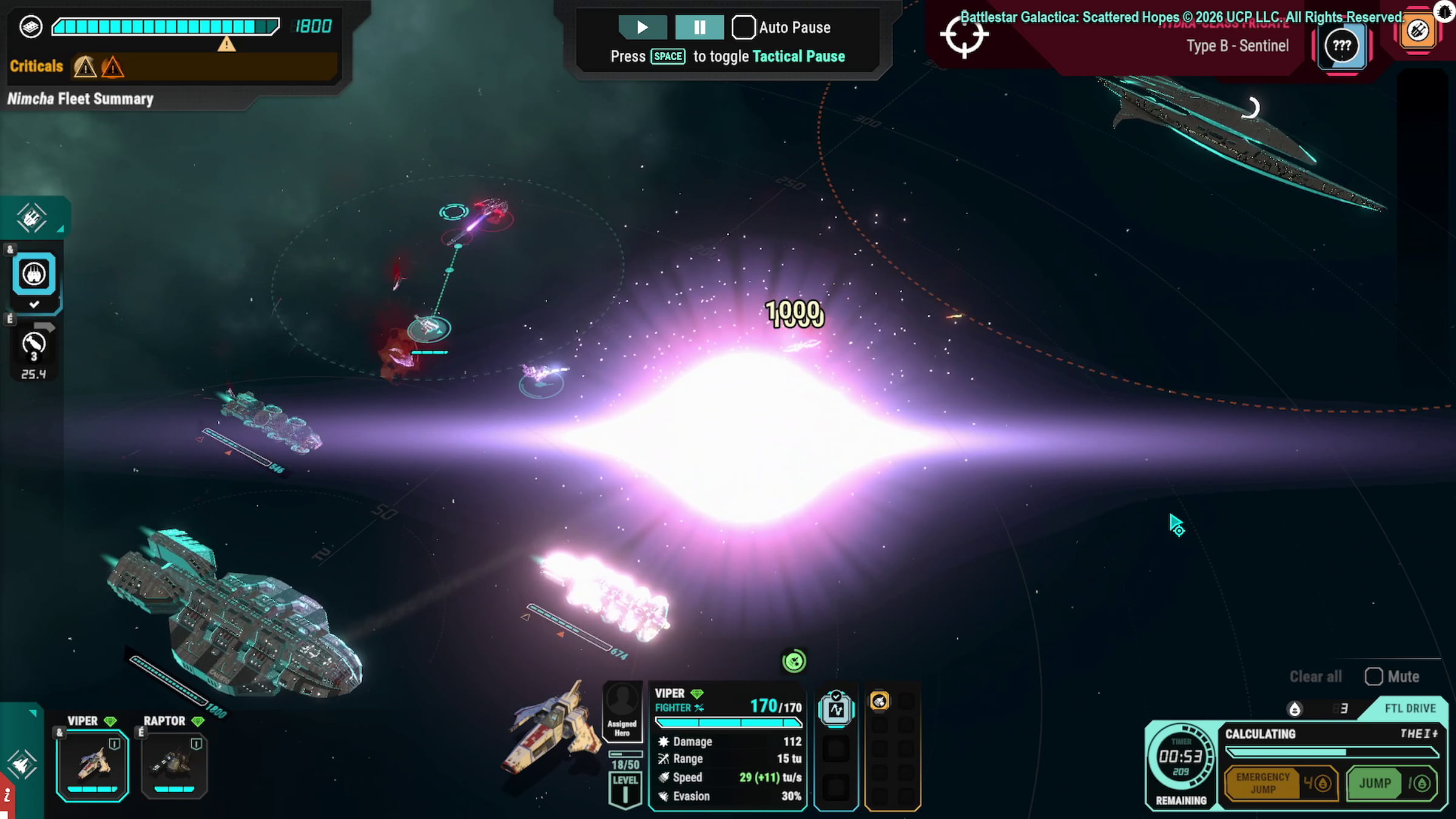
At first, Scattered Hopes feels like a classic space strategy game, with fleets, squad commands, and real-time battles. But it’s actually built like a roguelike: each playthrough is different thanks to random events, evolving upgrades, and long-term progress. You won’t defeat the Cylons through sheer power – they’re a constantly stronger enemy meant to keep you on the defensive. Instead of trying to win by overpowering them, your goal is simply to survive long enough to charge your jump drive and escape to the next area. This changes how you make every decision in the game.
Every time you play, the game presents fresh challenges. This happens through varied upgrades, different map designs, and unexpected events that change how your game unfolds. Moving between areas feels unpredictable, like a roguelike game, forcing you to react and adjust your strategy instead of sticking to a strict plan. Sometimes you’ll get lucky with early defensive boosts, making it easier to build up your fleet. Other times, you’ll face tough situations with little preparation. This constant change keeps each playthrough feeling new and exciting, just like a classic roguelike.
The appeal of this game lies in how well it captures the spirit of Battlestar. The universe is built around hardship and overwhelming challenges, not easy success. The game’s cycle of trying, failing, and trying again perfectly reflects this, making each loss feel like a painful setback and each win a meaningful achievement. At its core, the game is about simply surviving, and that strong connection between the story and gameplay is what truly makes it special.
The Preparation Phase: Decisions That Cost Time
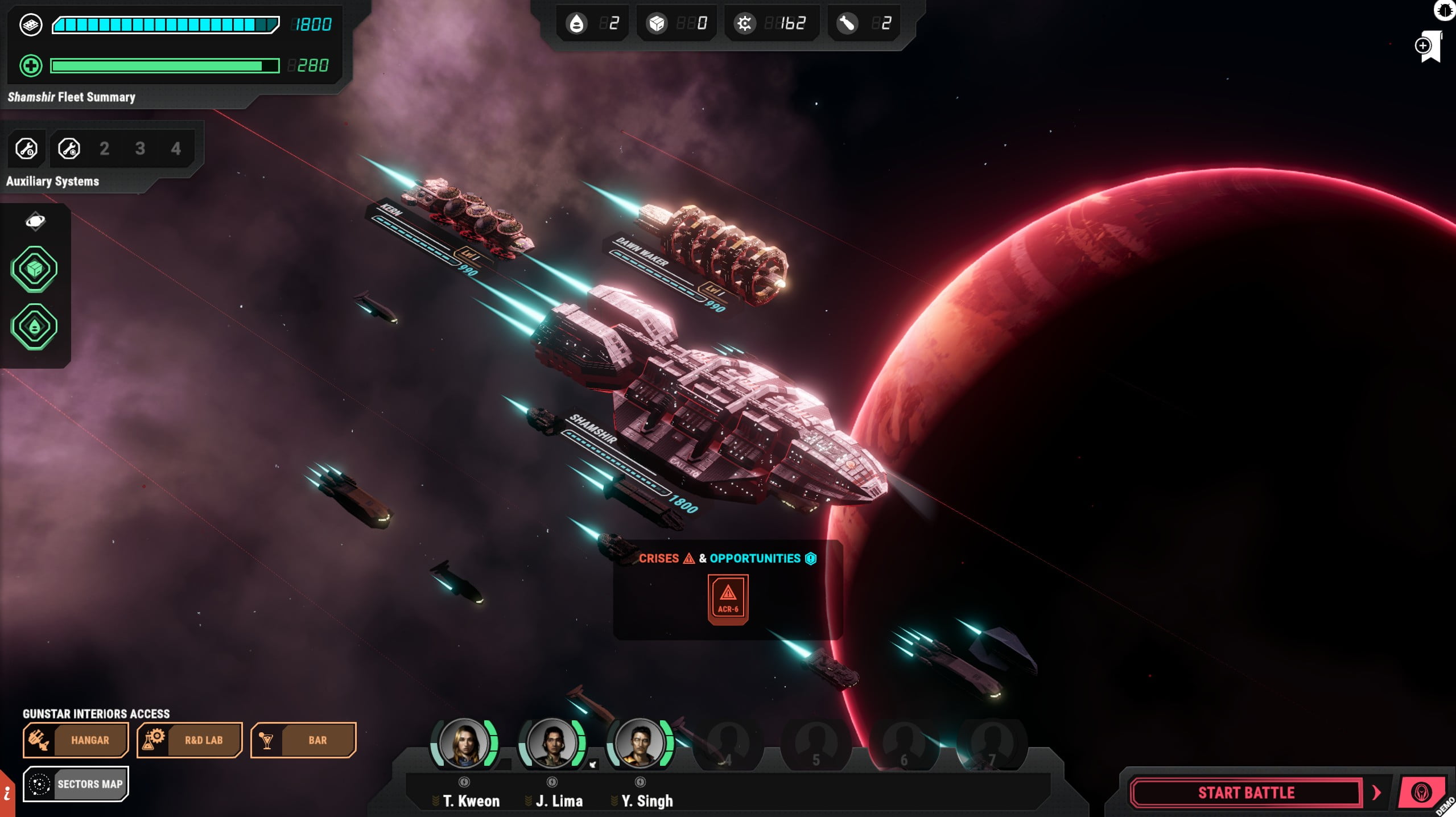
Okay, so in Scattered Hopes, the game basically splits into two main parts. The first part is all about getting ready – it’s where I really focus on managing my fleet. I assign my Heroes to different stations – they’re like super-specialists who give big boosts to whatever system they’re in charge of, so picking the right spot for them is key. I also spend a lot of time training my crew to make things run smoother – things like faster repairs, getting more out of my resources, and just generally improving how everything works. It’s not a huge change each time, but those little improvements really add up, because in this game, even a small edge can mean the difference between winning and losing.
Time is the most important thing to manage during this stage, as almost everything you do moves the Cylons closer to finding you. You’ll constantly be balancing getting ready and avoiding unnecessary risks, because focusing too much on improvement can make the Cylons even stronger. Unexpected situations pop up often, giving you choices between helpful rewards and dangerous downsides. You can save time by ignoring these events, but you might miss out on important benefits. However, ignoring major crises can be disastrous for your overall progress.
The Preparation phase is always stressful because you’re constantly racing against the clock. You’re forced to make tough choices, balancing immediate needs with future risks, all while building your fleet with the enemy closing in. The game isn’t about completing a to-do list; it’s about making meaningful decisions, because you can’t possibly do everything before the next attack. Limited time and resources prevent that. By the time the Cylons arrive, you realize every decision you’ve made has influenced the coming battle, and that responsibility carries over into combat.
The Battle Phase: Holding the Line Against the Cylons
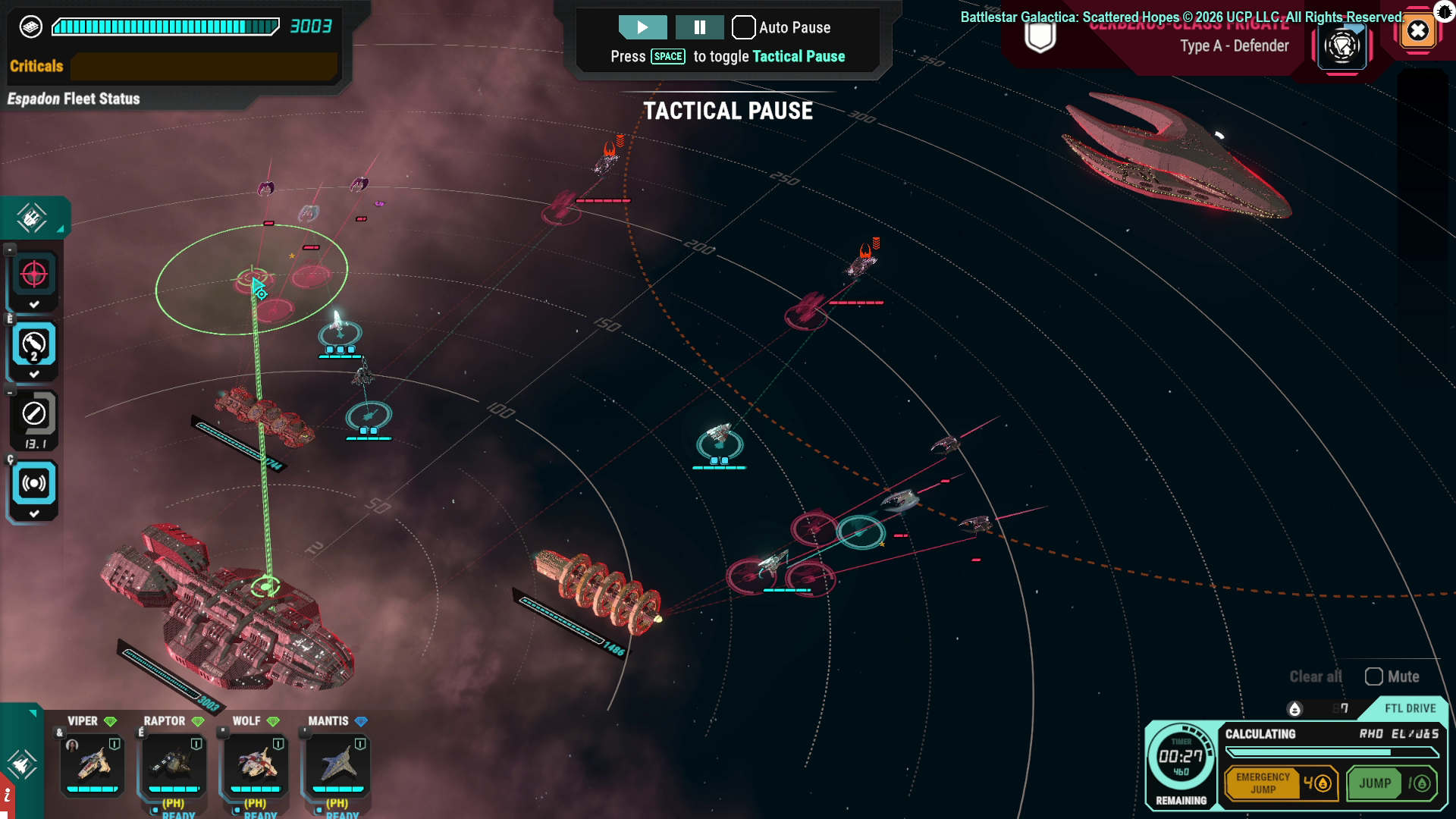
Once the Cylons arrive, the game enters its intense Battle phase. You’ll focus on protecting your Gunstar, which is the core of your fleet and your most important ship. You’ll face waves of enemy ships – some are simple fighters that gradually wear down your defenses, while others try to board your ships and cause internal damage. Adding to the challenge, the Cylons launch nuclear attacks that you need to intercept with your squadrons before they destroy everything. It quickly becomes a frantic effort to manage multiple threats at once.
Instead of focusing on destroying all enemies, the combat timer shifts your goal to simply surviving long enough for your ship to jump to safety. This means you’ll have to make tough choices about how to use your resources, where to position your ships, and which enemies are the biggest threat. For example, do you risk defending against a missile attack, or prioritize dealing with enemy ships trying to board? Every small mistake can quickly lead to bigger problems later on.
Damage isn’t just temporary – it lasts and affects your next round of preparation, linking the two parts of the game together. A tough battle can leave your ships badly damaged, requiring valuable time and resources to fix – resources you might not even have. This connection makes every fight feel important, because what happens in one battle impacts your choices later on. Even when you win, it often feels like a close call, as if you were barely able to hold on. This feeling of being vulnerable is central to how the combat works.
Building a Fleet Identity Through Roguelike Progression
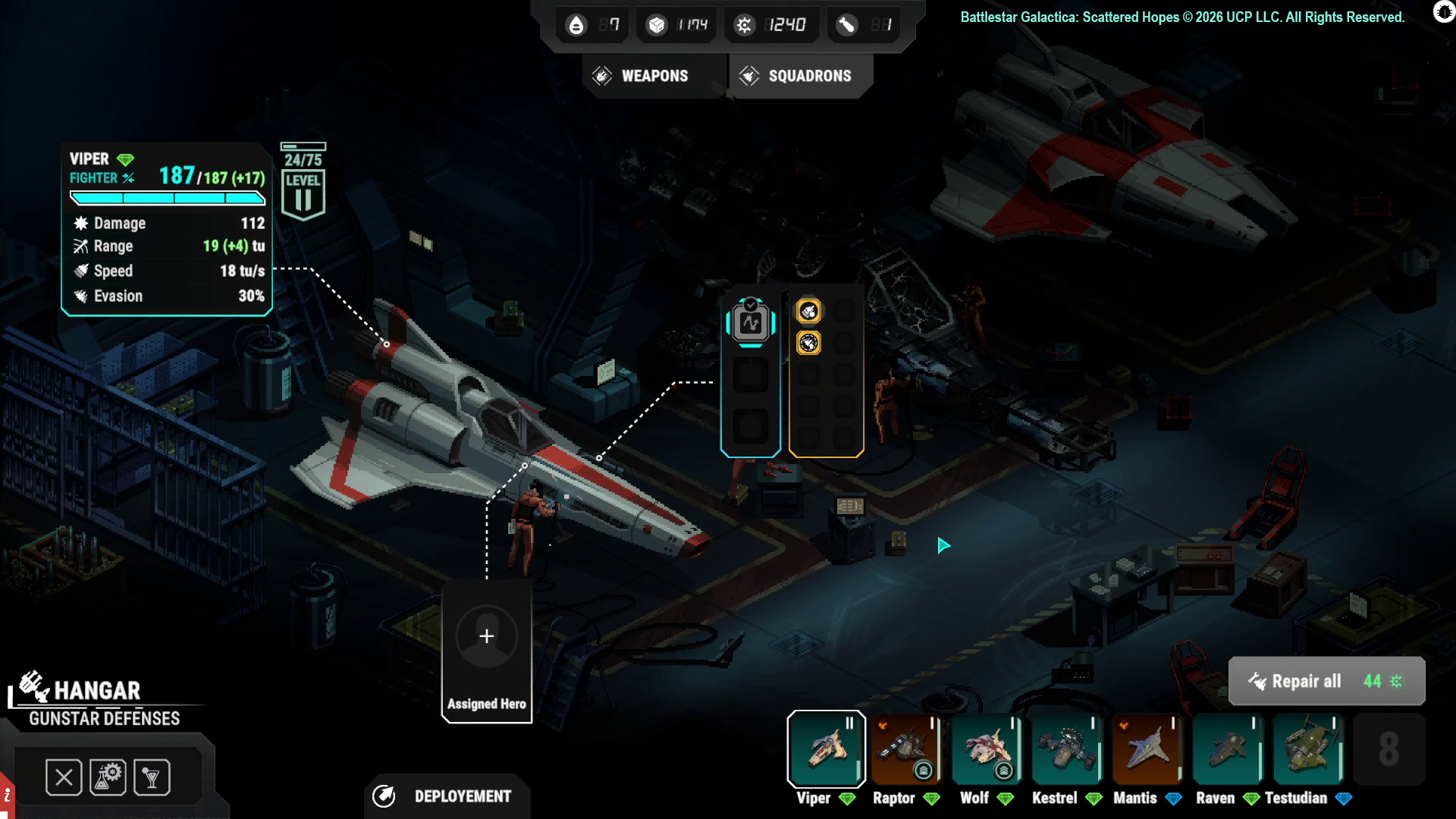
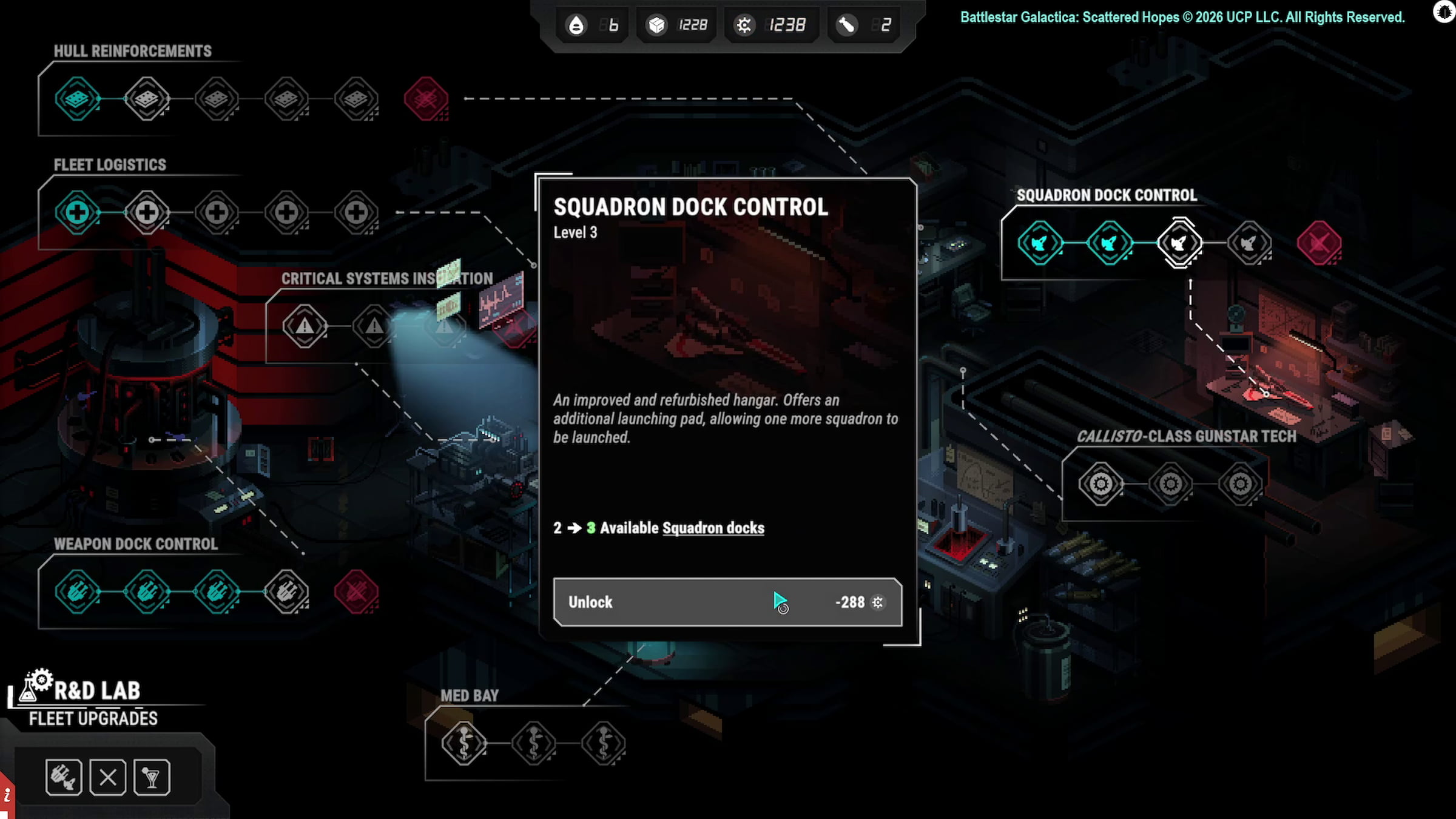
In Scattered Hopes, each playthrough lets you customize your fleet and how it operates. You can improve your ships, add new squadrons, and unlock special abilities that change how they handle different dangers. You might build a fleet focused on strong defenses, or one that’s quick and aggressive – it’s up to you! Because the available upgrades change with each run, you’ll need to be adaptable and change your plans instead of sticking to a single strategy. The game encourages you to react to the situation rather than try to perfectly optimize everything.
Heroes add another layer of customization by giving special benefits to the stations they control. Placing the right Hero in the right position can greatly improve how well things run or how tough your base is, and it works well with the upgrades you’ve already made. As you play, you’ll discover combinations that fit your style, but each run is different, so you can’t always count on the same setup. You also unlock new options over time, giving you more tools for future attempts. This means even when you lose, you’re still making progress and becoming more powerful.
The game’s changing nature keeps it interesting even after many playthroughs. You’re not trying to find one perfect way to play, but constantly trying out new strategies based on what the game throws at you. Because it’s a roguelike, skill comes from truly understanding how everything works, allowing you to react quickly to unexpected challenges. This focus on adapting fits perfectly with the game’s story about a fleet constantly moving and dealing with new dangers. It’s a clever design that makes the game both fun to replay and thematically consistent.
A Story Rooted in the Battlestar Legacy
In Scattered Hopes, the story stays true to the original Battlestar Galactica. The Cylons unexpectedly attack and wipe out the Twelve Colonies, and you’re one of the lucky few who survive. Your main goal is to get back to the Battlestar Galactica, where a plan is being made to fight the Cylons and save humanity. The game focuses on the journey itself, keeping the story simple and letting the gameplay take center stage. This straightforward approach works well with how the game is designed.
The game’s repeating cycle of attempts makes the story more impactful. Losing a run feels like witnessing another failed attempt at survival for your fleet, while each success feels like a hard-won victory against overwhelming odds. This repetition isn’t just a game mechanic; it emphasizes how precarious survival truly is. Like in XCOM 2, the game constantly puts you under pressure with limited resources and uncertain outcomes, creating a tense atmosphere where even safe moments feel temporary.
This early look at Battlestar Galactica: Scattered Hopes shows it really gets what fans love about the series. It turns the feelings of desperation and the struggle to survive into gameplay that affects every choice you make. If the finished game keeps this balance between intense moments and the desire to play again, it could be a unique combination of real-time strategy and roguelike elements. Right now, the goal isn’t about winning against the Cylons, but simply how long you can keep going while trying to reach the Battlestar Galactica.
What do you think? Leave a comment below and join the conversation now in the ComicBook Forum!
Read More
- Looks Like SEGA Is Reheating PS5, PS4 Fan Favourite Sonic Frontiers in Definitive Edition
- Dune 3 Gets the Huge Update Fans Have Been Waiting For
- Gold Rate Forecast
- Pluribus Star Rhea Seehorn Weighs In On That First Kiss
- Kelly Osbourne Slams “Disgusting” Comments on Her Appearance
- Antiferromagnetic Oscillators: Unlocking Stable Spin Dynamics
- Arknights: Endfield – Everything You Need to Know Before You Jump In
- Tomodachi Life: Living the Dream ‘Welcome Version’ demo now available
- Why Eriksholm: The Stolen Dream Could Be 2025’s Standout Stealth Experience
- Goat 2 Release Date Estimate, News & Updates
2026-02-16 19:44