Author: Denis Avetisyan
New research demonstrates how entanglement negativity can reveal topological phases even after quantum systems succumb to decoherence.
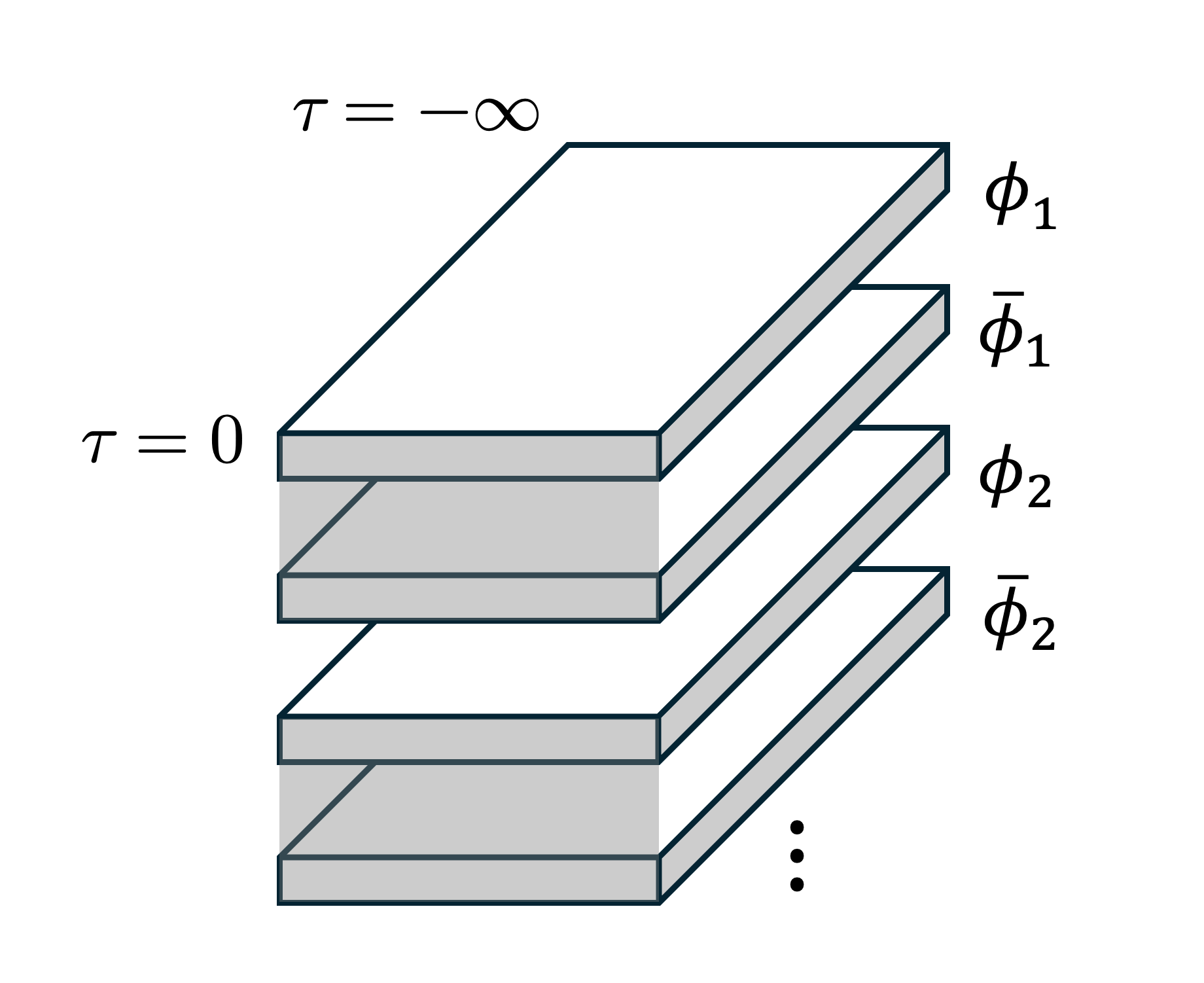
This review explores the connection between entanglement negativity, one-form symmetries, and the characterization of topological order in mixed states arising from decohered pure states.
Characterizing topological order in many-body systems remains challenging, particularly when considering the realistic effects of decoherence and mixed states. This is addressed in ‘Entanglement negativity in decohered topological states’, where the authors investigate how entanglement negativity and mutual information can serve as robust signatures of topological phases subject to decoherence. They demonstrate a connection between these entanglement measures and the quantum dimensions of anyonic excitations, revealing that mutual information probes the full emergent anyon theory while negativity isolates its modular part. Could these tools offer a pathway to definitively identify and classify topologically ordered states even in noisy, real-world systems?
Beyond the Ideal: Embracing Imperfection in Topological Order
Conventional understandings of topological order hinge on the existence of exceptionally pure, or pristine, quantum states – systems largely undisturbed by environmental noise. However, this requirement presents a significant hurdle for realizing topological quantum computation in practical devices. Real-world quantum systems invariably interact with their surroundings, leading to decoherence and the introduction of mixed states characterized by probabilistic combinations of pure states. This sensitivity to imperfections limits the scalability and reliability of devices built on traditional topological principles. The reliance on ideal conditions effectively confines topological order to the realm of theoretical physics and carefully controlled laboratory experiments, hindering its translation into robust, functioning quantum technologies. Therefore, exploring topological phenomena that can persist even within these noisy, mixed states is crucial for unlocking the full potential of this promising field.
The pursuit of stable quantum technologies faces a significant hurdle: decoherence, the loss of quantum information due to environmental interactions. Mixed-state topological order presents a compelling strategy to overcome this fragility. Unlike conventional topological phases reliant on perfectly ordered quantum states, this approach leverages robustness even within noisy, mixed quantum states. This resilience stems from the way information is encoded – not in fragile individual quantum particles, but in the collective properties of many-body entanglement, distributed across the system. Consequently, even with imperfections and disturbances, the essential topological properties – and the protected quantum information they harbor – can persist. This offers a pathway toward building practical quantum devices that are less susceptible to environmental noise and more capable of sustaining quantum coherence for extended periods, a crucial requirement for scalable quantum computation and communication.
Characterizing entanglement within mixed-state topological order demands a departure from conventional measures like entanglement entropy, which are ill-suited for describing correlations in noisy quantum systems. Traditional entanglement entropy relies on the purity of the quantum state, failing to capture the subtle, yet crucial, correlations present when decoherence and thermal fluctuations are significant. Researchers are now developing novel theoretical frameworks, including utilizing χ-matrices and Rényi entropies generalized to mixed states, to quantify these correlations more effectively. These advanced tools aim to reveal how topological order can persist even in the presence of noise, focusing on identifying and measuring entanglement that is robust against local perturbations. Successfully characterizing this ‘fragile’ entanglement is paramount, as it directly dictates the stability and potential for manipulation of topological quantum information in realistic devices.
Quantifying the Intangible: Entanglement Measures for Mixed States
Topological entanglement negativity (TEN) functions as a quantifiable measure of entanglement specifically designed for mixed states, which are quantum states that are not pure. Traditional entanglement measures, such as entanglement entropy, often fail or provide ambiguous results when applied to mixed states due to the difficulty in defining entanglement in these scenarios. TEN circumvents these limitations by focusing on the negativity of the partial transpose, a technique that identifies entangled states even when standard methods cannot. This approach allows for a robust and reliable determination of entanglement in systems exhibiting decoherence or thermalization, providing a more complete characterization of quantum correlations than is possible with purely entropy-based measures. The robustness of TEN makes it particularly valuable for analyzing systems where mixed states are prevalent, such as those found in condensed matter physics and quantum information processing.
Topological entanglement negativity (TEN), within the established theoretical framework, directly quantifies the modular part of anyon theories. This modularity is crucial as it characterizes the braiding statistics of anyons and distinguishes different topological phases. Specifically, TEN provides a means to identify and characterize these phases even in the presence of decoherence or thermal noise, conditions under which standard entanglement measures often fail. The ability to reliably detect this modular structure via TEN serves as a robust diagnostic for the presence of a topological order, independent of specific details of the system’s Hamiltonian, and allows for the classification of distinct topological phases based on their anyonic properties.
Topological mutual information (TMI) provides a means to characterize entanglement in mixed states, extending the concepts traditionally applied to pure states via topological entanglement entropy. Specifically, TMI functions as an analogue to topological entanglement entropy by quantifying the long-range entanglement present even in thermal or disordered systems. Crucially, the value of TMI directly probes the total quantum dimension, denoted as ln 𝒟, of the underlying anyon theory. This parameter, ln 𝒟, represents the total number of anyonic excitations and is a fundamental characteristic of the topological phase, allowing for its identification and classification based on the observed mutual information.
Analysis indicates that both Topological Entanglement Negativity (TEN) and Topological Mutual Information (TMI) are quantitatively equivalent to ln 𝒟, where 𝒟 represents the total quantum dimension of the anyon theory. This correspondence establishes a direct link between these entanglement measures and the fundamental properties of the underlying topological order. Specifically, the value of ln 𝒟 derived from TEN or TMI calculations provides a means to determine the total quantum dimension, a key characteristic defining the anyon model and distinguishing different topological phases of matter. This finding confirms that both TEN and TMI serve as robust probes of the anyon theory in mixed states, offering complementary methods to characterize topological order beyond ground-state entanglement.
Symmetries in the Noise: Preserving Order Amidst Disorder
One-form symmetry is a property of a system defined by the behavior of string operators, which are loop-like excitations that create non-local effects. Specifically, a one-form symmetry exists if there is no local operator that can change the flux of a string operator. This symmetry is crucial for characterizing topological phases of matter because it constrains the possible types of topological order. The presence of a one-form symmetry implies the existence of excitations with fractional statistics – anyons – and dictates their allowed braiding properties. Systems exhibiting one-form symmetry are protected from local perturbations, making them potentially useful for fault-tolerant quantum computation; the symmetry ensures that certain quantum states remain robust against noise.
Extending the concept of one-form symmetries to mixed states – quantum states that are probabilistic mixtures of pure states – allows for the characterization of topological order even in the presence of decoherence and thermal noise. Conventional symmetry analysis typically relies on pure states, but many physical systems are better described by density matrices representing mixed states. Strong one-form symmetry in a mixed state ρ implies the existence of a symmetry operator U such that U\rho U^\dagger = \rho, while weak symmetry allows for a phase factor. These symmetries constrain the possible types of topological phases and dictate the behavior of topological defects, offering a robust framework for analyzing topological order in realistic, noisy environments where pure state assumptions are invalid.
The braiding statistics of anyons – quasiparticles exhibiting fractional exchange statistics – are fundamentally determined by the presence and nature of one-form symmetries within a system. Specifically, the symmetry dictates how the wavefunction changes when two anyons are exchanged, resulting in either bosonic or fermionic statistics, or more generally, fractional phases. These phases accumulate during a braiding process, where anyons are moved around each other in a closed loop. The accumulated phase is directly related to the symmetry properties and serves as a key indicator of topological order. In the context of topological qubits, these non-Abelian braiding statistics provide a means for performing quantum computations that are robust against local perturbations, as the quantum information is encoded in the braiding history rather than in the precise location of the anyons.
The Language of Order: Modular Tensor Categories as a Blueprint for Topology
Modular tensor categories represent a powerful mathematical language for precisely characterizing anyons – exotic particles exhibiting neither bosonic nor fermionic statistics. These categories don’t merely acknowledge the existence of anyons, but provide a framework to describe how they behave when exchanged – a property known as braiding. The mathematical structure intrinsically encodes the rules governing this braiding, capturing the fundamental difference between exchanging two identical particles and rotating one around the other. Crucially, this isn’t just about qualitative behavior; the category’s properties allow calculation of quantities like the S-matrix, which directly relates to the exchange statistics and dictates the overall topological order of the system. This rigorous formalism moves beyond intuitive descriptions, providing a solid foundation for predicting and understanding the emergent phenomena in systems hosting these unique particles.
Quantum dimensions, calculated within the framework of modular tensor categories, represent a fundamental property of anyonic excitations and are crucial for characterizing topological phases of matter. These dimensions, denoted as d_i for each anyonic type i, aren’t simply geometric sizes; rather, they dictate the statistical behavior of these quasi-particles when exchanged. A topological phase’s inherent robustness stems from the fact that these quantum dimensions, and the braiding rules they underpin, are insensitive to local perturbations. Consequently, calculating these values allows researchers to predict macroscopic properties like ground state degeneracy and edge state behavior, effectively distinguishing between different topological orders and paving the way for potential applications in fault-tolerant quantum computation. The ability to precisely determine these dimensions provides a powerful tool for both theoretical understanding and experimental verification of exotic quantum phases.
Modular tensor categories represent a significant advancement in the theoretical description of topological order because of their broad applicability. Traditionally, topological phases were classified as either abelian or non-abelian, distinguished by the nature of their anyonic excitations and the commutativity of their braiding operations. However, these mathematical structures provide a unified framework capable of encompassing both types of order within a single, consistent formalism. This means that the same set of tools and concepts can be used to analyze systems exhibiting simple, bosonic anyons – characteristic of abelian phases – and those with more complex, non-commutative anyons – hallmarks of non-abelian phases potentially useful for topological quantum computation. The power of this unification lies in its ability to reveal underlying mathematical connections between seemingly disparate physical systems, offering a deeper understanding of the fundamental principles governing topological phases of matter and paving the way for the prediction and design of novel quantum materials.
The G-graded String-Net model serves as a tangible realization of the abstract mathematical structures within modular tensor categories, providing a pathway to understand how these concepts manifest in physical systems. This model posits that the ground state of a matter system is described not by a single quantum state, but by a superposition of string-like excitations connected by specific rules dictated by the chosen tensor category. The braiding of these strings, a direct consequence of the category’s mathematical properties, then leads to emergent phenomena like fractional statistics and topological order. Crucially, the model’s parameters – the fusion rules and braiding statistics – are entirely determined by the chosen modular tensor category, offering a powerful tool for designing and predicting the behavior of novel topological phases of matter, and bridging the gap between theoretical mathematics and experimentally observable physics.
Tools for the Future: Unveiling Topology with Computation
The replica trick is a sophisticated analytical technique employed in condensed matter physics and quantum information theory to quantify entanglement, specifically through the calculation of Rényi entropies and entanglement negativity. This method cleverly addresses the difficulty of directly computing these quantities for many-body systems by introducing the concept of ‘replicas’ – essentially, creating multiple identical copies of the system and studying their correlations. By analytically continuing the number of replicas to non-integer values, physicists can circumvent the challenges posed by interactions and obtain valuable insights into the system’s entanglement structure. S_{\alpha} = \frac{1}{1-\alpha} \lim_{n \to 1} \frac{\partial}{\partial n} Z(n)^{\alpha} , where S_{\alpha} is the Rényi entropy of order α and Z(n) is the partition function of n replicas. This approach not only provides a pathway to determine entanglement measures but also reveals critical information about the topological order and robustness of quantum states, making it a cornerstone in the development of fault-tolerant quantum computation.
Field-theoretical approaches offer a compelling pathway to quantify topological entanglement by establishing a direct correspondence between these measures and the quantum dimensions of defects within the system. This mapping allows researchers to translate the complex calculation of entanglement – which typically requires intricate many-body analysis – into determining properties of these defects, such as anyons or vortices. Specifically, topological entanglement negativity and Rényi entropies can be expressed as functions of these quantum dimensions, simplifying the computational burden and providing valuable physical insight. By characterizing the defects, one effectively probes the long-range entanglement inherent in topologically ordered phases, enabling the prediction and design of materials with robust quantum properties and potential applications in fault-tolerant quantum computation. This technique isn’t merely a computational trick; it reveals a deep connection between entanglement and the fundamental excitations governing topological order.
The convergence of computational techniques – notably the replica trick and field theory – with the abstract mathematical language of modular tensor categories presents a promising avenue for advancements in topological quantum computation. This framework allows researchers to not only characterize the entanglement properties of exotic quantum states, but also to translate these properties into concrete design principles for quantum devices. By leveraging the inherent robustness of topological phases – where information is encoded in the global properties of the system rather than local degrees of freedom – these tools facilitate the creation of devices less susceptible to environmental noise and decoherence. The ability to map topological entanglement measures to the quantum dimensions of defects within this framework provides a powerful way to assess and engineer the stability and performance of such devices, ultimately bringing the realization of fault-tolerant quantum computation closer to reality.
Investigations into the toric code, a prominent example of a topological quantum code, reveal a surprising resilience to decoherence when measuring topological entanglement negativity. Despite the inevitable introduction of noise and environmental interactions, calculations demonstrate that the decoherence effect on this crucial entanglement measure remains consistent with the pure state value of \ln 2. This suggests a fundamental robustness inherent in topological entanglement, preserving its capacity to detect and quantify entanglement even in noisy conditions. The persistence of this value is not merely a mathematical curiosity; it highlights the potential for utilizing topological codes in practical quantum information processing where maintaining entanglement is paramount, even in the presence of errors.
Investigations into the doubled Ising model have revealed a specific value for its Topological Mutual Information: 3/2 \ln 2. This result signifies a quantifiable relationship between the entanglement present across the boundaries of the doubled system and its inherent topological order. The calculation, achieved through a combination of replica techniques and field-theoretical mapping, demonstrates how this particular measure captures information about the system’s non-local correlations. Importantly, this value isn’t merely a mathematical outcome; it offers a concrete benchmark for assessing the robustness of topological phases and provides a pathway for characterizing the flow of quantum information within these systems, suggesting potential applications in fault-tolerant quantum computation.
The study meticulously pares away extraneous complexity to reveal the fundamental properties of decohered topological states. It seeks not to add layers of explanation, but to distill the essence of topological order using entanglement negativity as a diagnostic. This resonates with a sentiment expressed by Hannah Arendt: “The greatest banality of evil is that it can be done by ordinary people.” While seemingly disparate, both concepts highlight how seemingly complex phenomena – be it societal evil or quantum decoherence – can stem from underlying, basic principles. The work effectively demonstrates that even in mixed states, topological order leaves discernible traces, a clarity achieved not through increased complexity, but through careful removal of noise and focus on essential indicators, thus embodying the principle that a system requiring elaborate instruction has already faltered.
Where To Now?
The pursuit of topological order in realistically decohered systems demands a ruthless pruning of complexity. This work, by connecting entanglement negativity to underlying anyon theory and one-form symmetries, offers a promising, yet incomplete, diagnostic. The continued reliance on measures derived from pure states-even when applied to mixed states-feels… generous. Future efforts should prioritize extracting topological invariants directly from experimental observables, rather than inferring them through elaborate reconstructions of the density matrix.
A pressing limitation remains the difficulty in unambiguously identifying topological order in the presence of strong decoherence. The signal, inevitably, diminishes. The challenge is not to amplify it through increasingly sophisticated calculations, but to refine the very definition of topological order to withstand the inevitable noise. Perhaps the most fruitful avenue lies in focusing not on what remains of the topological phase, but on the fundamental symmetries that are preserved by the decoherence process.
The field should resist the temptation to build ever more elaborate modular categories, and instead ask: what is the simplest anyon theory consistent with the observed experimental constraints? The elegance of a solution is, after all, a form of evidence. A truly robust theory of decohered topological states will be defined not by its ability to capture every nuance of the underlying physics, but by its willingness to discard everything that is not essential.
Original article: https://arxiv.org/pdf/2602.16597.pdf
Contact the author: https://www.linkedin.com/in/avetisyan/
See also:
- Gold Rate Forecast
- Dune 3 Gets the Huge Update Fans Have Been Waiting For
- ’90s Cartoon Reboot & TMNT Connection!
- Guardians of the Globe Members We Want to See in Invincible Season 4
- Hideo Kojima Says He Was Never Told About The Matrix Creators Wanting Him to Make a Game
- Kelly Osbourne Slams “Disgusting” Comments on Her Appearance
- Why Gideon Emerges as Resident Evil Requiem’s Most Compelling Character
- After Stranger Things’ Conformity Gate Crashed Netflix, Here’s What The Ending SHOULD Have Been
- Netflix’s Run Away is the latest show to fail the Gen Z social media test
- 5 Best Sidekicks For Jon Bernthal’s Punisher After Game-Changing MCU Rumor
2026-02-20 03:08