Author: Denis Avetisyan
A new theoretical framework moves past traditional mean-field approximations to reveal how spatial variations and interaction ranges shape the behavior of physical systems.
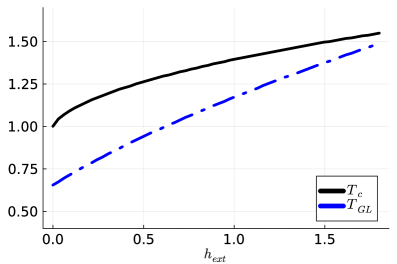
This review develops fluctuation diagnostics and analyzes fixed-point behavior to understand how gradient terms and interaction ranges impact critical phenomena and universality classes.
While mean-field theory provides a foundational framework for understanding critical phenomena, its inherent limitations often obscure crucial details of interacting systems. This is addressed in ‘Beyond Mean Field: Fluctuation Diagnostics and Fixed-Point Behavior’, which develops theoretical diagnostics to identify the breakdown of this approximation and incorporate the effects of spatial structure and finite interaction ranges. The authors demonstrate that these considerations naturally introduce gradient terms and can shift renormalization-group fixed points-potentially altering critical behavior without necessarily changing universality classes. How might these refined diagnostics further illuminate the complex interplay between fluctuations and fixed points in diverse physical systems?
The Illusion of Simplicity: Approaching Complex Systems
Many investigations into the behavior of physical systems begin with Mean-Field Theory, a powerful approach that drastically simplifies complex interactions. This technique essentially replaces the influence of all other elements on a given element with an average, or “mean,” effect, thereby transforming a many-body problem into a much more manageable, single-particle one. While this simplification allows for analytical solutions and provides a valuable first approximation, it’s akin to viewing a detailed painting as a single wash of color-certain nuances are inevitably lost. The primary benefit lies in its tractability; researchers can quickly establish a baseline understanding of a system’s behavior without getting bogged down in intractable calculations. However, it’s crucial to recognize that this ease comes at the cost of potentially overlooking vital details, especially when dealing with phenomena sensitive to subtle correlations between elements, such as those occurring near critical points.
Mean-field theory, while providing a valuable first approximation for many interacting systems, inherently overlooks the intrinsic fluctuations that arise from individual particle interactions. These fluctuations, often dismissed as minor perturbations, can dramatically alter a system’s behavior, particularly as it approaches a critical point-a condition where long-range order emerges. The neglect of these fluctuations leads to inaccurate predictions for critical exponents and correlation lengths, essentially misrepresenting the collective behavior of the system. For instance, phenomena like spontaneous magnetization or phase transitions are poorly described when fluctuations aren’t accounted for, as the theory assumes a homogenous, average environment that doesn’t reflect the actual, dynamic interplay between constituents. Consequently, a more refined treatment, incorporating these fluctuations, becomes essential for a complete and accurate understanding of critical phenomena and the true nature of emergent order.
Accurate descriptions of physical systems, especially those nearing critical points-where subtle changes can trigger dramatic shifts in behavior-require careful consideration of fluctuations. While mean-field theory offers a streamlined approach to modeling complex interactions, it inherently overlooks these vital deviations, potentially leading to incorrect predictions. The dominance of these fluctuations can be estimated through a direct relationship between the system’s correlation length ξ – a measure of how far apart particles can be and still be correlated – and the curvature of the mean-field potential, denoted as U"_{MF}. Specifically, the equation ξ² ↔ U"_{MF} provides a quantitative link: a decreasing curvature signals increasing fluctuations and the potential breakdown of the mean-field approximation, highlighting the need for more sophisticated models that incorporate these effects to fully capture the system’s behavior.
Diagnosing Instability: Beyond the Average Field
Ginzburg-Landau (GL) theory extends beyond mean-field approximations by incorporating fluctuation effects through a systematic expansion in terms of a small parameter, typically related to the correlation length. This is achieved by considering higher-order gradients of the order parameter in the free energy functional, effectively accounting for spatial variations and the associated energetic cost. The resulting functional allows for the calculation of correlation functions and critical exponents that deviate from those predicted by simpler mean-field models. Specifically, the GL approach introduces terms proportional to \nabla^2 \psi and (\nabla \psi)^2 into the free energy, where ψ represents the order parameter, enabling a perturbative treatment of fluctuations around a homogeneous mean-field solution. This allows for the investigation of systems where fluctuations are significant, such as near critical points or in low-dimensional systems.
The Ginzburg-Landau (GL) criterion functions as a diagnostic tool for evaluating the validity of mean-field approximations in physical systems. It determines whether fluctuations around the mean-field solution are sufficiently large to significantly alter the system’s behavior and invalidate the simplified mean-field description. Specifically, the criterion assesses the relative magnitude of fluctuation contributions to the order parameter; if these contributions exceed a certain threshold, the mean-field approximation is considered unreliable, and more sophisticated treatments accounting for fluctuations are necessary. This assessment is crucial because mean-field theory, while simplifying calculations, inherently neglects these fluctuations and can lead to inaccurate predictions when their impact is substantial.
The Ginzburg-Landau criterion quantitatively assesses the validity of mean-field approximations by comparing the magnitude of fluctuation contributions to the order parameter. This comparison is formalized through renormalization group analysis, which identifies fixed points characterizing the system’s behavior. For a standard Wilson-Fisher Fixed Point (WFFP), the resulting fixed point location is defined as \lambda¯ \rightarrow_{WFFP} = (-1/7, 48\pi^2/(49\beta¯)), where λ represents the coupling constant and \beta¯ is the renormalized beta function. Deviation from this fixed point indicates the dominance of fluctuations and the breakdown of the mean-field approach, necessitating the inclusion of higher-order corrections for accurate modeling.
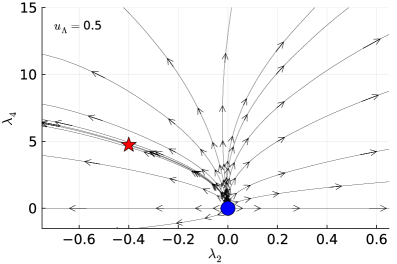
Tracing the Flow: Renormalization and the Emergence of Scale
The Renormalization Group (RG) is a methodology used in physics to examine the evolution of physical quantities as the observation scale changes. Unlike traditional perturbative approaches which often treat fluctuations as small corrections, the RG inherently accounts for their influence by systematically integrating out high-momentum modes – effectively “coarse-graining” the system. This process doesn’t simply eliminate these modes; instead, it renormalizes the parameters of the theory, modifying their values to reflect the effects of the eliminated fluctuations on lower-energy phenomena. By tracing the flow of these renormalized parameters with changing scale, the RG provides a framework for understanding how microscopic interactions give rise to macroscopic behavior, and whether a system exhibits universality – meaning its properties are independent of the specific details of the microscopic interactions.
The Renormalization Group (RG) procedure involves progressively eliminating degrees of freedom associated with high-momentum modes, also known as Ultraviolet (UV) momentum. This elimination isn’t simply removing terms; it fundamentally alters the effective parameters governing the low-momentum, long-distance physics. As high-momentum modes are integrated out, the remaining parameters ‘flow’ – their values change depending on the chosen scale of observation. Crucially, certain parameter values, termed ‘fixed points’, remain invariant under this flow. These fixed points represent scale-invariant behavior and dictate the system’s long-distance properties. Identifying these fixed points and characterizing the flow towards them provides insight into the stability of the system and the nature of its phase transitions. The location of the fixed points determines whether the system exhibits critical behavior, and the associated scaling exponents can be extracted from the flow.
The precise values determined at fixed points of the Renormalization Group directly govern the system’s behavior at long distances. For systems with separable interactions, the Wilson-Fisher fixed point (WFFP) undergoes a shift described by \lambda\bar{\rightarrow} WFFP = (-1/(1+6u\Lambda^2), 4\pi^2/(3) <i> (6u\Lambda^2/(1+6u\Lambda^2))^2 </i> \bar{\beta}) , where u represents the interaction strength, Λ is a high-momentum cutoff, and \bar{\beta} is the renormalized beta function. This shift indicates that fluctuations, accounted for by the RG procedure, can significantly alter the long-distance behavior compared to predictions from a simple mean-field approximation, which would not capture these scale-dependent corrections.
Simplifying Complexity: Analytical Tractability Through Abstraction
Employing a separable interaction kernel within the Renormalization Group (RG) flow equations significantly reduces computational complexity, enabling analytical solutions that would otherwise be intractable. This simplification arises from the decomposition of the interaction into a product of functions, each dependent on a single variable, rather than requiring calculations involving multi-dimensional integrals. Specifically, the interaction potential V(\mathbf{r}, \mathbf{r'}) is approximated as V(\mathbf{r}, \mathbf{r'}) = g \phi(\mathbf{r}) \phi(\mathbf{r'}), where g represents the coupling strength and φ is a single-variable function. This separation transforms the complex flow equations into a more manageable form, allowing for the determination of critical exponents and the qualitative behavior of the system without resorting to numerical methods.
The Landau potential, expressed generally as F = a\phi^2 + b\phi^4 + \dots, serves as a central functional for characterizing the free energy of a system undergoing a phase transition, with φ representing the order parameter. Within the framework established by using a separable interaction kernel to simplify the renormalization group flow equations, the Landau potential provides a tractable means to analyze the system’s stability and identify critical behavior. Specifically, the coefficients in the Landau expansion-such as ‘a’ and ‘b’-are determined by the microscopic details of the system and their temperature dependence dictates the location of the critical point and the nature of the phase transition. By focusing on this functional, calculations regarding the order parameter and its fluctuations become significantly simplified, enabling analytical progress in understanding the system’s phase behavior.
Incorporating gradient terms into mean-field theory allows for the modeling of spatial variations in the order parameter, thereby increasing the model’s capacity to accurately represent systems exhibiting non-uniform behavior. Critically, the addition of a separable interaction kernel does not alter the eigenvalues at the Wilson-Fisher fixed point (WFFP); this indicates that the qualitative behavior of the system remains consistent. The separable interaction exclusively impacts the location of the WFFP in parameter space, signifying a change in the critical parameters required to reach the fixed point, but not in the universality class of the transition itself. This preservation of eigenvalues simplifies analysis, as the fundamental critical exponents remain unaffected by the inclusion of the separable interaction.
The Power of Collective Behavior: Universality and Beyond
The remarkable concept of Universality Classes demonstrates that vastly different physical systems can exhibit identical critical behavior. This isn’t a coincidence; systems are grouped not by what they are made of, but by the symmetries and dimensionality of their underlying order parameters and fluctuations. For example, a simple ferromagnet and a liquid-gas transition, though seemingly disparate, both fall into the Ising Universality Class because they share the same symmetries and dimensionality, leading to identical critical exponents governing their behavior near the transition point. This means that detailed microscopic interactions are irrelevant at the critical point; the system’s macroscopic behavior is dictated by broad, collective phenomena, a powerful simplification enabling predictions across diverse fields like magnetism, fluid dynamics, and even social science. The critical exponents, such as the critical temperature T_c or the power-law decay of correlations, become universal constants characterizing the entire class, regardless of the specific material or process involved.
Critical phenomena are often modeled using gradient expansions, which assume interactions are strictly local – that is, a property at one point depends only on its immediate surroundings. However, many real-world systems exhibit non-local interactions, where distant elements influence each other’s behavior. These long-range correlations fundamentally reshape the renormalization group (RG) flow, the mathematical process describing how a system simplifies at different scales. Consequently, the resulting critical exponents – numbers defining the system’s behavior near a critical point – can deviate significantly from those predicted by simpler, local-interaction models. The degree of this alteration is directly tied to the strength and range of these non-local effects; a sufficiently strong non-locality can even drive a system away from its expected universality class, creating entirely novel critical behavior not captured by traditional mean-field theory. Understanding these deviations is crucial for accurately modeling diverse phenomena, from magnetism and superconductivity to turbulent fluids and even certain aspects of cosmology.
Predictive power regarding complex systems hinges on recognizing the limitations of simplified models; while mean-field approximations offer valuable insights, their accuracy diminishes as interactions become more intricate or long-ranged. The infrared (IR) cutoff serves as a crucial benchmark, signaling the scale at which these approximations break down and non-universal behavior emerges. Essentially, this cutoff defines the length scale over which microscopic details become relevant, necessitating more sophisticated analytical techniques or numerical simulations to accurately capture the system’s behavior. By carefully considering the IR cutoff and the nature of interactions, researchers can determine when to move beyond mean-field theory, enabling precise predictions about phenomena ranging from magnetic phase transitions to critical phenomena in diverse physical and biological systems. This understanding allows for a more nuanced approach to modeling complexity, bridging the gap between simplified descriptions and the rich reality of interacting systems.
The study illuminates how order arises not from imposed structure, but from the interplay of local rules governing system behavior. Much like a forest evolving without a forester, yet adhering to the rules of light and water, the emergence of spatial structure with gradient terms isn’t a directed process. As Georg Wilhelm Friedrich Hegel noted, “The truth is the whole.” This resonates with the paper’s departure from mean-field approximations; it’s not enough to consider average behavior-understanding the whole system, including fluctuation effects and how interaction ranges shift fixed points, is crucial. The research demonstrates that while universality classes may remain consistent, the precise path to a fixed point is determined by these nuanced local interactions.
What’s Next?
The insistence on diagnostics, rather than prescriptions, necessarily highlights where further exploration is warranted. While this work demonstrates the potential for shifting fixed points via interaction range – without necessarily invoking a change in universality class – the precise mechanisms for identifying such shifts a priori remain elusive. The system seems to whisper its preferences, and discerning those subtle cues requires increasingly sensitive probes. The elegance of self-organization suggests that control is an illusion; influence, however, is demonstrably real. The challenge now lies in mapping the landscape of influence, understanding how constraints – even those seemingly imposed from without – stimulate inventive responses within the system.
A natural progression involves extending these fluctuation diagnostics to systems further removed from the idealized scenarios explored here. Real materials are rarely homogeneous, and the interplay between quenched disorder and emergent spatial structure promises a rich complexity. Examining how these systems navigate the tension between local rules and global order will likely reveal that apparent failures of mean-field theory aren’t failures at all, but rather manifestations of the system finding the most resourceful path around imposed limitations.
Ultimately, the continued refinement of these tools isn’t about predicting critical behavior – the universe rarely conforms to prediction. Instead, it’s about developing a more nuanced language for describing the intricate dance between order and fluctuation, acknowledging that the most interesting phenomena often arise not from perfect symmetry, but from the beautiful imperfections that define complexity.
Original article: https://arxiv.org/pdf/2602.21095.pdf
Contact the author: https://www.linkedin.com/in/avetisyan/
See also:
- The Super Mario Galaxy Movie: 50 Easter Eggs, References & Major Cameos Explained
- All 13 Smash Bros. Characters in the Super Mario Galaxy Movie
- Highly Anticipated Strategy RPG Finally Sets Release Date (And It’s Soon)
- Dune 3 Gets the Huge Update Fans Have Been Waiting For
- Sydney Sweeney’s The Housemaid 2 Sets Streaming Release Date
- TV legend Carol Kirkwood reveals the reasons why she decided to retire after 28 years with BBC
- Welcome to Demon School! Iruma-kun season 4 release schedule: When are new episodes on Crunchyroll?
- Why is Tech Jacket gender-swapped in Invincible season 4 and who voices her?
- Marathon is Taking Aim at Bubble Shields, Knives, Snipers and More in Upcoming Balance Patches
- Darwin’s Paradox! drops Switch version for Switch 2, delayed to 2026
2026-02-25 22:48