Author: Denis Avetisyan
A new review explores the evolution of our understanding of matter’s building blocks, from traditional quark models to the surprising discovery of multi-quark states and their implications for hadron structure.
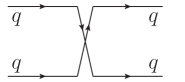
This article reviews the theoretical development and experimental evidence for exotic hadrons, including charmonium, hadronic molecules, and multiquark states, within the framework of Quantum Chromodynamics and chiral symmetry.
While conventional quark models have long served as the foundation for understanding hadron structure, they struggle to fully account for the growing evidence of exotic states beyond the traditional quark-antiquark paradigm. This review, ‘Charmonium, exotic hadrons and hadron structure’, traces the evolution of these models, beginning with the seminal observations of charmonium and culminating in explorations of multiquark configurations and hadronic molecules. The emergence of pentaquarks and other exotic hadrons suggests a richer underlying structure than previously imagined, demanding unquenched approaches and a reassessment of strong interaction dynamics. How will future experimental and theoretical investigations refine our understanding of these complex systems and the fundamental building blocks of matter?
The Fabric of Existence: Unveiling the Strong Interaction
The very fabric of everyday matter relies on the strong interaction, a fundamental force described by Quantum Chromodynamics (QCD). Unlike electromagnetism, which acts on charged particles, the strong interaction governs the behavior of quarks – the elementary constituents of protons, neutrons, and countless other hadrons. It’s this force that overcomes the electrical repulsion between protons within the atomic nucleus, binding them together and enabling the existence of stable atoms. Crucially, the strong interaction isn’t just about holding nuclei together; it’s responsible for nearly all the mass of visible matter. E=mc^2 dictates that mass and energy are interchangeable, and the energy binding quarks within protons and neutrons contributes far more to their mass than the quarks themselves. Therefore, a complete understanding of QCD is not merely a step towards particle physics completion, but a prerequisite for comprehending the structure and stability of the universe as we observe it.
The behavior of quarks, the fundamental constituents of matter, is governed by a peculiar duality inherent in the strong interaction, described by Quantum Chromodynamics (QCD). At extremely short distances – or, equivalently, at very high energies – the force between quarks diminishes, allowing them to behave almost as free particles; this is known as asymptotic freedom. However, as quarks are pulled apart, the force increases linearly with distance, preventing their isolation and perpetually confining them within composite particles called hadrons, such as protons and neutrons. This phenomenon, termed confinement, presents a significant paradox: the very force that weakens at close range becomes infinitely strong at larger separations, creating a ‘potential well’ from which quarks can never escape. Understanding this interplay between freedom and confinement remains a central challenge in particle physics, requiring complex theoretical approaches and powerful computational techniques to accurately model the strong force.
The paradoxical nature of the strong interaction – where quarks behave as nearly free particles at incredibly short distances but remain permanently bound within hadrons – necessitates the development of advanced theoretical frameworks. Calculating the precise inter-quark potential is exceptionally challenging, requiring techniques like lattice QCD, which discretizes spacetime to enable numerical solutions. These methods, alongside perturbative calculations applicable at short distances and effective field theories for lower energies, allow physicists to predict the properties of hadrons – such as their mass, spin, and decay rates. The accuracy of these predictions serves as a crucial test of \text{QCD} and provides insight into the fundamental nature of matter, revealing how the strong force dictates the structure and stability of the visible universe.
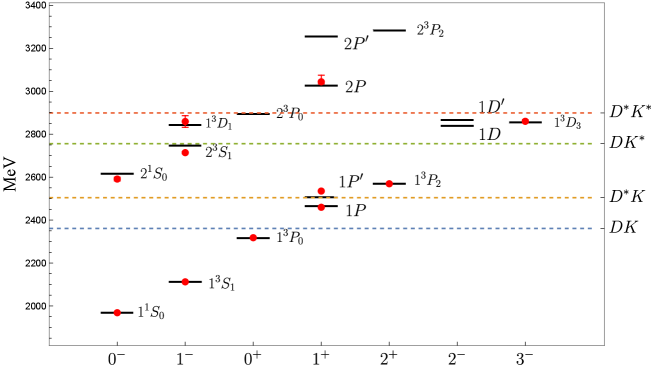
Modeling Confinement: The Cornell Potential
The Cornell potential, a widely used model for describing the strong force between quarks, mathematically represents the inter-quark potential as the sum of a short-range Coulombic term and a long-range linear confining term. The Coulombic component, - \frac{\alpha}{r} , accounts for the electrostatic interaction between color charges at shorter distances, where α is the strong coupling constant and r is the distance between quarks. The linear confining term, kr , where k represents the string tension, dominates at larger distances and describes the observed phenomenon of color confinement – the inability to isolate individual quarks. This functional form effectively captures the experimentally observed potential, transitioning from Coulombic behavior at short ranges to a linearly increasing potential as quarks are separated, implying a constant energy per unit length of the color flux tube.
The application of Non-Relativistic Quantum Mechanics to the Cornell potential allows for the accurate prediction of energy levels observed in heavy quark systems. Specifically, the model successfully reproduces the spectrum of charmonium, which consists of a charm quark and its anti-quark. Calculated energy level spacings, derived from solving the Schrödinger equation with the Cornell potential, correspond closely with experimental data. Furthermore, the model’s description of the inter-quark force accurately predicts decay patterns; transitions between energy levels, and resulting particle decay products, align with observed phenomena. This predictive capability extends to other heavy quarkonia, demonstrating the broad applicability of the combined theoretical framework.
The development and validation of the Cornell potential exemplify a successful approach to modeling complex physical systems by integrating pre-existing theoretical frameworks with experimental data. The potential leverages the well-established Coulombic force law, a component of electromagnetism, and combines it with a linearly-rising confinement term introduced to account for observed quark behavior. This combination, while phenomenological in origin, accurately reproduces the energy spectra and decay characteristics of heavy quarkonia, such as charmonium and bottomonium. The agreement between theoretical predictions based on the Cornell potential and experimental results demonstrates that incorporating empirical observations into established theoretical models – in this case, Non-Relativistic Quantum Mechanics – can yield a robust and accurate description of otherwise intractable systems. This methodology is broadly applicable beyond particle physics, providing a template for modeling complexity in diverse scientific fields.
Symmetries and Dynamics: Unveiling the Light Quark Landscape
Chiral symmetry, a consequence of the light quark masses approaching zero within the framework of Quantum Chromodynamics (QCD), predicts the existence of massless scalar particles known as Goldstone bosons. However, since quarks do possess small but non-zero masses, these bosons are not strictly massless, manifesting instead as the lightest pseudoscalar mesons: the pion, kaon, and eta. The symmetry is broken explicitly by the quark masses and spontaneously broken by the vacuum condensate of quark-antiquark pairs, \langle \bar{q}q \rangle, leading to these mesons acquiring masses proportional to the square root of the quark masses. This relationship between chiral symmetry breaking and the pseudoscalar meson masses is a key prediction of QCD and is consistently observed in experimental data.
The Chiral Quark Model extends the understanding of quark interactions by including the exchange of Goldstone bosons – specifically the lightest pseudoscalar mesons like pions – between light quarks (up, down, and strange). This exchange introduces an effective, long-range interaction that modifies the conventional color-magnetic interaction. The resulting effective inter-quark potential incorporates both vector and scalar components, with the scalar component arising from the pion-exchange and providing an attractive force that contributes significantly to hadron binding. This modification is crucial because it explains observed properties like the relatively light masses of pseudoscalar mesons and the hyperfine splitting within vector mesons, which are not adequately explained by purely color-magnetic interactions. The strength of this interaction is related to the pion coupling constant and provides a framework for calculating hadron masses and decay constants.
Hidden Local Symmetry (HLS) extends the understanding of inter-quark forces by positing that the interactions between light quarks are mediated not only by the exchange of Goldstone bosons, as described in the Chiral Quark Model, but also by vector mesons. This framework treats vector mesons – such as the ρ, ω, and φ – as gauge bosons associated with a local symmetry acting on the quark fields. HLS introduces a coupling between the vector mesons and the quarks, effectively modifying the strong force interaction and providing a mechanism to account for the observed masses and decay patterns of hadrons. The symmetry is “hidden” because it is not manifest in the static properties of hadrons but becomes apparent in their dynamic interactions and decays, providing a more complete description of the strong nuclear force than models relying solely on Goldstone boson exchange.
Accurate modeling of hadron properties necessitates the inclusion of symmetries and their associated dynamics due to the non-perturbative nature of Quantum Chromodynamics (QCD) at low energies. While perturbative QCD provides a successful description at high energies, it fails to accurately predict hadron masses and decay constants. The inclusion of chiral symmetry, and its spontaneous breaking, introduces Goldstone bosons that significantly contribute to the hadron spectrum and interactions. Furthermore, incorporating concepts like hidden local gauge symmetry allows for the inclusion of vector mesons as dynamical degrees of freedom mediating the strong force, leading to improved predictions for hadron observables. These symmetry-based approaches provide an effective framework for understanding the complex interplay of quarks and gluons within hadrons, offering a pathway to bridge the gap between QCD and experimental results.
Beyond the Expected: The Rise of Exotic Hadrons
The constituent quark model represents a refinement of the simpler quark model, addressing limitations in describing the complexities of hadron structure. While the original model posited hadrons as solely composed of valence quarks, this extension incorporates the dynamic effects of short-range one-gluon exchange – the force carriers of the strong interaction – between those quarks. This inclusion accounts for interactions beyond simple combinations, influencing hadron properties like mass and decay modes. Furthermore, the model acknowledges the importance of chiral and hidden gauge symmetries, stemming from the underlying symmetries of quantum chromodynamics (QCD). These symmetries, though often obscured by the strong interaction, manifest in specific hadron properties and decay patterns, offering a deeper understanding of how quarks combine to form the diverse spectrum of observed particles. This nuanced approach allows for a more accurate prediction and interpretation of experimental results, bridging the gap between theoretical predictions and observed hadronic behavior.
The long-held understanding of hadrons – composite particles made of quarks – has been dramatically reshaped by recent experimental findings. Traditionally, these particles were thought to be composed of just two or three quarks, forming baryons and mesons respectively. However, observations at facilities like the Large Hadron Collider have revealed a spectrum of exotic hadrons, including tetraquarks – containing four quarks – and pentaquarks – possessing five. These discoveries aren’t simply extensions of the standard model; they actively challenge it, suggesting that quark interactions are far more complex than previously imagined. The existence of these multi-quark states implies that quarks can bind in configurations beyond the conventional pairings, prompting physicists to re-evaluate the fundamental forces governing hadronic matter and explore new theoretical frameworks to accommodate these unexpected forms of matter.
The conventional understanding of hadrons – particles composed of quarks – has been challenged by recent discoveries, leading to the development of the Hadronic Molecule Picture. This model proposes that certain exotic hadrons aren’t the result of tightly bound arrangements of individual quarks, but instead emerge as loosely connected pairings of existing, well-understood particles: mesons and baryons. Essentially, these exotic states behave as molecules, where mesons and baryons act as constituent parts held together by residual strong force interactions. This differs significantly from the traditional view where exotic hadrons would require novel, complex internal quark structures. Evidence supporting this picture comes from the observed properties of states like the X(3872) and Zc(3900), which exhibit characteristics consistent with being composite particles rather than fundamentally new quark configurations. This molecular interpretation offers a potentially simpler explanation for the existence and behavior of these exotic states, opening new avenues for investigation into the strong force and the fundamental building blocks of matter.
The discovery of exotic hadrons-particularly states like X(3872), Zc(3900), and the Pc states-has fundamentally altered understandings of how quarks combine to form matter. These aren’t the simple two- or three-quark combinations predicted by the original quark model; instead, they represent more complex arrangements. Detailed analyses of proton structure reveal a surprising component: approximately 30% of the proton’s composition can be attributed to penta-quark configurations-brief, fluctuating arrangements of five quarks. This suggests that while the proton typically behaves as a three-quark baryon, it possesses a dynamic internal structure capable of temporarily manifesting more complex quark arrangements, challenging the long-held view of stable, well-defined hadronic constituents and prompting a reevaluation of strong interaction theory.
Refining the Picture: Dynamics and the Path Forward
The conventional understanding of hadrons as solely comprised of three quarks, while foundational, proves insufficient to fully describe experimental observations. The Unquenched Quark Model addresses these limitations by moving beyond this simplistic view, incorporating the dynamic effects of mesonic degrees of freedom and the complex interplay between different hadron channels. Mechanisms like the P03 Model facilitate this by allowing quarks to fluctuate into quark-antiquark pairs, effectively creating a ‘sea’ of virtual mesons that significantly influence hadron properties. This doesn’t discard the quark model, but rather refines it, acknowledging that hadrons aren’t static entities but dynamic systems shaped by these internal fluctuations and coupled-channel effects, ultimately offering a more nuanced and accurate depiction of their structure and behavior.
Investigations into hadron structure are persistently advanced through high-energy collision experiments, notably Deep Inelastic Scattering and the Drell-Yan process. These techniques probe the fundamental constituents of matter by bombarding targets with high-energy leptons or hadrons, revealing insights into the distribution of quarks and gluons within. Recent analyses of data from these experiments have not only refined existing models of hadron composition, but have also provided compelling evidence for more exotic configurations, including the potential existence of penta-quark states-composite particles containing five quarks. The precision achieved in these studies allows researchers to map the internal architecture of hadrons with increasing detail, testing the limits of theoretical predictions and guiding the development of more comprehensive models of the strong nuclear force.
Recent investigations into hadron structure have revealed compelling evidence for multi-quark states beyond the traditionally understood quark-antiquark meson model. Analyses of the Ds meson system demonstrate a substantial tetra-quark component, estimated to comprise approximately 17% of its composition, suggesting a more complex internal structure than previously assumed. Furthermore, observed asymmetries in the distributions of up and down anti-quarks within the proton necessitate the inclusion of a penta-quark component exceeding 12% to adequately explain experimental data. These findings collectively reinforce the validity of unquenched models, which incorporate dynamic mesonic degrees of freedom and coupled-channel effects, and highlight the limitations of simpler theoretical frameworks in fully describing the strong interaction and the intricate world of hadron constituents.
Progress in understanding the strong interaction, the force binding quarks into hadrons like protons and neutrons, hinges on a collaborative dynamic between theoretical innovation and rigorous experimental verification. Models, such as the Unquenched Quark Model, propose frameworks for interpreting the behavior of these particles, but their validity rests on continuous testing through experiments like Deep Inelastic Scattering and Drell-Yan processes. These experiments provide the data necessary to refine and validate theoretical predictions, revealing subtle effects – such as the tetra-quark component in mesons and the asymmetry in sea quark distributions – that would otherwise remain hidden. This iterative process, where theory guides experimental design and experimental results inform theoretical development, is not merely a validation exercise, but a pathway to uncovering the full complexity of hadron structure and the fundamental principles governing the strong force.
The pursuit of understanding hadronic structure reveals a landscape far exceeding initial quark model simplicity. This paper charts that evolution, moving from idealized frameworks to acknowledging the significance of multiquark states. It echoes a sentiment captured by Confucius: “Study the past if you would define the future.” The article’s focus on unquenched models, addressing the limitations of earlier theories, aligns with this principle. Abstractions age, principles don’t. Every complexity needs an alibi, and the ongoing exploration of exotic hadrons demands continuous refinement of theoretical tools and experimental strategies to unveil the true nature of matter.
What Remains?
The persistence of exotic hadron observations, despite decades refining the quark model, suggests the initial simplicity was, predictably, incomplete. The field has not so much solved a puzzle as peeled back layers, revealing further complexity. Current models, increasingly reliant on multiquark configurations and hadronic molecule interpretations, offer descriptions-but rarely explanations. The true test lies not in accommodating the anomalies, but in predicting them, in distilling a fundamental principle from the observed menagerie.
Future progress demands a willingness to discard cherished assumptions. Unquenched calculations, though computationally intensive, represent a necessary path toward a more realistic understanding of hadron structure. Equally vital is a diversity of experimental approaches – not merely seeking confirmation of theoretical predictions, but actively probing for the unexpected. The signal-to-noise ratio in this field remains stubbornly low; cleverer detectors and more nuanced analyses are paramount.
Ultimately, the quest to understand hadrons is a search for the minimal sufficient explanation. The elegance of the quark model initially promised a streamlined picture; what remains is a fragmented, nuanced reality. The goal is not to assemble a complete catalog of exotic states, but to identify the underlying principles that dictate their existence – to sculpt, from the chaos, a coherent form.
Original article: https://arxiv.org/pdf/2602.04090.pdf
Contact the author: https://www.linkedin.com/in/avetisyan/
See also:
- The Super Mario Galaxy Movie: 50 Easter Eggs, References & Major Cameos Explained
- 10 Best Free Games on Steam in 2026, Ranked
- Surprise Isekai Anime Confirms Season 2 With New Crunchyroll Streaming Release
- ‘Project Hail Mary’: The Biggest Differences From the Book, Explained
- Why is Tech Jacket gender-swapped in Invincible season 4 and who voices her?
- Preview: Sword Art Online Returns to PS5 as a Darker Open World Action RPG This Summer
- Sydney Sweeney’s The Housemaid 2 Sets Streaming Release Date
- Skate 4 – Manny Go Round Goals Guide | All of the Above Sequence
- The Super Mario Galaxy Movie Is An Amusing Sequel (And an Improvement) [Review]
- All 13 Smash Bros. Characters in the Super Mario Galaxy Movie
2026-02-05 09:34