Author: Denis Avetisyan
A new review examines the sociological and organizational hurdles to progress in quantum information science and technology, emphasizing the vital role of collaboration and realistic expectations.
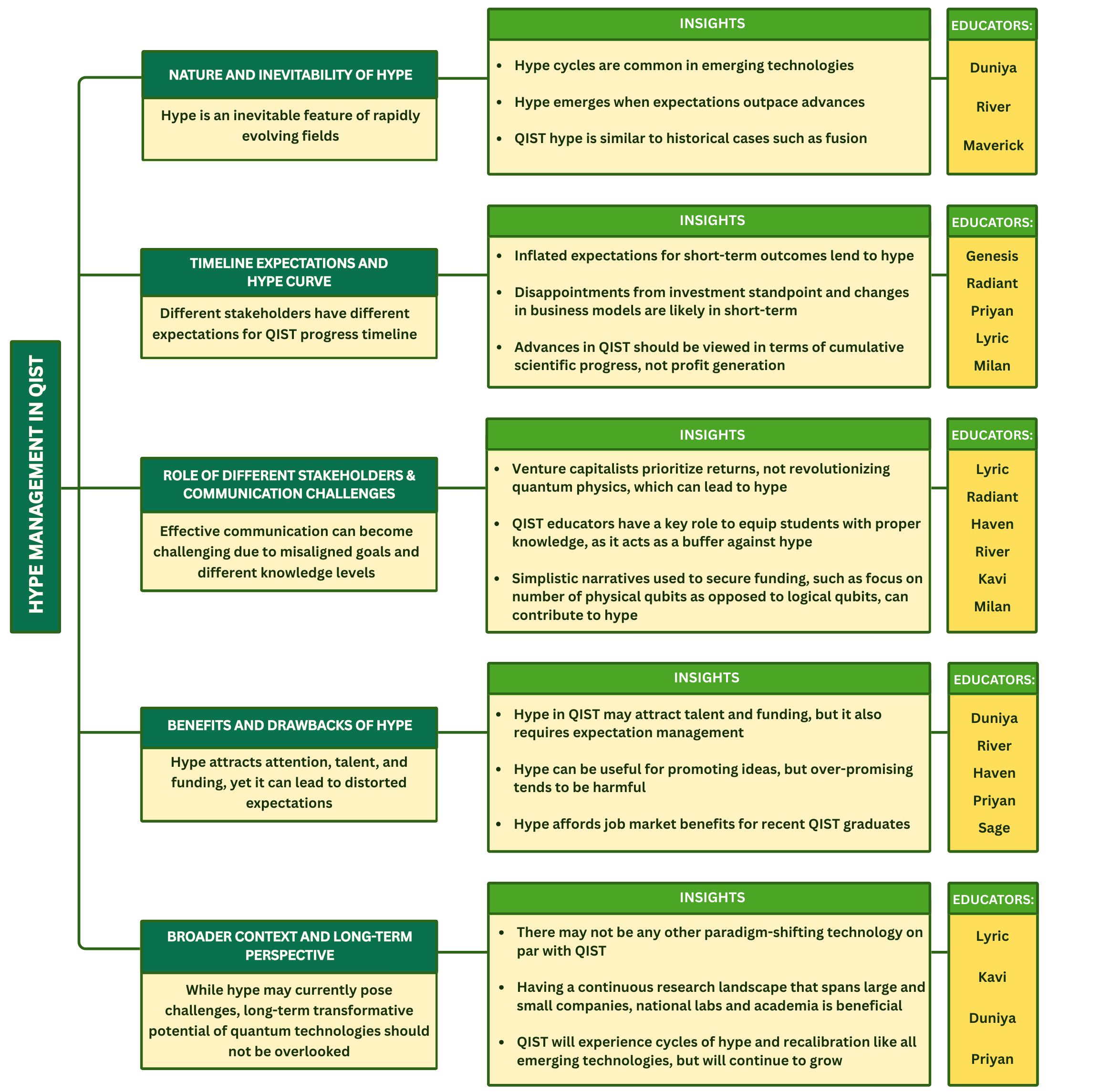
This article analyzes the challenges of interdisciplinary collaboration, university-industry partnerships, and managing hype within the emerging field of Quantum Information Science and Technology.
Despite the accelerating progress in quantum information science and technology (QIST), realizing its potential requires navigating significant sociological and organizational challenges. This research, ‘Navigating Hype, Interdisciplinary Collaboration, and Industry Partnerships in Quantum Information Science and Technology: Perspectives from Leading Quantum Educators’, examines these challenges through the lens of leading quantum educators, revealing critical insights into managing expectations, fostering diverse collaboration, and building sustainable university-industry partnerships. Findings emphasize the need for realistic assessments of the field’s trajectory alongside strategies to attract talent from non-physics disciplines and address concerns surrounding intellectual property in collaborative ventures. How can these insights inform policy and practice to cultivate a robust and equitable quantum workforce while avoiding the pitfalls of unrealistic hype?
The Ebb and Flow of Quantum Expectations
The burgeoning field of quantum technologies, while promising revolutionary advancements, is not immune to the cyclical pattern of inflated expectations commonly known as ‘QuantumHype’. This phenomenon, mirroring historical surges and subsequent disillusionment in areas like artificial intelligence and nanotechnology, arises from the complex interplay of scientific possibility, investor enthusiasm, and media attention. Initial breakthroughs, often extrapolated beyond their immediate scope, can generate significant investment and public excitement, leading to unrealistic timelines and overstated capabilities. This, in turn, sets the stage for potential disappointment when practical implementation proves more challenging and time-consuming than anticipated, potentially hindering long-term progress and sustained funding if not carefully managed with realistic assessments and transparent communication.
The influx of capital into quantum technologies, while seemingly beneficial, presents a delicate paradox: sustained progress hinges on tempering expectations with a realistic appraisal of existing limitations. Initial enthusiasm and substantial investment can quickly lead to disillusionment if not matched by demonstrable, incremental advancements. This phenomenon isn’t unique to quantum computing; history is replete with examples of emerging technologies that failed to deliver on early promises due to overly optimistic projections and a lack of understanding regarding fundamental obstacles. Therefore, a critical component of navigating this innovation landscape involves acknowledging the substantial engineering and theoretical challenges that remain, ensuring that investment is strategically directed towards achievable milestones and long-term, sustainable development rather than chasing immediate, potentially unattainable, breakthroughs.
Quantum technology’s advancement isn’t a straightforward march towards inevitable realization, but a complex interplay of scientific discovery, engineering limitations, economic forces, and societal needs. A nuanced understanding of innovation requires abandoning the notion of technological determinism – the idea that technology dictates its own development and impact. Instead, progress emerges from iterative cycles of experimentation, adaptation, and refinement, shaped by the priorities and constraints of various stakeholders. Successfully charting a course through this evolving field necessitates recognizing that quantum innovation isn’t simply about achieving technical milestones, but about strategically aligning research, investment, and application to address real-world challenges and cultivate sustainable growth. This perspective acknowledges that setbacks are inherent to the process and that responsible development demands careful consideration of ethical and societal implications alongside purely technical achievements.
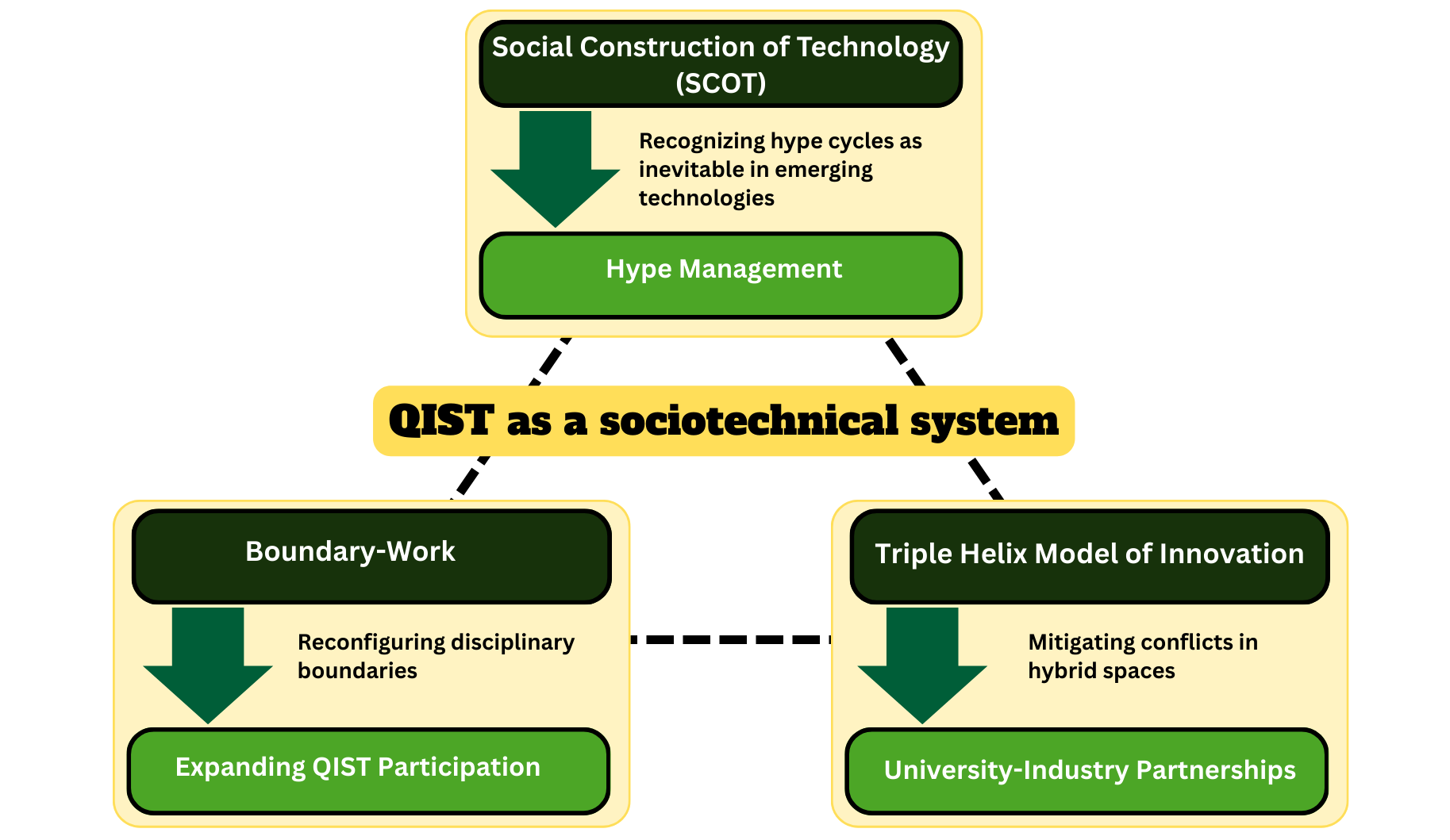
The Necessary Fragmentation of Disciplines
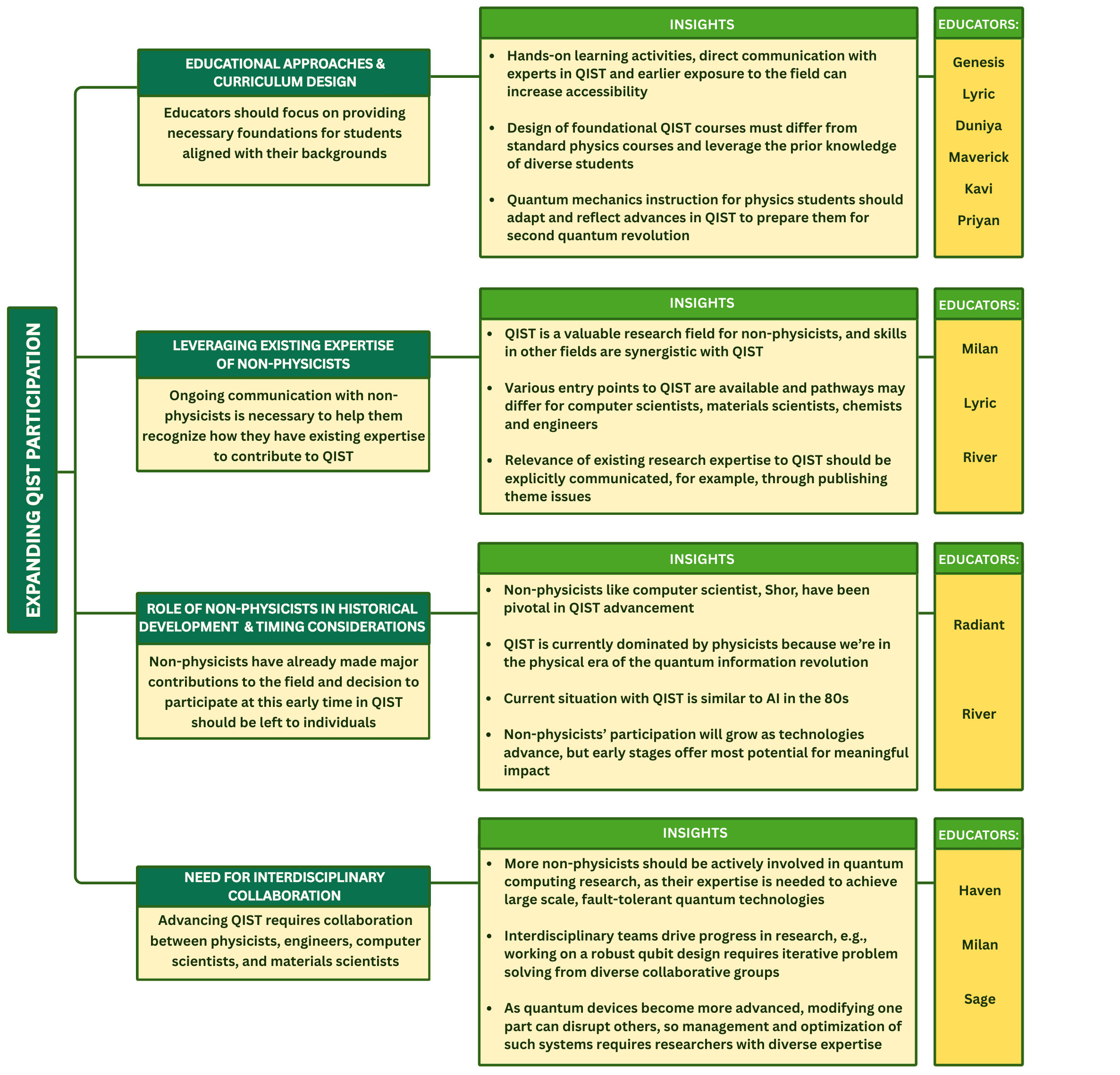
Advancing quantum information science demands a shift away from solely physics-based research methodologies towards robust interdisciplinary collaboration. Historically, progress in quantum technologies has been largely driven by physicists; however, current limitations necessitate the integration of expertise from diverse fields. Successful development of practical quantum devices requires contributions beyond theoretical physics, including materials science for qubit fabrication, computer science for algorithm development and error correction, and engineering for system integration and control. This collaborative approach isn’t simply about combining existing knowledge, but actively forging new research pathways through the synergistic application of distinct disciplinary perspectives and methodologies.
Interdisciplinary collaboration in quantum information science is not simply the combination of expertise, but a process of Boundary Work – the ongoing negotiation and definition of disciplinary boundaries. This process determines which forms of knowledge are considered relevant and authoritative, and consequently, which expertise is valued in problem-solving. Boundary Work involves establishing and maintaining distinctions between fields, but also identifying areas of overlap and potential integration. Successful collaboration requires explicit acknowledgement of these boundaries, and a deliberate effort to translate concepts and methodologies across disciplines, rather than assuming a seamless transfer of knowledge. The outcomes of Boundary Work directly impact resource allocation, research priorities, and the overall direction of quantum technology development.
Quantum information science advancement is increasingly constrained by the limitations of single-discipline approaches; therefore, integrating expertise from fields beyond physics is crucial. Specifically, materials science provides essential capabilities for qubit fabrication and characterization, computer science offers algorithmic development and error correction strategies, and engineering delivers the practical implementation and scaling of quantum devices. This study emphasizes that successful quantum progress requires actively addressing the challenges associated with incorporating these ‘non-physics’ skills, including communication barriers, differing methodological approaches, and the need for shared understanding of complex quantum phenomena to effectively leverage interdisciplinary contributions.
Bridging the Divide: University, Industry, and the Innovation Helix
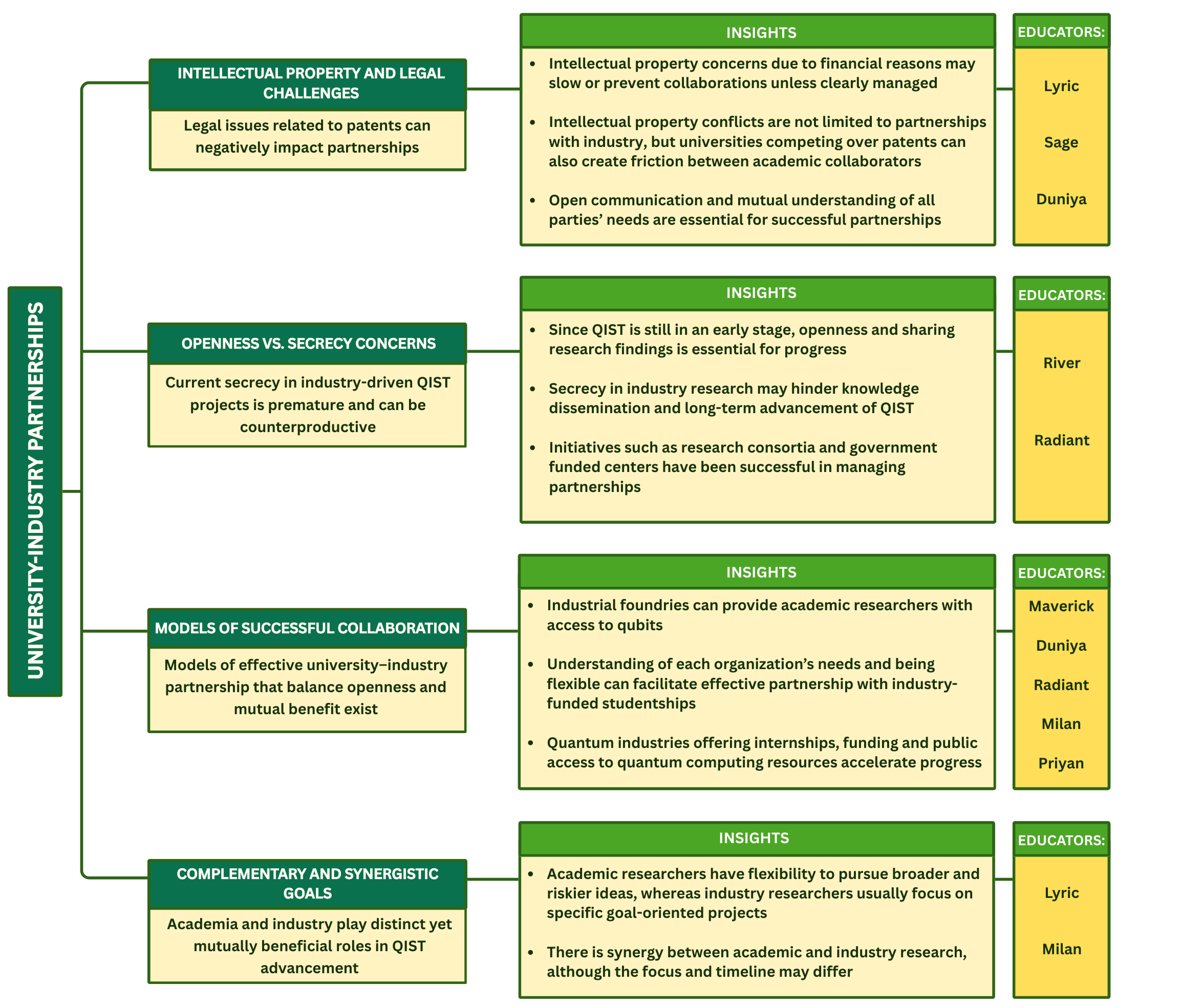
University-industry partnerships are demonstrably crucial for the commercialization of quantum technologies due to the inherent translational gap between fundamental research and market-ready products. Quantum research often requires significant capital investment and specialized infrastructure beyond the scope of most university labs, necessitating collaboration with industrial partners who can provide these resources. These partnerships facilitate the scaling of quantum prototypes, the engineering of robust systems, and the navigation of complex regulatory landscapes. Furthermore, industry involvement ensures research aligns with practical applications and market needs, increasing the likelihood of successful technology transfer and economic impact. The increasing number of joint ventures, sponsored research agreements, and spin-off companies focused on quantum technologies directly reflects the growing recognition of this synergistic relationship.
Traditional technology transfer, involving the licensing of university-developed intellectual property to industry, is increasingly insufficient for driving complex innovation. The Triple Helix Model offers an alternative framework, emphasizing the synergistic interaction between three primary stakeholders: academia, industry, and government. This model posits that innovation arises not from linear progression – research to development to commercialization – but from reciprocal relationships and mutual learning between these entities. Successful Triple Helix partnerships involve collaborative research projects, joint ventures, shared facilities, and policy initiatives designed to facilitate knowledge exchange and accelerate the translation of research into marketable products and services. The integration of governmental bodies provides crucial support through funding, regulatory frameworks, and the creation of supportive ecosystems.
University-industry partnerships in quantum technology development present notable intellectual property (IP) and confidentiality challenges. These arise from the need to balance academic freedom and publication with the commercial interests of industry partners, potentially creating disputes over ownership, licensing, and control of research outcomes. Confidentiality concerns stem from the sensitivity of proprietary information shared during collaborative projects, requiring robust agreements and data security protocols to prevent leaks and maintain competitive advantage. This study assesses the perspectives of quantum educators regarding these challenges, identifying key considerations for establishing frameworks that foster trust, ensure equitable benefit sharing, and support the long-term sustainability of the quantum technology ecosystem.
Sustaining Quantum Futures: A Long View Beyond Expediency
The continued progress of quantum technologies hinges not on immediate profit, but on a dedicated, long-term vision. Unlike many rapidly developing fields, quantum computing and sensing require substantial foundational research – years of exploration before practical applications emerge. This necessitates consistent investment in basic science, even when returns aren’t immediately visible, and a commitment to cultivating a skilled workforce capable of navigating the complexities of quantum mechanics. Prioritizing short-term gains risks stifling innovation by neglecting the crucial groundwork upon which future breakthroughs depend; a sustained, patient approach is essential to unlock the full potential of this transformative technology and ensure lasting advancements beyond incremental improvements.
A truly robust quantum future hinges not solely on a skilled physics workforce, but on a broadly ‘quantum-literate’ society. Current educational approaches must expand beyond specialized training to cultivate interdisciplinary competencies, integrating quantum concepts into fields like computer science, materials science, chemistry, and even finance. This necessitates developing curricula that emphasize the application of quantum principles to real-world problems, fostering creative problem-solving and innovation across diverse sectors. By equipping a wider range of professionals with a foundational understanding of quantum information science, it becomes possible to accelerate the translation of theoretical breakthroughs into tangible technologies and cultivate a more adaptable and resilient quantum ecosystem.
The cultivation of quantum innovation requires a research environment echoing the success of institutions like Bell Labs, where unfettered exploration and the seamless integration of fundamental discovery with practical application flourished. This study underscores the necessity of such an approach, highlighting how open scientific exchange and collaborative endeavors can accelerate progress within the complex quantum ecosystem. By analyzing current challenges and emerging opportunities, the research suggests that prioritizing basic research-not solely driven by immediate commercial interests-is paramount. A dedication to this model fosters a fertile ground for breakthroughs, allowing nascent quantum technologies to mature from theoretical concepts into tangible advancements with broad societal impact.
The pursuit of Quantum Information Science and Technology, as detailed in this research, exemplifies the inherent fragility of even the most promising systems. This work underscores the need to navigate the hype cycle with pragmatism, acknowledging that initial enthusiasm often precedes complex realities. Sergey Sobolev observed, “The only constant is change,” a sentiment perfectly aligned with the findings regarding university-industry partnerships. These collaborations, while vital, are subject to the inevitable pressures of differing priorities and intellectual property concerns. The study suggests that sustainable progress demands a continuous adaptation to evolving circumstances, accepting that stability is often a transient state before inevitable shifts occur, mirroring the broader principle that all systems, even those built on revolutionary technologies, are subject to the relentless march of time and change.
What’s Next?
The examined landscape of Quantum Information Science and Technology reveals not a march toward technological singularity, but the predictable entropy of a complex sociotechnical system. Uptime for enthusiasm is always temporary. The paper illustrates the inevitable friction arising when theoretical potential encounters the practical demands of translation-and the attendant boundary work required to manage expectations. The challenge isn’t simply building qubits, but constructing a sustainable ecosystem around them.
Future investigations should concentrate less on accelerating development and more on charting the decay curves of various collaborative models. Stability is an illusion cached by time; the current emphasis on university-industry partnerships, while seemingly pragmatic, necessitates careful monitoring. The long-term viability of these arrangements will hinge not on initial funding, but on the equitable distribution of intellectual property and the cultivation of genuinely shared objectives-a state rarely achieved in systems driven by asymmetrical power dynamics.
Latency is the tax every request must pay. The field must acknowledge that progress isn’t linear, and that managing the hype cycle requires a willingness to confront uncomfortable truths about resource allocation, talent pipelines, and the inherent limitations of any technology attempting to defy fundamental physical constraints. The true measure of success won’t be the realization of quantum supremacy, but the graceful negotiation of inevitable obsolescence.
Original article: https://arxiv.org/pdf/2602.15230.pdf
Contact the author: https://www.linkedin.com/in/avetisyan/
See also:
- Looks Like SEGA Is Reheating PS5, PS4 Fan Favourite Sonic Frontiers in Definitive Edition
- Pluribus Star Rhea Seehorn Weighs In On That First Kiss
- Dune 3 Gets the Huge Update Fans Have Been Waiting For
- Gold Rate Forecast
- Kelly Osbourne Slams “Disgusting” Comments on Her Appearance
- Tomodachi Life: Living the Dream ‘Welcome Version’ demo now available
- Arknights: Endfield – Everything You Need to Know Before You Jump In
- I went hands-on with a wireless third-party Xbox controller featuring drift-free “TMR” sticks, and it blew me away — don’t sleep on the GameSir G7 Pro ZZZ Edition
- ‘Marty Supreme’ Ending, Explained
- ‘Spider-Noir’ Gets TV-14 Rating, A First for Spider-Man Television
2026-02-18 09:01